


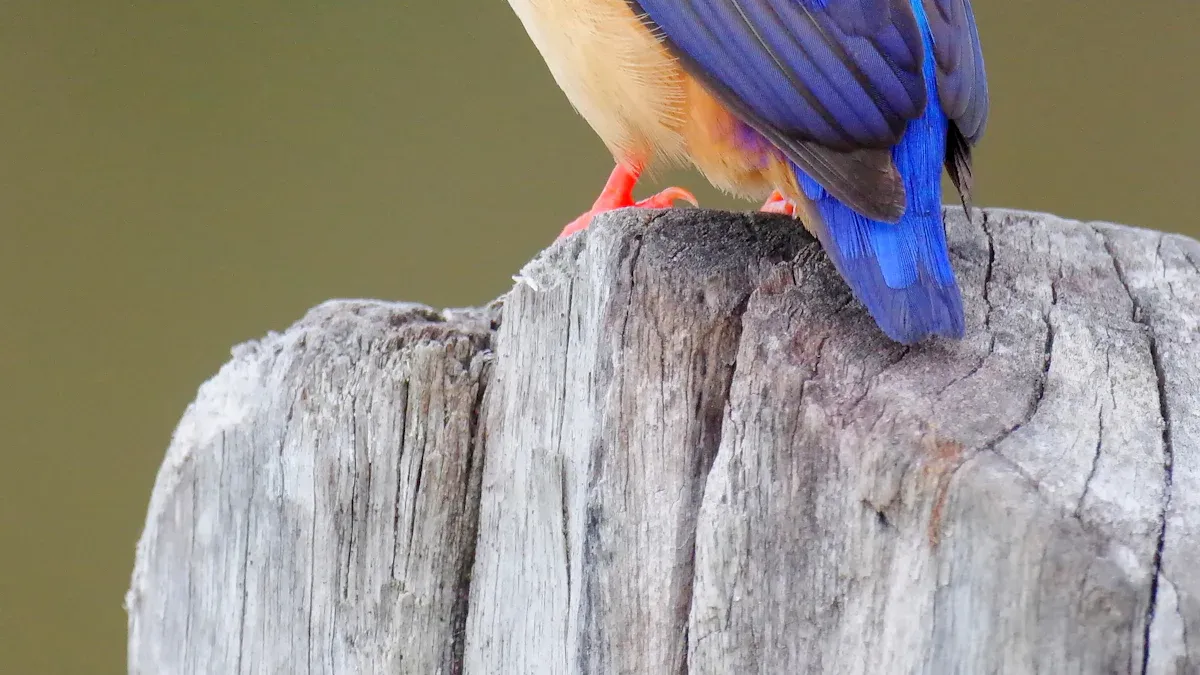
Australia’s geographical isolation created its unique avian fauna. Many birds live only in Australia. 45 percent of bird species in Australia are found nowhere else on Earth. This guide explores the distinct characteristics of Australia birds. Australia is home to over 700 species of birds. Including offshore islands, this number reaches around 900 species. This guide will show their evolutionary marvels and iconic species. It will also highlight the critical importance of their conservation.
Key Takeaways
Australia’s birds are special because many kinds live only there. They evolved unique traits due to the continent’s long isolation.
Australian birds show amazing adaptations to their environment. They have special beaks for eating nectar and ways to stay cool in the desert.
Iconic Australian birds include colorful parrots, honeyeaters, laughing kookaburras, and large flightless emus and cassowaries.
Birdwatching in Australia needs good planning and gear. Always follow rules to protect birds and their homes.
Many Australian birds face threats like habitat loss and climate change. You can help protect them by supporting conservation and making eco-friendly choices.
Uniqueness of Australian Birds
High Endemism
Australia’s long isolation from other landmasses created a unique evolutionary path for its avian inhabitants. This separation allowed many bird species to evolve without external influences. As a result, a high number of these birds are found only in Australia. They are endemic to this continent.
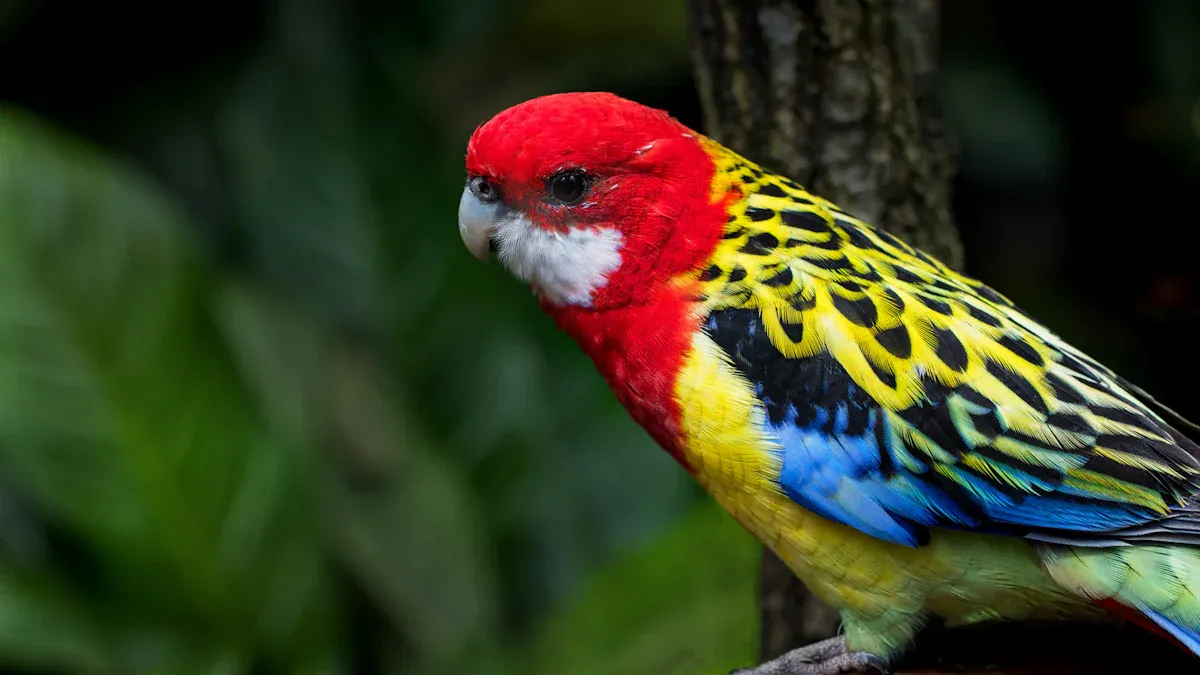
Many native birds showcase this uniqueness. For example, Western Australia hosts several distinct parrot species. These include the Carnaby’s Black-Cockatoo and Baudin’s Black-Cockatoo. The Western Corella also lives there. Other unique parrots are the Red-capped Parrot and the Western Rosella. The Western Ground Parrot is another example.
Beyond parrots, other unique species thrive in Australia. The Noisy Scrub-bird, Red-winged Fairy-Wren, and Western Spinebill are examples. Gilbert’s Honeyeater, Western Wattlebird, and Western Bristlebird also live only in this region. The Western Thornbill, White-breasted Robin, Red-eared Firetail, and Western Whistler complete this list of unique birds. These species highlight the continent’s rich and distinct avian diversity.
Evolutionary Marvels
Australia’s unique environment fostered remarkable evolutionary changes in its avian inhabitants. Ancient bird species here show deep evolutionary roots. For instance, perching birds, known as passerines, represent over 6,000 distinct species globally. Scientists believe these species originated in Australia. This highlights the continent’s important role in avian evolution.
Australia also hosted exceptionally large flightless creatures. The Dromornithidae lived here about 50,000 years ago. These were much bigger than modern ostriches. Their presence shows another unique aspect of Australia’s ancient avian fauna.
Songbirds are another prominent example of Australia’s unique evolutionary history. This large group includes about 5,000 species, such as robins, jays, magpies, and lyrebirds. Fossil evidence in Australia dates back 54 million years. This is older than discoveries elsewhere. Studies in the 1980s and a 2016 study in Nature Communications support this. They suggest songbirds originated and diversified in Australia around 33 million years ago. They spread beyond the continent only 10 million years later.
Australian avifauna also shows unique evolutionary traits. Nectarivory in Australasian parrots is one example. This dietary shift led to changes in body size, beak structure, and tongue structure. Australian honeyeaters (Meliphagidae) also show convergent evolution. They share traits like elongated bills and brush-tipped tongues with hummingbirds and sunbirds. This demonstrates adaptation to nectarivory.
Some Australian groups show remarkable evolutionary divergence. Australian passerines, like fairy wrens, sittellas, and tree-creepers, were once thought to relate to global counterparts. However, DNA comparisons revealed these Australian groups are more closely related to crows and shrikes. This indicates independent evolution on the continent. Australian robins, despite their name, are not thrushes. They share a common ancestor with crows and shrikes. Australasian (psittaculid) parrots also show late diversification in beak morphology. This happened during a period of aridification and expanding open forests in mainland Australia. This suggests environmental changes drove their diversification.
Adaptations to Landscapes
The diverse landscapes of Australia shaped its avian inhabitants in remarkable ways. The harsh arid climates of inland Australia influenced bird plumage. This led to fancier colors for mate attraction during the wet season. Conversely, avifauna in areas with more precipitation and vegetation often have darker plumage. Desert dwellers often exhibit lighter, greyer backs. Forest inhabitants have evolved darker green coloration. This serves as natural selection for camouflage and survival.
Australia’s distinctive Eucalypt forests significantly influenced avian evolution. This led to specialized feeding adaptations. For instance, honeyeaters developed long, curved beaks and brush-tipped tongues. They use these to extract nectar from Eucalyptus and Grevillea flowers. The country’s harsh and diverse climate, from arid deserts to lush rainforests, compelled birds to evolve innovative traits. This environmental pressure is a key reason for the unique characteristics of australia birds. Many global species, including all songbirds and parrots, trace their ancestry back to Australia. This guide helps understand these adaptations.
Many Australian desert species are water-dependent. This is especially true when temperatures reach or exceed 25°C. Species like budgerigars and zebra finches drink frequently throughout hot days. Painted finches, diamond doves, and spinifex pigeons also do this. Zebra finches visit water sources often during heatwaves, even at temperatures up to 44.5°C. They do not typically endure long periods without water. They increase drinking frequency during the hottest parts of the day. This helps them maintain evaporative heat loss. It also helps them defend a lower body temperature. This reduces the risk of fatal hyperthermia.
The Australian arid zone has many natural and artificial water points. Artificial water sources, primarily groundwater-fed, support livestock. They now provide a reliable water supply for fauna. Few locations are more than 5-7 km from water in many areas. Water-dependent birds typically stay within 12 km of a source. They can travel up to 20 km. Even if natural water sources become more saline during dry periods, desert birds continue to drink from them. Some residents of these areas are year-round inhabitants. Other regular migrants move through, while some migrants visit seasonally. Some regions may experience increased rainfall, especially summer rain. This aligns with periods of high water demand by birds for thermoregulation.
Iconic Australian Bird Families
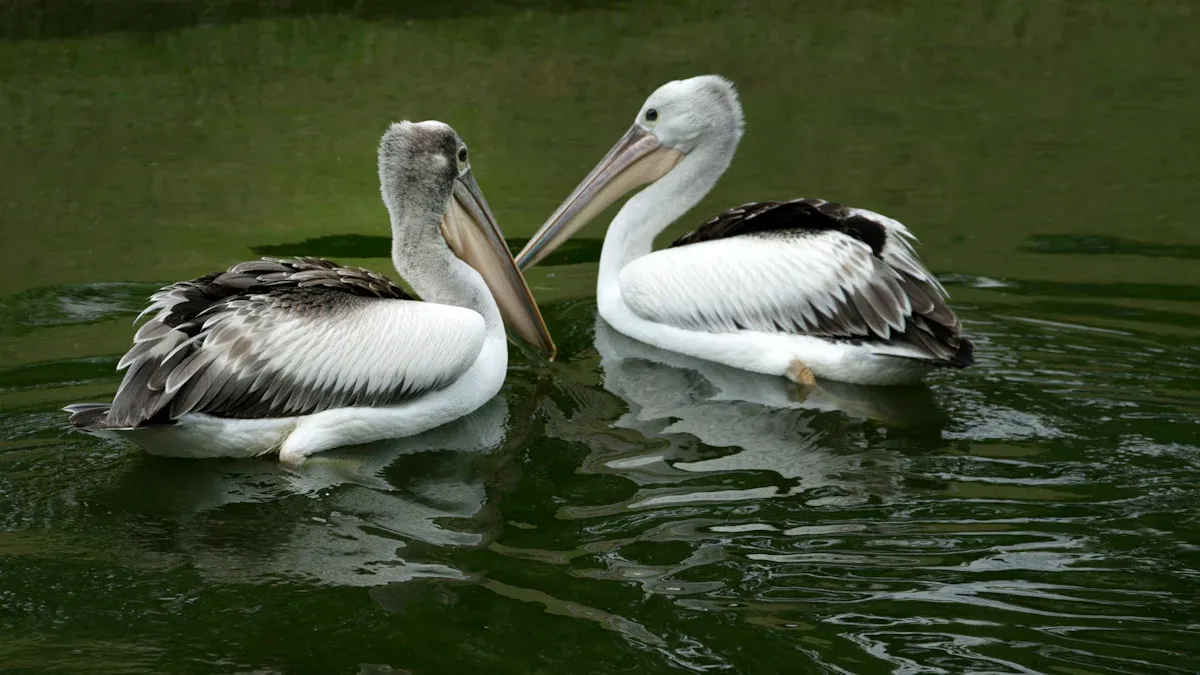
Australia boasts many iconic bird families. These families show unique traits. Many species are found only in Australia. They display striking colors, like parrots and kingfishers. These birds also have special body parts. Honeyeaters have long beaks and brush-tipped tongues for nectar. Some birds show unique behaviors. Lyrebirds mimic sounds. Bowerbirds build elaborate structures. Australia has over 800 bird species. About 350 of these live only in Australia. Australian songbirds are very important. They started their worldwide journey in Australia. Now, they make up half of the world’s 10,000 bird species. Honeyeaters grew in number by using nectar from eucalyptus trees. This section of the guide explores some of these famous bird families.
Parrots and Cockatoos
Australia is famous for its parrots and cockatoos. These birds are often colorful and very social. The Sulphur-crested Cockatoo is a large white bird with a yellow crest. Galahs are pink and grey. Budgerigars are small green and yellow parrots. They often live in large flocks. These birds show complex social behaviors.
“Demonstrating that food scavenging behaviour is not due to genetics is a challenge,” Klump added. “Social learning is the basis of different regional cultures, and some animals, such as primates and birds, appear to learn socially.”
Scientists have confirmed that cockatoos learn from each other. They learn how to lift garbage bin lids to find food. This research shows that this new behavior spreads through social learning. It is not passed down through genes. This highlights their intelligence and ability to adapt. It also shows social learning is a common behavior among them. Sulphur-crested cockatoos in Sydney open garbage bins for food. They learn this skill by watching and copying other cockatoos. This proves these birds can learn new behaviors socially. This is a sign of “culture” in animals. People once thought only humans had this trait.
Honeyeaters and Allies
Honeyeaters are a diverse group of birds in Australia. They play a vital role in the environment. These birds feed on nectar. They have long, curved beaks and brush-tipped tongues. These tools help them get nectar from flowers. The New Holland Honeyeater and the Noisy Miner are common examples.
Honeyeaters are key pollinators for many plants. They pollinate plants in several groups, including Haemodoraceae, Proteaceae, and Myrtaceae. They pollinate rare plants in Southwest Australia at a higher rate. This rate is 40% for rare plants, compared to 15% for general plants. Their movements while feeding help spread pollen. They move between flowers on the same plant or between nearby plants. How much food is available affects their movements. Social interactions and fighting with other species also change their movements. These factors impact how pollen spreads. Some honeyeater species travel long distances for nectar. Other species stay close to their homes. For example, some species travel over 145 km. Others, like those in the Lichenostomus group, rarely go more than 2-3 km. Honeyeater groups and the plants they pollinate can handle some environmental changes. However, local areas might see effects on fruit growth and pollen movement.
Kookaburras and Kingfishers
The Laughing Kookaburra is one of Australia’s most famous birds. It is known for its distinctive call. This call sounds like human laughter. It is the largest kingfisher in Australia. Kookaburras hunt by beating their prey against a branch.
The Laughing Kookaburra’s name comes from the Aboriginal Wiradjuri people. Their word describes the bird’s laughing sound. This unique sound is very famous. It appears in movies like Tarzan and Jurassic Park. It is also in video games. People often use it as a jungle sound effect, even though the bird lives in Australia.
Laughing Kookaburras have many distinct calls:
They make a territorial ‘laugh’. Several birds often do this at once. This sound is a common jungle sound effect.
They use the ‘laugh’ to mark their territory among family groups. They sing most often at dawn and dusk.
They make the call using a special voice box. This allows two sounds with many tones.
Young kookaburras learn the ‘laugh’ from their parents.
A full ‘laughing chorus’ has five parts: ‘Kooa’, ‘Cackle’, ‘Rolling’ (fast ‘oo-oo-oo’), loud ‘Ha-ha’, and a male’s ‘Go-go’ or female’s ‘Gurgle’.
They also squawk. They do this when nesting, showing submission, or when young birds beg for food.
They have more calls than other kookaburra species. They use changes in rhythm, tone, and sound to share detailed information.
These calls serve many purposes:
They attract and guard mates.
They set and keep social order.
They claim and defend territory. This often links to how aggressive they are.
They help neighbors and family recognize each other. This shows they still live in a territory.
They show the quality and health of well-organized groups.
They strengthen the main pair bond through calls sung together.
Neighboring groups cooperate. They sing chorus songs one after another without overlapping.
Australia has other notable kingfisher species.
Buff-breasted paradise-kingfishers live along Australia’s northern coast and in New Guinea.
Red-backed kingfishers live in Australia’s driest deserts.
The Sacred Kingfisher is one of ten kingfisher species in Australia.
Emus and Cassowaries
Emus and Cassowaries are large, flightless birds. They are iconic to Australia. Emus are the tallest Australian bird. They can stand up to 2 meters tall. They have powerful legs for running up to 50 km/h. Their shaggy feathers provide insulation.
Emus typically stand between 150 and 190 cm tall. They weigh between 31 and 37 kg. Cassowaries generally measure between 152 and 183 cm tall. They can weigh up to 73 kg. Some individuals are even heavier. Emus are often taller, but Cassowaries are almost always heavier.
Bird Species | Height Range (cm) | Weight Range (kg) |
|---|---|---|
Southern Cassowary | 130–170 | 29–85 |
Northern Cassowary | 150–180 | 30–58 |
Dwarf Cassowary | 100–110 | 17–26 |
Emu | 150–190 | 18–60 |
Cassowaries are very important to the rainforest. They act as ‘rainforest gardeners’. They spread seeds from over 238 plant species. They are the only animals that spread large seeds over long distances. They distribute seeds for more than 70 tree species that other animals cannot. Their unique digestion allows them to eat fruits and seeds toxic to other species. They pass seeds unharmed in their droppings. These droppings also act as fertilizer. This role helps keep rainforest diversity. It makes them a keystone species. Many other plants and animals benefit from them. Southern Cassowaries are essential ‘Gardeners’ of the Rainforest. They mainly eat fruit and spread seeds. They spread seeds for at least 238 fruit-producing plants. They are the only seed disperser for about 100 of these plant species. The seeds pass through their gut whole. They land on the forest floor, often far from the parent plant. This effectively plants them.
Lyrebirds and Bowerbirds
Lyrebirds and bowerbirds are known for their elaborate courtship displays. These displays are truly remarkable.
Male lyrebirds perform complex song and dance displays. They do this to attract females. These displays happen on ‘mounds’. These are clear, circular patches of ground in the forest. Adult males have a spectacular tail. They show this tail during their performances. Male lyrebirds are excellent vocal mimics. About 70-80% of their loud, complex song is accurate imitations of other bird species. They also sing many unique lyrebird songs. Males sing a lot in mid-winter. Most eggs are laid then. Vocal displays happen right before mating.
Lyrebirds have extraordinary vocal mimicry. They can parrot almost any sound they hear. Their voice box is the most complex of any songbird. This allows them to imitate other birds and mammals almost perfectly. Males use mimicry in their courtship rituals. They include many learned sounds. Females also use calls to defend their nest and territory. Lyrebirds learn sounds directly or from their parents. For example, Tasmanian lyrebirds mimicked sounds their mainland parents heard for generations. Modern examples of sounds they mimic include chainsaws, camera shutters, and even laser guns.
Lyrebirds typically imitate over 30 species in their environment. They can perfectly imitate some species. For instance, grey shrike-thrushes cannot tell the difference between their own calls and lyrebirds’ imitations. However, they might imitate some species imperfectly. They may not hit the full range of the eastern whipbird’s call. They also might not hold long, single notes as long. Lyrebirds also create new versions of other species’ songs. They add new sounds to the environment.
Male lyrebirds produce complex vocal displays. These include extensive and accurate mimicry of many other bird species. Albert’s lyrebirds copy the songs of local populations of model species, like the satin bowerbird. Within a lyrebird group, song structure varies less than the songs of their models. This suggests lyrebirds learn from each other. The display song of male Albert’s lyrebirds may include mimicry of over 10 other bird species. All males in a group produce the same chosen mimicked songs in a similar order.
Lyrebirds have an unmatched ability for vocal mimicry. This is due to their complex voice box. They accurately imitate individual songs of other birds. They also mimic the chatter of flocks and sounds from other animals. They can mimic human noises, machines, explosions, and musical instruments. Specific examples include mill whistles, chainsaws, car engines, car alarms, fire alarms, rifle-shots, camera shutters, barking dogs, and crying babies. One lyrebird learned flute tunes like ‘The Keel Row’ after hearing a flute player in the 1930s. A male lyrebird named ‘James’ perfectly mimicked many bird calls. These included the Australian Magpie, Kookaburra, and honey-eaters. He also mimicked non-bird sounds like a rock-crusher and a motor-horn.
Birdwatching Hotspots and Practices
Birdwatching in Australia offers incredible experiences. However, the continent’s vastness requires careful planning. Many visitors have limited time. They often lack knowledge about Australia’s geography and specific wildlife locations. This makes extensive research crucial. A clear goal helps. Decide if you want to see specific birds or general wildlife. Use travel guides, blogs, and social media for broad research. Then, narrow down options to create a reasonable itinerary. Avoid over-scheduling.
Top Birding Regions
Australia boasts many prime birding locations. Tasmania offers excellent opportunities. Visit Gould’s Lagoon in Hobart for Freckled Ducks and Tasmanian Native Hens. Pipe Clay Lagoon provides sightings of White-fronted Chats and various waders. Queens Domain is reliable for Eastern Rosellas. Peter Murrell Reserve has a wide variety of species. The Springs on Mount Wellington is ideal for higher altitude birds like Scrubtit and Pink Robin.
Queensland also has diverse birdlife. Durikai State Forest is a go-to for western species, including Swift Parrot and Turquoise Parrot. Mosquito Creek Road features over 200 species, such as Squatter Pigeons and Spotted Bowerbird. Elim Beach is excellent for waders. New South Wales offers wonderful birding. Salt Caves in Timallallie National Park, Pilliga Forest, provides many honeyeater species and Crimson Chat. This guide helps with finding Australian birds.
Essential Birding Gear
Successful birding requires the right equipment. Binoculars are essential for clear views. A reliable field guide is also crucial for identification. “The Australian Bird Guide” is a comprehensive resource. This book features over 900 species. It includes 4700 color illustrations and updated maps. This information-dense field guide provides comprehensive identification information. It offers detailed species accounts. These accounts include key identification features. This guide is an invaluable tool for birding Australia. Appropriate clothing, suitable for varying weather, also helps.
Ethical Birding Guidelines
Responsible birding ensures the welfare of birds and their habitats. Always minimize disturbance. Maintain distance from birds. Avoid actions that cause them to change behavior or flee. Do not deliberately flush roosting birds. Exercise extreme caution around nesting birds. Prolonged observation can lead to nest desertion. Do not share precise locations of nesting birds, especially rare species.
Bird photography should also avoid disturbance. Do not approach birds until they take flight. Prevent large groups from gathering around a single bird. Altering a nest for photos is unethical and illegal. Large groups or frequent visits can increase disturbance. Field guides should ensure good birding practices. Avoid playing calls or spotlighting. These techniques can cause significant disturbance. Respect all local laws. Obtain permission before entering private land. Protect the environment by not leaving rubbish. This guide promotes ethical birding experiences.
Conservation Challenges for Australia’s Birds
Threats to Birds
Many unique avian species face many dangers. Human actions cause these threats. Habitat destruction is a big problem. Climate change also harms them. Invasive species, like cats and foxes, kill many. Kate Millar, CEO of BirdLife Australia, states that human actions directly cause population declines. Elisa Bayraktarov, a conservation data-scientist, says protecting threatened species needs enough habitat. It also requires removing predators. Hugh Possingham, from the University of Queensland, notes that land-clearing in some states causes declines. Climate change makes these creatures change their bodies. They show bigger bills and longer wings. This helps them cope with warmer weather. Superb fairy-wrens have fewer babies during dry springs. They also die more often in warm winters. Scientists predict these fairy-wrens face extinction within 50 years. This happens even with low pollution. Many small climate effects add up. This guide helps understand these challenges.
Conservation Initiatives
Many groups work to protect Australia’s birds. BirdLife Australia runs several programs. They protect Key Biodiversity Areas. They also help migratory shorebirds. These species face habitat loss and hunting. BirdLife Australia works to save urban species and wetland species. They also focus on woodland species. Over 40 woodland species are at risk. The AWC protects many native species. They restore wildlife and fight invasive species. AWC also restores healthy fire patterns. They use science to guide their work. Birds SA focuses on a specific state. They offer grants for avian studies. They also campaign against beach driving. This harms coastal wildlife. Birds SA opposes hunting native species. They want all native species protected. This guide highlights these efforts.
How to Help Protect Birds
You can help protect these avian creatures. Support conservation groups. Donate to organizations like BirdLife Australia or AWC. Reduce your carbon footprint. This helps fight climate change. Plant native trees and shrubs in your garden. This provides food and shelter for wildlife. Keep pet cats indoors. This stops them from hunting native wildlife. Stay on marked paths when birdwatching. Do not disturb nesting sites. Report unusual wildlife sightings to local authorities. Educate others about the importance of conservation in Australia. Every small action helps protect these amazing creatures. This guide encourages your participation.
Australia’s avian fauna shows unparalleled uniqueness and incredible diversity. This guide explored their evolutionary significance and ecological roles. We learned about distinct characteristics, iconic species, and the joy of observing them. This comprehensive guide highlights the need for robust conservation efforts. These efforts must protect these natural treasures. Threats like habitat loss and climate change endanger many species. Support these initiatives and practice responsible tourism. This preserves Australia’s extraordinary birdlife for future generations.
FAQ
What makes Australian birds unique?
Australia’s isolation led to many unique bird species. They show high endemism. Evolutionary marvels like songbirds originated here. Birds adapted to diverse landscapes. This provides valuable information about their development.
What are some iconic Australian bird species?
Iconic species include parrots, cockatoos, honeyeaters, and kookaburras. Emus and cassowaries are large flightless birds. Lyrebirds and bowerbirds have elaborate displays. A good field guide offers more information on these birds.
How can I start birding in Australia?
Start birding by researching top regions. Tasmania and Queensland offer great birding opportunities. A comprehensive field guide helps identify species. This information is crucial for successful birding. This field guide is a must-have for any birding trip. Enjoy your birding!
What gear do I need for birding?
Essential birding gear includes binoculars and a reliable field guide. “The Australian Bird Guide” provides extensive information. Appropriate clothing is also important for comfortable birding. This field guide offers detailed information for successful birding. This gear enhances your birding experience.
How can I help conserve Australian birds?
Support conservation groups. Reduce your carbon footprint. Plant native trees. Keep pets indoors. Follow ethical birding guidelines. This information helps protect birds. A field guide can also provide conservation information for birding enthusiasts. This field guide is a great resource for responsible birding.
