


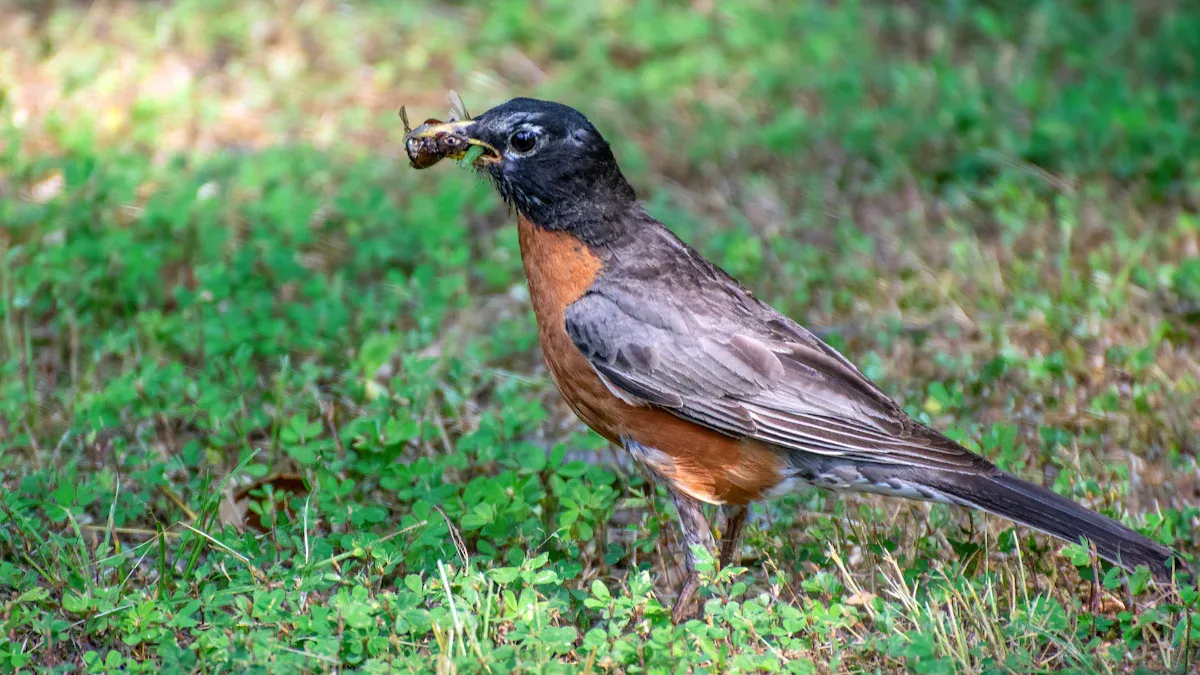
The American Robin often signals spring’s arrival. This familiar bird is one of North America’s most recognizable and beloved songbirds. Its population is vast, with estimates ranging from 310 million to 370 million individuals. This guide explores its distinctive appearance, melodious song, and varied diet. What truly makes this common bird so special?
Key Takeaways
American Robins are common birds. They have a reddish-orange breast and dark head. They are easy to spot.
Robins eat worms and insects. They also eat fruits in winter. Their diet changes with the seasons.
Robins sing beautiful songs. They sing to find mates and protect their homes. They sing early in the morning.
Robins build nests in trees and bushes. They lay blue eggs. Parents care for their young for many weeks.
You can help robins. Keep cats indoors. Do not use bug sprays on your lawn. Plant berry bushes for them.
Quick Facts About the American Robin
The American Robin is a familiar sight across North America. This section provides a quick overview of its essential characteristics.
Scientific Classification
Scientists classify the American Robin within the animal kingdom. It belongs to the thrush family.
Category | Classification |
|---|---|
Kingdom | Animalia |
Phylum | Chordata |
Class | Aves |
Order | Passeriformes |
Family | Turdidae |
Genus | Turdus |
Species | Turdus migratorius |
Key Identifying Features
The American Robin is the largest thrush in North America. It has a long tail and long legs. Its coloration is quite distinctive.
It has a robust build and a wingspan of 12-16 inches.
Its body shape is round.
The breast is a warm reddish-orange, extending to the belly.
The head is dark gray to black, though females have a paler head.
Its back and wings are gray-brown.
A white throat shows black streaks.
A white patch on the lower belly and undertail is visible, especially during flight.
White eye arcs often frame its eyes.
Average Size and Weight
Adult American Robins are medium-sized birds. They show consistent measurements across their population.
Length: 7.9-11.0 inches (20-28 cm)
Weight: 2.7-3.0 ounces (77-85 g)
Lifespan in the Wild
American Robins typically live for about two years in their natural habitat. However, some individuals survive much longer. Robins that live past their first year often reach between five and six years of age. Predators, weather conditions, and food availability all affect their survival rates.
American Robin Appearance
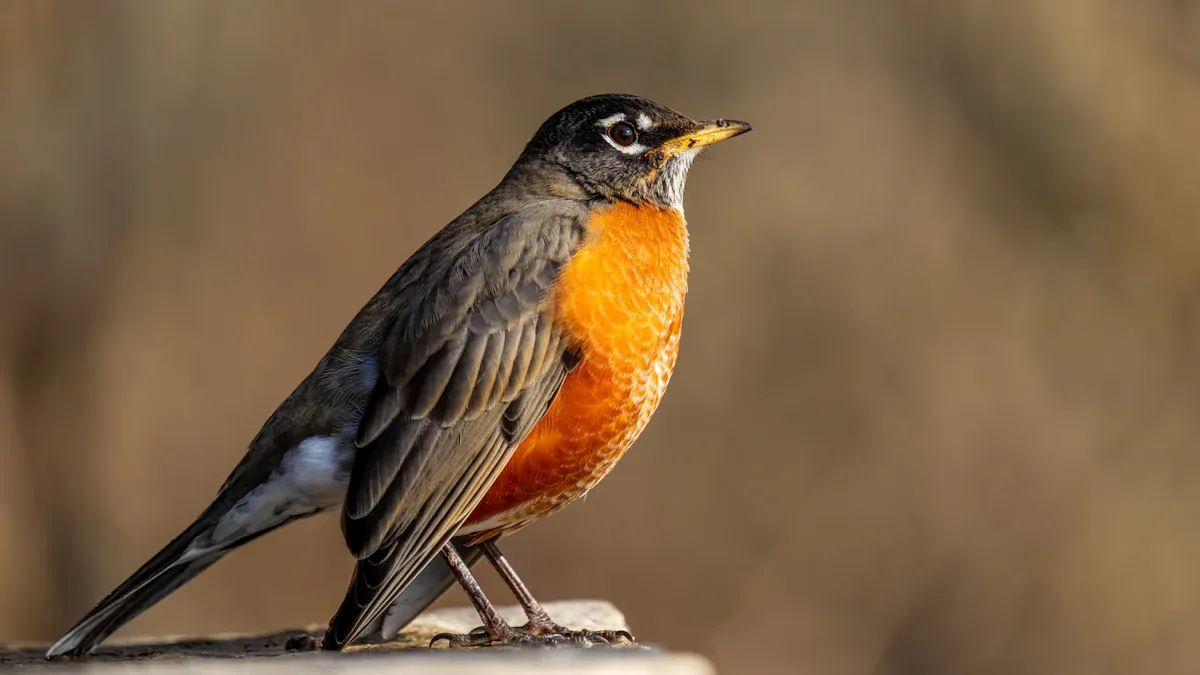
The American Robin has distinct physical characteristics. These features make it easy to identify. It is a medium-sized thrush.
Plumage Color and Markings
Adult American Robins display striking colors. Their backs and wings are gray-brown. A vibrant, rust-colored belly extends from the breast. The head is typically dark gray or black. White markings often frame the eyes, forming noticeable eye arcs. The throat is white with dark streaks. A white patch appears on the lower belly and under the tail. This patch is especially visible when the bird flies.
Size and Shape
The American Robin has a robust and rounded body. It possesses long legs and a long tail. These features help it move quickly on the ground. Its overall shape is typical of a thrush, being sturdy and well-proportioned.
Sexual Dimorphism
Male and female American Robins show clear visual differences. These distinctions help observers tell them apart.
Characteristic | Male American Robin | Female American Robin |
|---|---|---|
Coloration | Brighter in color, black head, bright beak color, distinct eye ring, white throat markings | Feathers look washed out and faded compared to the male’s darker, richer colors |
Camouflage | Less camouflaged | Well camouflaged to be safe from predators during incubation |
Head Color | Black | Less black/faded |
Eye Ring | Distinct | Less distinct/faded |
Throat Markings | White | Less prominent/faded |
Males generally have brighter plumage. Their heads are darker, often black. Females have a paler head and duller body colors. This allows females to blend in better with their surroundings. This camouflage protects them during nesting.
Juvenile Plumage
Young American Robins look different from adults. Their appearance changes as they mature.
Juvenile American Robins are heavily marked with dark spots on their breast.
White streaks are frequently visible along the shaft of the greater coverts and median coverts.
The rectrices (tail feathers) of juvenile American Robins are grayish, fairly narrow, and tapered.
These spotted patterns help young birds camouflage themselves. They lose these spots as they grow into their adult plumage.
Robin Habitat and Range
The American Robin thrives in many different environments. This adaptability helps it remain one of North America’s most common birds.
Preferred Habitats
American Robins show a preference for areas with open ground and scattered trees. They commonly inhabit lawns, gardens, and parks. Open woodlands also provide suitable living spaces. In spring, they seek park-like areas with large shade trees and fields with short grass for nesting and foraging. Other preferred spots include marshes, fields, forest borders, orchards, hedges, and cut-over woods. They frequently visit urban, suburban, and rural yards, including suburban backyards. The American Robin has successfully adapted to human changes in its habitat.
Geographic Distribution
The American Robin has a vast geographic range across North America. You can find this bird year-round almost anywhere south of Canada. Birds that breed from Canada to the north slope of Alaska travel south in the fall. Some robins spend winter as far south as the Southwest, Mexico, and the Gulf Coast. This wide distribution makes the american robin a familiar sight to many people.
Migratory Patterns
Many American Robins undertake seasonal migration. Northern populations move south for the winter. They seek warmer climates and more abundant food sources. This migration allows them to avoid harsh winter conditions. Robins from Canada, for example, migrate to the U.S. during autumn. They return north when spring arrives.
Urban Adaptation
American Robins have shown remarkable success in adapting to urban environments. They frequently build nests in human-made structures like eaves and window ledges. Their ability to find food in gardens and backyards contributes to their presence in cities and towns. This adaptability highlights their resilience in a changing world.
Robin Song and Calls
The American Robin is famous for its beautiful vocalizations. Its songs and calls are a familiar sound across North America. These sounds serve many purposes, from attracting mates to warning others of danger.
Signature Song
The American Robin’s signature song is a rich, warbled composition. Many describe it as sounding like “Cheerily, cheer up, cheer up, cheerily, cheer up.” The bird delivers these phrases quickly, with short pauses between them. Each syllable shows a rise and fall in pitch. The song consists of several steadily repeated phrases, typically four to eight whistled phrases like “cheerily” or “cheer up.” This vocalization is clear-toned, pretty, melodic, and caroling. During the day, the robin sings a familiar song of varied and lilting phrases. As evening approaches, the song changes. From sunset until dark, the robin adds ethereal whispered notes. This creates a song of remarkable grace and complexity.
Alarm and Contact Calls
American Robins use different calls for specific situations. They have distinct alarm and contact calls.
Call Type | Specific Sounds | Purpose |
|---|---|---|
Alarm Calls | Short, sharp, repetitive ‘tick’ or ‘tut-tut’ | To alert others of a nearby predator (e.g., cat or hawk) |
Contact Calls | Soft, gentle chirps | To maintain contact with other robins, especially during foraging |
Alarm calls include ‘tut’ and ‘peek’ for low-grade alerts. A whinny-type call signals higher-grade alarms. A high-pitched ‘seeee’ indicates the highest-grade alarm, often for a predatory hawk or falcon. These calls help other birds survive by warning them of danger. Contact calls, like a mumbled ‘cuck’ or ‘tuk’, allow a pair to track each other while they forage.
Dawn Chorus
The American Robin frequently participates in the dawn chorus. It often sings the opening overture. This early vocalization is common among male birds. They sing to establish breeding territories and attract mates. The chorus begins long before sunrise. Robins are often among the first to start, sometimes around 4 a.m. This signals their presence to other males and potential female partners.
Vocalization Learning
Young American Robins learn their vocalizations by listening to adult birds. They practice different calls and songs as they grow. This learning process helps them develop the full range of sounds needed for communication. They mimic the sounds they hear, gradually perfecting their own repertoire.
American Robin Diet and Feeding
The American Robin has a remarkably flexible diets. Its food choices change with the seasons and what is available. This adaptability helps the american robin thrive in many different environments. Robins often visit bird feeders, especially during colder months.
Primary Food Sources
American Robins eat two main types of food: invertebrates and fruits. Invertebrates make up most of their diet during spring and early summer. They feed these invertebrates primarily to their young. As late autumn and winter arrive, fruits become their main food. Fruits can make up over 90% of their yearly diet in many regions during these times. Common winter fruits include Bird Cherry (Chokecherry), Cranberry, Sumac, Hawthorn, Holly, Honeysuckle, and Juniper. Robins also eat earthworms, insects, and other invertebrates in winter if the ground remains unfrozen. Bird feeders can offer additional food in winter, such as mealworms, cranberries, or raisins.
Earthworms are an important component of the American robin’s diet. In fact, roughly 40 percent of the bird’s diet is comprised of earthworms. Yet only about ten or twenty percent of the robin’s diet is made of earthworms.
These statements show some variation in the estimated percentage of earthworms in their diet. Regardless, earthworms remain a significant food source for them.
Foraging Techniques
American Robins use specific methods to find and catch their prey. They often tilt their heads, then run a short distance, and then stop suddenly. This characteristic head-tilt and run method helps them find earthworms. Robins primarily rely on sight to locate prey. However, they might also use other senses. Some believe robins use their hearing to detect worms, though they are not specialized listening predators like owls. They could also use their sense of touch, feeling for invertebrates as they swipe their bills through the ground.
Seasonal Diet Changes
The robin’s diet changes significantly throughout the year. In early summer, and for young robins, insects make up most of their food. This provides essential protein for growth. As fall and winter approach, robins switch to nuts and fruits. This seasonal shift ensures they always have food available.
Water Needs
American Robins need water for drinking and bathing. They often visit bird baths or puddles. Access to fresh water is crucial for their health, especially during hot weather.
Robin Life Cycle and Reproduction
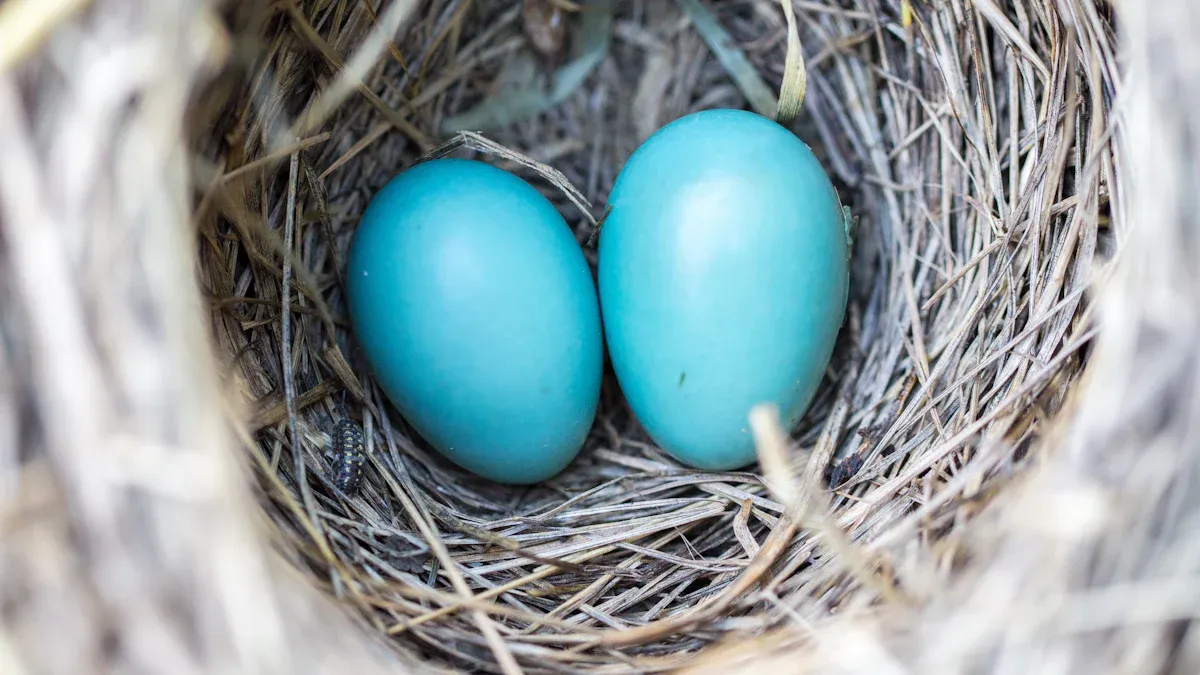
The American Robin’s life cycle involves a fascinating series of events. These events include courtship, nest building, and raising young. Robins show dedication to their offspring.
Courtship and Pair Bonding
Courtship and territorial behaviors are easy to observe. Male robins arrive at the breeding grounds before females. They establish territories through singing. They also fight off rivals. Older and more attractive males often secure the best territories. These territories offer good nesting sites, food, and cover. After about a week of defending their territory, males recognize its boundaries. Any intrusion receives aggression.
Male robins sing a rich caroling song. It sounds like “cheer-up, cheerily, cheer-up, cheerily.” They sing this song early and late in the day during the breeding season. This vocalization helps attract mates. Females are very selective when choosing a mate. Once a female selects a mate, she joins him in defending the territory. She particularly defends against other females. Alpha females are older, wiser, and more aggressive. They prefer males with the best nesting territory, attractive plumage, and a fine song. This ensures strong offspring. A male robin may also perform a tail-lift display. He lowers his head, raises his tail to a 45-degree angle, and flicks it sharply. He makes a “tuk tuk tuk” call during this display. This often happens in situations of potential danger. The wing-droop display occurs before or after aggressive encounters. The robin lowers its wingtips below its tail. It also puffs out its breast feathers.
Nest Building
American Robins build sturdy nests. They use a variety of materials. These materials include dead leaves, fine grass, mud, twigs, roots, hair, paper, and moss. They also use feathers and rootlets. Sometimes they incorporate human debris like ribbons or shreds of plastic bags. Soft mud reinforces the nest.
Robins choose nesting locations for protection from sun, wind, and rain. These locations must be sturdy enough to anchor the nest securely. They also need to be close to a good feeding spot and not too far from water. Predators should find them hard to see. Common locations include lower tree limbs, 5 to 20 feet above the ground. They also build nests in hedges, wood piles, and buildings. You can find nests on logs, lanterns, flower pots, mailboxes, and light fixtures. Gutters and unused cars also serve as nest sites. In western prairies, they may nest on the ground or in thickets. In Alaska, they build nests on buildings or cliffs.
Egg Laying and Incubation
American Robins are one of the earliest bird species to lay eggs. Most robin clutches during their first nesting of a season contain three or four eggs. Occasionally, they lay five eggs. Second and third nestings sometimes have only two eggs. The average clutch size for an American Robin is four eggs.
Incubation typically lasts 12 to 14 days. This period starts from the time the last egg is laid. Eggs usually hatch one day apart in the order they were laid. The female robin does most of the incubation.
Hatchlings and Fledglings
New hatchlings are exhausted, featherless, wet, and blind. They weigh about five grams. They have pink skin, closed black eyes, and a swollen stomach. Their neck is long and skinny. They have a gaping orange-lined mouth. They are largely soundless. Their body temperature is around 103°F. They cannot stand or sit upright. They can only raise their head for a few seconds to accept food.
By day six, nestlings open their eyes. Feather sheaths appear. They can hold their head up for thirty seconds. They can actively grasp objects with their mandibles. Fear begins to appear between day six and day ten. By day eight, the youngster has feathers everywhere, possibly except its stomach. It maintains adult temperatures, around 109°F. It can sit upright. Its food call becomes more vocal.
Parents must address three critical needs for infant robins during their first two weeks. Food is the most time-consuming and exhausting labor. Nestlings consume vast quantities of food. They often eat more than 50% of their own weight in 12 hours. A single nestling can eat about fourteen feet of earthworm in a day. Over the two-week nestling period, parents collect approximately three pounds of food. This amount does not significantly change with the number of young. Smaller broods receive more nourishment per baby. Parents also keep the nest clean. They protect their young from predators and environmental elements.
After approximately 13 days, nestlings are ready to fledge. The more advanced young can leave the nest by day 10 or 11. They have speckled breasts, stubby tails, and a smaller size than adults. For an additional three weeks, both parents continue to care for the chicks on the ground. The female may begin incubating another clutch of eggs. This leaves the male to care solely for the newly fledged chicks.
Broods Per Season
American Robins often raise two or three broods per breeding season. This is especially true in warmer climates. The female starts a new nest and lays eggs while the male cares for the recently fledged young from the previous brood. This strategy maximizes their reproductive success.
Robin Predators and Threats
American Robins face various dangers in their environment. Many animals hunt them. Human activities also pose significant risks.
Avian Predators
Several bird species prey on American Robins. Hawks, owls, and falcons hunt adult robins. Cooper’s Hawks and Sharp-shinned Hawks are especially known for this. Larger birds like crows and magpies are opportunistic feeders. They often eat robin eggs and young birds from nests. Other birds also eat robin eggs and chicks.
Mammalian Predators
Mammals also threaten robins. Domestic cats are a common predator, especially in urban and suburban areas. Raccoons, squirrels, and snakes often raid nests. They eat eggs and young chicks. These animals can climb trees and access nests easily.
Human-Related Threats
Humans have historically impacted robin populations. People hunted American Robins extensively for sport and food from colonial times through the mid-1800s. This led to many robins being shot and trapped for sale. The widespread use of pesticides also caused major problems. In the mid-1950s, pesticides like DDT led to large-scale robin die-offs.
This happened especially when people used them for Dutch elm disease control. Major poisoning events occurred as recently as 1972. An estimated 10,000 robins died from Azodrin in Florida. Other chemicals, such as carbofuran and chlorpyrifos, also cause mortality. Treating lawns with insecticides reduces earthworm numbers.
This removes a key food source for robins. If pesticides eliminate most earthworms, robins may stop nesting in that area. DDT caused significant robin mortality during spring migration. Robins accumulated DDT in their fatty tissues from eating contaminated worms. This chemical released into their bloodstream during fat metabolism, causing poisoning. The ban of DDT in the U.S. largely eliminated this threat. Increasing urbanization also links to more nest predation and nest failure. Accidents like flying into windows or being hit by cars also kill robins. Electrocution is another danger.
Nest Parasitism
Some birds lay their eggs in other birds’ nests. This is called nest parasitism. Brown-headed Cowbirds sometimes parasitize robin nests. The robin parents then raise the cowbird chicks. This can reduce the survival of the robin’s own young.
Conservation Status
The American Robin remains a common and widespread bird. Its conservation status reflects its ability to adapt to various environments.
Current Status
The American Robin holds a secure conservation status. This indicates a healthy population across its range.
Category | Status |
|---|---|
Global | G5 (Secure) |
State | S4 (Apparently Secure) |
Federal | Not Listed |
State Protection | Not Listed |
This classification means the species is not currently at risk. It faces no immediate threats to its survival.
Population Trends
American Robin populations recovered well after the Migratory Bird Treaty Act of 1918. This law protected many bird species. Despite this recovery, recent analyses show some declines. These declines are particularly noticeable in the eastern U.S. and eastern Canada between 2012 and 2022. Even with these regional drops, the American Robin is still North America’s most abundant songbird. Experts estimate its population at 370 million individuals.
Environmental Factors
Global warming has allowed the American Robin’s breeding range to expand northward. It now reaches into parts of the Canadian and Alaskan tundra. However, the species still faces threats. Pesticide poisoning remains a concern. Substances like neonicotinoids, chlorpyrifos, and glyphosate harm robins. Outdoor cats also pose a significant danger. Collisions with windows, towers, and vehicles cause many robin deaths.
Backyard Conservation
Individuals can help support American Robin populations. Keeping domestic cats indoors protects robins from predation. Avoid using insecticides on lawns. Instead, spot-spray weed killers. This reduces chemical exposure for robins. Planting berry-producing trees and bushes provides food. Cultivating trees and shrubs offers good cover for nesting. Setting out bird baths gives robins access to water. Offer specific foods like berries, chopped apples, and mealworms in feeders. Robins do not eat seeds. Leaving dead leaves under trees and shrubs provides foraging insects. This is especially helpful in colder months. Do not prune back dead vegetation like vines and stalks. These provide natural cover and nesting material. Also, do not pick berry bushes or fruit trees bare. These fruits are vital food sources for migrating or overwintering robins. Planting native fruit trees and shrubs also provides natural food sources in your backyards.
Fun Facts About Robins
The American Robin holds a special place in many people’s hearts. This common bird has several interesting traits and roles.
Spring Connection
The American Robin often symbolizes spring’s arrival. Its return brings a sense of renewal and hope for warmer months. The robin’s melodious song, often sounding like “cheerily, cheer up, cheerily,” becomes more frequent as winter ends. This increasing vocalization signals spring’s imminent arrival. While many robins migrate south, some remain year-round residents. Their consistent presence, or early return, connects people to the changing seasons. They cope with cold by fluffing feathers and roosting together. Their increased activity and songs become noticeable as temperatures rise.
Unique Sleeping Habits
American Robins have interesting sleeping patterns. They often gather in large communal roosts during non-breeding seasons. Hundreds or even thousands of robins may sleep together in trees. This behavior offers safety in numbers from predators.
State Bird Status
The American Robin is a beloved bird across the United States. It holds the honor of being the state bird for three states. These states are Connecticut, Michigan, and Wisconsin. Early European settlers named the American Robin after the European Robin. They felt homesick and saw a resemblance in the birds.
Ecosystem Role
American Robins play vital roles in their environment. They serve as a food source for many predators. Cooper’s hawks, sharp-shinned hawks, and large snakes hunt adult robins. Reptiles, mammals, and other birds eat their eggs and nestlings. Robins also help control insect populations. They consume beetles and other insects that can harm crops and gardens. Furthermore, robins aid in seed dispersal. They eat fruits and then spread the seeds through their droppings. This helps new plants grow and maintains plant diversity. Their foraging also disturbs the soil, improving its structure. Their droppings contribute nutrients, enhancing soil fertility.
The American Robin is a familiar yet fascinating bird. This guide explored its unique features and behaviors. Robins play a vital role in local ecosystems. They also symbolize nature’s resilience. Observe these birds in your environment. Appreciate their songs, foraging, and daily activities. The American Robin brings simple joy and a strong connection to nature.
FAQ
What do American Robins eat?
American Robins primarily eat invertebrates like earthworms and insects. They also consume fruits and berries, especially in fall and winter. Their diet changes with the seasons.
Do American Robins migrate?
Many American Robins migrate south for winter. Northern populations move to warmer climates. Some robins, however, stay in their breeding areas year-round if food is available.
Why do robins sing so early in the morning?
Male robins sing early to establish their breeding territories. They also attract mates. Their song is a familiar part of the dawn chorus.
How long do American Robins live?
American Robins typically live about two years in the wild. Some individuals can survive much longer. Predators and environmental conditions affect their lifespan.
What color are baby robins?
Baby robins have spotted breasts. These spots help them camouflage. They lose these spots as they grow into adult plumage.
