


High-altitude and alpine environments present Earth’s most extreme conditions. These challenging landscapes feature thin air, intense cold, and strong winds. Yet, birds are ultimate survivors in these alpine regions. They show remarkable adaptations. Their bodies and behaviors allow them to conquer these harsh alpine places. This ingenuity helps them thrive where other life struggles. Globally, 1,310 alpine breeding avian species exist. This represents 12.0% of all extant species. Understanding these high-altitude species reveals their unique challenges. It also shows the importance of their conservation, especially for species like the chough.
Key Takeaways
High-altitude birds live in very tough places. These places have thin air, cold weather, and strong winds.
These birds have special bodies and behaviors. They can breathe well, stay warm, and find food in harsh mountains.
Birds like the alpine chough show amazing ways to live in these high places. They have strong hearts and smart ways to find food.
Climate change and people’s actions hurt these birds. Their homes are changing, and they need our help to survive.
We must protect these unique birds and their mountain homes. This helps them keep living in these special places.
Alpine Regions and Avian Species
High-Altitude Environment Characteristics
High-altitude and alpine environments present unique challenges for life. These regions feature low oxygen levels. For example, at 3,000 meters, atmospheric pressure drops significantly, often around 68.1 kPa. This means less oxygen is available for breathing. Extreme cold also defines these areas. Winter temperatures in alpine habitats are consistently below freezing. In the Himalayan Alpine, the average winter temperature is about 33° Fahrenheit, with night temperatures almost always below freezing. Strong winds sweep across these landscapes, adding to the chill. High UV radiation is another factor. Birds in these alpine habitats face increased UV exposure, which can cause DNA damage and oxidative stress. However, birds like the alpine chough have adaptations such as melanin-rich feathers to block UV rays.
Alpine Habitat Distribution
Alpine habitats exist across the globe. They include the towering Himalayas, the vast Andes, and the rugged Rockies. Other significant high-elevation alpine habitats are found in the European Alps, the Caucasus Mountains, and parts of Africa. These diverse habitats share common harsh conditions. The distribution of these alpine regions creates isolated pockets where specialized avian species thrive. The alpine chough, for instance, inhabits many of these mountain ranges.
Challenges for Birds
The conditions in alpine habitats pose significant challenges for birds. Low oxygen levels lead to metabolic alterations and muscle loss. Birds also experience insulin resistance and need high oxygen flux for thermogenesis in cold temperatures. Oxidative stress, indicated by elevated malondialdehyde (MDA) levels, also increases in low-oxygen environments. The extreme cold demands efficient thermoregulation. Strong winds make flight difficult and increase energy expenditure. High UV radiation requires protective mechanisms. Despite these difficulties, many avian species, including the resilient alpine chough, have evolved remarkable ways to survive and even flourish in these demanding alpine environments. The chough demonstrates incredible adaptability.
Physiological Adaptations
High-altitude avian species possess remarkable biological mechanisms. These adaptations allow them to survive in extreme environments. They have evolved specialized systems for breathing, blood circulation, and body temperature control.
Respiratory System
Birds living in high-altitude regions have highly efficient respiratory systems. Their lungs work differently from mammals. Avian lungs use a unidirectional cross-current gas exchange system. This system is more effective than mammalian breathing, especially when oxygen is scarce. Birds also have a larger surface area in their lungs for gas exchange. The barrier where gases pass into the blood is very thin, about 2.5 times thinner than in mammals. This thin barrier remains strong. These features help birds take in more oxygen from the thin air.
Some birds show even greater specialization. The Andean goose, for example, has lungs exceptionally good at gas exchange. Its lungs have more blood vessels and a larger respiratory surface area for its body size. The infundibulae, usually without blood vessels in other birds, are well-vascularized in the Andean goose. This intense vascularization increases blood volume in the lungs. It also expands the surface area for gas exchange. This helps the bird extract more oxygen when oxygen diffusion is limited. High-altitude birds generally possess larger lungs, which further aids oxygen intake.
Hemoglobin, a protein in red blood cells, also plays a crucial role. High-altitude avian species consistently show a higher ability for hemoglobin to bind oxygen. This is true for both main and minor types of hemoglobin. This increased binding ability comes from the hemoglobin itself, not from other factors like chloride ions. Studies on birds like the bar-headed goose confirm this important adaptation. The alpine chough, a common sight in high mountains, also benefits from such respiratory efficiency. This small alpine bird thrives due to its specialized breathing.
Cardiovascular System
The cardiovascular system of high-altitude birds also shows unique adaptations. These birds often have larger hearts. A larger heart can pump more blood with each beat. This helps deliver oxygen more effectively throughout the body. Birds at higher altitudes do not necessarily have more red blood cells than lowland birds. However, they do have higher levels of hemoglobin. Hemoglobin carries oxygen in the blood. Higher hemoglobin levels mean the blood can carry more oxygen. This is a key way these birds cope with low oxygen. The alpine chough, like other alpine birds, relies on a strong heart and efficient blood to navigate its challenging home.
Thermoregulation
Keeping warm in extreme cold is vital for survival. High-altitude birds use several strategies for thermoregulation. They have very dense plumage. This thick layer of feathers traps air close to their bodies, providing excellent insulation. When temperatures drop further, birds shiver. Shivering produces heat through muscle contractions.
Some birds also use a clever system called countercurrent heat exchange. They use this system in their legs and feet. Arteries carrying warm blood to the feet run very close to veins carrying cold blood back to the body. The warm arterial blood transfers its heat to the cold venous blood. This warms the venous blood before it returns to the body. It also cools the arterial blood before it reaches the feet. This minimizes heat loss from the extremities. The alpine chough, a hardy alpine resident, uses these methods to maintain its body temperature. This small chough can often be seen foraging in snowy conditions, a testament to its effective thermoregulation. These birds, including the alpine chough, demonstrate incredible resilience in their cold, alpine world.
Behavioral Adaptations
Birds living in high-altitude and alpine environments show unique behaviors. These actions help them survive the harsh conditions. They find food, raise young, move across landscapes, and interact with each other in special ways.
Foraging Strategies
Finding food in scarce alpine environments requires clever strategies. Birds often become very selective about where they feed, especially during snowstorms. They may search for food during breaks in bad weather. Some birds use thick foliage to find hidden seeds or insects. They might also remember successful foraging spots from past winters. Crows and owls use their sharp eyesight to scavenge. They can dig through layers of snow to find food. Canada geese and ducks look for open water sources. These spots are crucial feeding grounds for them.
During the melting period, high-altitude birds adapt their foraging. Northern wheatears use the edges of snow fields. These areas provide accessible habitats with many prey items. White-winged snowfinches specifically eat Tipulidae larvae. They find these larvae at the retreating snow front. Ring ouzels move up and down mountains throughout the season. They track suitable foraging habitats, mainly looking for earthworms. Water pipits also move within the season. They avoid dense vegetation as it grows, seeking easier foraging areas. The alpine chough, or Pyrrhocorax graculus, often forages in groups. This chough searches for insects and scraps around human settlements or on exposed rocky slopes. This opportunistic feeding helps the alpine chough thrive.
Nesting and Breeding
Nesting and breeding in harsh alpine climates demand specific choices. Birds in exposed alpine environments often choose south-facing slopes and cliffs for nesting. Examples include the Sclater’s monal and Himalayan snowcock. These sites help them avoid bad weather and freezing temperatures. They get more sun exposure, which makes them warmer. This warmth is good for embryo development. It also reduces the challenge of keeping hatchlings warm. These locations often become snow-free earlier. This gives birds earlier breeding opportunities. Cliff nesting offers some protection from predators on the ground. It is a key strategy for better breeding success.
High-altitude birds also show flexibility in their breeding cycles. This helps them cope with variable alpine conditions. White-winged snowfinches adjust when they start and how long their breeding season lasts. They base this on factors like temperature, rain, and snow cover. Warmer temperatures before breeding and less rain in April lead to an earlier start. However, warmer temperatures later in the breeding season can shorten the overall breeding period. These birds may also raise two broods or re-nest if needed. This helps them have more young within the short summer. The alpine chough, Pyrrhocorax graculus, also adapts its breeding to local conditions. Its breeding biology is finely tuned to the short alpine summer. To stay cool as temperatures rise, snowfinches might move to higher elevations. The alpine chough often nests in rock crevices or caves, protecting its young from the elements.
Migration Patterns
Many high-altitude birds show distinct migration patterns. Some move long distances, while others make altitudinal movements. These movements help them find food and avoid extreme weather. Birds can fly at incredible heights during migration. Whooping swans have flown up to 27,000 feet above sea level. Mallards have records of flying at 21,000 feet. Bar-tailed godwits can reach 20,000 feet. A great snipe flew at about 8,700 meters. This is the highest altitude ever recorded for an identified migratory bird. Bar-headed geese are famous for their high-altitude flights. They have flown over 7,000 meters (23,000 feet). One bar-headed goose was tracked flying at 24,000 feet.
Some avian species perform altitudinal migration. This means they move up and down mountains. A neotropical bird species shows these patterns. Individuals change their movements based on local weather. The Rufous-gorgeted Flycatcher (Ficedula strophiata) is another example. It moves up the mountain when temperatures reach 11–12 °C at 1800 m. It moves down when temperatures reach 12–13 °C at 3000 m. Researchers identified 20 passerine bird species as altitudinal migrants on Mt. Gongga’s eastern slope. Eight of these showed a typical pattern: upward during breeding and downward during non-breeding. The alpine chough, Pyrrhocorax graculus, often makes short altitudinal movements. This chough moves to lower elevations in winter to find food.
Social Behaviors
Group dynamics offer many benefits for birds in harsh alpine conditions. Cooperation reduces uncertainty for individuals. This is very helpful in tough environments. Mathematical models suggest that only birds that forage cooperatively can survive the harshest conditions. Cooperation links to environmental difficulty in many species, including birds. When conditions are harsh, cooperation promotes strong groups. Birds become more tolerant of each other. They develop social bonds for helping each other.
Harsh conditions can lead to changes in social structure. Birds may become more cooperative. They show less aggression towards rivals. This increases their dependence on each other. Groups can also adjust their size. They split into smaller units when food is scarce. They might become more tolerant of other groups to use larger areas. Groups may come together when food is scarce. This offers protection from predators. It also helps them share information about where to find food. For example, larger groups of superb starlings had better adult survival. Female survival increased with group size in all conditions. Male survival increased with group size only in wet years. Larger groups mainly help by reducing predation. They do not necessarily improve food access or reduce stress. The alpine chough, Pyrrhocorax graculus, often forms large flocks. This social behavior helps the chough find food and stay safe in its challenging alpine home.
Iconic High-Altitude Birds
High-altitude environments host many remarkable avian species. These birds show incredible adaptations for life in the mountains. They thrive in some of the world’s most challenging habitats.
Alpine Chough
The alpine chough, Pyrrhocorax graculus, is a common sight in European mountains. This black-feathered chough is highly adapted to its alpine home. The alpine chough often forages at very high elevations. Its breeding habitats vary significantly by region.
Region | Breeding Elevation Range (meters) |
|---|---|
Europe | 1,260 – 2,880 |
Morocco | 2,880 – 3,900 |
Himalayas | 3,500 – 5,000 |
The alpine chough has been recorded nesting at 6,500 meters (21,300 ft). People have observed this chough following mountaineers on Mount Everest at 8,200 meters (26,900 ft). This small alpine bird, the pyrrhocorax graculus, truly embodies high-altitude living. The alpine chough is distinct from the yellow-billed chough, another mountain dweller. This chough species shows great resilience.
Himalayan Monal
The Himalayan monal, Lophophorus impejanus, is a stunning pheasant. It lives in the Himalayas. Male monals have spectacular iridescent plumage. Their feathers show metallic green, red, and blue colors. They also have a long green metallic crest. Females have duller, streaky brown bodies. They have a pale blue eye patch and a white throat. Young males look like females at first. Their vibrant colors develop over two years. This helps them attract mates for breeding.
Andean Condor
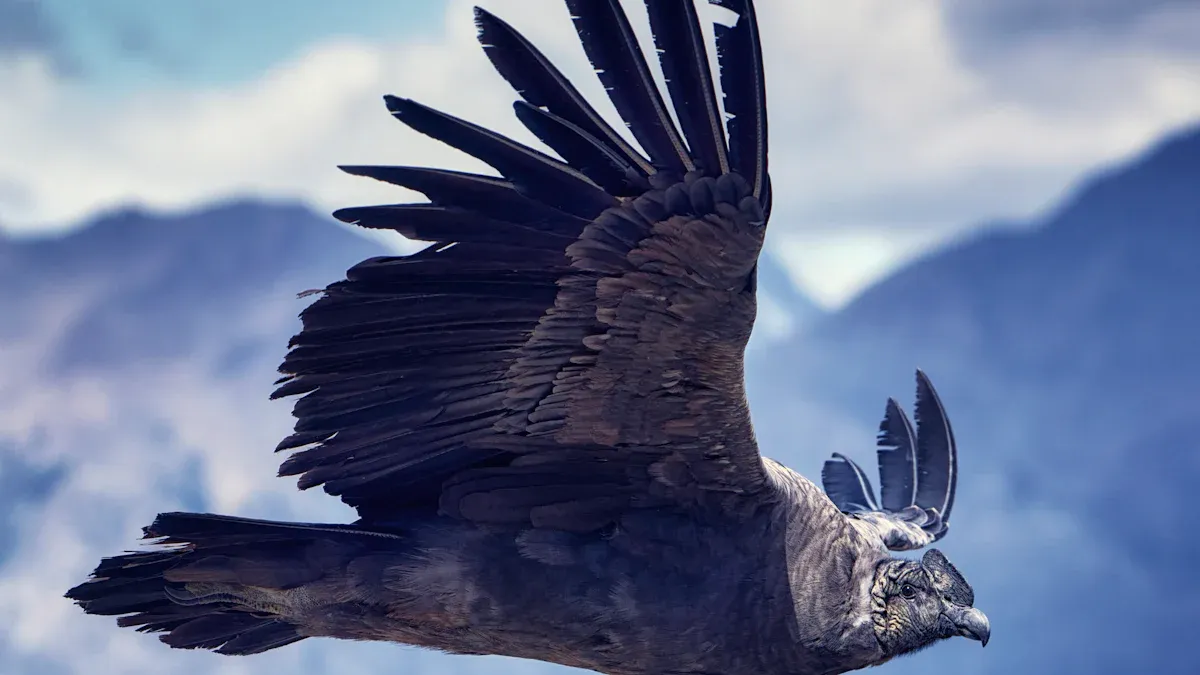
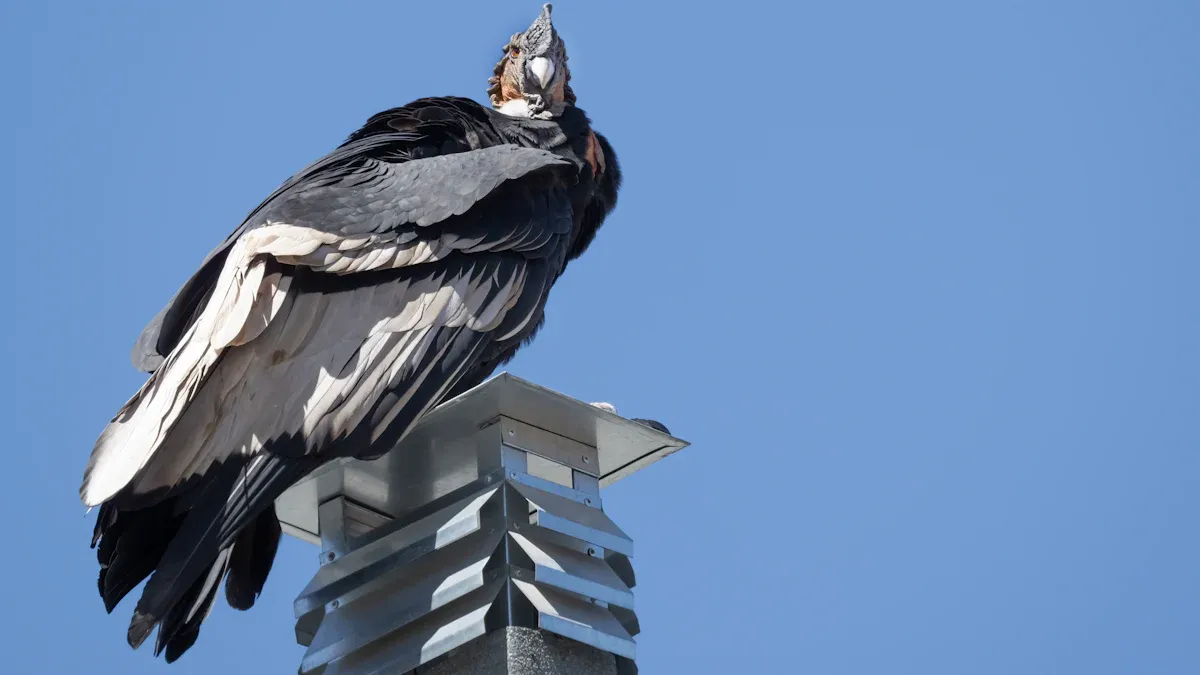
The Andean condor, Vultur gryphus, is a giant among flying birds. It lives in the Andes Mountains. This condor is the largest flying land bird in the Americas. Its wingspan can reach up to 10.5 feet. This massive wingspan allows it to soar effortlessly on mountain air currents.
Bar-Headed Goose
The bar-headed goose, Anser indicus, is famous for its extreme high-altitude migration. These birds fly over the Himalayas. They undertake one of the most challenging migrations on Earth. A 2012 study tracked one bar-headed goose reaching 7,290 meters (23,920 feet). This was the highest altitude directly tracked for these birds.
Lammergeier
The lammergeier, Gypaetus barbatus, is also known as the ‘bone-breaker’ vulture. It lives in mountains across Eurasia and Africa. This unique bird has a specialized diet. Its diet consists of 90% bone. Lammergeiers prefer fatty bones. These bones have high oleic acid content. This helps them optimize foraging time and energy use.
Threats and Conservation
High-altitude avian species face significant threats. These threats endanger their survival in fragile alpine ecosystems. Climate change and human activities are the primary threats.
Climate Change Impacts
Climate change profoundly impacts high-altitude birds. It causes habitat shifts and alters food sources. Glacier melt also affects these birds. Earlier snowmelt creates a time gap between snowmelt and hatching dates. This leads to worse breeding conditions for snowfinches at lower elevations. Higher temperatures change plant life. They increase growth speed and dry out alpine meadows. This reduces food availability for adult birds. It also makes them use more energy. Extreme weather events, like heavy snowfall or sudden temperature drops, hurt breeding. These events limit food access or force birds to travel farther for food. A mismatch between broods and peak food availability at low elevations affects later life stages. This includes breeding success and parental survival. These factors contribute to population decline.
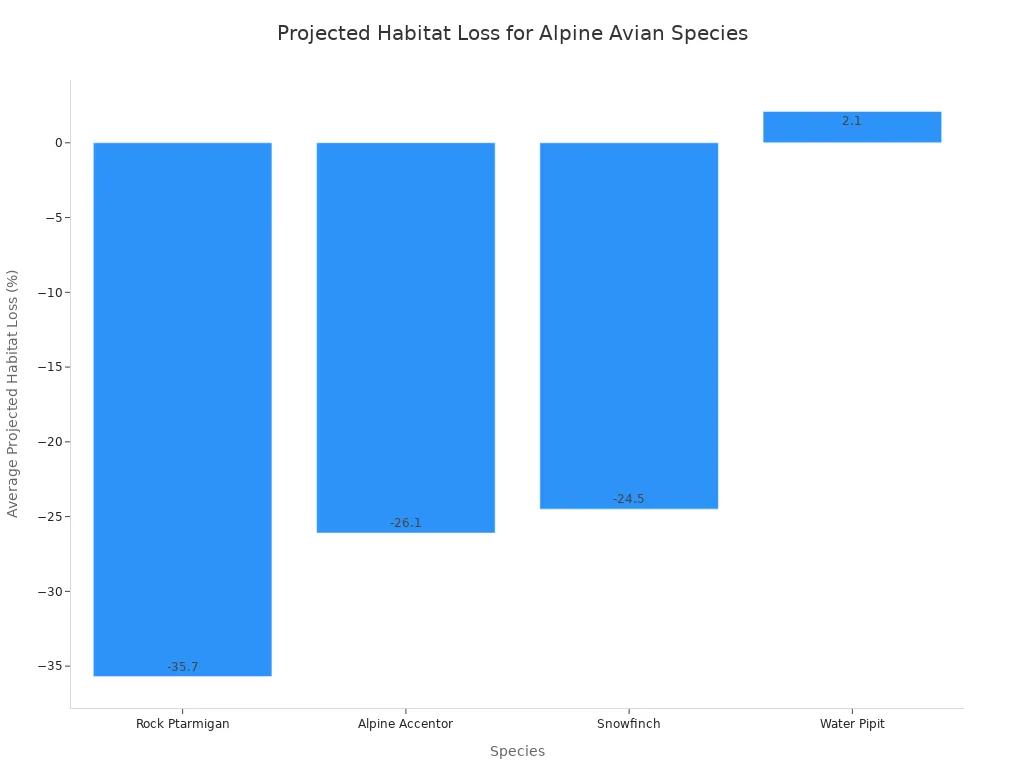
Climate change forces many species to higher elevations. This reduces their available habitat. The projected habitat loss for some alpine avian species is significant.
Species | Projected Habitat Loss Range (2041–2070, SSP585) | Average Projected Habitat Loss |
|---|---|---|
Rock Ptarmigan | 24% to 59% | -35.7% |
Alpine Accentor | 17% to 43% | -26.1% |
Snowfinch | 18% to 39% | -24.5% |
Water Pipit | -9% to +7% | +2.1% |
The chough, a resilient alpine bird, also faces these challenges. Its habitat may shift, impacting its foraging grounds.
Human Disturbances
Human activities also pose threats to high-altitude avian species. Outdoor recreation, such as hiking and skiing, reduces bird numbers. It also lowers species richness in avian populations. Winter sports specifically affect key indicator species in alpine ecosystems. Infrastructure development, like roads and buildings, fragments habitats. Pollution from human activities further degrades these environments. These disturbances stress birds and disrupt their natural behaviors. The chough, often found near human settlements, can be particularly vulnerable to these interactions.
Conservation Efforts
Conservation efforts are crucial for protecting these unique birds. Many initiatives focus on creating protected areas. These areas safeguard critical habitats. Researchers monitor populations to understand threats better. They also develop strategies to mitigate climate change impacts. Specific conservation actions target species of greatest conservation need. These actions include habitat restoration and reducing human disturbance. Educating the public about the importance of these ecosystems also helps. Protecting the chough and other alpine birds requires ongoing dedication and coordinated conservation actions.
High-altitude and alpine birds display extraordinary adaptations and resilience. They thrive in Earth’s harshest environments. These unique ecosystems are vital, and the chough, for example, plays a crucial role within them. However, these birds face ongoing threats, especially from climate change. We need urgent conservation efforts to protect them. The chough, a symbol of alpine life, inspires us with its evolutionary success. This chough, like other alpine species, demonstrates remarkable survival. The chough’s presence reminds us of nature’s wonder. We must ensure the chough continues to soar. The chough’s future depends on our actions. The chough is a testament to resilience.
FAQ
How do high-altitude birds breathe in thin air?
Birds in high mountains have very efficient respiratory systems. They possess larger lungs and specialized hemoglobin. This hemoglobin binds oxygen more effectively. Their unique breathing system extracts more oxygen from the scarce air.
How do these birds stay warm in extreme cold?
High-altitude birds use several methods to stay warm. They have dense feathers for insulation. They shiver to generate heat. Some birds also use a countercurrent heat exchange system in their legs. This minimizes heat loss from their extremities.
What do high-altitude birds eat?
These birds have diverse diets. They often eat insects, seeds, and small rodents. Some, like the Lammergeier, specialize in bones. Many birds are opportunistic feeders. They adapt their diet based on available food sources in their harsh environments.
What makes high-altitude birds special?
High-altitude birds are special due to their extreme adaptations. They survive low oxygen, intense cold, and strong winds. Their physiological and behavioral traits allow them to thrive where other animals struggle. They show remarkable resilience.
Are high-altitude birds facing threats?
Yes, high-altitude birds face significant threats. Climate change alters their habitats and food sources. Human disturbances, like tourism and development, also impact them. Conservation efforts are crucial to protect these unique species.