


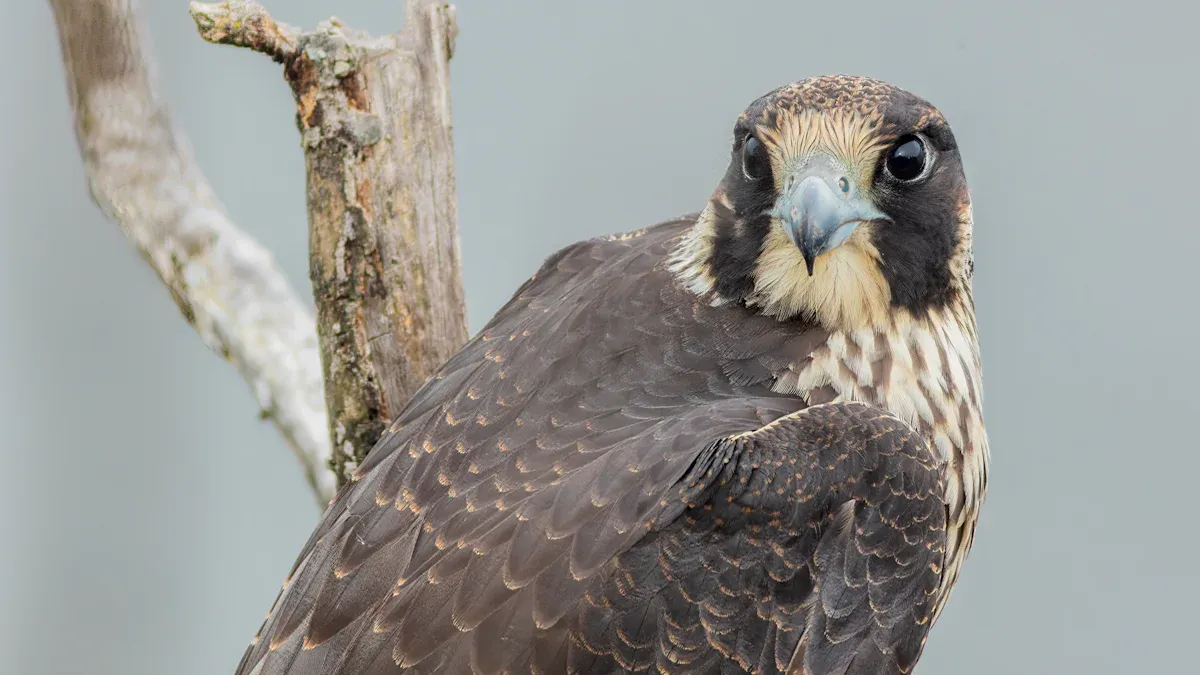
Birds of prey, also known as raptors, are formidable hunters. They play a crucial ecological role in New York State. These magnificent birds help maintain balance in natural ecosystems. New York hosts a rich diversity of raptors, including 16 distinct species. These birds in New York include powerful eagles, swift falcons, and silent owls. You can also find various hawks and the majestic osprey. Observing these birds of prey in New York offers an exciting experience. This guide helps readers with identifying raptors in New York. It promotes understanding and appreciation for these remarkable common birds of prey. It covers their identification.
Key Takeaways
New York State has many different birds of prey, like eagles, hawks, and owls. These birds are important for keeping nature balanced.
Raptors have special body parts for hunting. They have sharp claws, hooked beaks, and very good eyesight to catch their food.
Different raptors hunt in different ways. Some are fast, some are strong, and some hunt at night.
Conservation efforts have helped many raptors, like the Bald Eagle and Peregrine Falcon, recover in New York. This shows that protecting nature works.
When watching raptors, always stay far away and do not disturb them. This helps keep them safe and healthy.
New York Raptors
What Defines a Raptor?
Birds of prey are predatory birds. They hunt and feed on other animals. These birds possess specific physical traits. They have sharp talons for grasping prey. Most raptors show three talons forward and one back. A hooked beak helps them kill and eat their food. This beak also aids in preening and feeding young. Keen eyesight is another defining feature. Raptors spot prey from great distances. They often circle high or perch on tall trees.
Role of Raptors in NY Ecosystems
Raptors play a vital role in New York’s ecosystems. They act as apex predators. These birds control populations of smaller animals. Red-shouldered Hawks, for example, eat small mammals, snakes, and amphibians. American Kestrels hunt insects, rodents, and small birds. Bald Eagles and Ospreys primarily consume fish. These birds of prey in New York help manage common urban pests like Rock Pigeons and Norway Rats. Their presence indicates a healthy environment across New York.
Common Traits of Birds of Prey
Birds of prey share many hunting adaptations. They have exceptional eyesight. Raptors can spot medium-sized prey from over a mile away. Their forward-facing eyes provide binocular vision. This helps them judge distance to prey. Owls can turn their heads up to 270 degrees. This compensates for their fixed eyes. Many raptors see ultraviolet light. This helps them detect urine trails from prey. Diurnal raptors have good color vision. Owls hunt well in low light.
Owls also have silent flight. Fringed feathers deaden flight noise. This allows them to surprise prey. Their enhanced hearing helps them locate hidden animals. Falcons have a black ‘mask’ around their eyes. This reduces glare. Raptors generally have sharp, hook-shaped beaks for tearing flesh. Peregrine falcons have special nostril adaptations. These help them breathe during high-speed dives. Talons are extremely sharp and non-retractable. They seize and tear prey. Red-tailed hawks use talons for a death blow. Ospreys have reversible front toes. This helps them grasp slippery fish. Birds have lightweight bones. This enhances their flying abilities. Owls have flexible necks. They move their heads horizontally 270 degrees.
Raptors show diverse hunting styles. Accipiter hawks use agility. They navigate dense foliage to ambush prey. Eagles show great power. Golden Eagles hunt large prey. Falcons are known for speed. Peregrine Falcons are the fastest flying birds. They use a high-speed ‘stoop’ dive. Buteos, like Red-tailed Hawks, have excellent vision. They spot small mammals from perches. Northern Harriers use owl-like facial disks. These collect sounds of prey. Turkey Vultures have a strong sense of smell. They locate carrion.
Hawks and Falcons in New York
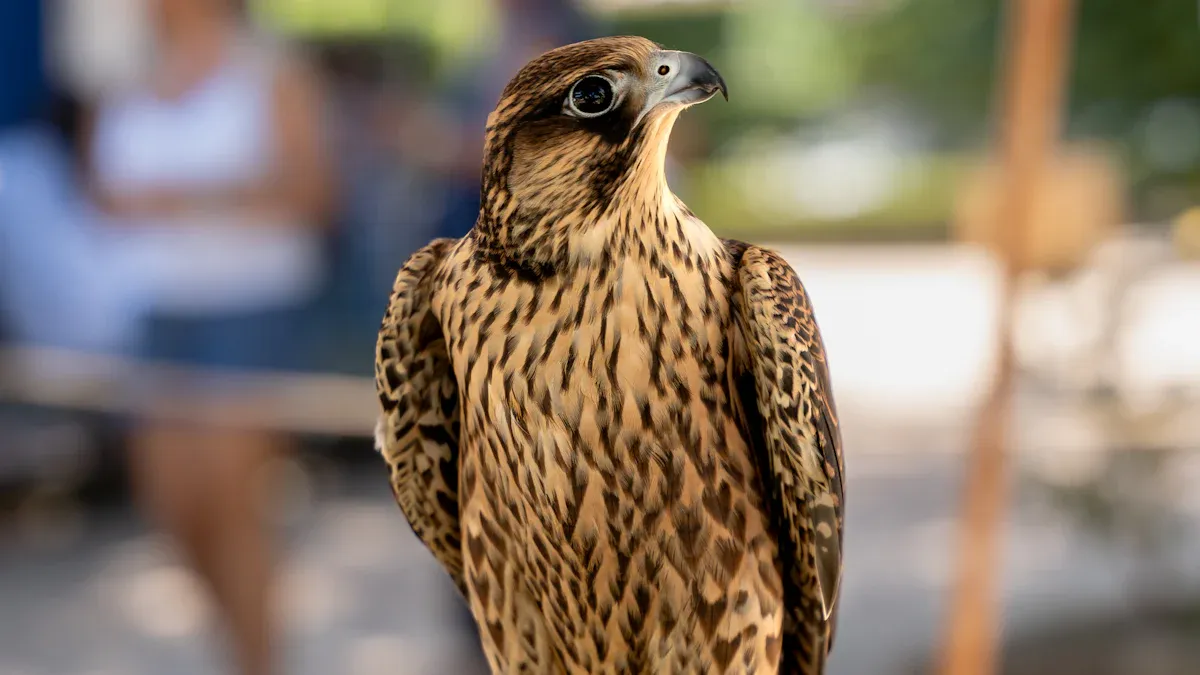
Hawks and falcons are sleek and agile hunters. They are a common sight in New York. These birds are known for their speed and precision.
Red-tailed Hawk
The Red-tailed Hawk is one of the most common hawks in New York. People often see this large hawk soaring high above open fields or perched on telephone poles. It has a sturdy build. Many describe it as “beefy.” This hawk is a Buteo, a type of broad-winged hawk.
Identification:
Tail Color: Most adult Red-tailed Hawks have a rusty-red upperside. Juvenile Red-tails often have brown tails crossed by darker horizontal bars. Adult birds have a well-defined red tail. Immature birds have a mostly brown tail.
Build: It looks hefty and sturdy.
Shoulder Markings: A white V forms from the larger shoulder feathers.
Bib: It may have a dark belly band. It will never have a dark bib-like feature.
Throat: It has a white throat.
Belly: It has a dark belly band and a white lower belly.
Back Markings: From the back, the bird appears to have ‘suspenders’.
Call: It makes a long, high-pitched, rasping kreeeer. It usually makes this sound while soaring.
Red-tailed Hawks live in various habitats. These include forests, deserts, and urban areas. They eat small mammals like rodents and rabbits. They also hunt birds and reptiles.
Cooper’s Hawk
The Cooper’s Hawk is a medium-sized hawk. It is known for its agility in flight. This hawk often hunts in wooded areas. It is one of the types of hawks that surprises its prey.
Habitat: Cooper’s Hawks prefer mature forests. They also live in open woodlands and wood edges. You can find them in river groves. They inhabit coniferous, deciduous, and mixed woods. These areas typically have tall trees and nearby openings. They also live in trees along rivers through open country. In suburbs and cities, they use tall trees for nest sites. In winter, especially in the west, they can be in fairly open country. They also like riparian areas and suburban orchards.
Hunting: Cooper’s Hawks are skilled hunters. They often use a lot of jumping to catch prey. They primarily eat small to medium-sized birds. They also hunt small mammals.
Red-shouldered Hawk
The Red-shouldered Hawk is a beautiful hawk. It has striking reddish-brown shoulders. This hawk prefers moist woodlands. It often lives near rivers or swamps.
Vocalizations: Red-shouldered Hawks are very vocal. They make noise when disturbed at their nests. This is especially true if a Great Horned Owl is nearby. They are also noisy during courtship. During one courtship display, a pair soars in broad circles. They give a series of three to four screaming “kee-aah” calls. A loud “kee-aah” call, with the second note descending in pitch, is often repeated. Hawks use this call to claim their territory and when alarmed. Female Red-shouldered Hawks may produce a soft “kee” call when on the nest.
Red-shouldered Hawks eat small mammals, amphibians, and reptiles. They are one of the species of hawks that help control pest populations.
Northern Harrier
The Northern Harrier is a distinctive hawk. It has an owl-like face and a white rump patch. This hawk flies low over open fields. It hunts by sound and sight.
Hunting Technique: The Northern Harrier commonly hunts by zigzagging low over the ground. It pounces quickly when it finds prey. It uses a unique disc of facial feathers. This gives it an owlish appearance. This likely helps it hunt by ear. This is especially useful in areas with tall grass. This ‘harrying’ pattern of flight, with wings held in a bold dihedral, is characteristic of its hunting approach. Northern Harriers are known for hovering motionless in mid-air over fields. They scan for prey. Their wings move in a circular motion to create lift and maintain position. This allows them to keep a close eye on prey. They strike opportunistically. During hovering, they are agile. They use their keen sense of hearing to locate small mammals rustling in the grass below. The Northern Harrier employs a unique hunting style by coursing. It zigzags slowly across open areas, often 10 to 30 feet above the ground. This method uses its exceptional hearing. A facial disc and large ear openings aid this. This helps it detect prey hidden by vegetation. Its distinctive build, with long wings, legs, and tail, allows for slow, buoyant flight. This enables it to drop instantly onto detected prey. This cruise-listen-pounce technique is standard for catching rodents. The harrier is also versatile. It can snatch birds in flight. It pounces on frogs or insects from a hover. It can even still-hunt like other raptors.
Northern Harriers primarily eat small mammals and birds. They are a fascinating sight in the open landscapes of New York.
American Kestrel
The American Kestrel is the smallest falcon in New York. It is a colorful and agile hunter. People often see it hovering over fields. It has a distinctive head pattern.
Identification: American Kestrels have rusty backs and tails. Males have blue-gray wings. Females have rusty wings. Both sexes have two black vertical stripes on their faces. They also have a black spot on the back of their heads.
American Kestrels eat large insects, small mammals, and small birds. They often perch on power lines or tall trees. They then dive to catch their prey.
Peregrine Falcon
The Peregrine Falcon is a powerful and swift falcon. It is famous for its incredible speed. This bird is a true marvel of the sky.
Speed: The Peregrine Falcon is the fastest bird in the world. It reaches incredible speeds during its hunting dives. Ken Franklin recorded a falcon stooping at a top speed of 389 km/h (242 mph) in 2005. The fastest dive by a bird is that of a peregrine falcon. It is estimated at approximately 320 km/h (200 mph) terminal velocity. Experimental dives suggest even higher speeds, possibly up to 389 km/h (242 mph). In 1999, Ken Franklin’s falcon, ‘Frightful’, was reportedly clocked at 242 mph (389.46 km/h) during a stoop from 17,000 ft (5,182 m) above sea level.
Conservation: Peregrine Falcons faced severe population declines due to DDT. However, conservation efforts helped them recover. The ban of DDT was crucial. Pesticide residues in prey had eliminated peregrine falcons as a nesting species in New York by the early 1960s. Reintroduction efforts involved releasing young captive-bred birds from 1974-1988. This led to their return as a nesting species. Peregrines first returned to nest on two New York City bridges in 1983. By 1985, they were nesting in the Adirondacks again. Ongoing management includes placing wooden nest boxes filled with gravel at many sites. This increases productivity. It also involves managing human disturbances. This includes closing Adirondack cliff climbing routes near active nests during the breeding season. The United States banned DDT in 1972. Between 1974 and 1988, The Peregrine Fund and New York State Department of Environmental Conservation released 168 young falcons in New York State. By 1983, two breeding pairs had returned to two sites. By 1998, there were 38 breeding pairs. By 2003, 49 territorial pairs were known. By 2006, there were 62 territorial pairs. By 2012, there were 77 territorial pairs. This led to the cessation of releases due to recovery success. Researchers at Cornell University successfully bred peregrines in captivity for reintroduction. Over 6,000 Peregrine Falcons have been released in North America since 1974 as part of this recovery program.
Peregrine Falcons primarily eat other birds. They catch them in mid-air. They are a symbol of successful conservation.
Eagles and Ospreys of New York
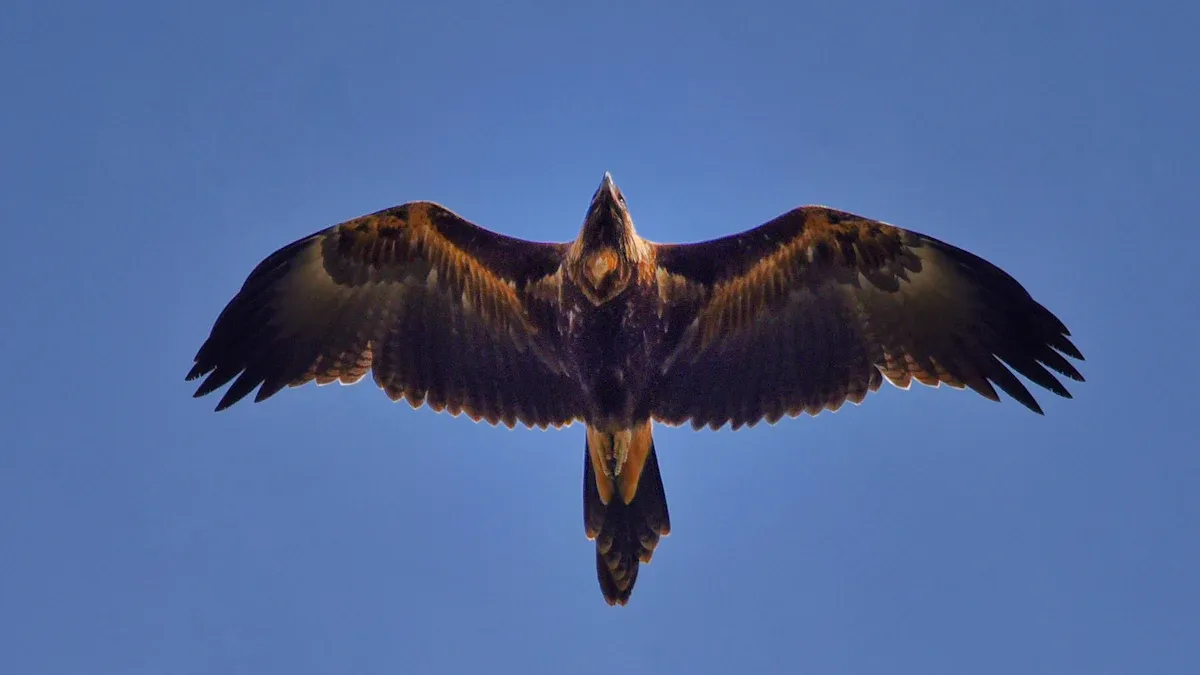
Eagles and Ospreys represent some of the most majestic birds of prey in New york. Their impressive size and powerful hunting skills make them truly captivating.
Bald Eagle
The Bald Eagle is a powerful symbol. It is the national bird of the United States. This magnificent bird has made a remarkable comeback in New York. In 1972, only a single pair of nesting American Bald Eagles was left in New York state. Before the widespread use of DDT, about 20 pairs of Bald Eagles bred in New York. By 1972, only one breeding pair remained, and this pair rarely produced young. Conservation efforts helped bring them back from the brink.
Identification: Adult Bald Eagles are easy to identify. They have a distinctive white head and tail. Their bodies are dark brown. Their beaks are large and yellow. Juvenile Bald Eagles look different. They are mostly brown with some white mottling. They gradually develop their white head and tail over several years.
Bald Eagles prefer habitats near large bodies of water. These include rivers, lakes, and coastal areas. They primarily eat fish. They also scavenge carrion and hunt other birds or small mammals. Their large nests, called eyries, are often in tall trees near water.
Golden Eagle
The Golden Eagle is a rarer visitor to New York. It is a large, powerful raptor. It prefers open country and mountainous regions. Golden Eagles are less common than Bald Eagles in the state.
Identification: Distinguishing a Golden Eagle from a juvenile Bald Eagle can be tricky. Here is a comparison:
Feature | Juvenile Golden Eagle | Juvenile Bald Eagle |
|---|---|---|
Head Plumage | Dark brown with noticeable golden nape; little change | Dark brown for ~6 months, then dramatic changes |
Beak Base | Orange-yellow gape and base | Yellow gape, less bright |
Beak Color | Dark and stays dark | Dark for ~1 year, then progressively changes |
Cere | Bright yellow | Not discernible from culmen |
Eye Color | Remains dark brown | Dark brown, begins to change in second year |
Legs | Covered with feathers down to the feet | Bare |
Tail (Perched) | White at base with broad black terminal band | Variable color, never a well-defined bicolored tail |
Breast/Belly (Perched) | Uniformly dark brown | Brown with variable, uneven white mottling |
Head Proportion | Looks proportionally smaller | Looks proportionally larger |
Wing Underside (Soaring) | Well-defined white patches, vary in size | Dark with white mottling, increases in immature stages |
Tail Base (Soaring) | White with conspicuous black terminal band | Generally similar to breast and belly |
Golden Eagles hunt medium-sized mammals. They also prey on large birds. They use their keen eyesight to spot prey from high above.
Osprey
The Osprey is a specialized fish-eating raptor. It is often called a “fish hawk.” You can find the Osprey near water bodies across New York.
Identification: Ospreys have a distinct appearance. They have a dark brown back and a white belly. A dark stripe runs through their eyes. Their wings are long and narrow. They have a noticeable M-shape when soaring.
Hunting Techniques and Adaptations: The Osprey has incredible adaptations for catching fish.
They possess exceptional vision. Two foveas in their retina provide a larger field of sharp focus. Their pecten, a structure in the eye, has a high density of photoreceptor cells. This gives them superior vision resolution. Crampton’s muscles aid their ocular lenses. They see prey at great distances.
Ospreys position themselves at steeper angles relative to potential prey. This reduces the effect of water refraction.
Dark feathers in front of the eye reduce glare from the water.
Oily, dense plumage provides waterproofing. This allows them to fly even when soaked.
They can close their nares (nostrils) to prevent water entry. They also have a nictitating membrane. This semi-transparent eyelid acts like goggles for underwater vision.
They grasp fish with reversible outer toes. Two toes face forward, and two face back. Tiny spines or “spicules” on their feet help grip slippery fish.
The Osprey‘s outer front toe swivels to the rear. This provides two grasping talons front and back for a secure grip. Their toes are lined with short, stiff spikes for extra grip on fish.
Long, powerful, narrow wings help them lift from the water with heavy fish.
They carry fish facing forward. This minimizes wind resistance.
The Osprey dives feet-first into the water. It emerges with a fish clutched in its powerful talons. This impressive hunting display makes the Osprey a favorite among birdwatchers.
Owls and Vultures in New York
New York hosts a fascinating array of nocturnal hunters and diligent scavengers. These owls and vultures play crucial roles in the ecosystem. They often operate under the cover of darkness or clean up what others leave behind.
Great Horned Owl
The Great Horned Owl is a powerful and common owl in New York. It is a large owl with prominent ear tufts. These tufts look like horns. This owl hunts at night. It has excellent night vision and hearing.
The Great Horned Owl is a versatile predator. It eats many different animals. Its diet includes skunks, which few other predators touch. It also hunts various birds, such as hawks and waterfowl. This owl preys on mammals ranging from mouse-sized to rabbit-sized.
Did You Know? Great Horned Owls have a very broad diet. They eat rats, mice, and rabbits. They also hunt ground squirrels, opossums, and skunks. Sometimes, they even catch small raccoons and muskrats. They have been known to prey on small dogs, domestic cats, young Peregrine Falcons, and Ospreys. This owl also eats snakes, lizards, frogs, and insects. Rarely, it catches fish.
Barred Owl
The Barred Owl is another common owl in New York. It has large, dark eyes and no ear tufts. This owl prefers dense forests and swamps. It is known for its distinctive call.
The Barred Owl’s call is loud and resounding. It often sounds like “Who, cooks, for-you? Who, cooks, for-you, all?” This call typically has eight hoots. People sometimes call it the “Eight-Hooter.” Mated pairs often sing together. They make various sounds, including howls, yelps, and squalls. During courtship, they perform a lively duet of cackles, hoots, caws, and gurgles.
Barn Owl
The Barn Owl has a unique heart-shaped face. It is a beautiful and silent hunter. This owl often lives near open fields and farmlands. It hunts small rodents at night.
Barn Owls are cavity-nesting owls. They use both natural and human-made spaces. They prefer large platforms inside barns and silos. They also use tunnels dug into silage in roofed or topless silos. Barn cupola shelves are another favorite spot. People have seen them in feed bins, church steeples, and belfries. They also use platforms in commercial buildings, attics of abandoned houses, and ledges inside chimneys. Sometimes, they nest under bridges. Placing nest boxes in suitable farmland habitats helps Barn Owls breed successfully in New York. More nest box programs are a good way to help these birds of prey in New York.
Eastern Screech Owl
The Eastern Screech Owl is a small owl. It is hard to spot because of its excellent camouflage. This owl often lives in suburban areas and woodlands. It has two distinct color forms.
Eastern Screech Owls come in two main color morphs. Some are red or rufous. Others are gray. Both morphs help the owl blend into its surroundings. This owl makes a trilling call that sounds like a horse’s whinny.
Turkey Vulture
The Turkey Vulture is New York‘s primary scavenger. It is not an owl. It is a large, dark bird with a featherless red head. This bird helps keep the environment clean. It eats dead animals, called carrion.
Turkey Vultures primarily find carrion using their strong sense of smell. They can detect ethyl mercaptan. This chemical comes from decomposing bodies. They can find carcasses that are one to three days old, even when hidden. They also use visual cues. They soar over open areas and watch other scavengers. This raptor has a highly developed sense of smell, unlike most birds. This ability helps them find food even without seeing it.
Raptor Conservation and Viewing in New York
Threats to New York’s Raptors
Raptors in New York face many dangers. Trauma is the most frequent cause of injury and death for these birds. This includes collisions with vehicles or structures. Unknown or unspecified causes also account for a significant number of cases. Orphaning is another common issue.
Cause of Distress | Percentage of Cases |
|---|---|
Trauma | 57.0% |
Unknown/Unspecified | 20.1% |
Orphaning | 12.3% |
Rodenticides pose a serious threat, especially for urban raptors. A Cornell University study found 68% of Red-tailed Hawks in New York had anticoagulant rodenticide (AR) toxins. These toxins prevent blood clotting. They cause internal bleeding and death. Second-generation anticoagulant rodenticides (SGARs) are particularly dangerous. They accumulate in predators like hawks. Nearly half of 265 dead raptors tested in New York showed AR presence. This widespread poisoning affects many birds of prey.
Conservation Efforts in NY
New York actively protects its raptors. The New York State Environmental Conservation Law (ECL) includes falconry regulations. These rules ensure proper care for raptors. Falconers must have licenses and adequate facilities. They can also help with conservation education. They assist wildlife rehabilitators. Hawkwatch data is crucial. It helps analyze raptor population trends. This data informs conservation research. New York’s stable habitats and ongoing efforts show positive responses for some birds in New York.
Ethical Raptor Observation
Observing raptors requires respect. Keep a safe distance. Avoid disturbing their nests or hunting activities. Use binoculars or a spotting scope for close views. Never try to feed a raptor. This can harm them and make them dependent on humans. Ethical hawk watching ensures these magnificent birds thrive.
Top Viewing Spots for Birds of Prey
New York offers excellent locations for viewing raptors. These spots are especially good during migration.
Braddock Bay (on Lake Ontario shore)
Derby Hill Bird Observatory (on Mexico Bay, east of Oswego)
Hamburg (hawk watch site in Niagara County along eastern Lake Erie shore)
Ripley (previously active hawk watching spot in Chautauqua County on Lake Erie)
These sites provide great opportunities to see many raptors.
New York boasts an incredible diversity of magnificent raptors. These birds of prey hold significant ecological importance. We have explored their unique identification features, preferred habitats, and fascinating behaviors. Continue learning about and appreciating these magnificent creatures. Support conservation efforts in New York and practice responsible bird watching. The enduring wonder of New York’s raptors enriches our natural world.
FAQ
What is a raptor?
A raptor is a bird of prey. It hunts and eats other animals. Raptors have sharp talons, hooked beaks, and keen eyesight. They play a vital role as predators in ecosystems.
What do Red-tailed Hawks eat in New York?
Red-tailed Hawks primarily eat small mammals. Their diet includes rodents and rabbits. They also hunt birds and reptiles. These hawks help control pest populations across New York.
What makes an Osprey a specialized hunter?
Ospreys are specialized fish-eating raptors. They have unique adaptations. These include reversible outer toes and spicules on their feet. These features help them grasp slippery fish.
What is the fastest bird in the world?
The Peregrine Falcon is the fastest bird in the world. It reaches incredible speeds during its hunting dives. This falcon can stoop at over 200 miles per hour.
What is the main threat to raptors from rodenticides?
Rodenticides cause internal bleeding in raptors. These toxins accumulate in predators. They lead to illness and death. This poses a serious threat to many bird of prey species.
