


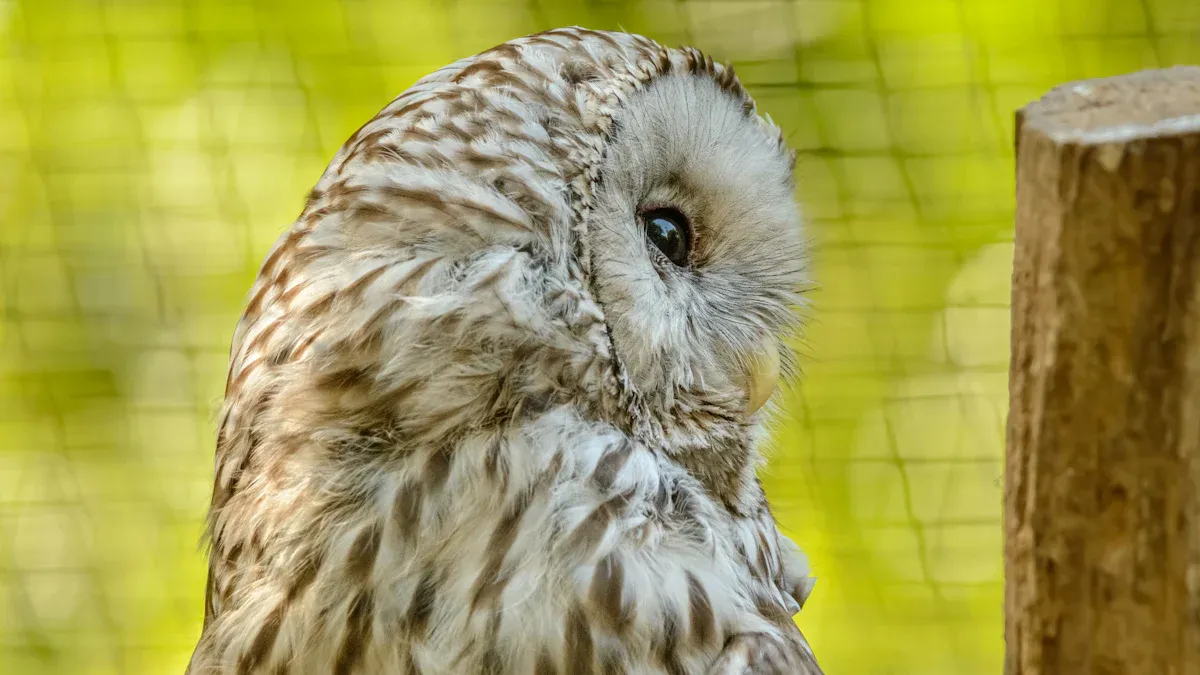
The unique adaptations of owl feathers allow for silent flight and possess distinct beauty. Identifying these feathers offers a fascinating way to connect with nature. This owl feather identification chart provides a comprehensive guide to 10 key owl feather types. Readers will learn how to identify different owl feathers, understand their unique characteristics, and gain practical identification tips. This guide directly addresses your interest in recognizing these remarkable avian features.
Key Takeaways
Owl feathers have special parts that help them fly silently and stay warm.
You can identify owl feathers by their color, pattern, size, and how they feel.
It is against the law to collect owl feathers, even if you find them on the ground.
Owl Feather Anatomy: Basics
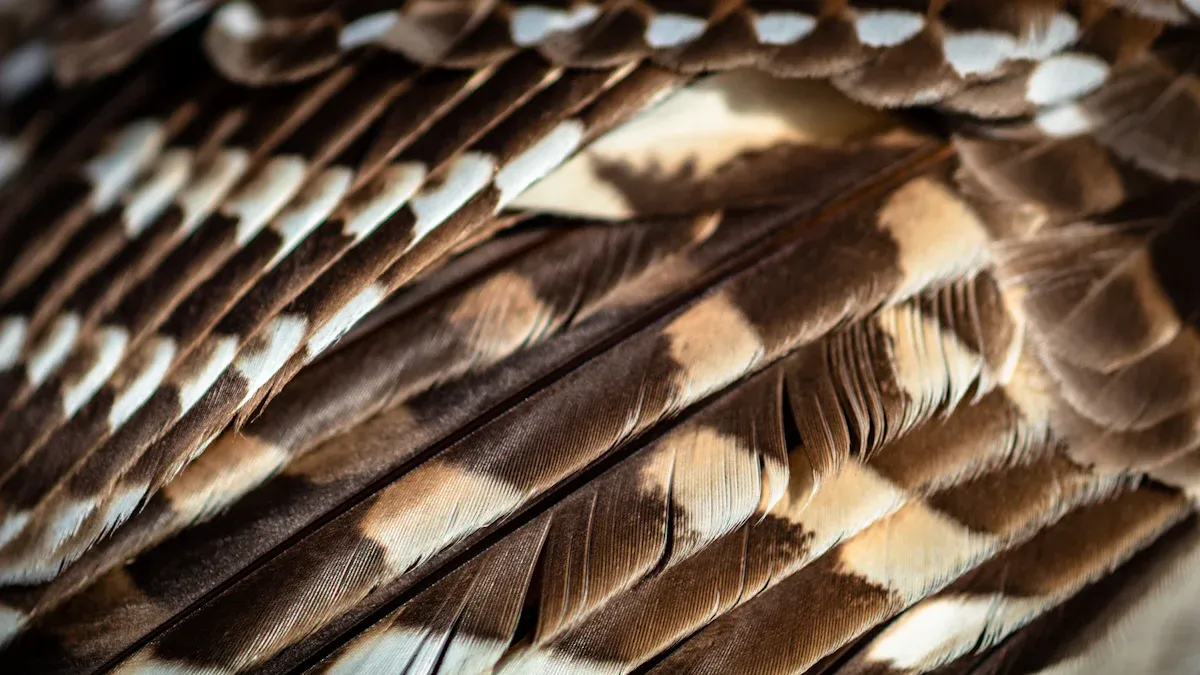
An owl’s body features several distinct feather types, each with a specific purpose. These feathers work together, allowing the owl to fly, stay warm, and hunt effectively. Understanding these seven broad groupings helps identify different owl species and their unique adaptations.
Primary Feathers: Flight & Lift
Primary feathers are crucial for an owl’s flight. These strong feathers generate both thrust and lift, which enables the owl to fly. Owls typically have about ten primary feathers embedded in the soft tissue of their hand wing. A unique feature for many owl species is the tiny serrations on the leading edge of these feathers. This adaptation allows them to fly silently, which aids in more successful hunting.
Secondary Feathers: Wing Support
Secondary feathers provide essential wing support. These feathers are also flight feathers, located along the owl’s forearm. They help create the broad wing surface necessary for efficient flight and contribute to the overall lift generated during flight.
Tail Feathers: Steering & Balance
Tail feathers are vital for an owl’s maneuverability and stability. Known as rectrices, these stiff feathers attach to the pygostyle. They function like a rudder, allowing the owl to steer during flight. Tail feathers are also essential for braking, graceful landing, perching, and taking off. They help maintain balance, especially when an owl perches.
Contour Feathers: Body & Insulation
Contour feathers cover most of an owl’s body. They give the owl its overall shape and create a smooth, aerodynamic form. These feathers arrange like roof shingles, forming a waterproof barrier. Their fluffy bases also provide a layer of insulation, shielding the owl’s skin from the sun and helping regulate body temperature.
Down Feathers: Warmth & Softness
Down feathers are soft and fluffy, located close to the owl’s skin. They provide excellent insulation, trapping air to keep the owl warm in cold conditions. These feathers are crucial for maintaining the owl’s body temperature.
Beyond these main types, owls also possess other specialized feathers. Semiplumes, for example, have a fluffy structure and provide additional insulation, often found beneath contour feathers. Bristles are stiff, hair-like feathers, often found around the eyes and beak, offering protection or sensory input. Filoplumes are fine, hair-like feathers associated with other feathers, believed to have a sensory function.
| Owl Species | Feather Color & Pattern | Size (Approx. Length) | Texture & Structure | Key Identification Traits | Notes / Habitat |
|---|---|---|---|---|---|
| Barn Owl (Tyto alba) | Pale tan to cream with soft mottled brown spots | 20–35 cm (wing feather) | Extremely soft, velvety texture | Lacks strong contrast; edges finely fringed for silent flight | Common in open fields, barns, and grasslands |
| Great Horned Owl (Bubo virginianus) | Brown, gray, and buff barred pattern | 25–40 cm | Dense and broad with fluffy down | Large, heavy feathers; distinct dark barring | Found in forests, deserts, and urban areas |
| Snowy Owl (Bubo scandiacus) | White with black or dark brown bars (males often whiter) | 20–35 cm | Dense, insulating texture | Bright white color with limited markings | Arctic regions; tundra habitats |
| Barred Owl (Strix varia) | Brown and white horizontal barring | 20–30 cm | Very soft and rounded tips | Noticeable “barred” pattern across the feather | Eastern & Central North America forests |
| Eastern Screech Owl (Megascops asio) | Gray or reddish-brown with wavy patterns | 10–20 cm | Compact and soft | Small size, cryptic woodland camo | Forests, suburban woodlots |
| Northern Saw-whet Owl (Aegolius acadicus) | Brown with white streaks and golden tints | 8–15 cm | Light and fluffy | Smallest owl feathers; narrow shape | Dense coniferous forests |
| Short-eared Owl (Asio flammeus) | Tawny buff with black streaks and spots | 20–30 cm | Light and airy with soft edges | More pointed wing feathers | Grasslands and marshes |
| Long-eared Owl (Asio otus) | Mottled brown and gray, darker streaks | 18–28 cm | Narrow with muted coloring | Distinct vertical streaking | Forest edges, farmlands |
| Burrowing Owl (Athene cunicularia) | Light brown with white spots | 10–18 cm | Slightly stiffer than forest owls | Less soft texture due to open-air hunting | Open prairies and deserts |
| Great Gray Owl (Strix nebulosa) | Silver-gray with fine streaks | 25–40 cm | Large, downy, wide feathers | Broad wings, softest edges among owls | Boreal forests and northern regions |
Key Owl Feather ID Characteristics
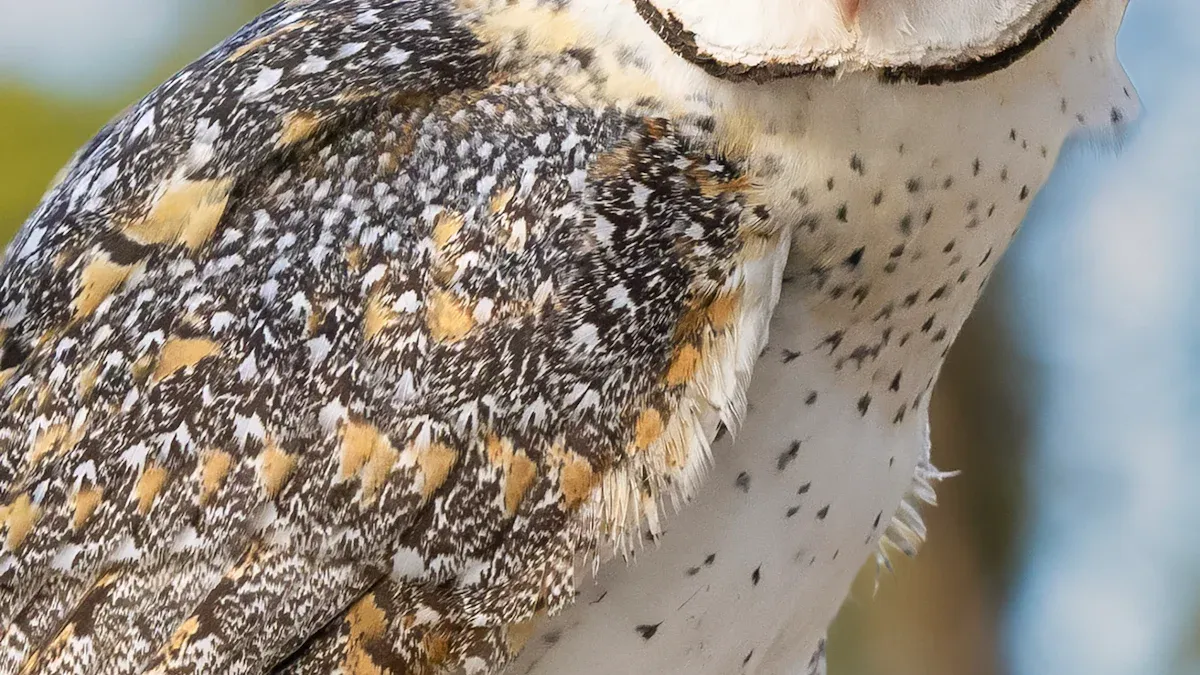
Identifying owl feathers involves looking closely at several unique features. These characteristics reveal much about an owl’s life and adaptations.
Color & Pattern: Camouflage Clues
Feather colors and patterns provide excellent camouflage. An Eastern Screech-Owl, for example, has gray and brown feathers. These colors help it blend perfectly with tree bark. It often sits in tree cavities or on branches, making it hard to see. Snowy Owls have mostly white feathers. This helps them hide in snowy tundra environments. Great Horned Owls have brown, gray, and white feathers. These colors help them blend into wooded areas. Owls living in birch forests might have lighter feathers than those in darker oak forests.
Size & Shape: Feather Type & Owl Size
The size and shape of a feather tell you its type and the size of the owl it came from. Large, broad feathers often come from larger owls. Smaller, narrower feathers belong to smaller species. Primary feathers are long and stiff for flight. Tail feathers are usually broad for steering.
Texture: Silent Flight Adaptation
Owl feathers have special textures for silent flight. The primary wing feathers have a comb-like, serrated design on their leading edges. This design breaks up airflow and reduces noise. The surfaces of many owl feathers feel soft and velvety. This velvety texture absorbs sound, muffling the noise of air moving over the wings. This soft coating consists of tiny, flexible filaments called pennulums. These features work together to disrupt airflow and absorb sounds.
Rachis (Shaft) Features
The rachis, or feather shaft, also shows unique traits. For instance, the Barn Owl’s sonus feather has a rachis that does not extend past the vane. This differs from a bristle feather. Also, the barbs on a Barn Owl’s feather are spaced widely apart compared to the feather’s length.
Fringed Edges: Silent Hunting Secret
The fringed edges on an owl’s feathers are key to its silent hunting. The trailing edges of the feathers have soft fringes. These fringes reduce noise from the wing. This noise reduction is very important for owls. They need silent flight to catch prey. These fringes help interrupt turbulent air, which lowers sound intensity. Some owls, like fish-eating owls, do not have these fringes. This suggests fringes are important for hunting prey that can hear. Fish, their main prey, usually cannot hear the approaching owl.
Owl Feather Identification Chart: 10 Types
This owl feather identification chart helps you recognize feathers from various owl species. Each entry provides a concise description, key identification features, and typical size.
Great Horned Owl Feather
Great Horned Owl feathers often display a mottled pattern of dark brown, gray, and buff. These colors help the owl blend into tree bark and forest environments. A primary flight feather from a Great Horned Owl can measure between 10 to 14 inches long. They have a soft, velvety texture, typical of many owl species, which aids in silent flight. Look for distinct dark barring on a lighter background.
Barred Owl Feather
Barred Owl feathers are known for their distinctive patterns. They feature speckled brown, white, and rust coloration. This combination creates a beautiful, camouflaged appearance. A distinguishing characteristic of an owl feather, including those from a Barred Owl, is its barred pattern combined with a soft, fuzzy texture. These feathers often show alternating bands of light and dark brown. A large primary feather can reach 8 to 12 inches in length. The feathers from baby barred owls also show these patterns, though they may be softer and less defined.
Barn Owl Feather
Barn Owl feathers are remarkably soft and delicate. Their colors typically range from golden-buff to white, often with fine speckles of gray or black. These feathers contribute to the owl’s ghostly appearance. Unique features identify a Barn Owl feather.
These include hair-like feathers above the beak and hair-like facial disk feathers. The soft wing feathers and feathers around the ear opening are also notable. Some feathers have leading edge ‘hooks’. Fluffy body feathers provide insulation. Approximately 90% of UK Barn Owls can be sexed by their feathers. Males typically appear paler, and females generally look darker. This distinction is visible even in nestlings. A darker female can be contrasted with an extremely pale male.
The typical size of a Barn Owl feather varies significantly depending on its position on the wing. For instance, feather p10, which is the second longest, has a mean length of 24.5 cm. The outer vane of feather p10 has a mean area of 10.44 cm², while its inner vane has a mean area of 52.15 cm². Fringes on the inner vane of feather p10 typically measure 3.45 mm. Those on feather p1 are smaller, averaging 1.68 mm. Fringes in the coverts are even more distinct, ranging from 3.78 mm to 6.1 mm.
Snowy Owl Feather
Snowy Owl feathers are predominantly white, often with varying degrees of dark barring or spotting. Males tend to be whiter, while females and younger owls have more dark markings. This coloration provides excellent camouflage in arctic environments. A primary feather can be 9 to 13 inches long. The feathers are dense and thick, offering superior insulation against cold temperatures. Look for pure white feathers or white feathers with sparse, dark brown bars.
Eastern Screech-Owl Feather
Eastern Screech-Owl feathers come in two main color morphs: gray and reddish-brown (red morph). They also have a grayish-brown (brown morph) variation. Their feathers feature dark vertical streaks and fine dark barring. This coloration and streaked appearance enable camouflage against tree bark. Feathers provide warmth. They also have softened edges, contributing to silent flight. They are light, waterproof, and adjustable for flight control. Juvenile feathers are fluffy and finely barred. A typical body feather might be 2 to 4 inches long, while a primary feather could reach 5 to 7 inches.
Western Screech-Owl Feather
Western Screech-Owl feathers are similar to their eastern counterparts but generally have a grayer tone. They also exhibit intricate streaking and barring patterns. These patterns help the owl blend into arid and semi-arid landscapes. A key feature is the fine, wavy barring across the feather vanes. Primary feathers typically measure 5 to 7 inches. These feathers are soft and provide excellent camouflage for this owl species.
Long-eared Owl Feather
Long-eared Owl feathers are a mix of mottled browns, grays, and buffs. They have fine, intricate patterns that resemble tree bark. This camouflage helps the owl hide in dense foliage. A primary feather can be 7 to 10 inches long. Look for distinct dark brown and black streaks on a lighter background, often with a herringbone pattern. The feathers from baby long-eared owls are very downy and soft.
Short-eared Owl Feather
Short-eared Owl feathers are heavily streaked overall, sometimes appearing spotted. They have mottled brown and buff upperparts. The pale underside also has streaked plumage. These feathers help the owl blend into grasslands and open fields. Females exhibit more intricate feather patterns compared to males. Key features include dark eye patches and a whitish face.
Small ear tufts are often difficult to see. These inconspicuous ear tufts become more noticeable when the owl is defensive or curious. Bright yellow eyes are rimmed in black within a pale facial disk. Dark crescent-shaped carpal (wrist) marks are visible on the underwing in flight. A primary feather typically measures 6 to 9 inches. This owl species is a master of camouflage in its open habitats.
Great Gray Owl Feather
Great Gray Owl feathers are predominantly gray with intricate dark barring and speckling. This coloration provides superb camouflage in boreal forests. These feathers are very soft and dense, offering excellent insulation. A primary feather can be quite large, ranging from 10 to 15 inches. Look for a distinctive “bull’s-eye” pattern on the facial disk feathers, though these are smaller. The overall impression is one of a large, fluffy gray owl.
Burrowing Owl Feather
Burrowing Owl feathers are sandy brown with white spotting and barring. This pattern helps the owl blend into its grassland and desert environments. These feathers are relatively small compared to other types of owls. A primary feather might be 4 to 6 inches long. Look for distinct white spots on a brown background, especially on the wing and tail feathers. These little owls have feathers adapted for life on the ground. Another example of little owls is the Elf Owl.
For further comparison and identification of these owl species, readers can use resources like the Feather Atlas ID Tool (fws.gov) and Featherbase. These tools offer detailed images and descriptions to help identify various owl feathers.
Ethical & Legal Feather Collection
Migratory Bird Treaty Act (MBTA)
Collecting feathers from wild birds, including any owl species, is subject to strict laws. The Migratory Bird Treaty Act (MBTA) protects most native birds in the United States. Owls are explicitly listed as a species protected under this Act. The MBTA prohibits the ‘take’ of most native birds and any of their parts, including feathers. This prohibition extends to feathers picked up off the ground. Distinguishing naturally molted feathers from those plucked from poached birds is nearly impossible. This law is crucial for bird conservation.
The MBTA makes it unlawful to ‘pursue, hunt, take, capture, kill, possess, sell, purchase, barter, import, export, or transport any migratory bird, or any part, nest, or egg or any such bird, unless authorized under a permit issued by the Secretary of the Interior.’ The term ‘take’ is specifically defined as ‘pursue, hunt, shoot, wound, kill, trap, capture, or collect, or attempt to pursue, hunt, shoot, wound, kill, trap, capture, or collect.’
The MBTA is a strict liability crime. This means specific intent or knowledge that the bird is protected is not required for a conviction. Violations can lead to different charges. Unlawfully trafficking in migratory bird parts, such as feathers, was considered a misdemeanor in one case. Conspiring to kill, transport, offer for sale, and sell migratory birds could be charged as a felony.
The specific nature of the violation determines the charge. This law helps ensure the conservation of bird populations. The MBTA prohibits the possession of feathers from native North American birds, including owls, without a permit. This prohibition applies to all feathers, regardless of how they were obtained. This includes molted feathers or those from road-killed birds. The law’s purpose is to protect wild birds by preventing their killing by collectors and the commercial trade in their feathers. This supports overall wildlife conservation.
Observing vs. Collecting: Best Practices
Understanding these legal restrictions is vital for responsible nature enthusiasts. Instead of collecting feathers, observing them in their natural environment is the best practice. This approach supports bird conservation. Documenting observations through photography or sketching allows appreciation without breaking the law.
Scientists, however, sometimes obtain permits for collecting feathers for research. This research often involves studying flight-feather molt patterns and aging criteria for most owl species. Published information can aid in age-code determinations. This scientific observation reinforces the complexity and legal restrictions around collection. Respecting these laws contributes significantly to bird conservation efforts. It ensures the continued protection of these magnificent owl species and their habitats. This commitment to conservation benefits all wildlife.
This guide emphasized observing specific characteristics for accurate owl feather identification. Look for color, pattern, size, texture, and unique features. This owl feather identification chart serves as a valuable starting point for recognizing common owl feather types. Continue exploring these magnificent birds. Foster a deeper appreciation for their adaptations and the natural world. Always respect wildlife laws and practice ethical observation.