



Budgie mutations are genetic variations. They create the incredible variety of budgie colors and patterns. These changes alter a budgie’s appearance. The budgie color chart shows these diverse forms. This post explains 15 beautiful mutations. A single color mutation can dramatically change a budgie. Over 70 recognized mutation types exist, showcasing vast budgie diversity. Each mutation contributes to a budgie’s unique beauty. Exploring each genetic mutation offers excitement.
Key Takeaways
Budgie colors come from two main pigments: yellow and blue. Genetic changes create all the different colors and patterns you see.
Genes decide a budgie’s color. Some genes are dominant, meaning they always show. Others are recessive, meaning both parents must pass them on for the color to appear.
Many mutations change how budgies look. Some mutations change the main body color, like dark factor or violet. Others reduce color, like Lutino or Albino budgies.
Some mutations change patterns on wings or faces. Examples include Opaline, Spangle, and Yellowface budgies. These create unique markings.
Complex combinations of mutations create special budgies, like Rainbow budgies. Breeders keep finding new and beautiful budgie varieties.
Understanding Budgie Genetics
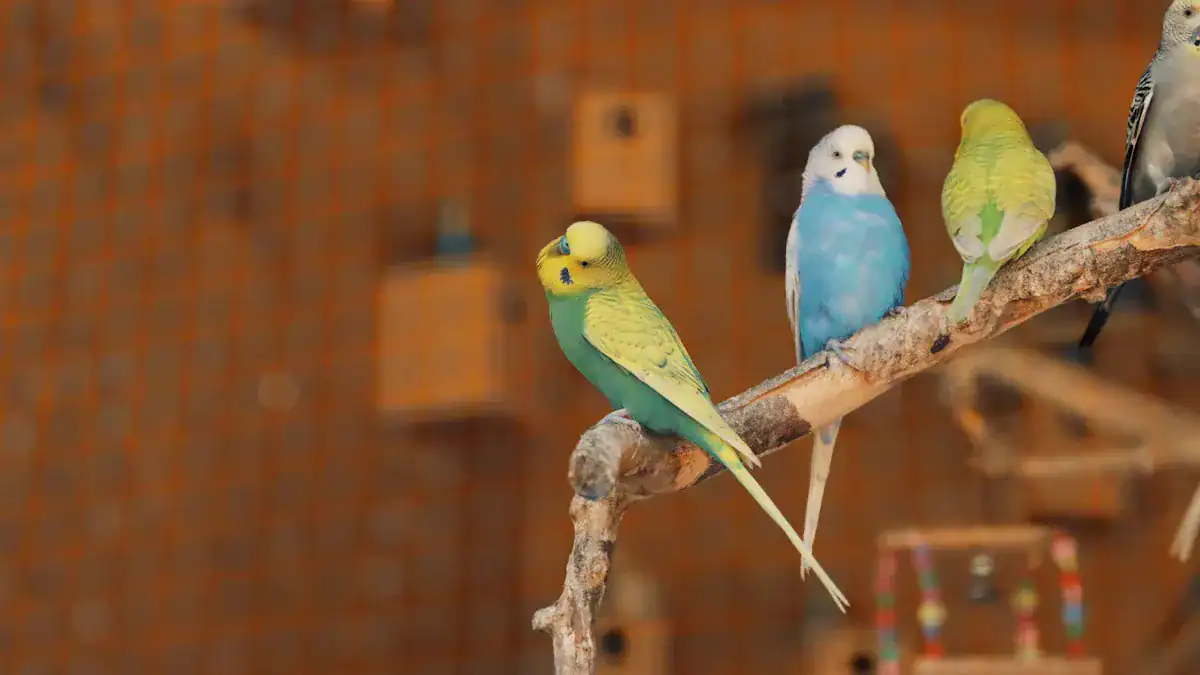
Budgie genetics explain the many beautiful colors and patterns. Understanding these principles helps people appreciate each unique budgie. All budgie colors come from basic pigments and how light interacts with feathers.
Base Colors: Yellow and Blue Pigments
Budgies primarily use two base pigments: yellow and blue. Yellow pigments in budgie feathers are psittacofulvins. The MuPKS enzyme produces these polyene pigments. Blue color in a budgie is not a pigment itself. It is a structural color. This color appears when yellow pigment is absent. A genetic mutation (R644W substitution in MuPKS) stops yellow psittacofulvin production. This absence allows the structural blue to become visible.
Dominant, Recessive, and Sex-Linked Traits
Genes determine a budgie’s color. These genes can be dominant, recessive, or sex-linked. Dominant genes express themselves even if only one copy is present. Recessive genes require both copies to be present for expression. If a budgie carries one dominant and one recessive gene for a trait, the dominant gene will be expressed. The recessive gene will remain hidden. Green is a dominant budgie color. Blue is a recessive budgie color. A budgie with a green gene and a blue gene appears green. Green is dominant over blue. Recessive colors appear only if both gene copies are recessive. A budgie can carry a recessive color gene hidden.
Sex-linked genes are on sex chromosomes. Males (XX) can carry a sex-linked gene without showing it. They are ‘split’ for the gene. Females (XY) have only one X chromosome. They express the trait if they carry the gene. For example, a male parent must carry the gene to produce female Lutino budgies. This inheritance pattern is key for many budgie mutation types.
How Budgie Mutations Alter Appearance
Budgie mutations alter the MuPKS enzyme. This enzyme is crucial for yellow pigment production. A white cap mutation reduces gene activity. It lowers yellow pigment production. Another mutation affects the enzyme’s active site. This also reduces yellow pigment. Some mutations affect MuPKS mRNA stability. This impacts the total yellow pigment amount.
Yellow-faced and golden-faced budgies have temperature-sensitive MuPKS mutations. These restrict yellow pigment distribution to specific areas. The blue mutation is a loss-of-function mutation. It completely stops yellow pigment production. A single amino acid change (R644W) in MuPKS causes the blue mutation. These genetic changes create the wide range of budgie colors we see. Each mutation changes how a budgie looks.
| Base Series | Primary Color | Common Mutations/Varieties | Body Color Description | Cheek Patch Color | Cere (Beak Area) Color | Eye Color | Notes |
|---|---|---|---|---|---|---|---|
| Green Series | Yellow-based | Normal Green, Light Green, Dark Green, Olive | Bright green body, yellow face & mask | Violet or blue | Male: Blue / Female: Brown | Black (with white iris when adult) | Wild-type coloration; dominant in genetics. |
| Blue Series | White-based | Sky Blue, Cobalt, Mauve | Blue body with white face/mask | Violet | Male: Blue / Female: Brown | Black (white iris when adult) | Caused by loss of yellow pigment. |
| Grey Series | White-based | Grey, Grey Green | Body appears grey or smoky with typical markings | Violet-grey | Male: Blue / Female: Brown | Black (white iris when adult) | Grey mutation dilutes color tone. |
| Lutino (Ino) | Yellow-based | Lutino | All-yellow body, red eyes, no markings | None (clear face) | Male: Pink / Female: Tan | Red | Sex-linked mutation removing melanin. |
| Albino (Ino) | White-based | Albino | Pure white body, red eyes, no markings | None | Male: Pink / Female: Tan | Red | Same gene as Lutino, but in blue series. |
| Cinnamon | Both series | Cinnamon Green, Cinnamon Blue | Markings light brown instead of black | Violet | Normal | Black (white iris) | Feathers appear softer and warmer in tone. |
| Opaline | Both series | Opaline Green, Opaline Blue | Reduced head markings, body color extends onto back | Violet | Normal | Normal | Reversal of color distribution on back and wings. |
| Spangle | Both series | Single Factor (SF), Double Factor (DF) | SF: Wing edges light-colored; DF: Almost white/yellow | Violet | Normal | Normal | Wing pattern mutation; very popular. |
| Pied (Recessive) | Both series | Recessive Pied | Random color patches; clear areas on chest/head | Varies | Male: Blue / Female: Brown | Normal | No regular pattern; each is unique. |
| Pied (Dominant) | Both series | Dominant Pied | Clear patch on nape, lower belly clear | Varies | Normal | Normal | Lighter pattern; combined with others easily. |
| Clearflight Pied | Both series | Clearflight | Clear wings and tail feathers | Normal | Normal | Normal | Wings mostly white or yellow; body colored. |
| Yellowface Type I | Blue series | Yellowface Skyblue, Yellowface Cobalt | Light yellow tint on face, slight greenish hue | Violet | Normal | Normal | Creates “seafoam” or turquoise tones. |
| Yellowface Type II | Blue series | Goldenface | Deeper yellow extends onto body, creating lime tint | Violet | Normal | Normal | Very bright and attractive variation. |
| Dilute | Both series | Dilute Green, Dilute Blue | Washed-out pastel tone; lighter markings | Pale violet | Normal | Normal | Often mistaken for pastel budgies. |
| Greywing | Both series | Greywing Green, Greywing Blue | Body color diluted to ~50%; grey markings | Violet | Normal | Normal | Common exhibition mutation. |
| Clearwing | Both series | Clearwing Green, Clearwing Blue | Bright body, nearly clear wings | Violet | Normal | Normal | Wings nearly transparent; vibrant body color. |
| Fallow | Both series | German, English, Scottish Fallow | Pale body, reddish eyes, brown markings | Pale violet | Normal | Red | Rare genetic mutation; very soft tones. |
| Saddleback | Both series | Saddleback Green/Blue | Dark patch across back like a “saddle” | Violet | Normal | Normal | Combination of opaline-like markings and unique saddle. |
| Violet Factor | Both series | Violet Skyblue, Violet Cobalt, Violet Green | Enhances depth and richness of color | Violet (deep) | Normal | Normal | Adds purple sheen, especially in blue series. |
| Texas Clearbody | Both series | Clearbody Green/Blue | Clear chest with colored wings/back | Violet | Normal | Normal | Hybrid mutation, eye-catching contrast. |
The Budgie Color Chart: 15 Beautiful Budgie Mutations
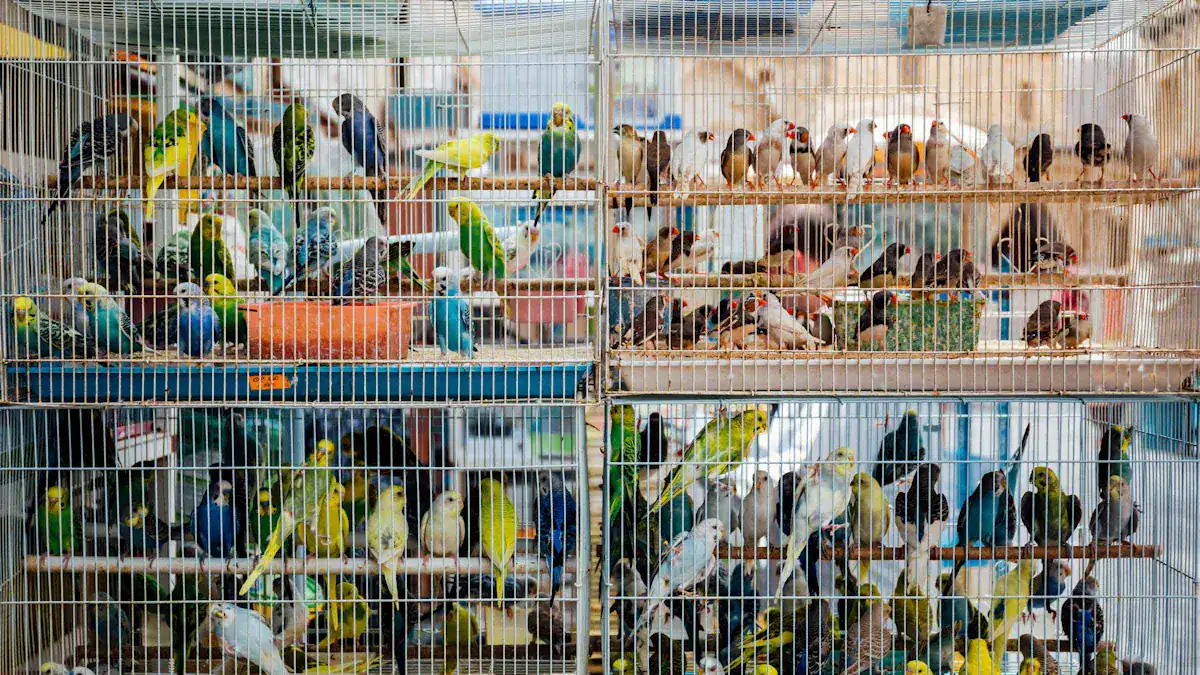
This section explores 15 beautiful budgie mutations. Each mutation changes a budgie’s appearance. Understanding these variations helps you appreciate the incredible diversity on the budgie color chart.
Coloration Modifiers
These mutations change the overall depth or hue of a budgie’s base color.
Dark Factor Budgie
The Dark Factor gene influences the depth of a budgie’s body color. This gene is semi-dominant. A budgie with one dark factor looks different from a budgie with two dark factors. Two alleles determine the darkness: the normal gene and the dark factor gene. The ‘Incomplete Dominance Theorem’ explains these different shades. The absence of the dark gene is ‘dd’. A single factor is ‘Dd’. A double factor is ‘DD’.
Green (Yellow-based) Budgies:
No dark factor (dd): These are original bright green budgies, called “light green.”
One dark factor (Dd): These budgies are a darker green, called “dark green.” They lack iridescence.
Two dark factors (DD): These budgies have a deep olive drab green color, called “olive.” They appear almost muddy green. They have violet blue cheek patches and dark blue tail feathers.
Blue (White-based) Budgies:
No dark factor (dd): These are original bright sky blue budgies, called “sky blue.” They show bright iridescent pale skyblue.
One dark factor (Dd): These budgies are a slightly darker blue, called “cobalt.” They lose iridescence.
Two dark factors (DD): These budgies have a deep grey blueish color, called “mauve.” They can look muddy and greyish but are bluer than grey. They have violet cheek patches and a blue tail.
Basic Colour | No Dark Factor (dd) | One Dark Factor (Dd) | Two Dark Factors (DD) |
|---|---|---|---|
Green | Light Green | Dark Green | Olive |
Blue | Blue | Cobalt | Mauve |
Violet Factor Budgie
The Violet Factor is a striking mutation. It adds a rich, deep violet hue to a budgie’s body color. This factor often appears on blue budgies, transforming a sky blue or cobalt into a vibrant purple-blue. It intensifies the existing blue pigment. A violet budgie often has one dark factor (cobalt) plus the violet factor.
Grey Factor Budgie
The Grey Factor mutation introduces a grey wash over the budgie’s base color. This changes green budgies into grey-green. It turns blue budgies into a true grey. The grey factor creates a cool, muted tone. It replaces the blue or green with a distinct grey shade.
Pattern and Pigment Reducers
These mutations reduce or remove pigments, affecting patterns and overall color.
Lutino and Albino Budgie
Lutino and Albino budgies are beautiful examples of pigment reduction. Both are sex-linked ‘Ino’ mutations. They lack melanin, the dark pigment.
Lutino Budgie: This budgie has a bright yellow body. It originates from the Green series. Lutinos have red or pink eyes, especially noticeable in young birds. Their legs and feet are pink. They have no black throat spots, cheek patches, or wing markings. This gives them a smooth, clean appearance.
Albino Budgie: This budgie has a pure white body. It originates from the Blue series. Albinos also have red or pink eyes and pink legs and feet. They show no markings anywhere. Their cere is flesh-colored for males and brown for females.
Dilute Budgie
The Dilute mutation significantly reduces melanin pigment in the feathers. This makes the budgie’s markings much lighter. The Dilute trait is a recessive gene. A budgerigar must have two copies of the Dilute allele to show this trait. This reduction in melanin granules leads to a much reduced intensity of black markings. It also greatly reduces blue coloration. The eyes of Dilute budgies always remain dark. Their beak, legs, and feet usually keep a normal amount of melanin.
Greywing Budgie
Greywing budgies have reduced melanin, but not as much as Dilutes. Their wing markings appear grey instead of black. Their body color is also lighter than normal budgies. Greywing is an autosomal recessive mutation. Both parents must carry the gene for offspring to express the trait. Greywing, Clearwing, and Dilute are allelic mutations of the same gene. Greywing is dominant over Dilute. This means a Greywing can carry a hidden Dilute trait.
Clearwing Budgie
Clearwing budgies have clear yellow and white wings. They have very little melanin in their wing markings. Their body color remains strong and vibrant, unlike Greywings or Dilutes. This creates a striking contrast between the clear wings and the full body color. Clearwing budgerigars, like Greywing and Dilute varieties, are allelic mutations of the same gene. This genetic relationship shows these three types share a common genetic origin for their distinct appearances.
Facial and Body Color Alterations
These mutations specifically change the color of the face or how body color appears.
Yellowface Type I Budgie
A Yellowface Type I budgie has a lemon yellow mask. This yellow color is restricted to the mask feathers. It may also appear on the peripheral tail feathers. The body feathers keep their normal coloration. The yellow pigment is limited to these areas. The gene controlling Yellowface Type I can be present in a single or double dosage. A double factor Yellowface Type I results in a whiteface appearance.
Yellowface Type II Budgie
The Yellowface Type II budgie shows a more extensive yellow. The yellow pigment from the mask “bleeds” into the body color. This creates a wash of yellow over the blue body. A blue budgie with this mutation might appear seafoam green. The yellow spreads beyond the face and tail.
Goldenface Budgie
Goldenface budgies have a richer, more golden yellow head and mask. This golden yellow coloration can also extend onto the wings.
When the mutant gene is inherited in double factor, the yellow on the head and tail is more restricted. However, it is still more extensive than in Yellowface Type I budgies. The exhibition Australian Golden Faced Blue budgerigar is the double factor form. It has a cream/lemon face and forehead. Its body color is like the non-yellow faced series with minimal yellow intrusion. The mask is a deep buttercup yellow. It extends over the face and crown. This budgie also has a buttercup yellow overlay on the white areas of the secondary tail feathers.
Pattern Disruptors
These mutations alter the typical markings and patterns on a budgie’s feathers.
Opaline Budgie
The Opaline mutation changes the pattern of markings on a budgie. Opaline characteristics are evident in the head and saddle area. The main body color appears on the feathers of the budgie’s neck and back. This creates a “mantle” effect. Opalines have thinner bars on their head, allowing more color to show through. They typically show a brighter body color, especially in the rump area. This is due to reduced melanin content in the contour feathers. The Opaline gene is sex-linked. Hens express the trait if they have the allele on their single X chromosome. Cocks need the allele on both X chromosomes.
Spangle Budgie
Spangle budgies have unique feather markings. In a single factor Spangle, wing markings, throat spots, and tail feathers are altered. Feathers have a white or yellow edge with a thin black pencil line and a yellow or white center. Throat spots often appear as targets with a yellow or white center. A double factor Spangle is a pure white or pure yellow budgie. It sometimes has a slight hint of body color. This intensified Spangle gene effect removes all body markings and color. Spangle budgies have normal dark eyes with a white iris ring.
Cinnamon Budgie
Cinnamon budgies have brown markings instead of black or dark grey. Their tail feathers are lighter than normal budgies. Their body color and cheek patches are significantly paler, about half the depth of color compared to Normals. Cinnamon budgies have a silky feather texture. Newly hatched chicks have deep plum-colored eyes. Adult Cinnamon budgies always have pink feet. Their beak tends to be more orange. This mutation creates a softer, warmer appearance.
Pied Budgie Mutations
Pied mutations create patches of clear (white or yellow) areas on a budgie’s body.
Dominant Pied Budgie
Dominant Pied budgies show irregular patches of clear areas on their body. These patches can appear anywhere. They often have a clear patch on the back of their head. The amount of clear area varies greatly. This mutation is dominant, so only one copy of the gene is needed for the trait to show.
Recessive Pied Budgie
Recessive Pied budgies have large, irregular clear areas. These clear areas often cover a significant portion of their body. They typically have dark eyes without an iris ring. Their cere often remains pink or flesh-colored, even in adult males. This mutation is recessive, so a budgie needs two copies of the gene to show the trait.
Clearflight Pied Budgie
Clearflight Pied budgies have clear flight feathers on their wings. They also often have a clear patch on the back of their head. Their body color remains strong and vibrant. This creates a distinct pattern of clear wings with a colored body.
Dark-Eyed Clear Budgie
A Dark-Eyed Clear budgie has a completely clear body. It is either pure white or pure yellow. However, unlike Lutinos or Albinos, Dark-Eyed Clears have dark eyes with an iris ring. They also have normal colored ceres and feet. This mutation combines the clear body of an ‘Ino’ with the dark eyes of a normal budgie.
Exploring Budgie Mutations Beyond the Basics
Budgie genetics offer endless possibilities. Breeders and enthusiasts continue to discover new variations. These complex combinations go beyond single gene changes. They create truly spectacular birds.
Complex Combinations: Rainbow Budgies
Rainbow budgies are a prime example of complex genetic combinations. They are not a single mutation. Instead, a Rainbow budgie combines several distinct genetic traits. These traits must all be present for a budgie to be classified as a Rainbow.
To achieve a Rainbow budgie, the bird must visibly show these characteristics:
Opaline: This sex-linked mutation reduces black striping. It enhances the base color.
Clearwing: This gene breeds recessively. It causes significant color dilution in the wings. This gives them a pastel appearance.
Yellowface or Goldenface: This dominant mutation results in yellow facial feathers. It is crucial for the Rainbow budgie’s vibrant look. Yellowface Type II or Goldenface are particularly popular. They offer significant color alteration.
Blue-based budgie: The bird must have a blue base color. One of the yellowface mutations then adds the yellow pigment.
The World Budgerigar Organisation recognizes this specific combination. It defines a true Rainbow budgie. These birds display a stunning array of colors. They blend blue, yellow, and often green hues.
The Continuous Discovery of New Budgie Varieties
The world of budgie mutations constantly evolves. Breeders work with existing genes. They also look for new genetic variations. This leads to the continuous discovery of new budgie varieties. Sometimes, a new mutation appears spontaneously. Other times, breeders combine known mutations in novel ways. For example, a “Rainbow Spangle” budgie adds the Spangle mutation to the Rainbow combination. This creates even more intricate patterns. The genetic diversity within the budgie species remains vast. It promises many more beautiful variations for the future. Each new budgie mutation adds to the rich tapestry of colors.
Budgie mutations introduce incredible diversity and beauty. Understanding these genetic variations enhances appreciation for each budgie’s unique appearance. Readers can now observe their own birds and those they encounter with a newfound understanding of the budgie color chart. The ongoing fascination with budgie genetics and breeding continues to reveal more stunning variations. Every budgie tells a genetic story through its colors.