



Imagine discovering a tiny, perfect egg in your garden. You feel a sense of wonder. Knowing what bird laid it brings great satisfaction. This practical bird egg identification chart helps you instantly recognize 15 common backyard bird eggs. This chart is a valuable tool for birdwatchers, nature enthusiasts, and curious minds. You will gain quick identification skills. Always remember responsible observation when you explore.
Key Takeaways
Identify bird eggs by looking at their size, color, pattern, shape, and where the nest is located.
Always watch bird nests from far away. Never touch or bother wild bird eggs because it can harm the birds and is against the law.
American Robin eggs are bright blue. Northern Cardinal eggs are grayish-white with spots. Blue Jay eggs have varied colors with brown or olive spots.
House Sparrow eggs are dull white with many spots. European Starling eggs are plain pale blue or green. Mourning Dove eggs are plain white.
Many birds build nests in different places. Knowing where a bird builds its nest helps you identify its eggs.
Using This Bird Egg Identification Chart
This bird egg identification chart helps you quickly identify common backyard bird eggs. You can become a skilled observer. Use this chart as your guide. It makes bird egg identification simple.
Egg Identification Factors
Successful egg identification relies on several key features. You should pay close attention to these details.
Size: Measure the egg if possible, or estimate its size compared to common objects.
Color: Note the egg’s base color. Is it white, blue, green, or brown?
Pattern: Look for spots, speckles, or blotches. These egg color patterns are unique. Environmental conditions can influence egg color. For example, Reed Warblers show this. Solar radiation also affects egg color. This leads to differences in populations. Individual female birds often lay eggs with consistent characteristics. This includes pigmentation. The order in which eggs are laid can also impact color variation. Russet Sparrows show this. Egg pigmentation also serves important evolutionary adaptations. It helps reduce predation risk. It also prevents nest parasitism.
Shape: Eggs can be oval, round, or pointed.
Nest Location: Where you find the nest provides a big clue. Is it in a tree, a bush, or on the ground?
You must visually observe these factors. Then, cross-reference them with the details in this bird egg identification chart. This method makes your identification accurate. This chart provides clear information for each species.
Responsible Observation
You must always practice responsible observation. Never touch or disturb wild bird eggs. It is against the law in many places. Disturbing a nest can cause parents to abandon their eggs. Observe from a safe distance. Use binoculars if you need a closer look. Knowing local wildlife regulations is also important. This ensures you protect the birds and their nests. Your careful approach helps these birds thrive.
American Robin Egg
Egg Features
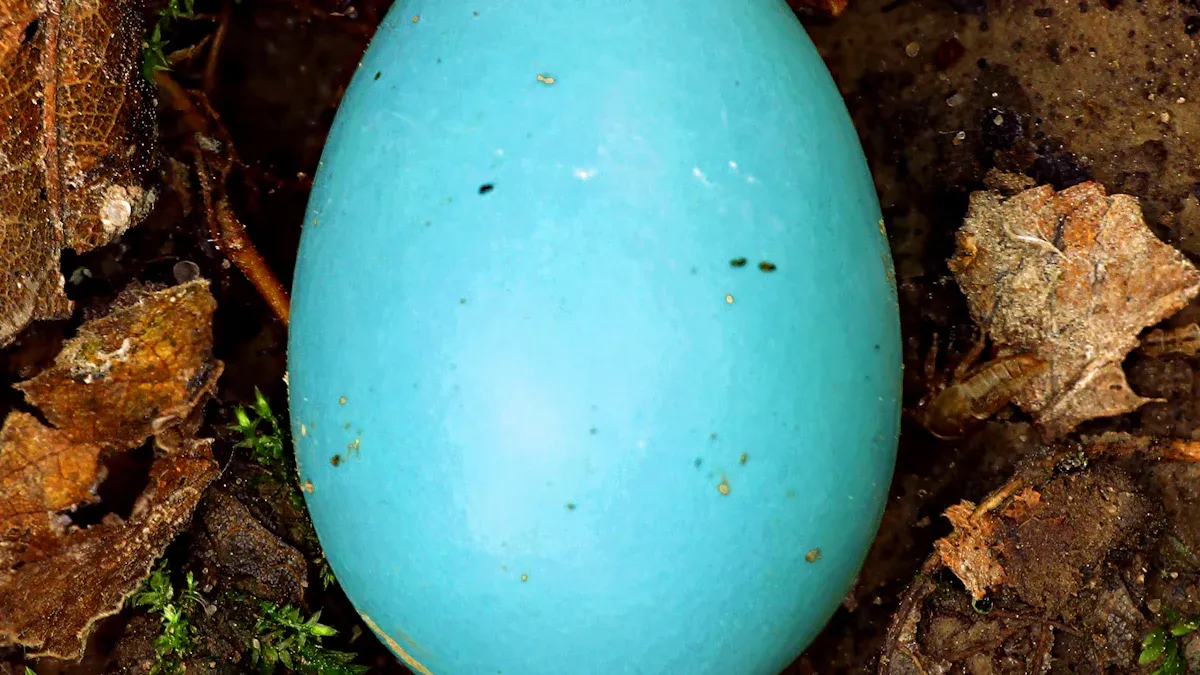
You will easily recognize an American Robin egg. Its color is a striking, uniform blue. Many people call this shade “robin’s egg blue.” You will notice it has no spots or markings. This plain appearance makes its identification straightforward. The egg is typically oval in shape. It measures about 1.1 to 1.3 inches long. This distinct color helps with quick identification among other bird eggs.
Clutch Size
American Robins are common backyard birds. They typically lay between 3 and 5 eggs per clutch. Female American Robins usually incubate these light blue eggs. This clutch size is common for many songbirds. You can expect to see this range if you find a robin’s nest. This information aids in your bird egg identification efforts.
Nesting & Habitat
American Robins build their nests in many places. You often find them in urban and suburban yards. They also nest in gardens and parks. Look for their nests in trees and shrubs. They might also choose sheds, porches, or decks. These birds adapt well to human environments. Their nests are usually cup-shaped. They build them from mud and grass. This wide range of nesting sites makes finding a robin’s nest quite common. Knowing these locations helps with accurate identification.
Northern Cardinal Egg
Egg Features
You will find northern cardinal eggs have a distinct appearance. Their color ranges from grayish to greenish-white. This subtle hue helps them blend into their surroundings. You will notice the smooth texture of these eggs when you observe them closely. While the base color is subtle, you can often spot various markings. These markings are key for accurate identification. They might include specks or blotches. Photos of these specific markings are available in detailed bird guides, further aiding your identification process. This unique combination of color and pattern makes their identification possible.
Clutch Size
A female cardinal typically lays three or four eggs per nest. Sometimes, you might find as few as one egg. Other times, you could discover as many as five. This range is common for the cardinal.
Nesting & Habitat
Northern cardinals prefer dense, shrubby areas for nesting. You often find their nests in forest edges, overgrown fields, or hedgerows. They also use backyards, marshy thickets, and ornamental landscaping. This wide range of locations helps with nest identification.
They build their nests in a fork of small branches. These nests are usually 1 to 15 feet high. Dense foliage hides them well, providing protection. You can find nests in many trees and shrubs. These include dogwood, honeysuckle, hawthorn, and grapevines. They also use redcedar, spruce, pines, and hemlock. Rose bushes, blackberry brambles, elms, sugar maples, and box elders are also common choices. This variety in nesting sites makes finding a cardinal nest an exciting discovery. Knowing these details assists your bird egg identification efforts. This information is crucial for proper identification of the species.
Blue Jay Egg
Egg Features
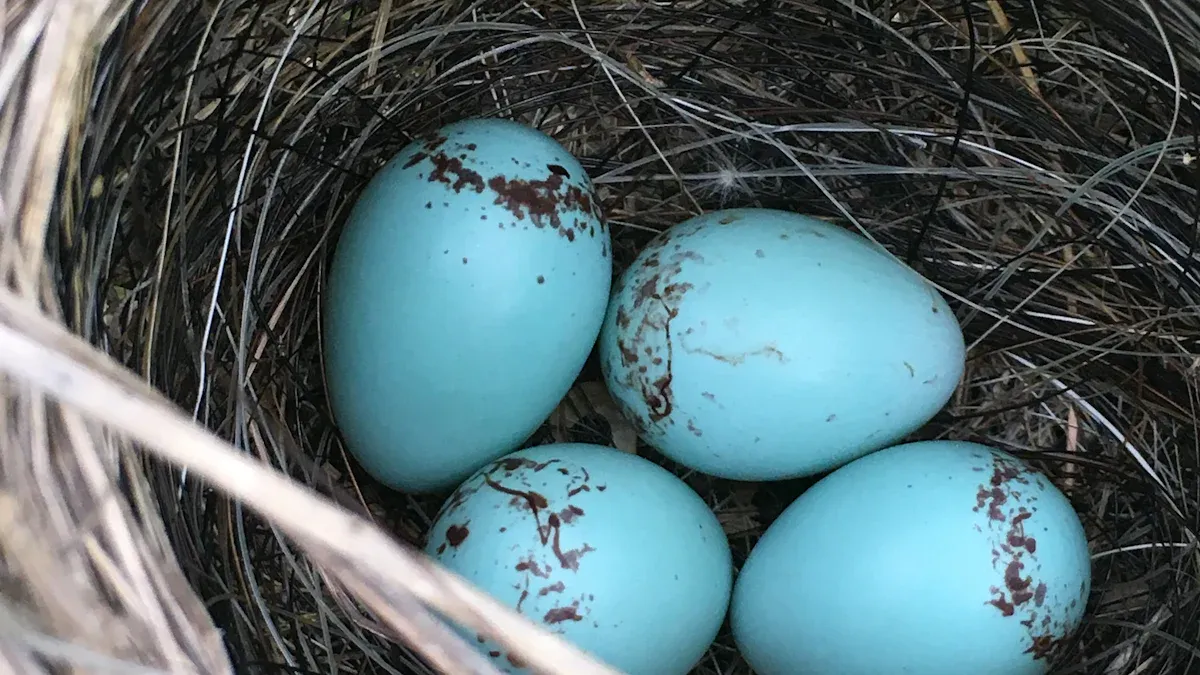
You will find Blue Jay eggs have a diverse look. Their base color varies. It can be pale olive, buff, or dull green. Sometimes, you might even see a bluish-white hue. These eggs often feature irregular spots and blotches. The markings are typically brown or olive.
You might also see gray or purplish specks. These spots are usually denser at the larger end of the egg, forming a wreath-like pattern. This unique pattern assists in their identification. Blue Jay eggs typically measure approximately one inch in length and three-quarters of an inch in width. Another common size range is 1.0-1.3 inches long and 0.7-0.9 inches wide. This size information is crucial for accurate bird egg identification.
Clutch Size
Blue Jays lay a varying number of eggs. The clutch size for Blue Jays can range from 2 to 7 eggs. You usually find between 3 and 6 eggs in a nest. An average clutch contains 4 or 5 eggs. This range helps you confirm your identification.
Nesting & Habitat
Blue Jays construct robust nests. You often locate them in the fork of a tree or a substantial shrub. They favor both deciduous and coniferous trees, providing good cover. These nests typically sit 10 to 20 feet above the ground, making them somewhat visible but still protected. Blue Jays gather a variety of materials. They use twigs, bark strips, leaves, and sometimes even human-made materials like string, cloth, or paper. They carefully line the nest’s interior with fine roots and soft plant fibers.
You can discover Blue Jay nests in woodlands, parks, and suburban areas. Their ability to adapt makes them a common sight in many environments. Knowing these nesting habits helps with overall identification. The presence of a jay in the area also provides a strong clue.
House Sparrow Egg
Egg Features
You will find House Sparrow eggs vary in appearance. Their base color is typically dull white, grayish-white, or pale greenish-white. These eggs often feature many spots and speckles. The markings can be gray, brown, or olive. You might see these spots scattered all over the egg. Sometimes, they are denser at the larger end. This pattern helps with their identification. House Sparrow eggs are usually oval in shape. They measure about 0.8 to 0.9 inches long. This size is quite small. Accurate identification relies on observing these details.
Clutch Size
House Sparrows are prolific breeders. They typically lay between 3 and 7 eggs per clutch. You will most often find 4 or 5 eggs in a nest. This clutch size allows them to raise several broods each year. This information aids in your bird egg identification.
Nesting & Habitat
House Sparrows are highly adaptable nesters. You often find their nests in urban and suburban areas. They build messy, bulky nests. These nests consist of grass, twigs, string, and feathers. They place nests in various sheltered locations. This makes their identification easier.
Eaves and Roofs: These sheltered spots offer protection from weather. Small gaps in soffits and roof structures serve as entry points.
Vents and Openings: Sparrows use vents, dryer ducts, and similar openings for warmth and safety.
Garages and Sheds: These structures provide many hiding spaces. They also protect from predators, especially if windows or doors are open.
You can also find nests in tree cavities or birdhouses. Their widespread presence makes finding a sparrow nest common. Knowing these nesting habits helps with proper identification. This detailed information assists your overall bird egg identification efforts.
European Starling Egg
Egg Features
You will notice European Starling eggs have a distinct appearance. Their color ranges from pale bluish to pale greenish. These eggs are typically unmarked. You will not see spots or speckles on them. This plain, uniform color helps you recognize them. The eggshells are smooth. They have an oval shape. European Starling eggs measure about 1.1 to 1.2 inches long. This size is similar to many other small bird eggs. However, their unique color aids in accurate identification. This specific hue makes their identification straightforward.
Clutch Size
European Starlings lay a good number of eggs. You will typically find between 3 and 7 eggs in a starling nest. Most often, a female starling lays 5 to 7 eggs. This clutch size allows them to raise several young. This information helps with your bird egg identification. It gives you a clue about the species.
Nesting & Habitat
European Starlings are cavity nesters. You will find their nests in holes. They use natural tree cavities. They also use old woodpecker holes. Starlings adapt well to human structures. You might find nests in building crevices. They also use birdhouses. These birds prefer open woodlands, parks, and suburban areas. They build a messy nest. It consists of grass, twigs, and leaves. They often line it with feathers. You can often spot their nests in urban environments. This makes their identification common. Knowing their preferred nesting sites assists your overall identification efforts. This helps you confirm your initial identification.
Mourning Dove Egg
Egg Features
You will find mourning dove eggs are plain white. They have no spots or markings. This simple appearance makes their identification quite easy. The eggs are typically oval. They have a smooth, dull surface. You can recognize their size. They measure about 2.57–2.96 cm (1.01–1.17 in) in length. Their width is around 2.06–2.30 cm (0.81–0.91 in). This consistent size helps with accurate identification. This distinct look helps you with bird egg identification.
Clutch Size
Mourning Doves usually lay two eggs per clutch. Sometimes, you might find only one. Rarely, they lay three or four. This small clutch size is typical for the mourning dove. They often raise several broods each year. This helps their population thrive. Knowing the clutch size assists your identification.
Nesting & Habitat
Mourning Doves build flimsy nests. You often see them in various locations. Their nests are usually a loose platform of twigs. They place them in dense foliage on branches. This includes evergreen, orchard, mesquite, cottonwood, and vine trees. You might also find nests on the ground, especially in western regions. This ground nesting is another clue for identification.
They also adapt well to human structures. You can find their nests in:
Gutters
Eaves
Abandoned equipment
Eve troughs
Rose arbors
Light poles
Functioning traffic signal lights
Steel I-beams supporting houses
Discarded cars and car parts
This wide range of nesting sites makes finding a mourning dove nest common. This information is crucial for proper identification.
American Crow Egg
Egg Features
You will find American Crow eggs have a distinct appearance. Their base color is typically dull blue-green to gray-green. Sometimes, you might see a pale bluish-green or olive-green hue. These eggs are not plain. They feature irregular blotches and spots. These markings come in different shades of brown and gray. You often see these blotches concentrated at the larger end of the egg. However, they can sometimes spread evenly across the shell. This unique pattern helps with their identification. The size of a crow egg is larger than many songbirds. This also aids in your bird egg identification efforts.
Clutch Size
American Crows lay a moderate number of eggs. You will typically find between 4 and 6 eggs in a crow nest. The average clutch size for American Crows falls within this range. Sometimes, you might discover as few as 3 eggs. On rare occasions, a nest could contain up to 9 eggs. This range helps you confirm your identification.
Nesting & Habitat
American Crows build large, sturdy nests. You often find these nests high in trees. They prefer deciduous or coniferous trees. Crows place their nests in a main crotch or on a horizontal limb. These nests are usually 10 to 70 feet above the ground. They construct their nests from sticks and twigs. They line the inside with softer materials. These include bark strips, grass, mud, and animal hair. You can find crow nests in various habitats. These include woodlands, open country, parks, and suburban areas. Their adaptability makes them common in many environments. Knowing these nesting habits helps with overall identification.
Barn Swallow Egg
Egg Features
You will find Barn Swallow eggs have a distinctive look. Their base color is typically white, creamy white, or sometimes pinkish-white. These eggs are not plain. They feature reddish-brown or purplish-gray spots and speckles. You often see these markings concentrated at the larger end of the egg. This creates a wreath-like pattern. This unique pattern helps with their identification. Barn Swallow eggs typically measure 20 mm × 14 mm (3⁄4 in × 1⁄2 in). They have an oval shape. This specific combination of color, markings, and size assists your bird egg identification.
Clutch Size
Barn Swallows usually lay a moderate number of eggs. You will typically find between 4 and 5 eggs in a nest. Sometimes, a clutch can range from 3 to 7 eggs. This clutch size is common for these agile flyers. Knowing this range helps you confirm your identification.
Nesting & Habitat
Barn Swallows are expert nest builders. They construct cup-shaped nests from mud pellets. They reinforce these nests with grass and straw. They line the inside with soft feathers. You will find these nests attached to vertical surfaces. They prefer human-made structures for nesting. You often locate them inside barns and outbuildings on farms. They also build nests under bridges and docks. Historically, they used caves and rock faces. You might even find them on rafters inside barns. These birds adapt well to human environments. Their choice of nesting sites provides strong clues for identification.
Song Sparrow Egg
Egg Features
You will find song sparrow eggs have a unique appearance. Their base color is typically greenish white. This subtle hue helps them blend into their surroundings. You will notice these eggs are dark-splotched. The markings are usually reddish-brown or purplish-brown. These spots often concentrate at the larger end of the egg. This pattern helps you with accurate identification. Song sparrow eggs are oval in shape. They measure about 0.7 to 0.8 inches long. This size is common for many small birds. However, the specific color and spotting aid in their clear identification.
Clutch Size
Female Song Sparrows lay a varying number of eggs. You will typically find between three and five eggs per clutch. Studies show that the average clutch size is approximately four eggs. However, a song sparrow’s clutch can range from 1 to 6 eggs. This range helps you confirm your bird egg identification.
Nesting & Habitat
Song Sparrows build their nests in well-hidden spots. You often find them on the ground. They also build nests in dense shrubs or low trees. These birds prefer areas with thick vegetation. Look for nests in overgrown fields, marsh edges, or along stream banks. They construct a cup-shaped nest. It consists of grasses, leaves, and bark strips. They line the inside with finer materials like rootlets and hair. This careful construction provides good camouflage. Knowing these nesting habits helps with overall identification.
House Finch Egg
Egg Features
You will find House Finch eggs have a varied appearance. Their base color is typically pale bluish-green or greenish-white. These eggs are not plain. They feature fine spots and speckles. The markings are usually black, purple, or pale olive. You often see these spots concentrated at the larger end of the egg. This creates a wreath-like pattern. This unique pattern helps with their identification. The length of a House Finch egg can range from 17.5 to 22.4 mm. This size information is crucial for accurate bird egg identification.
Clutch Size
House Finches typically lay a moderate number of eggs. You will usually find between 3 and 6 eggs in a finch nest. The average clutch size is about 4 or 5 eggs. This range helps you confirm your identification. House Finches can raise multiple broods in a single breeding season.
Nesting & Habitat
House Finches are highly adaptable nesters. You often find their nests in various locations. They prefer human-created habitats. These include buildings, lawns, and small conifers. You can also find them in urban centers. In rural areas, they use barns and stables.
In their native range in the Western US, they also use natural habitats:
Dry deserts
Desert grasslands
Chaparral
Oak savannahs
Streamsides
Open coniferous forests (below 6,000 feet elevation)
They build cup-shaped nests. These nests consist of twigs, grass, and leaves. They line them with softer materials like feathers or hair. You can find nests in deciduous trees, coniferous trees, cactus, and rock ledges. They also use woodlands, prairies, cities, farmlands, and deserts. You might even find nests in building vents, chimneys, and house eaves. This wide range of nesting sites makes finding a House Finch nest common. This information assists your overall identification efforts.
Chipping Sparrow Egg
Egg Features
You will find Chipping Sparrow eggs have a delicate appearance. Their base color is typically pale blue-green. This subtle hue helps them blend into their surroundings. These eggs feature markings of brown, purple, and black. You will notice these markings are mostly concentrated at the larger end of the egg. This pattern helps you with accurate identification. Chipping Sparrow eggs are small. They measure about 0.6 to 0.7 inches long. This size is typical for a small sparrow. This specific combination of color and markings aids in their clear identification.
Clutch Size
Chipping Sparrows lay a moderate number of eggs. The average clutch size for Chipping Sparrows is 4. You will typically find between 2 and 7 eggs in a nest. This range helps you confirm your identification. They often raise multiple broods during the breeding season.
Nesting & Habitat
Chipping Sparrows build neat, cup-shaped nests. You often find these nests in small trees or shrubs. They prefer conifers, but they also use deciduous trees. They place their nests relatively low to the ground, usually between 2 and 15 feet high. They construct their nests from fine grasses, rootlets, and hair. You might even see horsehair woven into the nest. This makes the nest look very tidy. You can find Chipping Sparrows in open woodlands, parks, and suburban areas. They are common in yards with scattered trees. Knowing these nesting habits helps with overall bird egg identification.
Common Grackle Egg
Egg Features
You will find Common Grackle eggs have a varied appearance. Their base color is typically pale blue or greenish-white. These eggs are not plain. They feature heavy blotches and streaks. The markings are usually brown, black, or purple. You often see these markings concentrated at the larger end of the egg. This creates a distinct pattern. This unique pattern helps with their identification. Common Grackle eggs are oval in shape. They measure about 1.1 to 1.3 inches long. This size is larger than many songbirds. This specific combination of color, markings, and size assists your bird egg identification.
Clutch Size
Common Grackles lay a moderate number of eggs. You will typically find between 4 and 7 eggs in a grackle nest. The average clutch size is about 5 or 6 eggs. This range helps you confirm your identification. They usually raise one brood per year.
Nesting & Habitat
Common Grackles build sturdy nests. You often find these nests close to water sources. They are usually well-concealed within dense tree branches or thick shrubs. You can find nests anywhere from 10 to 30 feet above the ground. They may also build nests within dense reedy marsh growth, such as cattails. Preferred spots include two vertical limbs or a horizontal branch in a conifer tree. You might also find nests high in coniferous trees near open areas. Common Grackles sometimes use unusual nesting sites. These include birdhouses, woodpecker holes, cliff crevices, and barns. They have even been observed nesting in the active nests of Ospreys and Great Blue Herons. This wide range of nesting sites helps with overall identification.
Downy Woodpecker Egg
Egg Features
You will find Downy Woodpecker eggs are quite simple in appearance. Their color is a pure, glossy white. These eggs have no spots or markings. This plain look helps you recognize them. They are typically oval in shape. Downy Woodpecker eggs are small. They measure about 0.7 to 0.8 inches long. This size is consistent for this species. This distinct, unblemished white color aids in their identification.
Clutch Size
Downy Woodpeckers lay a moderate number of eggs. You will typically find between 3 and 8 eggs in a nest. They generally lay one egg per day. A typical clutch size is 5 eggs. Downy Woodpeckers usually have one brood per year. This information helps with your bird egg identification.
Nesting & Habitat
Downy Woodpeckers are cavity nesters. You will find their nests in holes they excavate themselves. They prefer dead trees or dead limbs of live trees. They often choose deciduous trees. These birds create a small, round entrance hole. The nest cavity is usually 6 to 12 inches deep. You can find their nests in woodlands, parks, and suburban areas. They adapt well to human environments. Their presence in your backyard can lead to easy identification of their nesting sites. Look for their nests in trees with soft wood. This makes excavation easier for them. Knowing these nesting habits assists your overall identification efforts.
Eastern Bluebird Egg
Egg Features
You will find Eastern Bluebird eggs have a beautiful, distinct color. They are typically a pale, sky-blue. This color often reminds you of a clear spring day. Sometimes, you might see a pure white egg. These eggs are usually unmarked. You will not find any spots or speckles on their smooth surface. This plain, uniform color helps you recognize them quickly. The eggs have an oval shape. They measure about 0.8 inches long. This size is consistent for the species. This specific hue makes their identification straightforward.
Clutch Size
Eastern Bluebirds lay a moderate number of eggs. You will typically find between 4 and 5 eggs in a nest. This is a common clutch size for these small, cavity-nesting birds. Sometimes, a clutch can range from 2 to 7 eggs. This variation depends on factors like the female’s age and local food availability. They often raise two or three broods in a single breeding season. Knowing this range helps you confirm your identification.
Nesting & Habitat
Eastern Bluebirds are cavity nesters. You will find their nests in natural tree cavities. They also use old woodpecker holes. These bluebirds readily use human-made nest boxes. This makes them a favorite for backyard birdwatchers. They build a neat, cup-shaped nest. It consists of fine grasses, pine needles, and sometimes animal hair or soft feathers. You can find them in open woodlands, orchards, and suburban areas. They prefer fields with scattered trees and open spaces for foraging. Their choice of nesting sites provides strong clues for identification. Look for nests in areas with short grass and perching spots. The presence of an Eastern Bluebird in the area also gives you a strong hint. This information assists your overall bird egg identification efforts.
Black-capped Chickadee Egg
Egg Features
You will find Black-capped Chickadee eggs have a distinct appearance. Their base color is typically white. These eggs feature fine reddish-brown spots. You often see these spots concentrated at the larger end of the egg. This creates a wreath-like pattern. This unique pattern helps with their identification. Black-capped Chickadee eggs are oval in shape. They measure about 0.6 inches long. This size is quite small. This specific combination of color and markings aids in their clear identification.
Clutch Size
Black-capped Chickadees lay a good number of eggs. You will typically find between 6 and 8 eggs in a nest. Sometimes, a clutch can range from 5 to 10 eggs. This clutch size is common for these small, active birds. Knowing this range helps you confirm your identification.
Nesting & Habitat
Black-capped Chickadees are cavity nesters. You will find their nests in holes they excavate themselves. They prefer soft, decaying wood. They often choose dead trees or stumps. They also use old woodpecker holes. These chickadees readily use human-made nest boxes. This makes them a favorite for backyard birdwatchers. They build a soft nest. It consists of moss, bark fibers, and plant down. They line it with animal hair or feathers. You can find them in deciduous and mixed forests. They also live in parks and suburban areas. Their choice of nesting sites provides strong clues for bird egg identification. Look for nests in areas with mature trees. The presence of a Black-capped Chickadee in the area also gives you a strong hint. This information assists your overall identification efforts.
Ethical Birdwatching Practices
You play a vital role in protecting wild birds and their habitats. Your actions ensure these creatures thrive. Always prioritize the well-being of birds when you observe them. This means you must follow ethical guidelines.
Leave Eggs Undisturbed
You must never disturb or handle wild bird eggs. It is against the law in many places. Disturbing a nest can cause parent birds to abandon their eggs. Federal laws, like the Migratory Bird Treaty Act of 1918, make it a federal offense to move or destroy an active bird nest. An active nest contains eggs or a brooding adult bird. This act protects over 800 species. It covers living and dead birds, their feathers, eggs, and nests. Destroying a nest with eggs or young is illegal without a special permit. Violations can lead to severe penalties. These include prison time and large fines. You cannot even keep a protected nest found on the ground without a special permit.
Observe from a Distance
You should always observe birds and their nests from a safe distance. Use binoculars or a spotting scope if you want a closer look. This prevents you from stressing the birds. It also keeps you from accidentally damaging their nest or eggs. Your presence too close to a nest can make parents nervous. They might leave their eggs vulnerable to predators or harsh weather. Respect their space.
Know Local Regulations
You must know and respect local wildlife regulations. These laws protect birds and their habitats. Beyond the Migratory Bird Treaty Act, other federal laws exist. The Bald and Golden Eagle Protection Act, enacted in 1940, specifically protects eagles, their eggs, and nests. The 1973 Endangered Species Act also prohibits harm to endangered birds and their eggs. Penalties for violating these acts can include jail time and significant fines. State and Native American tribal laws often provide even stricter protections. For example, all native bird species in Florida are protected under the federal Migratory Bird Treaty Act. This act prohibits the intentional ‘take’ of these birds, their eggs, nests, or young without proper authorization. Understanding these rules helps you practice responsible birdwatching.
You now have a powerful tool. This bird egg identification chart makes identifying common bird eggs easy and enjoyable. Apply your new knowledge. Continue exploring the natural world around you. This bird egg identification chart guides your discoveries. Always practice ethical birdwatching. Respect wildlife and their habitats. Your careful observation protects them. Each egg identification deepens your understanding. This simple chart opens a world of wonder.