


Many people wonder if hawks are dangerous to humans. Direct hawk attacks on humans are extremely rare. These incidents are almost always defensive actions. This blog explores the minimal risks associated with hawks, helping readers understand hawk behavior. We also provide guidance for safe coexistence. This post clarifies the true nature of hawk-human interactions, emphasizing that the risk of hawks dangerous to humans is generally low.
Key Takeaways
Hawks are not dangerous to humans. Direct attacks are very rare.
Hawks act aggressively to protect their nests and young. This happens mostly during nesting season.
Most ‘attacks’ are warning displays. Hawks want you to leave their space.
Protect small pets from hawks. Use shelters or deterrents.
Respect hawk nesting areas. Stay away from them to avoid problems.
Hawk Behavior and Aggression
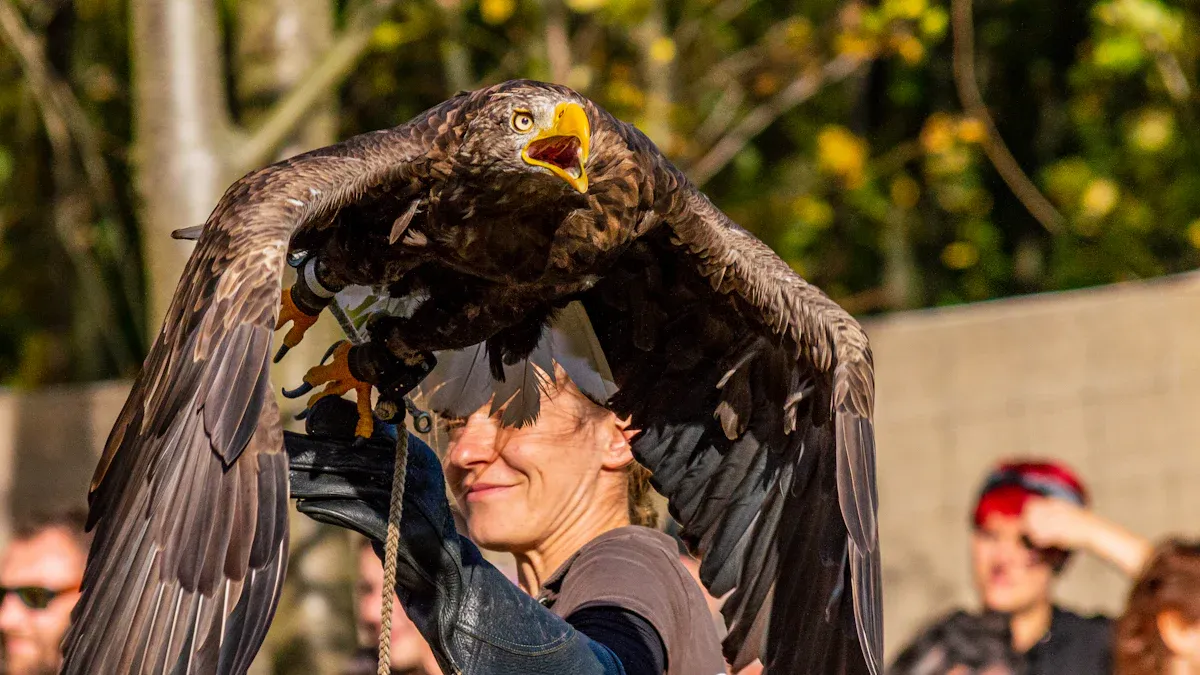
Hawks primarily show aggression for defensive reasons. This behavior is not offensive. It mostly happens during nesting season when parent hawks protect their young.
Nesting Season Defense
During nesting season, parent hawks become very protective. They guard their chicks fiercely. This is a natural instinct. Hawks with nests closer to the ground in suburban areas often show stronger defensive behaviors. Urban raptors, including hawks, also display heightened aggression during this time. They might ‘dive-bomb’ to scare away perceived threats. This action aims to warn intruders, not to cause serious harm.
Territorial Displays
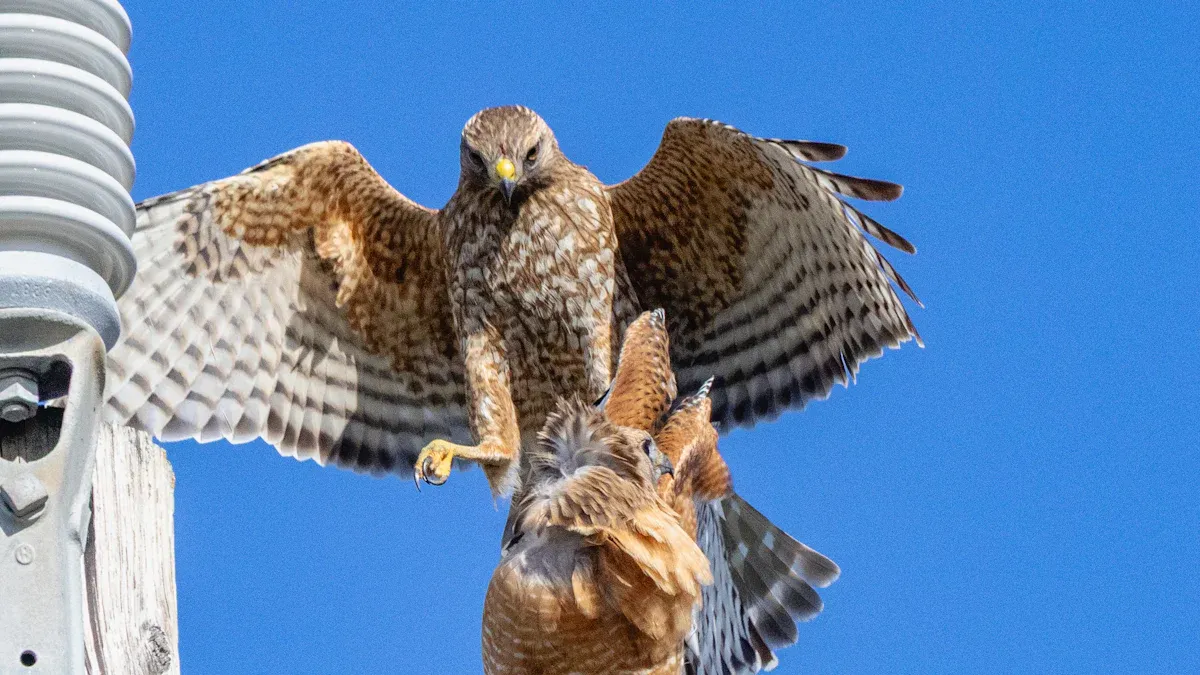
Hawks also defend their territory. They use various displays to show other birds or animals who owns the space. These displays rarely involve direct human confrontation. However, if a hawk perceives a human as a direct threat to its immediate territory, it might react. Hawks engage in aggressive behaviors like chasing and attacking intruders with wings and talons. Sometimes, these encounters can involve talon locking, where two birds grapple in the air.
Hawks also use specific postures to communicate aggression. They hold their body and head upright with feathers erected. They fix their eyes on an intruder and lean forward. Flight displays are common too. These include exaggerated wingbeats and circling maneuvers, often with repeated screams. The ‘Sky-dance’ display, with steep dives and upward shoots, also serves as a territorial warning. For example, Harris’s Hawks defend their territories all year. Red-tailed Hawks show aggression towards Great Horned Owls during breeding season, chasing and attacking them.
Mistaken Identity Incidents
Very rarely, a hawk might mistake a small object or a small pet for prey. This is an extremely uncommon event. It is important to understand that this behavior is not directed at humans themselves. Hawks do not see humans as prey. They are much too large for a hawk to hunt.
Are Hawks Dangerous To Humans: The Real Risk
Actual physical contact or injury from hawks to humans is exceptionally rare globally. Most encounters people perceive as aggressive are warning displays. These displays are not physical attacks. Hawks recognize they cannot consume human adults. They tend to flee when humans are present. This reinforces the low danger level.
Low Incidence of Conflict
Physical conflict between hawks and humans occurs very infrequently. The expansion of urban areas leads to habitat fragmentation for hawks. This increases interactions between hawks and humans in these settings. Despite more frequent encounters, direct attacks remain uncommon. During their breeding season, from late winter to summer, hawks show heightened aggression. They protect their nests during this time. This can lead to more frequent interactions with humans and pets near nesting sites. However, these interactions rarely escalate to actual physical harm to people. The risk of Hawks Dangerous To Humans remains minimal.
Warning Displays vs. Attacks
Most ‘aggressive’ encounters are actually warning displays. Hawks use various methods to deter perceived threats. They often swoop close to intruders without making contact. They also use vocalizations. For example, adult Swainson’s Hawks produce a shrill ‘kreeeeee’ alarm call. This piercing vocalization lasts 2–3 seconds and fades at the end. They use it when perched or in flight, specifically when intruders are near the nest. These actions serve as a clear message: “Stay away.” They are not attempts to cause injury. These displays aim to scare away threats, protecting their young or territory.
Potential Injury Severity
Even in the rare event of physical contact, injuries are typically superficial. People might experience minor scratches. These are not serious wounds. A hawk’s talons are sharp, but they are designed for catching small prey, not for fighting large animals. Hawks do not view humans as prey. They understand humans are too large to hunt. Therefore, they do not typically engage in full-force attacks against adults. The primary goal of a hawk’s defensive action is to deter, not to inflict significant harm. This further confirms that the idea of Hawks Dangerous To Humans is largely a misconception.
Minimizing Risk: Safe Coexistence
People can live safely with hawks. Giving hawks space is important. This is especially true during their breeding season. People should avoid known nest sites. Do not approach, feed, or harass hawks. This can change their natural behavior. Hawks are not dangerous to humans. However, small pets can be prey. People should take precautions for their pets. This indirectly reduces human involvement in a hawk’s hunting. Birds of prey smaller than eagles are very unlikely to attack pets. Even large hawks, like the Red-tailed Hawk, typically do not attack them.
Respecting Nesting Areas
Hawks become protective when they have nests. People should give these areas a wide berth. Staying away from nesting sites helps prevent conflicts. It also allows hawks to raise their young without stress. Observe hawks from a distance. Use binoculars if you want a closer look. This shows respect for their natural habitat. It also keeps both humans and hawks safe.
Avoiding Provocation
Do not provoke hawks. This means people should not try to get their attention. Do not throw things at them. Do not make loud noises near them. Feeding hawks is also a bad idea. It makes them associate humans with food. This can lead to unwanted interactions. Hawks are wild animals. They should remain wild. Let them hunt for their own food. This helps them maintain their natural behaviors.
Protecting Small Pets
Hawks do not see humans as prey. However, small pets can sometimes be at risk. Hawks can carry prey up to their own body weight. A 2.5-pound hawk can comfortably carry prey around 1 to 1.2 pounds. This means very small pets might be vulnerable. People should take steps to protect their small animals.
Here are some effective strategies to protect small pets:
Provide physical shelters. ‘Catios’ for cats and ‘dogios’ for small dogs are good options. These are covered enclosures attached to a house. They allow pets to be safely outdoors.
Use deterrents. Life-size, realistic-looking owl decoys can work. They should make random movements and hoot. Stationary ones need moving every few days. Hanging reflective mylar tape, shiny objects, or CDs can also confuse hawks.
Employ protective gear. Hawk vests, similar to coyote vests, shield dogs from hawk talons. Spike vests make it painful for hawks to grab a pet.
Install motion-activated sprinklers. Wind chimes and noise-making devices can scare off hawks. Make sure they do not disturb neighbors.
Modify the environment. Install bird roosting spikes on perches to deter hawks. Cover outdoor bird feeders to avoid attracting them. Aviaries and outdoor pet bird cages need fine mesh. This prevents talons from reaching inside.
Common Hawk Species and Human Interaction
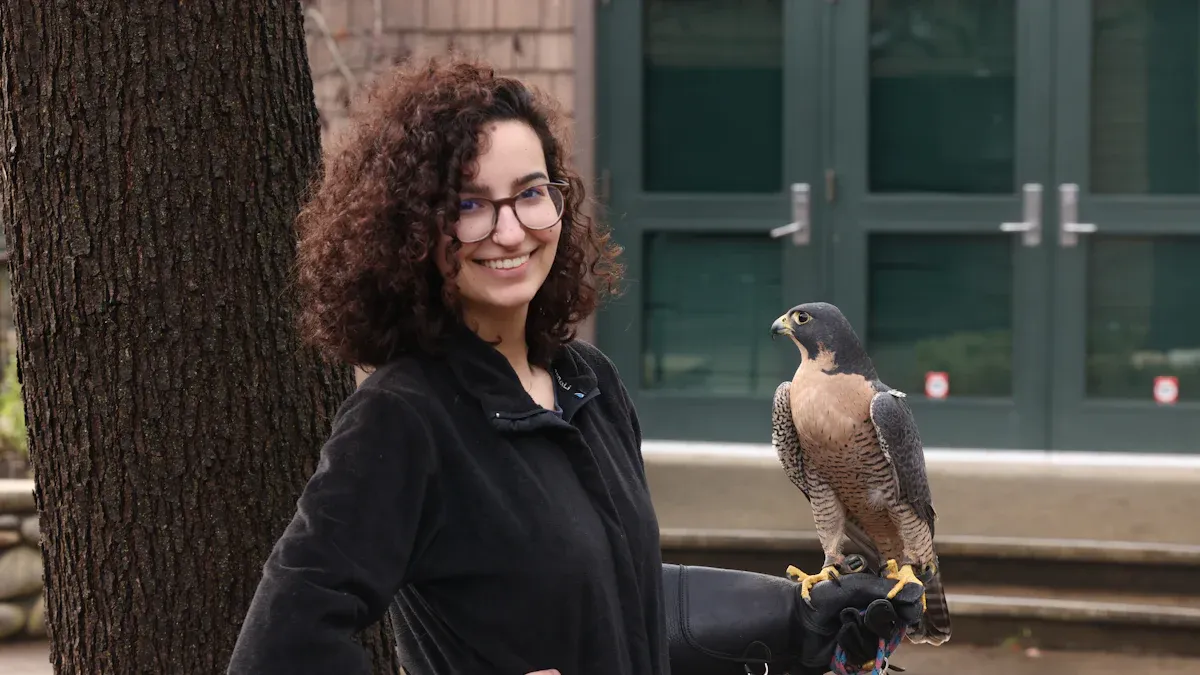
Different hawk species show various behaviors when they interact with humans. Some species are more common in urban settings. Others are known for their strong defensive actions.
Red-tailed Hawks in Urban Areas
Red-tailed Hawks are common predators. They thrive in urban environments. These hawks use tall trees and human-made structures for nesting. They continually use urban areas for hunting and defending their territory. People observe their soaring behavior in cities, including on bluffs. Other observed behaviors include reproduction, migration, and interactions with other species. Red-tailed Hawks adapt to nesting in cities across North America. This shows their ability to live near people.
Goshawks and Aggression
Goshawks are known for their aggressive behavior. They show a high level of aggression towards other Goshawks. Their territorial fights can even be fatal. Both male and female Goshawks aggressively defend their nests. They attack any perceived intruder, including humans. Goshawks make very loud alarm calls. They dive on intruders, especially when people come closer than 50 meters to the nest. They perform aggressive airborne diving on intruders. They lunge or dive-bomb. They use their wings, talons, and bill to attack if warning postures do not work.
Other Species Overview
Other hawk species also interact with humans. Cooper’s Hawks, for example, often avoid human detection. This is especially true when they are nesting in residential areas. One observation showed a Cooper’s Hawk changing its flight path. It climbed quickly to hide its nest location after seeing a human. Historically, farmers shot Cooper’s Hawks because the birds preyed on chickens. This past conflict suggests these hawks have learned to be wary of humans. This wariness helps them avoid conflict.
Debunking Hawk Aggression Myths
Many common beliefs about hawks and their aggression towards humans are simply myths. People often misunderstand hawk behavior. Hawks are not predatory threats to humans. They are generally too small to kill large animals.
Hawks as Human Predators
The idea that hawks see humans as prey is a significant misconception. Hawks are much smaller than humans. They hunt animals that fit their size and strength. For instance, Cooper’s Hawks typically target birds like robins and jays. Broad-winged Hawks eat snakes, amphibians, insects, and small mammals. Red-tailed Hawks primarily hunt rodents and other small animals such as rats, mice, and rabbits. Merlins focus on small to medium-sized birds, small mammals, and insects. Hawks simply lack the physical ability to prey on a human. They do not view humans as a food source.
Intentional Attacks on Adults
Hawks do not intentionally attack adult humans. Their aggressive displays are always defensive. They protect their nests or their young. A hawk perceives a human as a threat to its territory, not as food. They want the human to leave their space. These actions are a form of communication. They tell intruders to stay away. They are not attempts to cause serious harm.
Misinterpreting Natural Behaviors
People often misinterpret natural hawk behaviors as aggression. A hawk swooping close to a person might seem threatening. However, this is usually a warning display. Loud vocalizations also serve as warnings. These behaviors tell intruders to move away from a nest or territory. They are not attempts to harm. Hawks are simply communicating their boundaries. They are protecting their young or their hunting grounds. Understanding these natural instincts helps clarify why the notion of Hawks Dangerous To Humans is largely unfounded.
Hawks pose minimal danger to humans. The idea of “Hawks Dangerous To Humans” is largely a myth. Their rare aggressive displays are primarily defensive. These actions occur during nesting season when they protect their young. Understanding hawk behavior is crucial. People must respect their space. We can safely coexist with these magnificent birds. Appreciate them from a distance. Falcons, hawks, and eagles are not generally dangerous to humans.
FAQ
### Is it common for hawks to attack humans?
No, hawk attacks on humans are extremely rare. Hawks typically only show aggression when defending their nests or young. They do not view humans as prey.
### What should I do if a hawk swoops near me?
If a hawk swoops, it is usually a warning. The hawk wants you to leave its territory. Move away from the area calmly. Avoid making sudden movements or provoking the bird.
### Can hawks carry away small pets?
Hawks can carry prey up to their own body weight. Very small pets, like tiny puppies or kittens, might be at risk. Larger hawks like Red-tailed Hawks rarely attack pets.
### Why do hawks sometimes seem aggressive?
Hawks appear aggressive mainly during nesting season. They protect their chicks from perceived threats. This defensive behavior includes swooping and vocalizing to warn intruders away.
### Do hawks hunt humans for food?
No, hawks do not hunt humans for food. Humans are far too large for any hawk to prey upon. Hawks hunt small animals like rodents, birds, and insects.
