


Quintana Roo offers incredible birdwatching opportunities. This region boasts unique ecosystems, and you’ll find many beautiful birds in Quintana Roo. eBird records 281 bird species in Quintana Roo, with the Yucatan Peninsula being home to around 10 endemic species. This guide helps you identify key birds and discover prime viewing locations in the Yucatan. You’ll also learn practical birdwatching tips for the Yucatan Peninsula. Explore the amazing tropical avian species and appreciate the vibrant birdlife of the Yucatan.
Key Takeaways
Quintana Roo is a great place for birdwatching. It has many different kinds of birds.
You can see many special birds in Quintana Roo. These include flamingos, toucans, and hummingbirds.
Good places to watch birds are Sian Ka’an Biosphere Reserve and Isla Contoy National Park.
Always use binoculars and a field guide for birdwatching. Go early in the morning to see more birds.
Protect birds and their homes. Do not disturb them when you are watching.
Understanding Birds in Quintana Roo: Avian Richness
Geographic Overview
Quintana Roo is a prime spot for birdwatching. You find it in a special place called the Mexican Neotropics. This area is a transition zone, which means it has many different kinds of birds. Quintana Roo’s location helps explain its high number of birds. The region gets a lot of rain. This rainfall creates diverse plant life and different habitats. Humid places like Quintana Roo generally support more birds than dry areas. You can find over 527 bird species across 62 families here. This includes 12 endemic species, which live only in this region. The Yucatan Peninsula is truly a bird haven.
Key Habitats
Quintana Roo offers many different places for birds to live. You will find four main ecosystems here. These include tropical forests, savannas, mangrove forests, and coral reefs. Farming also creates new habitats for birds. These new places include second-growth forests and open fields. The region has a long coastline with beautiful beaches. It also features unique cenote sinkholes. The Sian Ka’an Biosphere Reserve shows this amazing variety. It has semi-evergreen tropical forest, wetlands, savannas, and marine habitats.
Many birds live in these distinct habitats. For example, Tropical Kingbirds like open forests and forest edges. Great Kiskadees prefer woodlands close to water. Golden-fronted Woodpeckers live in tropical rainforests. Brown Pelicans stay in marine and estuarine habitats. Hooded Orioles enjoy open forests and urban areas. You will see many birds in the richly forested and coastal regions of the Yucatan.
Iconic Bird Species
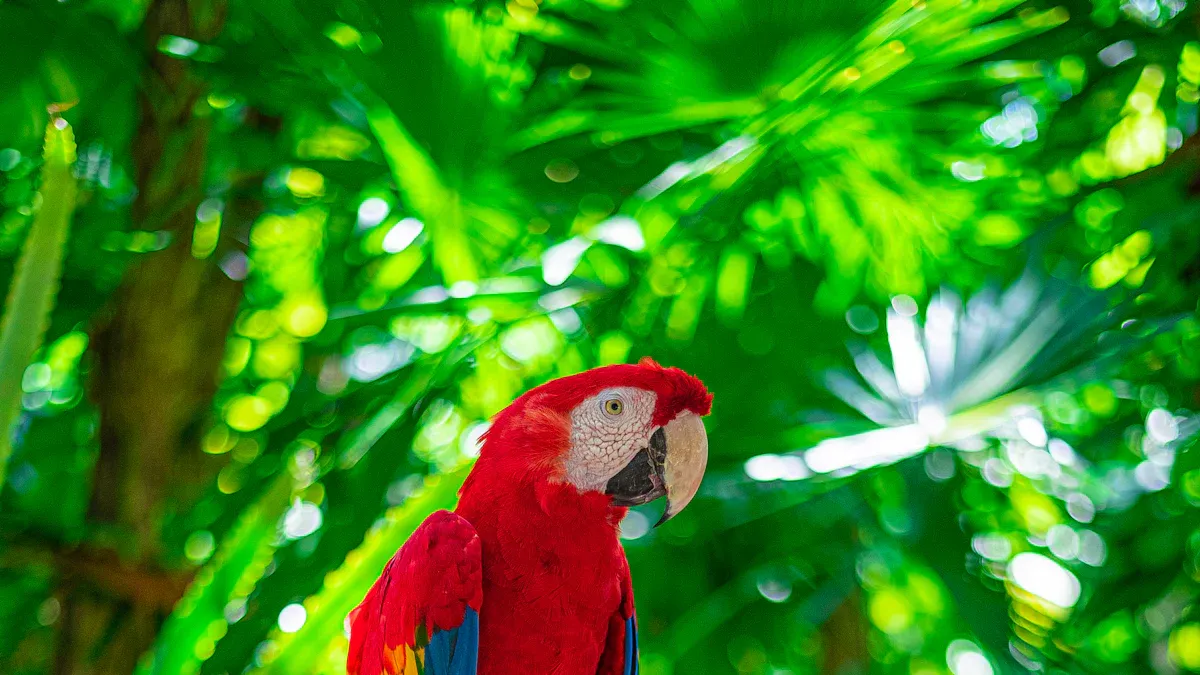
Quintana Roo is home to many amazing birds. You can find some truly iconic avian residents here. Each one offers a unique viewing experience. This section will help you identify these special birds. You will also learn where to find them.
Resplendent Quetzal
The Resplendent Quetzal is a bird of stunning beauty. Its iridescent green plumage and long tail feathers make it unforgettable. Males have a vibrant red breast. They also have a shaggy crest. These birds live in cloud forests. You will find them in higher elevations. Quintana Roo’s tropical forests offer suitable habitats. Look for them in areas with dense canopy. They often perch quietly. You might need patience to spot one.
Yucatan Jay
The Yucatan Jay is a striking bird. You will easily recognize it. Adult Yucatan Jays have a black head, nape, and underparts. Their back, wings, and tail are a sharp blue. They have black irises and eye rings. Their beak, legs, and feet are yellow. Both sexes look the same. Immature birds look different. Their head, body, and tail tip are white. Their back is a soft blue. Their wings and tail are soft gray. The outer tail feathers are white. Their beak, legs, and feet are soft yellow with a pink tint. Their irises are dark brown. Young jays change as they grow. Their yellow beak and eye rings turn black within their second year. White head and body feathers become black during their first major molt.
These jays are about 30 cm (12 inches) long. They have a black body with blue wings, mantle, and tail. Their bill is black, and their eye rings and legs are yellow. Immature birds have a yellow bill. In Quintana Roo, you find the Yucatan Jay in both humid and scrubby forests. You can also see them in coastal scrub areas. These habitats are usually below 500 meters (1,600 ft) in elevation. The Yucatan Jay also lives in subtropical or tropical dry forests. You can find them in plantations and cleared areas. These are at altitudes up to 250 meters (820 ft) within the Yucatan Peninsula. Listen for their distinctive calls. This often helps you locate them.
Flamingos
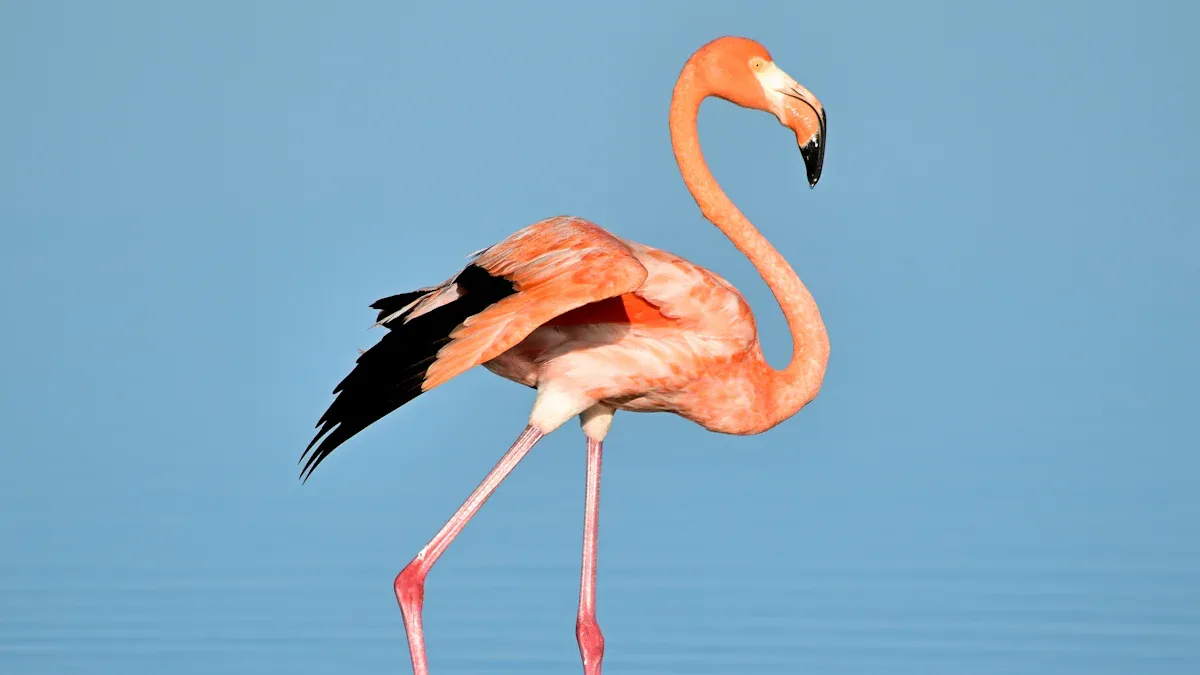
You can see beautiful flamingos in Quintana Roo. The Caribbean flamingo, also known as the American flamingo, lives here. It is a year-round resident. You find it along the north coast of Campeche, Yucatan, and Quintana Roo. Flamingos gather on the northern coast of the Yucatan Peninsula. The Yum Balam Flora and Fauna Protection area in northern Quintana Roo is a stopover and feeding area for migrating flamingo groups. The main nesting site in Mexico is Ría Lagartos. Other important feeding and stopover areas include Los Petenes in Campeche and Ría Celestún Biosphere. This is on the western edge of Yucatan state.
The American flamingo is a rare winter visitor in the coastal waters of Ascensión and Espiritu Santo bays. These bays are in the Sian Ka’an Biosphere Reserve in Quintana Roo. You might see groups of a few hundred there. Their primary feeding and nesting grounds are along the northern coast of the Yucatan Peninsula. This stretches from the Celestún estuaries to the west and Ría Lagartos to the east. Look for them in shallow, brackish waters. They often feed with their heads upside down.
Toucans
Toucans are unmistakable birds. They have large, colorful bills. The Keel-billed Toucan is a common species in Quintana Roo. Its bill shows bright green, blue, and orange colors. These birds live in tropical lowland rainforests. You often see them in the forest canopy. They eat fruits, insects, and sometimes eggs. Listen for their frog-like croaking calls. You can spot them high in the trees. They often travel in small flocks.
Hummingbirds
Hummingbirds are tiny, energetic birds. They are a joy to watch. Quintana Roo hosts many hummingbird species. You can see the Rufous-tailed Hummingbird or the Wedge-tailed Sabrewing. The Cozumel Emerald is a special hummingbird. It is found only on Cozumel Island. Hummingbirds feed on nectar from flowers. They also eat small insects. Look for them in gardens, forest edges, and flowering shrubs. You can attract them to feeders with sugar water. Their rapid wing beats create a humming sound.
Raptors
Raptors are birds of prey. They include hawks, eagles, and falcons. You can see many raptor species in Quintana Roo. The Roadside Hawk is common. The Great Black Hawk is also present. The Aplomado Falcon is another notable raptor. It is globally classified as “Not Threatened” or “Species of Least Concern.” This is due to its wide distribution and flexible habitat. However, Mexico lists it as Threatened. The U.S. lists it as Endangered. This is mainly due to pesticide contamination and habitat loss. Look for raptors soaring high above open fields or perching on tall trees. They hunt small mammals, reptiles, and other birds. You might also spot a green jay in the same areas.
Waterfowl and Shorebirds
Quintana Roo’s coastal areas and wetlands attract many waterfowl and shorebirds. You can see various ducks, herons, and egrets. The Great Blue Heron is a majestic sight. It stands tall in shallow waters. You can also find various sandpipers and plovers along the beaches. These birds feed on fish, crustaceans, and insects. Visit lagoons, estuaries, and coastal mudflats. You will find many species there. Early morning or late afternoon are the best times for viewing.
Other Notable Species
Beyond these iconic birds, Quintana Roo offers many other unique species. The Cozumel Wren is an endemic species on Cozumel Island. It differs from mainland wrens with a white belly and distinct songs. The Yucatan Woodpecker is another interesting bird. It lives in tropical forests. You can also find the Cozumel Emerald, a hummingbird, on Cozumel Island. The Cozumel Thrasher is another Cozumel endemic species, though rarely seen since 2004. The Cozumel Vireo also lives on Cozumel Island. The Yucatan Wren is a near endemic species. It lives in drier, cactus scrub habitats. You can find it on the western and northern fringes of the Yucatan Peninsula. This includes areas near Celestun. You might also encounter the vibrant green jay in forested areas.
Best Birdwatching Locations
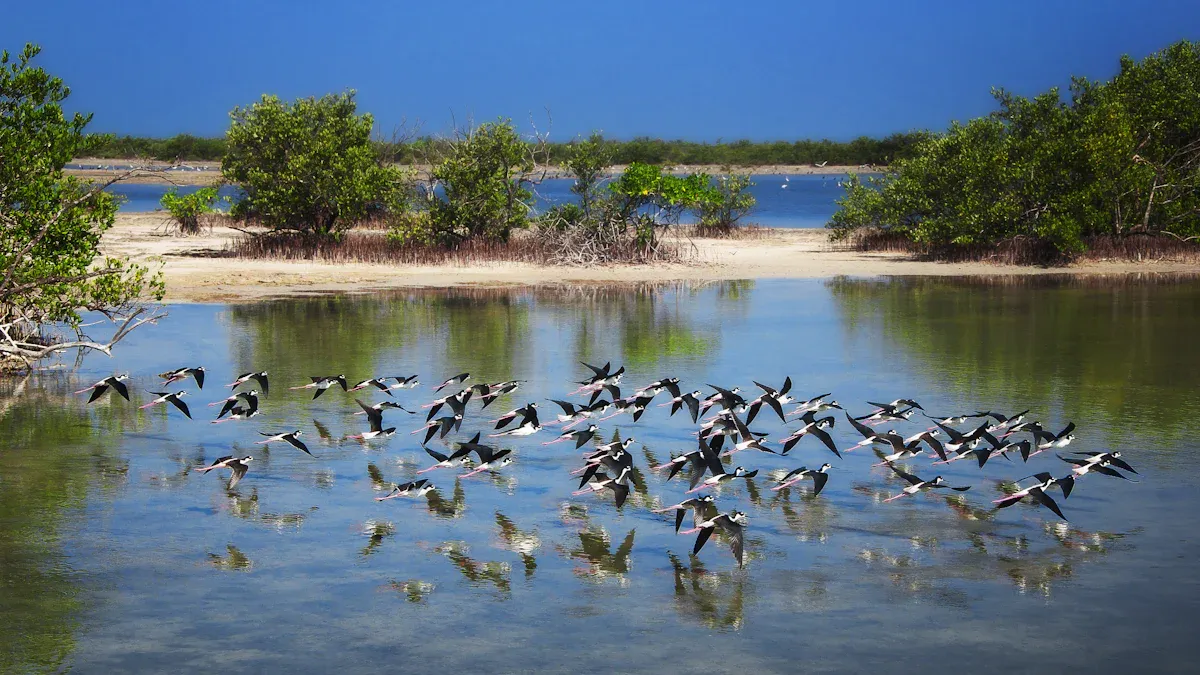
Quintana Roo offers many fantastic places to see birds. You can find diverse habitats across the Yucatan Peninsula. These spots provide unique chances to observe tropical avian species. A pocket-format guide for 408 species is available. You will find it a useful resource for identifying the birds you encounter.
Sian Ka’an Biosphere Reserve
The Sian Ka’an Biosphere Reserve is a top birdwatching destination. It became a Biosphere Reserve in 1986. UNESCO recognized it as a natural heritage site in 1987. This reserve is one of Mexico’s largest protected areas. It covers over 1.5 million square miles along the northern coastline. You will find diverse ecosystems here. These include semi-evergreen tropical forests, wetlands, savannas, and marine areas. Over 345 bird species live in Sian Ka’an. This includes more than 1 million nesting migratory birds from the United States and Canada. You might even spot the uncommon Jabiru stork.
Over 300 bird species call Sian Ka’an home. You can see ospreys and roseate spoonbills. Various migratory warblers also visit. Birds Island is an excellent spot for birdwatching. Consider the time of year for your visit. Migratory birds are often present during the winter months. The dry season, from November to April, offers good weather for spotting wildlife.
Isla Contoy National Park
Isla Contoy is known as ‘The Island of Birds’. It is a protected natural reserve. This island serves as a sanctuary for over 150 species of resident and migratory birds. It became a National Park in 1998. Strict conservation rules keep the island untouched. Only 200 visitors can enter per day. You cannot stay overnight on the island.
Isla Contoy is a crucial nesting site for seabirds in the Mexican Caribbean. You can easily observe frigatebirds, brown pelicans, and double-crested cormorants. Ecotourism is carefully regulated here. You can only access the National Park by authorized boats. These boats typically depart from Cancun, Isla Mujeres, and Puerto Juarez. Boat arrivals are between 10 AM and 11 AM. Departures are between 3 PM and 5 PM. The island hosts Mexico’s most important grey pelican colony on the east coast. Nesting sites are also available for the peregrine falcon. During summer, other species like the bobo White belly, cormorant, magnificent frigate, and giant heron visit. They come for shelter or reproduction. Remember to bring sunglasses, caps, biodegradable sunscreen, mosquito repellent, and binoculars. You can also take a guided tour with resident biologists. A bird watching trip to the nesting-lagoon site of Puerto Viejo is available for a small donation.
Cozumel Island
Cozumel Island is special for its endemic birds. Three recognized endemic bird species live here. These include the Cozumel Emerald, Cozumel Vireo, and Cozumel Thrasher. The Thrasher, however, may be extinct. The Cozumel Wren also has strong claims to species status.
You will find prime birdwatching locations across Cozumel. Planetario De Cozumel Cha’an Ka’an attracts key species, especially the Cozumel Vireo. Pueblo Nuevo / Subdivisión Abandonados is an accessible spot for forest birds. You might see nightjars and Western Spindalis there. El Cedral offers a rich variety of forest birds. It has a good population of Cozumel Vireo. You can also find interesting migrants like Prothonotary and Cerulean Warblers. Planta de Tratamiento de Aguas Residuales (Ptar) de San Miguelito is good for the Cozumel Wren. You can also spot migrant warblers, Black Catbird, and waterbirds like the Ruddy Crake. Punta Sur Eco Beach is ideal for beach and water birds, such as the Royal Tern. El Cedral, in southern Cozumel, is a prime site. You can easily find the endemic Cozumel Emerald and Cozumel Wren there. The Cozumel Vireo lives in areas with low jungle vegetation.
Bacalar Lagoon
Bacalar Lagoon is a beautiful freshwater lake. It attracts many aquatic and terrestrial birds. You can find larks, sparrowhawks, and owls. Parrots, mockingbirds, and herons also live here. You might see snail-hawks and melodious green jays. Elusive birds of prey also inhabit the area.
Isla de los Pájaros, or Bird Island, is an excellent observation point. You can reach it by boat or kayak. It is ideal for seeing mangrove ecosystem birds. Early morning walks are best for admiring wild creatures. Bacalar Lagoon Resort also offers spontaneous bird watching. You can see birds directly from your accommodation. This is because of its closeness to natural habitats.
Local Parks and Gardens
You do not always need to travel far to see birds. Local parks and gardens in Quintana Roo offer good opportunities. Jardín Botánico Dr. Alfredo Barrera Marín in Puerto Morelos is a prime location. This 65-hectare botanical garden is one of Mexico’s largest. It is the last preserved forest patch between Cancun and Playa del Carmen. It has diverse plant collections and natural forest formations. This makes it an attractive habitat for many bird species.
Early morning visits are best for bird sightings. You can commonly observe Vaux’s swift, Green jay, and Lineated Woodpecker. The Yucatan Woodpecker, Orange Oriole, and Caribbean Dove also live here. You might see Spot-breasted Wren, White-bellied Wren, and Masked Tityra. Black-crowned Tityra, Red-crowned Ant-tanager, and Red-throated Ant-tanager are also present. Rose-throated tanager, Lesson’s Motmot, Black-Headed Trogon, Social Flycatcher, and Squirrel Cuckoo are common. During migration periods, many American warblers can also be spotted. Even places like Chichen Itza and Cenote Hubiku, though in Yucatan, offer unique birdwatching experiences. A Turquoise-browed Motmot was spotted near the exit at Chichen Itza. Cenote Hubiku features Altamira Orioles, numerous Motmots, Clay-colored Thrush, Streaked Flycatcher, Tropical Mockingbird, Scrub Euphonia, and Rose-throated Becard. These are great spots to see birds in the Yucatan Peninsula.
Essential Birdwatching Tips
You can make your birdwatching trip to Quintana Roo even better with some planning. These tips will help you see more birds and enjoy your time.
Best Time to Go
The best time to see birds is early in the morning. Try to start around 5:00 AM. This is when birds are most active. The air is also cooler then, which makes viewing more comfortable. Birdwatching tours operate all year in the Yucatan. You can always find birds, but different species appear in different seasons. You will see seasonal changes in the birdlife.
Recommended Gear
You need a few key items for birdwatching. Binoculars are very important. They help you see distant birds clearly. A good field guide for the birds of the Yucatan Peninsula or Mexico is also essential. Consider “Howell & Webb: A Guide to the Birds of Mexico and Northern Central America.” It offers detailed information. “Ber van Perlo: Birds of Mexico and Central America” is more compact. The Merlin app with the Mexico pack is a free and helpful option. It includes bird sound recordings. Bring a camera to capture your sightings. Wear comfortable clothing suitable for the weather.
Ethical Birdwatching Practices
Always put the birds’ well-being first. Do not disturb them or their nests. Stay on marked paths to protect their habitat. Keep quiet so you do not scare the birds away. Never use playback devices to attract birds. This can stress them. Observe from a distance.
Local Guides and Tours
Hiring a local guide can greatly improve your experience. They know the best spots for finding specific birds. Guides also understand bird behavior in the Yucatan. They can help you identify species you might miss on your own. Many tours are available. They offer expert knowledge and access to prime locations.
Conservation for Birds in Quintana Roo
Threats to Avian Species
You might wonder what challenges the beautiful birds in Quintana Roo face. Mexico is quickly losing important bird habitats. Agriculture and new buildings are taking over these areas. This means less space for these creatures to live. For example, the Cozumel Thrasher has not been seen since 2007. Hurricanes Wilma and Dan caused much damage to its home.
Many problems affect conservation. Government policies are sometimes weak. Economic changes lead to more poverty. People take too many natural resources. These issues harm many avian species and their homes. Old ways of knowing about the land are also disappearing. This affects how people use the land and protect nature.
Tourism also creates challenges. Hurricanes destroy habitats. Wilma, for instance, wiped out nesting trees. Even though locals wanted to replant, reserve managers stopped them. Land is also sold to build hotels. These sales often happen without fair payment to local communities. This changes the land where these animals live.
Local Conservation Initiatives
Despite these threats, many people work to protect birds. The Sian Ka’an Biosphere Reserve is a great example. It protects over 300 species of birds. It also safeguards marine life and plants. In the Riviera Maya, many groups help. Local communities, hotels, and divers support these efforts. They work together to save different species, including birds.
One special project helps the Bridled Tern. This bird nests on Isla Contoy National Park. Jonathan Nochebuena leads this effort. His group, AMCAH, monitors the birds. They band them and involve the community. This work helps more terns survive. It also teaches people about protecting seabirds. These initiatives show you how people are making a difference for the avian residents.
Quintana Roo is an exceptional birdwatching destination. You find diverse and beautiful birds in Quintana Roo. This guide helps you explore the unique tropical species of the Yucatan. Apply the knowledge from this guide to enhance your birdwatching experiences in the Yucatan. You must practice responsible tourism. Help preserve these ecosystems and the magnificent birds in Quintana Roo. Explore, enjoy, and protect this vibrant avian paradise in the Yucatan.
FAQ
What kinds of birds live in Quintana Roo?
You can find over 527 bird species here. This includes many tropical birds. You will see colorful toucans, tiny hummingbirds, and majestic flamingos. Raptors and various waterfowl also live in the region.
Where can I go to see birds in Quintana Roo?
Visit places like Sian Ka’an Biosphere Reserve or Isla Contoy National Park. Cozumel Island has unique birds. Bacalar Lagoon and local parks also offer great viewing opportunities.
What should I bring for birdwatching?
You need binoculars to see birds up close. Bring a good field guide or use a bird identification app. Wear comfortable clothes. A camera helps you capture your sightings.
When is the best time to watch birds?
Go early in the morning, around 5:00 AM. Birds are most active then. The air is also cooler. You can find birds all year, but migratory species visit during winter months.
