


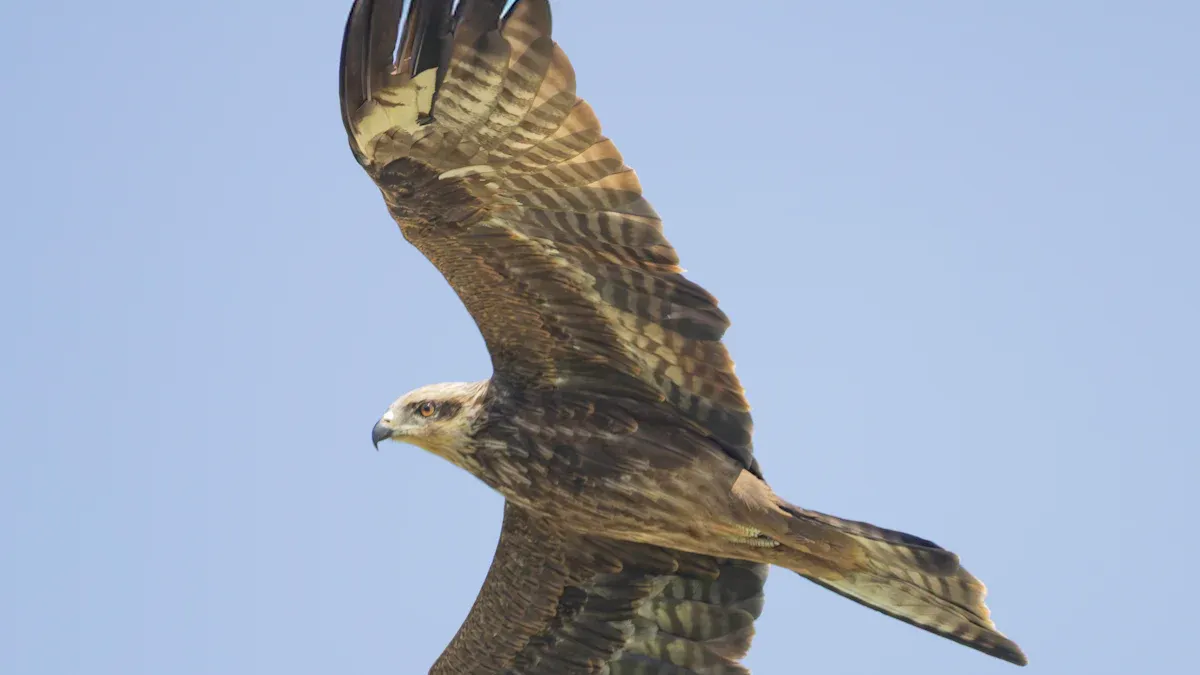
Hawks gather in large groups for several key reasons. They often do this for Raptor Migration, utilizing warm air currents, finding safety in numbers, and exploiting abundant food sources. These gatherings involve specific behaviors like communal roosting and kettling. Such group activities significantly boost their efficiency and survival chances.
Key Takeaways
Hawks gather in large groups to travel long distances. They use warm air currents to save energy.
Hawks sleep together in groups for safety. This protects them from other animals and keeps them warm.
Hawks find food more easily when they are in groups. Some even hunt together to catch prey.
Young hawks learn important skills from older birds. They watch and copy how adults find food and hunt.
Not all hawks gather in groups. Some types, like Broad-winged Hawks, form very large groups when they move to new places.
Raptor Migration and Kettling
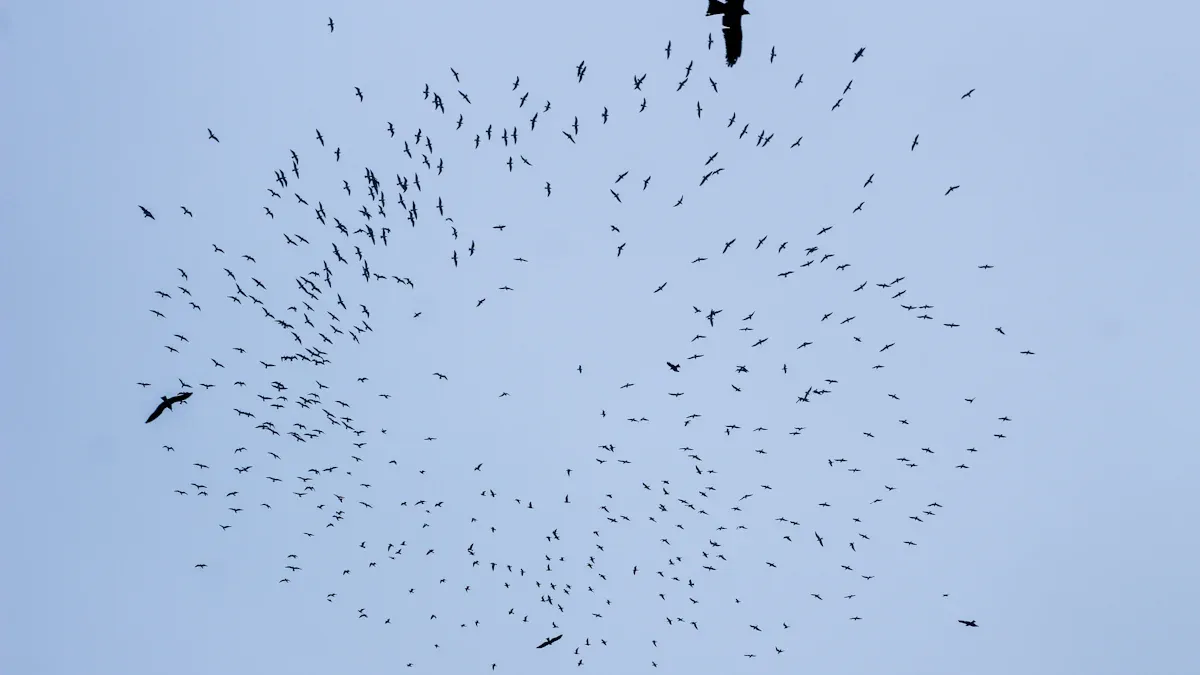
Hawks often gather in large groups during their long journeys. This behavior is especially common during Raptor Migration. When many hawks swirl and spiral together in a thermal, people call this a “kettle.” This term comes from the way the birds look like objects boiling in a pot. This unique group behavior helps them travel vast distances.
Migration Instinct
Many hawk species have a strong instinct to migrate. They travel thousands of miles between breeding grounds and wintering areas. This annual journey is crucial for their survival. It allows them to find abundant food and suitable climates throughout the year. This instinct drives them to form large groups, especially when conditions are right for efficient travel.
Thermals and Uplifts
Hawks use natural air currents to fly long distances with little effort. These currents are called thermals and uplifts. Thermals are large, invisible bubbles of warm air. They rise into the atmosphere. Different landscape features create these thermals. Large rock piles, clear cuts, paved roads, and parking lots absorb and reflect heat differently. This creates the warm air. Raptors, like gliders and sailplanes, exploit these rising columns of air. They climb several hundred meters without flapping their wings much. This saves a lot of energy during Raptor Migration. Hawks also use orographic uplift. This happens when wind currents are pushed upwards along mountain slopes. They gain altitude by circling within these ascending air currents before gliding. Broad-winged Hawks are excellent at using these air currents. They sometimes form kettles with hundreds of birds inside a single thermal bubble as it rises. When the thermal weakens, the hawks glide down. They then look for another thermal, repeating the process.
Kettling for Energy Conservation
Kettling is a highly efficient way for hawks to travel. By circling together in a thermal, they gain lift. This allows them to soar without flapping their wings. This conserves their energy during long flights. They use these thermals to gain altitude. Then, they glide across the landscape until they find the next thermal. This method of flight is much less tiring than continuous flapping. It allows them to cover greater distances each day.
Group Navigation Benefits
Traveling in groups offers significant advantages for navigation. Flocking helps birds combine information about their direction. This leads to more frequent correct choices for their path. Group travel also helps them find landmarks. These landmarks might be hard to see or scarce when flying alone. Inexperienced birds also benefit greatly. They can follow more knowledgeable companions to their destination. This collective wisdom improves the success rate of the entire group during Raptor Migration.
Communal Roosting
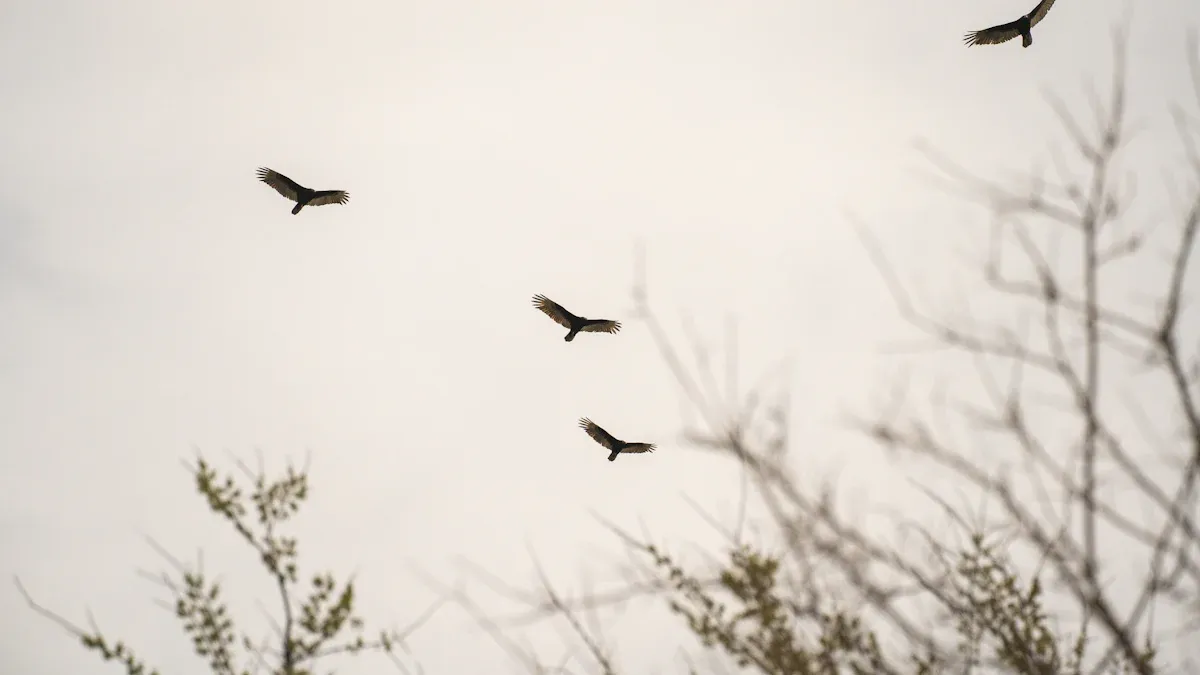
Hawks often gather in large groups to sleep. This behavior is called communal roosting. They choose specific places to spend the night. These roosts offer many benefits.
Choosing Roost Sites
Hawks carefully select their roost sites. They look for places that offer protection from weather and predators. Tall trees, cliffs, or dense groves often serve as ideal locations. These sites provide good visibility. They also offer shelter from wind and rain. The birds return to these same spots night after night.
Predator Protection
Gathering in large groups provides safety from predators. Many eyes can spot danger more easily. A large roost allows for quicker detection of predators. Individuals can react and warn others faster. This collective vigilance helps the entire group. Individual risk also decreases. An individual in a large group has a lower chance of being caught. This is known as the dilution effect. Group living offers cooperative vigilance. It also reduces predation rates.
Individuals in larger groups may experience lower vulnerability to predators. This happens due to dilution effects. It also comes from more efficient detection of threats. Or it can be an enhanced ability to repel attackers.
Warmth and Energy Conservation
Communal roosting helps hawks stay warm. Huddling together reduces heat loss. This is especially important on cold nights. Sharing body heat helps each bird conserve energy. They use less energy to maintain their body temperature. This saved energy is vital for their survival. It helps them prepare for the next day’s activities.
Social Information Exchange
Roosts are also places for social interaction. Hawks can share information with each other. They might learn about good foraging areas. They could also learn about safe travel routes. Younger birds can observe older, more experienced individuals. This exchange of information helps the entire group. It improves their chances of finding food and surviving.
Foraging and Social Dynamics
Hawks often gather in groups to find food. This behavior helps them get enough to eat. It also allows them to work together.
Exploiting Food Abundance
Raptors gather where food is easy to find. They go to places like bird feeders or farms. These areas attract many prey animals. This gives raptors a lot of food. Vultures also gather in groups. They often feed on a single large carcass. This provides a big meal for many birds.
Vultures are often seen feeding on a single carcass.
Cooperative Hunting
Some raptor species hunt together. This helps them catch more prey. Harris’s Hawks are famous for this. They hunt as a team. Groups of these hawks surround prey. They flush it out for others to catch. They also take turns chasing it. This teamwork helps them catch prey more often. Groups with more than two members survive better.
Some raptor species, such as the Cape Vulture, are known to hunt in groups.
Harris’s Hawks use clever strategies. One or two hawks enter thick bushes. They scare out prey. Other hawks wait nearby to catch it. They also use a “relay attack.” Hawks take turns diving at prey. This forces the prey to keep running. It tires the prey out. This makes it easier to catch.
Learning and Information Transfer
Young raptors learn hunting skills from older birds. They watch and copy what adults do. Juvenile American kestrels learn by watching other hunting birds. They catch more prey when they hunt near others. Adult raptors sometimes teach their young directly.
Adult raptors engage in teaching behaviors. They release injured prey near juveniles. This lets the young birds practice hunting.
Peregrine falcons release live birds in front of their young. This encourages the juveniles to chase them.
Ospreys learn diving techniques. Adults drop fish in the water. This makes young ospreys practice catching fish.
Social Hierarchy
Raptor groups often have a social order. This hierarchy decides who eats first. It also affects how they share food. This structure helps keep peace within the group. It ensures all members get some food.
Species-Specific Behaviors
Raptors often show different social behaviors. Most raptors live alone for much of the year. However, some species gather in groups, especially during Raptor Migration.
Broad-winged Hawks
Broad-winged Hawks are a good example of group behavior. They form large flocks when they migrate. These groups, called kettles, can be very big. During the peak of migration, Broad-winged Hawk kettles can have thousands of birds. One observed kettle numbered about 4,800 individuals. They use these large groups to find and use thermals more effectively.
Vultures and Their Habits
Vultures show different grouping habits compared to predatory hawks. Vultures, like Turkey Vultures, are very social birds. They often roost in large groups. These roost sites can be used for many generations. Predatory hawks, such as Red-tailed Hawks, are usually solitary outside their breeding season. Vultures also form small groups, called ‘wakes,’ when they perch. They form large kettles when they fly. Predatory hawks might form large flocks only to use thermals. Vultures play a vital role in their habitats. They act as ‘clean-up operatives’ by eating decaying carcasses. This prevents the spread of diseases like anthrax and rabies. They also help return nutrients to the soil.
Diverse Raptor Grouping
Other raptor species also have unique ways of grouping. Some falcons might gather at rich food sources. Eagles often gather at communal roosts during winter. This helps them conserve energy. The specific reasons for grouping vary by species. It depends on their hunting style and environment.
Environmental Influences
Environmental factors greatly affect how raptors group together. The quality of their habitat influences their presence. For example, Goshawk breeding sites show rich plant life in city areas. Goshawks choose habitats with less urban development and clear understory trees. These same factors also help many different plant species grow. This means good plant diversity often creates suitable homes for Goshawks.
Hawks gather in large groups for clear reasons. They gain migration efficiency, enhanced safety, and optimized foraging. Kettling helps them save energy during long journeys, especially during Raptor Migration. Communal roosting protects them from predators and cold. Social dynamics allow information exchange and cooperative hunting. These behaviors greatly contribute to raptor survival and success. These magnificent birds show fascinating adaptations.
FAQ
What is “kettling” in raptor behavior?
Kettling describes a group of hawks circling together in a thermal. They resemble objects boiling in a pot. This behavior helps them gain altitude. It conserves energy during long-distance flights.
Why do hawks gather in large groups for migration?
Hawks gather for migration to use thermals more effectively. Group travel also offers safety in numbers. It helps them navigate and find food sources. This increases their chances of survival.
What is communal roosting for hawks?
Communal roosting is when hawks gather in groups to sleep. They choose safe sites like tall trees. This behavior provides protection from predators. It also helps them conserve warmth and energy.
Do all hawk species gather in large groups?
No, not all hawk species gather in large groups. Many raptors are solitary for most of the year. Broad-winged Hawks are a notable exception. They form very large flocks during migration.
How do hawks benefit from social information exchange?
Hawks benefit from social information exchange at roosts. They learn about good foraging areas. They also discover safe travel routes. Younger birds learn from experienced individuals. This improves the group’s overall success.
