


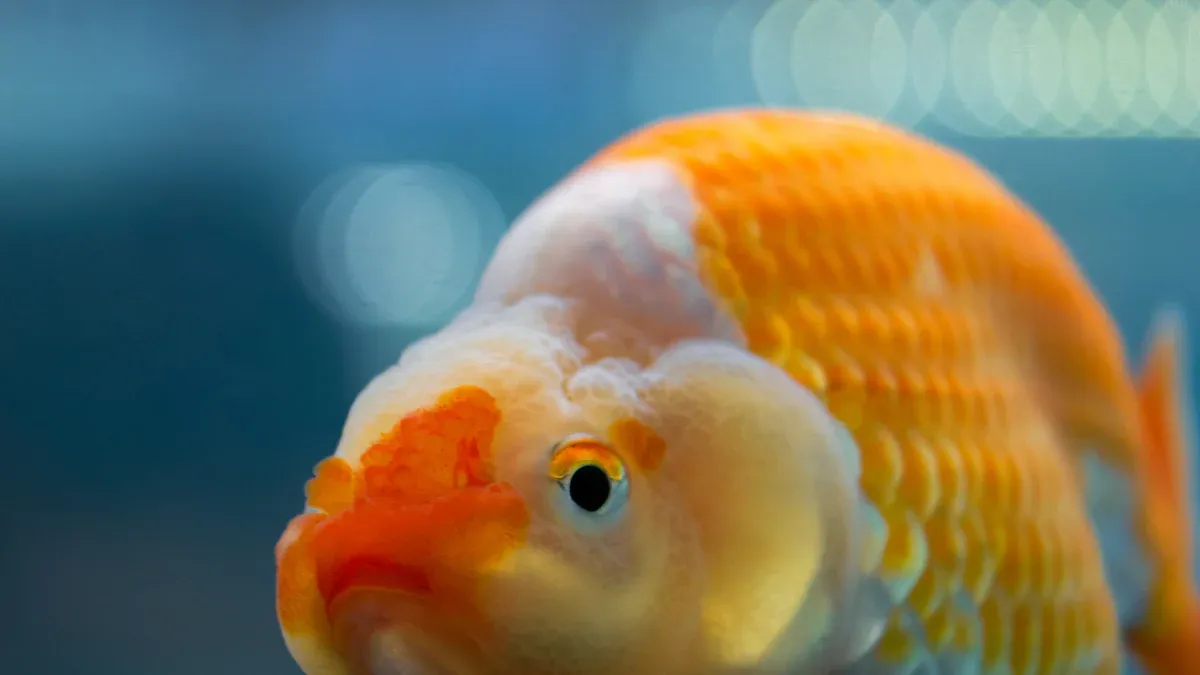
You might think of goldfish as simple bowl dwellers. However, these popular freshwater pets offer surprising diversity and beauty. Goldfish have a rich history. They can live a long lifespan, often 10-15 years. The global market for goldfish shows their popularity.
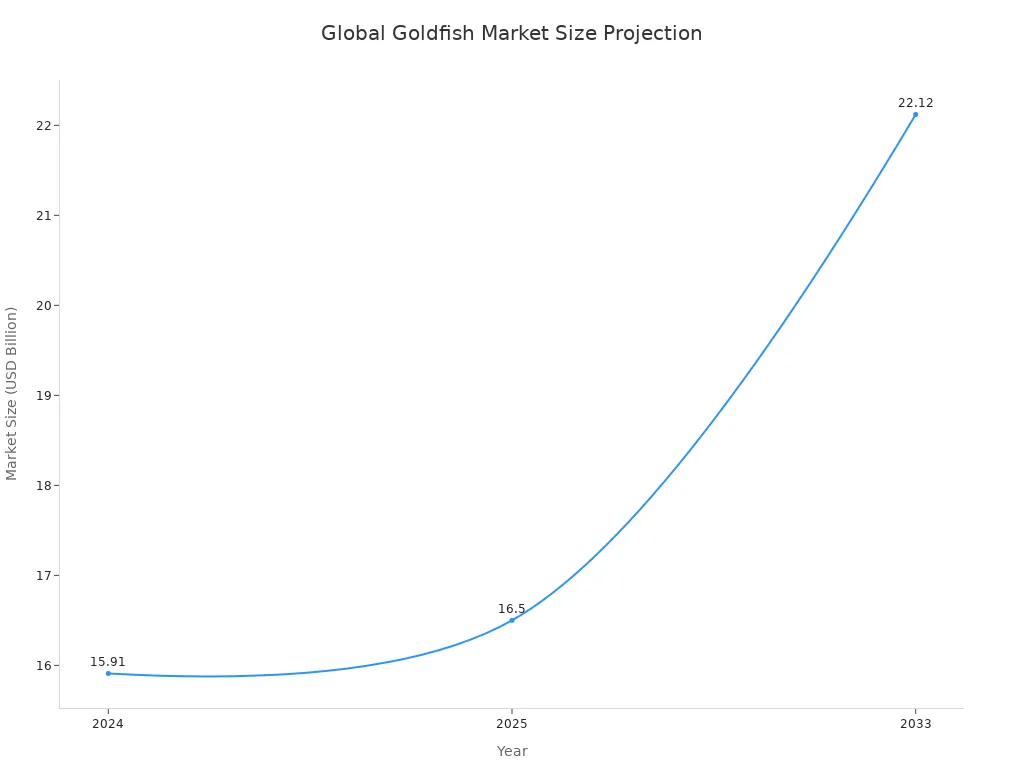
You will find many types of goldfish. Some goldfish varieties have single tails. Others boast elegant double tails. These different varieties require specific care. Understanding these differences helps you provide the best home for your goldfish. This guide will help you learn about many amazing goldfish.
Key Takeaways
Goldfish are diverse pets. They come in many types and colors.
Different goldfish types need different care. Some need more space.
Proper care helps goldfish live long. They can live 10 to 15 years.
Always keep water clean. Feed goldfish good food.
Match goldfish types together. Fast swimmers go with fast swimmers. Slow swimmers go with slow swimmers.
Common Goldfish: A Classic Type
Appearance
The common goldfish is a classic choice. You recognize its streamlined, torpedo-shaped body. It has a single, flowing tail fin. Its other fins are typically short. These include the dorsal, pectoral, pelvic, and anal fins. Common goldfish come in various colors. You can find them in orange, red, white, yellow, or black. Sometimes they show combinations of these colors. They can grow quite large, reaching up to 10-12 inches in length. With proper care, these goldfish often live for 10 to 15 years. You can expect to have a goldfish in your household for a decade or more.
Care Needs
Caring for a common goldfish is straightforward. They are hardy fish, making them suitable for beginners. However, they need ample space to thrive.
Tip: Goldfish grow large. They are not suitable for small bowls. Their size demands significant room for swimming and healthy development.
For a single goldfish, you need a large tank.
A small to medium-sized fish requires a minimum of 35 gallons.
Medium to large goldfish need at least 55 gallons.
Ideally, you should house these goldfish in large outdoor ponds. Clean water is crucial for their health. You must maintain good filtration, using a filter rated for the tank size. Perform regular partial water changes, about 25% weekly. This keeps nitrates low and water parameters stable. Goldfish prefer slightly alkaline water with a pH between 7.0 and 8.0. They also tolerate a wide range of temperatures, but avoid sudden fluctuations. Feed your goldfish a varied diet. This includes high-quality flakes or pellets specifically designed for goldfish. You can also offer fresh vegetables like blanched peas, lettuce, or spinach. Goldfish are peaceful and active swimmers. They enjoy exploring their environment and interacting with their surroundings.
Comet Goldfish: Graceful Swimmers
Appearance
The Comet Goldfish is a popular single-tailed variety. You will notice its long, slender body. It has a deeply forked, single tail fin. This tail often trails behind it like a comet, giving it its name. Comet Goldfish come in various colors. You can find them in solid orange, red, yellow, or white. Some display a beautiful calico pattern. These goldfish are active and fast swimmers. They can grow quite large. A Comet Goldfish can reach up to a foot long. This makes them impressive aquatic pets. With proper care, they can live for 10 to 15 years.
Care Needs
Caring for Comet Goldfish requires attention to space. They are hardy fish, making them a good choice for beginners. However, their large adult size means they need a lot of room. To accommodate a Comet Goldfish that grows to a foot long, you should provide a tank of at least 150 gallons. Smaller tanks can hinder their growth and overall health.
Tip: Comet Goldfish are very active. They need plenty of open swimming space.
Maintain excellent water quality for your Comet Goldfish. Use a powerful filter and perform weekly partial water changes. Aim for a pH between 7.0 and 8.0. These goldfish are quite adaptable to temperature. They can tolerate a wide range. For an ideal long-term temperature in a tank, keep the water between 65°F and 78°F (18.3°C-25.5°C). Make sure any temperature changes happen slowly, only a few degrees per day. Feed your goldfish a high-quality diet. This includes flakes or pellets designed for goldfish. You can also offer fresh vegetables as treats. Comet Goldfish are peaceful. They do well with other single-tailed goldfish varieties.
Shubunkin Goldfish: Calico Beauty
Appearance
The Shubunkin goldfish offers a unique beauty. You will recognize its distinctive calico pattern. This pattern features patches of red, orange, black, blue, and white. These goldfish colors create a mottled, pearl-like effect. The Shubunkin has a slender, elongated body, much like the Common or Comet goldfish. It also possesses a single, flowing tail fin. This tail is often deeply forked. Shubunkins can grow quite large, reaching up to 10-14 inches in length. With proper care, a Shubunkin goldfish typically lives for 10 to 15 years. In well-maintained pond environments, these fish can even exceed two decades in lifespan, sometimes living 15 to 30 years.
Care Needs
Caring for a Shubunkin goldfish is similar to caring for other single-tailed varieties. They are hardy and active fish. You need to provide them with ample space. A single Shubunkin goldfish requires a tank of at least 35-40 gallons. If you plan to keep more than one, add 10-20 gallons for each additional fish. For optimal health, a large outdoor pond is ideal. Maintain excellent water quality. Use a robust filtration system. Perform weekly partial water changes of about 25%. This keeps the water clean and stable. Shubunkins prefer a pH between 7.0 and 8.0. They tolerate a wide range of temperatures, but avoid sudden changes. For feeding, offer a high-quality goldfish flake or pellet. For Shubunkin goldfish, a small feeding 1-3 times per day is generally recommended. Young goldfish benefit from three feedings daily due to their rapid growth. Older goldfish can tolerate less frequent feedings. You can also supplement their diet with blanched vegetables. These goldfish are peaceful. They make good tank mates for other single-tailed goldfish.
Fantail Goldfish: Double-Tailed Charm
Appearance
The Fantail Goldfish is a popular type of fancy goldfish. You will easily recognize its distinctive double tail fin. This tail is usually short and forked, spreading out like a fan. Its body shape is round and egg-like, making it look quite charming. Fantails come in many colors. You can find them in solid orange, red, white, or black. Some also display a calico pattern. These goldfish are not as streamlined as single-tailed varieties. They swim with a graceful, slower movement. A Fantail Goldfish can reach a maximum body length of 150mm (6 inches). With proper care, these beautiful goldfish can live for 10 to 15 years.
Care Needs
Caring for a Fantail Goldfish requires specific attention. They are generally hardy, making them a good choice for beginners interested in fancy goldfish. However, their round body and double tail mean they are not as fast as single-tailed goldfish. This makes them less competitive for food.
Tip: Keep Fantail Goldfish with other slow-swimming, double-tailed varieties. This ensures all fish get enough food.
You need a tank of at least 20 gallons for one Fantail Goldfish. Add 10 gallons for each additional goldfish. Maintain excellent water quality. Use a good filter and perform weekly partial water changes. Fantail Goldfish can tolerate a wide pH range. A stable pH between 7.0 and 8.0 is generally fine. An ideal pH is around 7.6. It is more important to keep the pH stable than to constantly adjust it. Keep the water temperature between 65°F and 75°F (18°C-24°C). Feed your goldfish a high-quality sinking pellet or flake food. This helps prevent swim bladder issues. You can also offer blanched vegetables as treats.
Ryukin Goldfish: Distinctive Hump
Appearance
The Ryukin Goldfish stands out with its unique body shape. You will immediately notice its distinctive hump behind its head. This hump gives it a high, arched back. Its body is short and deep, often appearing triangular from the side. This goldfish also features a long, flowing double tail. This tail can be quite elaborate and adds to its elegant appearance. You can find Ryukin in many vibrant colors. They come in solid red, white, red and white combinations, or beautiful calico patterns. These goldfish are a type of fancy goldfish. They are not as streamlined or fast as single-tailed varieties. Ryukin can achieve a body length of 20 cm, with exceptional individuals potentially growing even larger. Ryukin kept in outdoor ponds can grow as large as 10 inches. With proper attention, these beautiful fish can live for 10 to 15 years.
Care Needs
Providing for a Ryukin requires careful planning. They are generally hardy fish. However, their unique body shape and flowing fins make them slower swimmers. This means they cannot compete well for food with faster goldfish varieties. You should keep Ryukin with other slow-moving, fancy goldfish. This ensures all fish get enough to eat. For a single ryukin goldfish, you need a tank of at least 25 gallons. This is the absolute minimum recommended size. Keeping them in a smaller tank may stunt their growth.
It prevents them from reaching their full potential. Ryukin become big, wide, powerful-bodied fish. They need substantial space to thrive and move comfortably. You must maintain excellent water quality. Use a robust filtration system. Perform weekly partial water changes of about 25%. This keeps the water clean and stable. Keep the water temperature between 65°F and 75°F (18°C-24°C). Feed your goldfish a high-quality sinking pellet or gel food. This helps prevent swim bladder issues common in fancy goldfish. You can also offer blanched vegetables as treats. Provide some hiding spots or decorations. Ensure they have smooth edges to protect their delicate fins. Proper care ensures a long and healthy life for your Ryukin.
Oranda Goldfish: The Crowned Jewel
Appearance
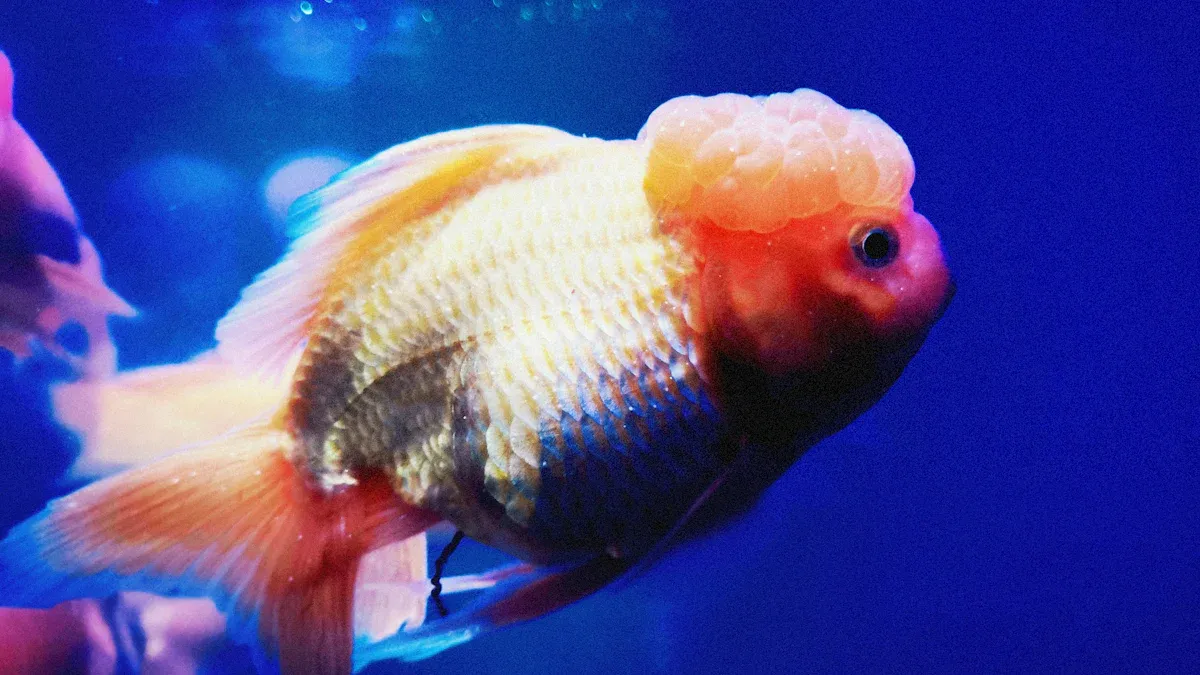
The Oranda Goldfish truly earns its title as a crowned jewel. You will immediately notice the distinctive fleshy growth on its head. This growth is called a “wen” or “hood.” It can cover the entire head, sometimes even obscuring the eyes. The Oranda has a round, egg-shaped body. Its fins are typically long and flowing, especially the double tail. This gives it a very elegant look. Orandas come in many vibrant colors. You can find them in solid red, orange, white, black, or beautiful calico patterns. These goldfish can grow quite large, often reaching 8 to 10 inches in length. With proper care and suitable living conditions, an Oranda goldfish can live up to 15 years. In large, well-maintained ponds, some can even reach 20 years of age. The average lifespan for an Oranda goldfish is 10–15 years.
Care Needs
Caring for an Oranda Goldfish requires specific attention due to its unique features. You need at least a 20-gallon tank for one Oranda goldfish. Add 10 gallons for each additional fish. Maintain excellent water quality. Use a robust filtration system. Perform weekly partial water changes of about 25%. This keeps the water clean and stable. Keep the water temperature between 65°F and 75°F (18°C-24°C). A stable pH between 7.0 and 8.0 is ideal.
Tip: Oranda goldfish are slow swimmers. Keep them with other slow-moving, fancy goldfish. This ensures all fish get enough food.
Feed your Oranda a high-quality sinking pellet or gel food. This helps prevent swim bladder issues common in fancy goldfish. You can also offer blanched vegetables as treats. Regularly monitor the wen for cleanliness. Ensure tank decorations have smooth edges to prevent injury to their delicate wen and fins. Proper care helps your Oranda goldfish thrive.
Lionhead Goldfish: Wen Development
Appearance
The Lionhead goldfish is a unique and captivating variety. You will immediately notice its prominent fleshy growth on its head. This growth is called a “wen.” It covers the head, cheeks, and gill plates. This gives the fish a distinctive, lion-like appearance. Unlike many other goldfish, the Lionhead lacks a dorsal fin. Its body is short and stout, with a rounded back. It has a double tail fin, which is typically short and spread. Lionheads come in various colors. You can find them in red, orange, white, black, or calico patterns. These fancy goldfish are slow swimmers. They can grow to about 6-8 inches in length. With proper care, a Lionhead goldfish can live for 10 to 15 years.
Care Needs
Caring for a Lionhead goldfish requires specific attention. Their unique wen can sometimes obstruct their vision. This makes them less competitive for food. You should keep Lionheads with other slow-moving, fancy goldfish. This ensures all fish get enough to eat. For a single Lionhead goldfish, you need a tank of at least 20 gallons. Add 10 gallons for each additional fish.
Maintaining stable water conditions is crucial for these delicate goldfish. Fluctuations can cause stress and disease. You must regularly monitor water parameters. Perform weekly water changes to manage the fish’s bioload. Aim for ammonia and nitrites at 0-.25. Keep nitrates below 50 ppm. Goldfish prefer a high mineral content. A General Hardness (GH) of 150 ppm or more is ideal. A Carbonate Hardness (KH) of 100 ppm or more helps pH stability. The water temperature should be between 65 to 72 degrees Fahrenheit. A pH of 7.0 to 7.8 is generally preferred. Stability is more important than the exact number. Feed your Lionhead a high-quality sinking pellet or gel food. This helps prevent swim bladder issues. You can also offer blanched vegetables as treats. Ensure tank decorations have smooth edges. This protects their delicate wen and fins.
Ranchu Goldfish: King of Goldfish
Appearance
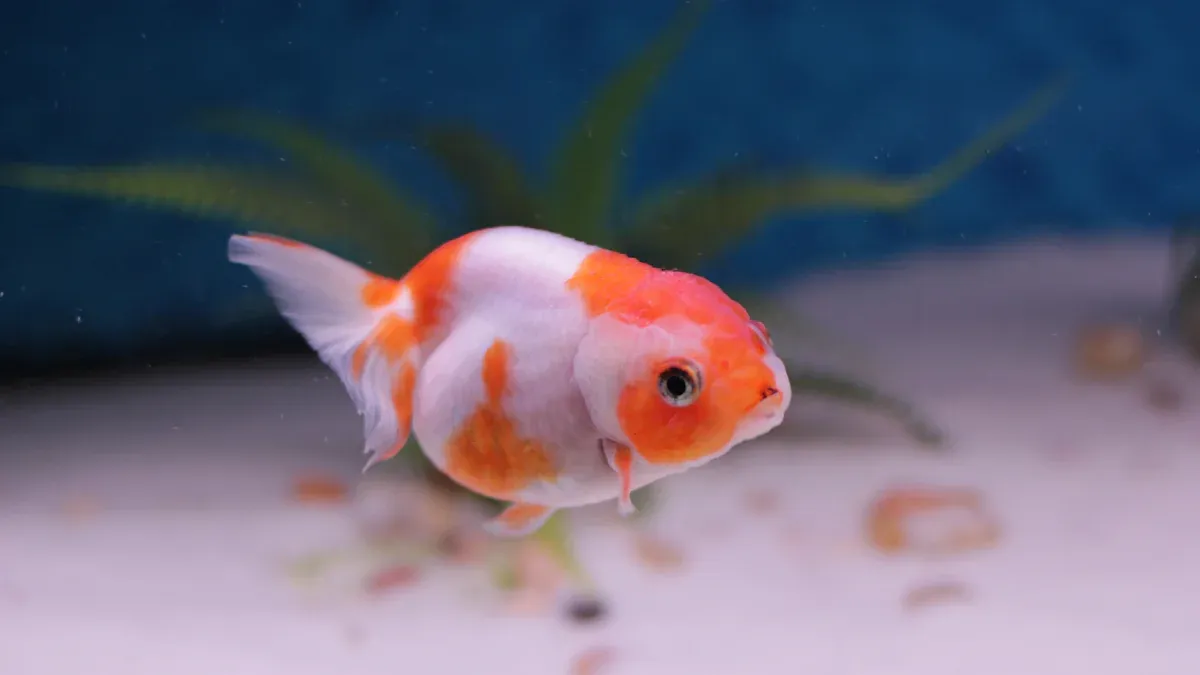
The Ranchu goldfish holds the esteemed title, “King of Goldfish.” You will recognize its unique, rounded body. It has a distinct, arched back. This goldfish completely lacks a dorsal fin. Its head features a prominent “wen” or hood. This fleshy growth covers its head and gill plates. The wen gives the Ranchu a distinctive, almost regal look. Its fins are short and paired. It has a double tail fin that spreads out. This contributes to its slow, deliberate swimming style. Ranchu goldfish come in various colors. You can find them in red, orange, white, black, or calico patterns. A good body length for a Ranchu goldfish is 125mm (5 inches). Genetics and early fry care influence its final size and hood development. The typical adult size of a Ranchu goldfish ranges from five to eight inches in length when fully grown. However, with a particularly large tank, they can grow much bigger. They can potentially reach nearly a foot long. In outdoor ponds with hundreds of gallons of space, they can even grow up to almost 18 inches. With proper care, these magnificent goldfish can live for 10 to 15 years.
Care Needs
Caring for a Ranchu goldfish requires specific attention. Their unique body shape and lack of a dorsal fin make them slow swimmers. This means they cannot compete well for food with faster goldfish varieties. You should keep Ranchu goldfish with other slow-moving, fancy goldfish. This ensures all fish get enough to eat. For a single Ranchu goldfish, you need a tank of at least 20 gallons. Add 10 gallons for each additional goldfish. Maintain excellent water quality. Use a robust filtration system. Perform weekly partial water changes of about 25%. This keeps the water clean and stable. Keep the water temperature between 65°F and 75°F (18°C-24°C). A stable pH between 7.0 and 8.0 is ideal. Feed your Ranchu a high-quality sinking pellet or gel food. This helps prevent swim bladder issues common in fancy goldfish. You can also offer blanched vegetables as treats. Regularly monitor the wen for cleanliness. Ensure tank decorations have smooth edges. This protects their delicate wen and fins.
Pearlscale Goldfish: Unique Scales
Appearance
The Pearlscale goldfish is truly distinctive. You will immediately notice its scales. Each scale has a raised, dome-like center. This gives the fish a textured, pearl-like appearance. Its body is round and stout, resembling a golf ball. This unique body shape makes it a slow swimmer. Pearlscales typically have a double tail fin. This tail is often short and fanned. You can find these beautiful goldfish in various colors. They come in solid orange, red, white, black, or calico patterns. A Pearlscale goldfish usually grows to about 6-8 inches in length. The average lifespan of a Pearlscale goldfish is typically 10 to 15 years. With proper care, including a suitable environment, balanced diet, and good water quality, they can live for 20 years or more.
Care Needs
Caring for a Pearlscale goldfish requires specific attention. Their unique scales and round body make them delicate. They are not strong swimmers. You should keep Pearlscale goldfish with other slow-moving, fancy goldfish. This ensures all fish get enough food. For a single Pearlscale goldfish, you need a tank of at least 20 gallons. Add 10 gallons for each additional goldfish. Maintain excellent water quality. Use a robust filtration system. Perform weekly partial water changes of about 25%. This keeps the water clean and stable. Keep the water temperature between 65°F and 75°F (18°C-24°C). A stable pH between 7.0 and 8.0 is ideal. Feed your goldfish a high-quality sinking pellet or gel food. This helps prevent swim bladder issues common in fancy goldfish. You can also offer blanched vegetables as treats. Ensure tank decorations have smooth edges. This protects their delicate scales from injury. Proper care helps your Pearlscale goldfish thrive.
Telescope Eye Goldfish: Protruding Eyes
Appearance
The Telescope Eye Goldfish is truly unique. You will immediately notice its most striking feature: large, protruding eyes. These eyes extend outwards from its head. This gives the fish a distinctive, almost bug-eyed look. Its body is typically short and stout, similar to other fancy goldfish. It has a double tail fin, which can be short or long and flowing. Telescope Eyes come in various colors. You can find them in solid black (often called Black Moor), red, orange, white, or calico patterns. These goldfish are not fast swimmers. Their vision is also somewhat impaired due to their eye structure. A Telescope Eye Goldfish typically grows to about 6 inches (15 cm) in length. Some individuals can reach up to 13 cm, while others, like many goldfish, can grow to around 20 cm (8 inches). With proper care, these fascinating goldfish can live for 10 to 15 years.
Care Needs
Caring for a Telescope Eye Goldfish requires special consideration. Their protruding eyes make them vulnerable to injury and give them poor vision. You should keep them with other slow-moving, fancy goldfish. This ensures all fish get enough food. For a single Telescope Eye Goldfish, you need a tank of at least 20 gallons. Add 10 gallons for each additional goldfish.
Tip: Choose tank decorations carefully for Telescope Eye Goldfish. Avoid anything with sharp edges.
Maintain excellent water quality. Use a robust filtration system. Perform weekly partial water changes of about 25%. This keeps the water clean and stable. Keep the water temperature between 65°F and 75°F (18°C-24°C). A stable pH between 7.0 and 8.0 is ideal. Feed your goldfish a high-quality sinking pellet or gel food. This helps prevent swim bladder issues. You can also offer blanched vegetables as treats. When selecting aquarium decorations, avoid any items with sharp edges or rough surfaces. These could harm their delicate eyes or trailing fins. Use smooth, fine-grained substrates like sand or fine gravel. This prevents injuries. You can add a few plants, but avoid dense vegetation. Telescope Goldfish can become trapped in thick plants due to their poor vision. They need ample swimming space. This careful care helps your Telescope Eye Goldfish thrive.
Black Moor Goldfish: Dark Elegance
Appearance
The Black Moor goldfish is truly striking. You will immediately notice its deep, velvety black coloration. This dark elegance makes it stand out in any aquarium. Its most prominent feature is its large, protruding telescope eyes. These eyes extend outwards from its head. The Black Moor has a short, stout body, similar to other fancy goldfish. It also possesses a long, flowing double tail fin. This tail adds to its graceful, slow swimming style. While typically black, some Black Moor goldfish colors can fade to a dark grey or even orange over time. This often happens if they are kept in warmer water. A Black Moor goldfish typically grows to about 6-8 inches in length. With proper care, these fascinating goldfish usually live for 10 to 15 years. Some can even thrive for longer than 10 years.
Care Needs
Caring for a Black Moor goldfish requires specific attention. Their protruding eyes give them poor vision. This makes them vulnerable to injury. You should keep them with other slow-moving, fancy goldfish. This ensures all fish get enough food. For a single Black Moor goldfish, you need a tank of at least 20 gallons. Add 10 gallons for each additional goldfish. Maintain excellent water quality. Use a robust filtration system. Perform weekly partial water changes of about 25%. This keeps the water clean and stable. Keep the water temperature between 65°F and 75°F (18°C-24°C). A stable pH between 7.0 and 8.0 is ideal. You do not need special lighting for Black Moor goldfish. However, suitable lighting simulates natural day and night cycles. Feed your goldfish a high-quality sinking pellet or gel food. This helps prevent swim bladder issues. You can also offer blanched vegetables as treats. Choose tank decorations carefully. Avoid anything with sharp edges. This protects their delicate eyes and fins.
Bubble Eye Goldfish: Delicate Features
Appearance
The Bubble Eye Goldfish is truly one of the most unique goldfish varieties. You will immediately notice its most striking feature: two large, fluid-filled sacs located directly under its eyes. These sacs are very delicate. This goldfish lacks a dorsal fin, giving its back a smooth, rounded appearance. Its body is short and stout, similar to other fancy goldfish. It has a double tail fin, which is typically short and spread. Bubble Eye Goldfish come in various colors, including red, orange, white, and calico patterns. An adult Bubble Eye Goldfish typically reaches a size of 6 inches. Some individuals can range from 5 to 8 inches (15 to 20 centimeters) in length. These goldfish are slow swimmers due to their unique features.
Care Needs
Caring for a Bubble Eye Goldfish requires extra attention due to their delicate eye sacs. You must handle them with great care. Their sacs can easily rupture if they bump into sharp objects. You should keep Bubble Eye Goldfish with other slow-moving, fancy goldfish. This ensures all fish get enough food. For a single Bubble Eye Goldfish, you need a tank of at least 20 gallons. Add 10 gallons for each additional goldfish.
Maintaining excellent water quality is crucial for these delicate fish. Use a robust filtration system. Perform weekly partial water changes of about 25%. This keeps the water clean and stable. Keep the water temperature between 65°F and 75°F (18°C-24°C). A stable pH between 7.0 and 8.0 is ideal. You must choose your substrate carefully. Any gravel substrate must be smooth. Use simple medium-sized gravel. Ensure the gravel is relatively smooth to protect their delicate sacs. Avoid any tank decorations with sharp edges. Feed your goldfish a high-quality sinking pellet or gel food. This helps prevent swim bladder issues. You can also offer blanched vegetables as treats. Proper care helps your Bubble Eye Goldfish thrive.
Essential Goldfish Care: Tips for All Popular Goldfish Pets
You have learned about many types of goldfish. Proper care is vital for all of them. Understanding their needs ensures a long, healthy life.
Tank Setup and Size
Goldfish need ample space. A common misconception is that goldfish can live in small bowls. This is incorrect. Small spaces stunt their growth. They also lead to poor water quality. Provide a tank that suits the adult size of your chosen goldfish. Remember, single-tailed goldfish grow much larger than fancy varieties.
Water Quality and Filtration
Maintaining clean water is essential for your goldfish. You need a robust filtration system. Perform regular partial water changes. This keeps the water clean and stable. For optimal goldfish health, a pH range of 7.0 to 7.8 is generally recommended. pH stability is more crucial than hitting an exact number. Ammonia and nitrite levels should ideally be kept at 0.25 ppm or lower. Nitrates should be maintained below 50 ppm. Regular testing of aquarium water is essential. Use an aquarium test kit for accurate measurements. This ensures temperature, pH, ammonia, nitrate, and nitrite levels remain stable.
Diet and Feeding
Feeding your goldfish correctly supports their health. Offer a high-quality goldfish food. This can be flakes, pellets, or gel food. Avoid overfeeding. If your goldfish cannot finish the food within 2-3 minutes, you are feeding too much. For adult goldfish, a recommended feeding schedule involves small portions 2-3 times a day.
Morning: A meal consisting of less substantial amounts of good flaky food or pellets.
Afternoon: Offer another small amount or a different flavor, such as fresh vegetables or a freeze-dried treat.
Evening: Conclude the day with another light meal. Consider approximately a teaspoon of pellets per fish per feed. You can also offer two or three algae wafers, one cube of frozen food, or about four peas.
Tank Mates and Temperament
Consider tank mates carefully. Single-tailed goldfish are fast swimmers. They do well together. Fancy goldfish are slower. They have delicate features. Keep fancy goldfish with other slow-moving goldfish. This ensures everyone gets enough food. Avoid mixing fast and slow varieties.
Health Monitoring and Common Issues
Monitor your goldfish regularly. Look for signs of illness. Early detection helps treatment. Here are common diseases and their symptoms:
Disease Name | Primary Symptoms |
|---|---|
Dropsy | Scales stick out like a pinecone, swollen body. |
Swim Bladder Disease | Difficulty swimming, floating upside down. |
Fin Rot | Fins appear ragged, frayed, or discolored. |
Ich (White Spot Disease) | Small white spots on body and fins, flashing. |
Fungal Infections | Cotton-like growths on body or fins. |
Ammonia Poisoning | Red or purple gills, gasping at the surface. |
This table shows some common issues. If you notice any symptoms, research the specific problem. Seek advice from an aquatic veterinarian if needed. Proper care prevents many health problems.
You have explored the vast diversity within the types of goldfish family. Each of these goldfish varieties offers unique beauty. Choosing a goldfish that suits your commitment is important. Responsible goldfish keeping means understanding their specific needs. This ensures their well-being. Continue learning and observing your goldfish for signs of health and happiness. Providing proper care is rewarding. You will enjoy these beautiful and unique aquatic pets.
FAQ
What is the main difference between single-tailed and double-tailed goldfish?
Single-tailed goldfish have one long tail fin. They are usually faster swimmers. Double-tailed goldfish have two distinct tail fins. They often have rounder bodies and swim slower. These are two main types of goldfish varieties.
What should I feed my goldfish?
You should feed your goldfish high-quality flakes, pellets, or gel food. Offer blanched vegetables as treats. Avoid overfeeding. Feed small amounts two to three times daily.
What is the typical lifespan of a goldfish?
Goldfish can live a long time. With proper care, many goldfish varieties live 10 to 15 years. Some can even live over 20 years in ideal conditions.
What are common signs of an unhealthy goldfish?
Look for clamped fins, white spots, or difficulty swimming. Swollen bodies or ragged fins also indicate problems. Early detection helps you treat your goldfish.
What should I consider when choosing different types of goldfish?
Consider the adult size of the goldfish. Think about its swimming ability. Match slow-swimming breeds with other slow-swimming varieties. This ensures all your goldfish thrive.