


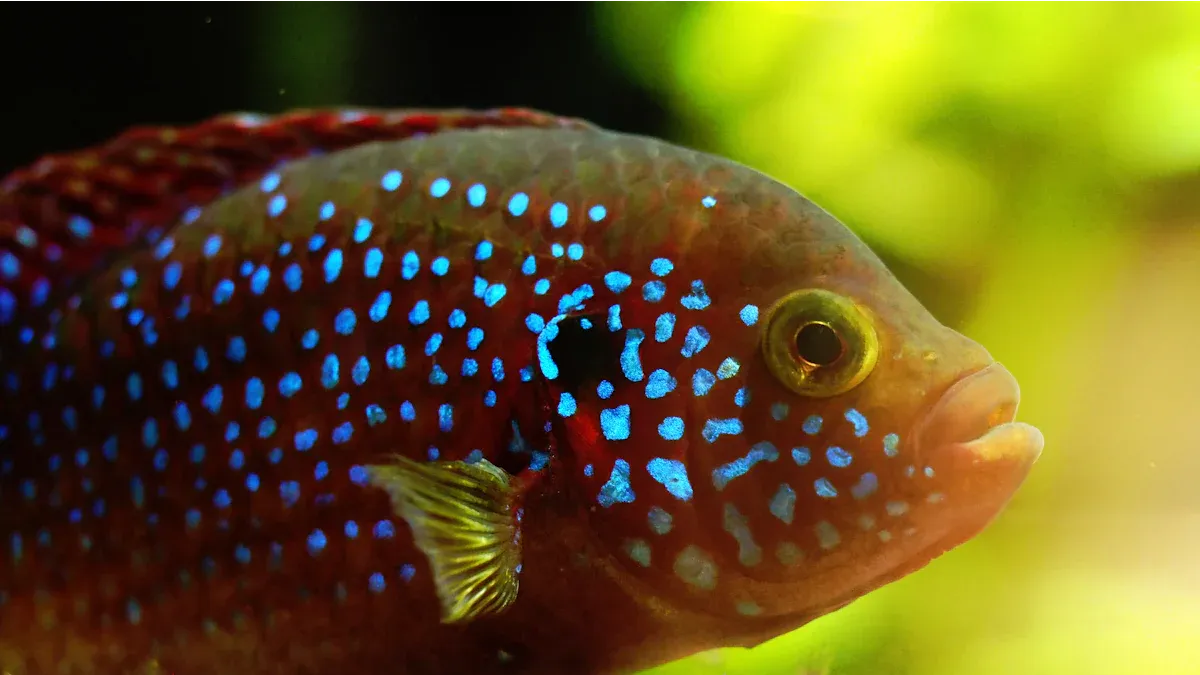
The Jack Dempsey cichlid captivates many aquarium enthusiasts. This species thrives in tropical freshwater tanks and can live over 10 years with proper care, as outlined in a comprehensive Care Guide. You may find them popular in Australia, where they have established populations in local waterways due to illegal releases. Their aggressive nature makes them unsuitable for community tanks. Understanding their needs, as detailed in the Care Guide, can help you create a thriving environment for these stunning fish.
Key Takeaways
Provide a spacious tank of at least 55 gallons for a single Jack Dempsey cichlid to reduce stress and aggression.
Maintain water conditions with a temperature of 72-86°F and a pH of 6.5-7.5 for optimal health.
Feed Jack Dempsey cichlids a balanced diet rich in protein, including high-quality pellets and live or frozen foods.
Create hiding spots and territories in the tank to help manage aggression and promote a peaceful environment.
Choose tank mates carefully, selecting species that can handle the aggressive nature of Jack Dempsey cichlids.
Tank Setup for Jack Dempsey Cichlids
Setting up the ideal tank for your Jack Dempsey cichlid is crucial for their health and well-being. These fish thrive in environments that mimic their natural habitat. Here’s how to create the perfect setup.
Optimal Tank Size
The recommended tank size for a single Jack Dempsey cichlid is at least 55 gallons. If you plan to keep a pair, consider a larger tank to accommodate their territorial nature. A spacious environment allows them to establish territories and reduces stress.
Observation | Conclusion |
|---|---|
A Jack Dempsey cichlid in a 60-gallon tank stopped its usual behaviors and became less aggressive. | This suggests that inadequate space or environmental conditions can lead to stress and altered behavior in Jack Dempsey cichlids. |
A recommendation was made to increase tank size to at least 75 gallons for cohabitation with other species. | This indicates that larger tank sizes are necessary to prevent aggression and ensure the well-being of Jack Dempsey cichlids. |
Water Conditions
Maintaining proper water conditions is vital for the health of your Jack Dempsey fish. They prefer specific parameters to thrive:
Parameter | Range |
|---|---|
Temperature | 72-86° F (22-30° C) |
pH | 7.0-8.0 |
Hardness | 9-20 dGH |
Aim for a preferred pH range of 6.5 to 7.5 and a hardness range of 8.0 to 12 dGH. Regularly test your water to ensure these conditions remain stable. Sudden changes can stress your fish and lead to health issues.
Decor and Layout
Creating a suitable decor and layout is essential for reducing stress and aggression in Jack Dempsey cichlids. Here are some tips for setting up your tank:
Use natural-looking decor such as large pieces of bogwood and rocks.
Provide a substrate of at least 5cm deep for digging and foraging.
Create clear territories with the placement of decor.
Incorporate vertical structures or plants to break lines of sight.
Hiding spots play a significant role in the behavior of Jack Dempsey cichlids. Studies show that when more shelters are present, submissive signals decrease. This suggests that providing ample hiding spots can help reduce aggression and promote a more peaceful environment.
By following these guidelines, you can create a thriving habitat for your Jack Dempsey cichlid. A well-set-up tank not only enhances their beauty but also contributes to their overall health and happiness.
Jack Dempsey Cichlid Care
Caring for your Jack Dempsey cichlid involves understanding their dietary needs and establishing a proper feeding schedule. These fish thrive on a balanced diet rich in animal proteins. Here’s how to ensure your Jack Dempsey fish receive the nutrition they require.
Diet
Jack Dempsey cichlids are carnivorous and need a varied diet to meet their nutritional requirements. A balanced diet includes:
High-quality pellets
Live or frozen foods
Occasional treats
Here’s a breakdown of suitable food types:
Food Type | Description |
|---|---|
High-quality pellets | Primary food source, e.g., Hikari Gold |
Live foods | Chopped earthworms, bloodworms, small fish pieces |
Frozen foods | Chopped mussels, krill, and brine shrimp |
Occasional treats | Crickets, grasshoppers, fruit flies |
Vegetable matter | Blanched spinach or peas once a week |
To maintain optimal health, you should feed juvenile Jack Dempsey cichlids 2-3 times a day. Adult Dempsey cichlids can be fed 1-2 times daily. Avoid overfeeding, as it can lead to poor water quality and health issues. Signs of overfeeding include cloudy water, unusual odors, and lethargy in your fish.
Feeding Schedule
Establishing a consistent feeding schedule is crucial for your Jack Dempsey cichlid’s health. Follow these guidelines:
Feed juvenile Jack Dempsey cichlids 2-3 times a day.
Feed adult Jack Dempsey cichlids 1-2 times a day.
By adhering to this schedule, you can help prevent overfeeding and ensure your fish receive the nutrients they need. Additionally, consider incorporating nutritional supplements to enhance their diet. Products like TDO™ FRESHWATER COLOR BOOST and Mysis-Feast® can provide essential nutrients and promote vibrant colors.
Temperament
Understanding the temperament of Jack Dempsey cichlids is essential for successful aquarium management. These fish exhibit a notable aggressive nature, making them challenging companions in a community tank. Compared to other popular cichlid species, Jack Dempsey cichlids rank high in aggression. Many aquarists report that their Jack Dempsey cichlid displays territorial behavior, often attacking new tankmates. One user shared that their fish killed every new addition, highlighting the aggressive temperament of this species.
Understanding Aggression
Aggression in Jack Dempsey cichlids can manifest in various ways. You may notice signs such as:
Frequent chasing of other fish
Displaying fins and body to assert dominance
Hiding or becoming reclusive when stressed
These behaviors indicate that your fish may feel threatened or uncomfortable. Stress can lead to increased aggression, so monitoring their environment is crucial.
Managing Behavior
To manage the aggressive behavior of Jack Dempsey cichlids, consider these effective strategies:
Provide 2-3 hiding spots or caves for each fish to prevent territorial disputes.
Keep several breeder’s nets handy to remove aggressive fish quickly.
Ensure all fish are well-fed to reduce aggression; take time to feed them adequately.
Maintain filtration rated at double the tank volume to ensure good water quality.
Avoid feeding live fish to prevent learned aggressive behaviors.
Lower water temperature to reduce aggression, ideally between 72°F-74°F.
By implementing these strategies, you can create a more harmonious environment for your Jack Dempsey cichlid. Remember, a well-managed tank can help reduce stress and aggression, allowing your fish to thrive.
Compatibility
When considering the compatibility of Jack Dempsey cichlids, you must choose tank mates carefully. Their aggressive nature can lead to conflicts, especially with smaller or more passive fish. Here’s what you need to know about suitable tank mates and breeding considerations.
Suitable Tank Mates
Jack Dempsey cichlids can coexist with certain fish species that can handle their temperament. Here’s a list of recommended tank mates:
Common Pleco
Firemouth Cichlid
Silver Dollars
Convict Cichlids
Blue Acara
Hoplo Catfish
Iridescent Shark
Striped Raphael Catfish
Boesemani Rainbowfish
Jaguar Cichlid
Giant Danio
Tinfoil Barb
These species can generally withstand the aggressive behavior of Jack Dempsey cichlids. However, avoid housing them with smaller or more passive fish. Their predatory instincts can lead to attacks, especially during breeding periods when they become more protective.
Breeding Considerations
Breeding Jack Dempsey cichlids requires specific conditions to ensure success. Here are some key points to consider:
Tank Size: A minimum of 55 gallons is necessary for a bonded pair. A larger tank, around 75 gallons, is ideal for growing families.
Water Quality: Maintain high water quality in a fully cycled aquarium. This helps prevent health issues during breeding.
Nesting Sites: Provide a thick layer of fine sand substrate and large flat stones for spawning. Caves and driftwood also serve as hiding spots.
Behavior: Expect territorial behavior during breeding. Pairs may engage in lip locking and prepare nesting sites by digging pits under rocks.
Many aquarists make common mistakes when attempting to breed Jack Dempsey cichlids. Here are some tips to avoid these pitfalls:
Move breeding pairs to a dedicated 30-gallon aquarium to increase breeding success.
Ensure a flat surface for egg laying; without it, the fish may dig through the substrate.
Use soft substrates like sand to facilitate the breeding process.
By understanding tank mate selection and breeding behaviors, you can create a more harmonious environment for your Jack Dempsey cichlids. This knowledge will help you enjoy the beauty of these fish while minimizing conflicts.
In summary, caring for Jack Dempsey cichlids requires attention to their tank setup, diet, and temperament. You must provide a spacious tank with proper water conditions and plenty of hiding spots. Feed them a balanced diet rich in protein and establish a consistent feeding schedule. Remember, their aggressive nature means you should choose tank mates carefully. By following these guidelines, you can create a thriving environment for your Jack Dempsey cichlid and enjoy their beauty for years to come. 🐟
FAQ
What is the lifespan of a Jack Dempsey cichlid?
Jack Dempsey cichlids can live for over 10 years with proper care. Providing a suitable tank environment, maintaining water quality, and feeding a balanced diet will help ensure a long, healthy life.
How often should I change the water in the tank?
You should change 10-15% of the water weekly. Regular water changes help maintain water quality and remove harmful toxins. Always use a water conditioner to treat tap water before adding it to the tank.
Can Jack Dempsey cichlids live with other fish?
Yes, but you must choose tank mates carefully. Select fish that can handle their aggressive nature. Avoid smaller or more passive species to prevent stress and potential harm.
What should I do if my Jack Dempsey cichlid is aggressive?
If your Jack Dempsey cichlid displays aggression, provide more hiding spots and territories. Ensure all fish are well-fed and monitor their environment. You may need to separate aggressive individuals if conflicts persist.
How can I tell if my Jack Dempsey cichlid is stressed?
Signs of stress include hiding, loss of appetite, and erratic swimming. Monitor water conditions and tank mates. Address any issues promptly to help your fish feel secure and healthy.
