


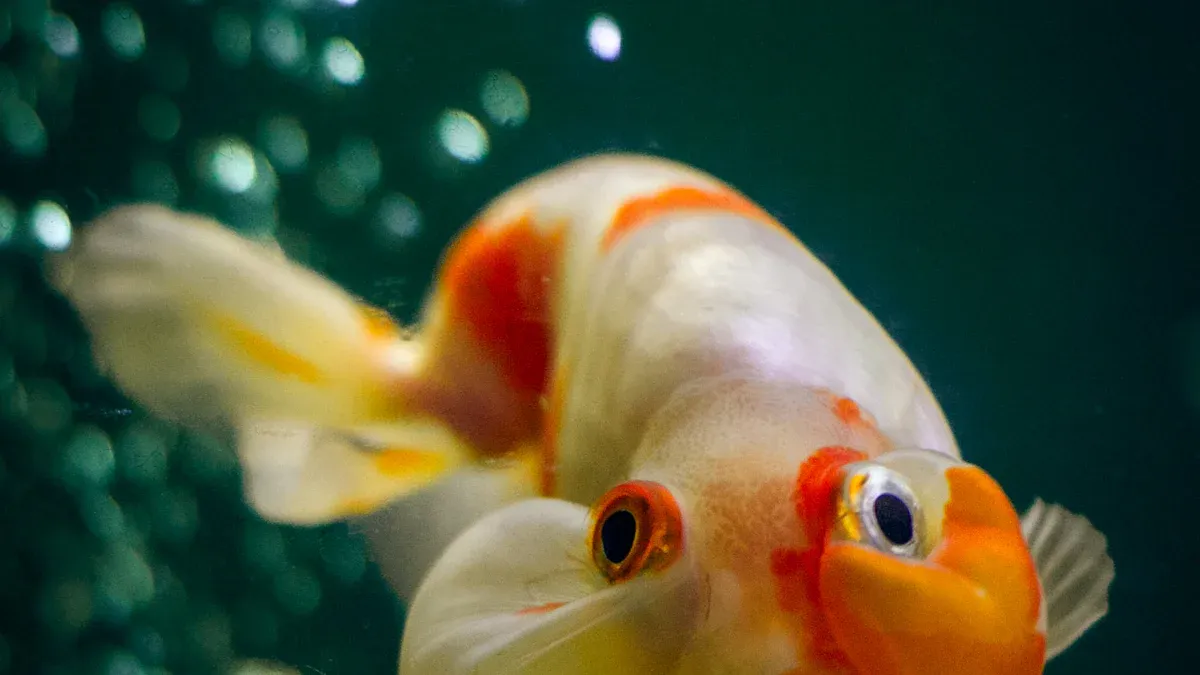
Welcome, new hobbyists, to the exciting world of the aquarium! Choosing the right fish is crucial for a successful start, especially for beginner aquariums. Many beginners face challenges such as unstable water conditions or stressed fish. Selecting appropriate freshwater aquarium fish helps you avoid common pitfalls that can lead to disappointment. This post introduces 17 popular freshwater fish that are hardy, adaptable, and easy to care for. These most popular freshwater fish are perfect fish for beginners, ensuring you build confidence and enjoyment in your freshwater aquarium journey.
Key Takeaways
Choose hardy and peaceful fish for your first aquarium. They handle small mistakes and get along with other fish.
Select fish with manageable sizes and simple diets. This makes feeding and tank maintenance easier for you.
Always cycle your aquarium before adding fish. This creates good bacteria that clean the water.
Check water levels often and change water regularly. This keeps your fish healthy and happy.
Do not overfeed your fish. Overfeeding makes the water dirty and can make fish sick.
Why Choose Beginner-Friendly Fish
Hardiness and Adaptability
You want fish that can handle small mistakes. Hardy fish are resilient. They tolerate minor changes in water conditions. This gives you time to learn. You will find these hardy fish forgive small errors. This makes your first aquarium experience much less stressful. Your aquarium will thrive with these adaptable species.
Peaceful Temperament
A peaceful community aquarium is a joy to watch. You want fish that get along. This prevents stress and aggression. Many beginner-friendly fish are peaceful. They coexist well with others. You should choose peaceful species for your community tank. This ensures a calm environment for all your fish.
Some beginner-friendly tetra species show different aggression levels:
Gentle: Black Neon Tetras are very peaceful.
Somewhat nippy: Lemon Tetra or Green Fire Tetra might nip in rare cases.
Semi-aggressive or nippy: Diamond Tetra or Serpae Tetra can be more assertive.
Manageable Size and Diet
Choosing fish with manageable sizes is important. Small fish fit smaller tanks. This means you do not need a huge community aquarium to start. Their diets are also simple. You can easily feed them.
Fish Type | Average Adult Size | Dietary Needs |
|---|---|---|
Corydoras (Panda, Salt and Pepper) | Small species | Sinking tablets/pellets |
Bristlenose Pleco | Small size | Sinking wafers, sliced cucumber |
Swordtails | Females over 3″, males up to 3″ | Algae grazers, sinking algae wafers, cucumber |
Sailfin Mollies | Males up to 3″ | Algae grazers, sinking algae wafers, cucumber |
Availability and Affordability
You will find fish for beginners easily. Most local fish stores carry them. They are also budget-friendly. This helps beginners start their hobby without a large investment. Compare their cost to more advanced species.
Fish Species | Price Range |
|---|---|
Green Chromis | $10-$25 |
Firefish | $20-$45 |
Royal Gramma | $30-$60 |
17 Popular Freshwater Fish for Beginner Aquariums
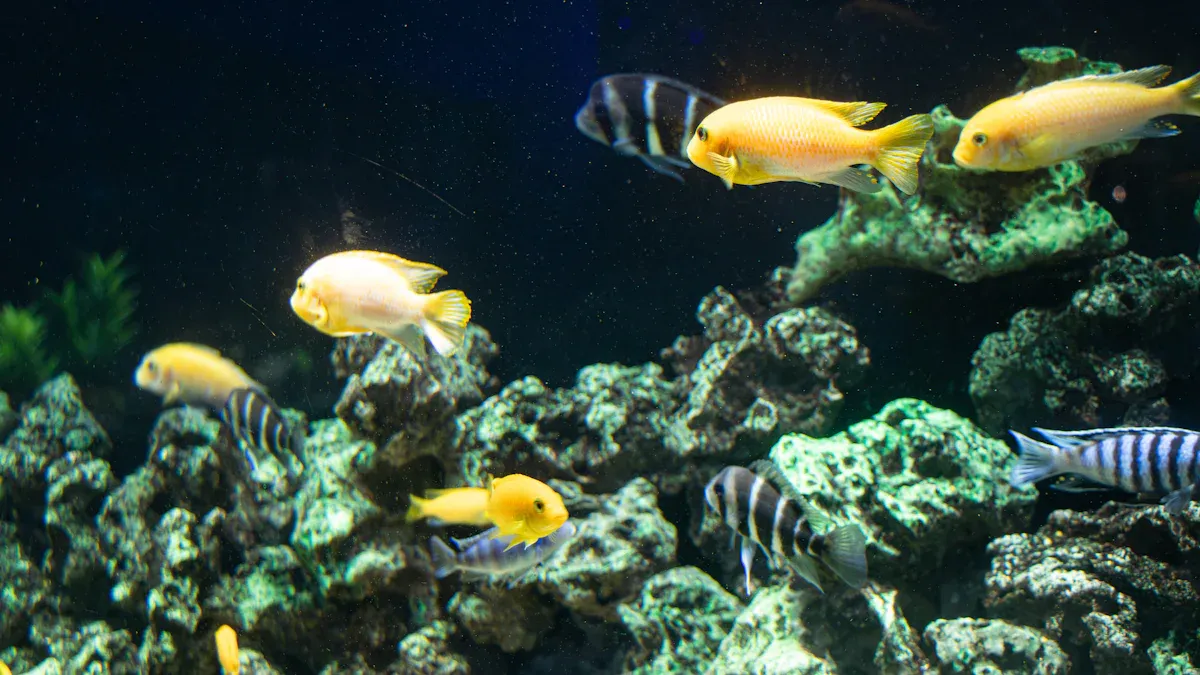
Guppy (Poecilia reticulata)
Guppies are among the most popular freshwater fish for beginners. You will find them vibrant, active, and relatively easy to care for. They are livebearers, meaning they give birth to live young, which can be exciting for new aquarists. Guppies typically live between 1 and 3 years. With exceptional care, some may live up to 5 years, though this is uncommon.
Category | Detail |
|---|---|
Lifespan: | 2-5 years |
Size: | 2 inches (females up to 2.5 inches) |
Care: | Easy |
Diet: | Omnivores |
Behavior: | Peaceful and Easy-going |
You should know about common health issues. Guppies can get Ich (White Spot Disease). This shows as tiny white spots on their skin, gills, and fins. They might breathe fast, seem tired, and lose their appetite. Fin Rot also appears as weakening or fraying fins with color changes. Poor water quality and stress make it worse. Columnaris is a bacterial infection. It causes white or gray sores on the body, fins, and head. Fish might have trouble swimming. Velvet Disease is from parasites. It looks like gold or rust-colored powder on their body. Their fins might clamp, and they will breathe hard. Swim Bladder Disease affects their ability to float. You will see poor or erratic swimming and bloating.
Platy (Xiphophorus maculatus)
Platies are another excellent choice for beginners. These most popular freshwater fish are colorful, active, and peaceful species. You will enjoy watching them explore your aquarium. Platies are small. A group can thrive in an aquarium as small as 10 gallons. However, larger tanks are always beneficial. Platies are active and enjoy exploring. More space allows them to swim and play.
Parameter | Value |
|---|---|
Temperature | 70-82°F |
Ammonia | 0 ppm |
Nitrite | 0 ppm |
Nitrate | <30 ppm |
GH (General Hardness) | 10-28 dGH (167-467 ppm) |
KH (Carbonate Hardness) | 3-5 dKH (54-90 ppm) |
pH | 6.8-8.5 |
Water Change | 25% every 2 weeks |
Note: Southern and Swordtail Platies prefer warmer temperatures, while Variable Platies prefer cooler ranges. Platies are hardy and can adapt to varying water hardness if acclimated properly.
Platy fish are omnivores. They are not picky eaters. They accept high-quality fish food like flakes, pellets, and frozen foods. You must include enough plant matter in their diet. Spirulina, kelp, or algae meal are good choices. This ensures they get all necessary vitamins and nutrients. Adults should eat once a day. Juveniles need two to three small meals daily. Feed an amount they can consume within 2-3 minutes. This avoids overfeeding.
Molly (Poecilia sp.)
Mollies are hardy and adaptable fish for beginners. You will find them in many colors and fin types. They are peaceful species and add variety to your community aquarium.
Tank Size:
A 20-gallon tank is the minimum for a small group of Mollies. Larger tanks are better, especially for Sailfin varieties. Allow at least 3 gallons per adult Molly. For mixed groups or breeding, a 30- or 40-gallon tank is advised.
A minimum of 10 gallons is recommended for four individual Mollies. For larger varieties like Sailfins, a tank of at least 30 gallons is necessary. Each additional fish requires approximately 3 gallons of space.
Water Parameters:
Mollies prefer slightly alkaline water. The pH should be between 7.5 and 8.5. They thrive in moderately hard water. Maintain a stable GH between 12-25 dGH and KH around 10 dKH. The tank temperature should be between 75°F and 82°F (24°C to 28°C). You can add aquarium salt to mimic brackish conditions if needed.
Mollies are tropical fish. They need warm water, ideally between 72°F and 78°F. The preferred pH level is between 6.7 and 8.5. Hardness should be 20 to 30 KH. A standard mechanical/biological filtration system is suitable.
Diet:
Mollies are omnivorous. They need a balanced diet of both plant and animal matter. This includes high-quality flake or pellet food. Offer blanched vegetables like spinach, zucchini, and peas. Protein-rich treats include brine shrimp, bloodworms, and daphnia. Algae wafers or natural tank algae are also good. Feed once or twice daily in small portions. Fast them occasionally once a week for digestive health.
Their diet should include flakes, pellets, and algae wafers. Supplement with vegetables like lettuce, zucchini, and spinach. Protein sources such as live and frozen brine shrimp and bloodworms can also be provided. Feed small amounts twice daily. This aids digestion and prevents issues like bloat.
Swordtail (Xiphophorus hellerii)
Swordtails are popular freshwater fish known for the male’s distinctive “sword-like” tail. They are active and generally peaceful, making them a good addition to a community tank.
Tank Size: A minimum of 10 gallons is recommended for a small group of 4-5 swordtails. Larger tanks are needed if you keep them with other community fish. A 30-gallon aquarium or larger is recommended, especially for groups or community fish. A minimum of 15-20 gallons is needed for swordtails. Larger tanks help reduce aggression and stress.
Water Temperature: Maintain water temperature between 68-82°F. The ideal range is 75°F to 79°F.
pH Levels: Aim for a pH of 7-8. They prefer pH-neutral to slightly alkaline water, from 7.0 to 8.5.
TDS: Keep TDS between 100-450ppm.
Water Hardness: Maintain hardness between 12-35 dGH.
Diet: Swordtails are omnivores. They eat plants, bugs, worms, detritus, algae, and insects in the wild. In captivity, a high-quality omnivore food should be a staple. Color-enhancing foods with carotenoids are especially good. Supplement with thawed frozen foods, algae tabs, blanched vegetables, and live foods. Floating or slowly sinking foods are best. They occupy the middle to upper tank levels. A staple diet of commercial flakes or micro-pellets for tropical fish is recommended. Supplement with live, frozen, and freeze-dried foods like brine shrimp, daphnia, and bloodworms several times a week. They thrive on flakes, pellets, vegetables (like zucchini), and protein-rich foods (such as brine shrimp or bloodworms).
Neon Tetra (Paracheirodon innesi)
Neon tetras are small, schooling fish with brilliant iridescent colors. They are a classic choice for beginners due to their peaceful nature and stunning appearance.
For Neon Tetras, a minimum tank size of 40 liters is recommended. Larger tanks are better for bigger schools. A 20-gallon tank is ideal. It provides ample space for swimming and exploration. It also accommodates their social nature in groups of at least six. A dark substrate, like black sand, mimics their natural environment. It also enhances their colors.
Ideal water parameters include a temperature range of 22-26°C. The pH should be 6.0-7.0. Hardness should be between 35-180 ppm (2-10 dGH). They thrive in well-planted tanks with soft, slightly acidic water. They benefit from driftwood, fine-leaved plants, and a dark substrate. This mimics their natural habitat. A sponge filter or gentle-flow filter prevents strong currents. Maintaining stable water parameters is crucial. Soft and acidic water is ideal. The pH should not exceed 7.0. Hardness should be no more than 10 dGH. A standard sponge filter is suitable. Weekly water changes of about a quarter of the tank volume help maintain water quality.
Neon Tetras are omnivorous. You should feed them high-quality micro pellets, flakes, frozen, or live foods. Daphnia and baby brine shrimp are good choices. Feeding once a day in small portions is sufficient. A balanced diet with occasional protein-rich treats enhances their coloration. A varied diet is essential. Include both animal- and plant-based foods. This can consist of fish flakes, micro pellets, live or frozen foods (such as bloodworms and baby brine shrimp), algae wafers, and even small amounts of fruits and vegetables like grapes, cucumbers, and strawberries. Feed Neon Tetras twice a day for two minutes. This prevents overfeeding and maintains water quality. In the wild, their diet includes algae, insect larvae, and small invertebrates.
Zebra Danio (Danio rerio)
Zebra danios are active, hardy, and peaceful fish. Their striped patterns make them attractive. They are one of the most popular freshwater fish for beginners because they tolerate a range of conditions. You will see them darting around the upper levels of your aquarium.
Water Parameters | Range |
|---|---|
Temperature | 64°F to 82°F (ideal around 76°F) |
pH Levels | 6.5 to 7.5 (keep as neutral as possible) |
Water Hardness (KH) | 8 to 12 KH |
Water Parameters | Range |
|---|---|
pH | 6.5 – 7.5 |
Ammonia | 0 ppm |
Nitrite | 0 ppm |
Nitrate | Below 40 ppm (ideally under 20 ppm) |
KH (Carbonate Hardness) | 4 – 8 dKH |
GH (General Hardness) | 5 – 12 dGH |
Zebra Danios are omnivores. They are not picky eaters. Commercial foods like flakes and small pellets provide a nutritionally balanced meal. Feed them twice a day. Provide enough food they can consume in two minutes. Avoid overfeeding. This maintains good water conditions and prevents weight gain. Supplement their diet with high-protein snacks. Brine shrimp, bloodworms, and mosquito larvae (live or frozen) are good options. In captivity, Zebra Danios are easy to feed. They consume various small tropical fish foods. A balanced diet can include fish flakes, nano pellets, freeze-dried foods, frozen bloodworms, and live baby brine shrimp. Offer a variety of options. This prevents nutrient deficiencies and ensures all fish get food.
Corydoras Catfish (Corydoras sp.)
Corydoras catfish are small, armored bottom-dwellers. They are peaceful and excellent scavengers. You will love watching these active little fish sift through the substrate. They are a great addition to any community aquarium.
Corydoras Catfish can live in covered tanks of nearly any size. Many beginners use 10-gallon aquariums. They can also thrive in larger tanks. You must manage fish count to avoid overstocking. For water parameters, Corydoras do well in established community tank water. Maintain a pH of 7.0 – 7.8. Keep the temperature between 72 – 78 degrees Fahrenheit. Stability is key. Avoid sudden shifts. Ammonia and Nitrite levels should be 0 ppm. Control Nitrate buildup with regular partial water changes. Their diet includes basic food types. Fish flakes, pellets, and bottom feeder tablets are good. While they scavenge, they should not rely solely on leftovers. Supplements specifically for them are necessary. Feed only an amount they can consume in about 5 minutes.
Otocinclus Catfish (Otocinclus affinis)
Otocinclus catfish, often called “otos,” are tiny, peaceful algae eaters. They are perfect for keeping your tank clean. You will find them diligently grazing on algae.
For Otocinclus Catfish, the ideal tank size is a minimum of 10 gallons. A 20-gallon tank or larger is recommended for a group of six. Water parameters should include a temperature between 72°F and 79°F (22°C to 26°C). The pH level should be 6.5 to 7.5. They prefer soft water with a hardness of 6 to 15 dGH. Ammonia and nitrite levels must be 0 ppm. Nitrates should be below 20 ppm. Their diet primarily consists of algae. Supplement with algae wafers, spirulina-based foods, and blanched vegetables. Zucchini, cucumber, and spinach are good choices. A varied diet is crucial for their health.
Kuhli Loach (Pangio kuhlii)
Kuhli loaches are unique, eel-like fish. They are peaceful bottom-dwellers. You will enjoy their shy, nocturnal behavior. They often hide during the day and become active at night.
Tank Size: A 10-gallon tank is the minimum. A 20-gallon tank is optimal (18.5 liters minimum with 37 liters being ideal). A 20-gallon tank is a good start for a small group of about 6 Kuhli loaches. A long, shallow tank mimics their natural river habitat.
Water Temperature: Maintain water temperature between 74-80°F. Use a heater. Another source suggests 72 to 79°F (22-26°C).
Water pH: Aim for a pH of 6.5-7.0. The range should be 6.0-7.5.
Water Hardness: A hardness of 2-8 dGH is preferred. This indicates soft, slightly acidic water. The range should be 4-8 dGH.
Substrate: They require soft, sandy substrates.
Diet: Kuhli loaches are omnivores. They are not picky eaters but prefer bottom-feeding. Use sinking pellets or flakes as their main food. For treats, offer frozen or live bloodworms and brine shrimp. Feed them in the evening when they are most active. They should eat a balanced diet of meaty and vegetable-based foods. This includes live foods like freshly hatched brine shrimp, black worms, daphnia, bloodworms, and other small invertebrates. Freeze-dried or frozen versions are also suitable. Sinking pellets and bottom-feeder tablets are good. Vegetables such as zucchini, cucumber, blanched spinach, or lettuce can also be offered. They scavenge for snails, which provide protein, calcium, and other minerals.
Betta Fish (Betta splendens)
Betta fish, or Siamese fighting fish, are stunning. Their flowing fins and vibrant colors make them one of the most popular freshwater fish. While males can be aggressive towards each other, a single betta can be a captivating pet for beginners.
A tank size of 5-10 gallons is recommended for optimal quality of life for your betta. A minimum of 3 gallons is acceptable. Betta fish require a minimum tank size of 5 gallons. This prevents stress, stunted growth, and other health issues.
Temperature: Maintain temperature between 75F-80F. Another source suggests 78-82°F (maintained with a heater).
Ammonia: Keep ammonia at 0.0 PPM.
Nitrite: Keep nitrite at 0.0 PPM.
Nitrate: Keep nitrate below 20 PPM.
pH: Maintain pH between 6.5-7.5.
Water Hardness: Betta splendens can tolerate moderately hard water. They prefer soft water. Wild bettas may require softer, more acidic water. The range is 2-15 dKH.
Maintenance: Regular monitoring and weekly water changes are essential.
Betta fish are carnivores. They need a high-protein diet. Betta-specific pellets are preferred over flakes. Feed 2-4 pellets or flakes once a day. Supplements and treats include live foods like mosquito larvae or daphnia. Frozen bloodworms and brine shrimp are also good. Feed these once or twice per week due to higher protein. Avoid overfeeding. This prevents bloating, digestive issues, obesity, and excess ammonia from uneaten food.
Cherry Barb (Puntius titteya)
Cherry barbs are peaceful, schooling fish. Their reddish hue, especially in males, adds a beautiful splash of color to your aquarium. They are hardy and suitable for beginners.
Cherry Barbs readily consume a diverse range of food sources. This includes flake food or other dry sustenance specifically for tropical fish. To enrich their diet, periodically provide supplementary treats. Vegetables, daphnia, bloodworms, brine shrimp, plankton, or similar items are good. For healthier fish with better coloring, offer regular meals of small frozen and live foods. Daphnia, bloodworm, and brine shrimp are good. Combine these with high-quality dried food like granules or flakes. Some should include additional algal or plant content.
Cherry Barbs are omnivores. They eat small bugs, micro worms, crustaceans, zooplankton, and algae in nature. In captivity, they are not picky eaters. Provide a variety of dry, frozen, and live fish foods. This ensures essential nutrients. Due to their smaller mouths, suitable foods include nano pellets, daphnia, and spirulina flakes for vegetable and algae content. To enhance their scarlet hues, feed them fish foods with naturally red ingredients. Krill flakes, baby brine shrimp, and Easy Fry and Small Fish Food are good options.
Ideally, Cherry Barbs require a 95-liter aquarium. A 115-liter aquarium is highly appreciated. It provides more space for schooling and hiding. They thrive in larger tanks. A tank size of at least 25 to 30 gallons is recommended. This comfortably accommodates a school of these fish without overcrowding. The minimum tank size for a school of cherry barbs is 30 gallons (113.6 L). A longer aquarium is preferable for more open swimming space.
Water temperature: Maintain between 73°F to 81°F. They are tropical fish. They need a stable water temperature between 74-80° F (23.3-26.7° C).
pH levels: Keep pH between 6 to 8. They prefer neutral water with a pH between 6.0-7.0.
Water hardness: Maintain hardness between 5 to 19 dH.
Harlequin Rasbora (Trigonostigma heteromorpha)
Harlequin rasboras are small, peaceful schooling fish. Their distinctive black triangle marking makes them easily recognizable. They are a great choice for beginners looking for a calm community tank.
For Harlequin Rasbora fish, the minimum tank size is 10 gallons. Larger tanks (20-30 gallons) are recommended for schooling and increased activity. Ideal water parameters include a temperature range of 72°F to 80°F (with 74°F as a target). pH levels should be between 6.0 and 7.8 (6.5 being optimal). Water hardness should be from 2 to 15 KH (lower being better). As omnivores, Harlequin Rasboras are opportunistic eaters. They consume a wide variety of foods.
White Cloud Mountain Minnow (Tanichthys albonubes)
White Cloud Mountain Minnows are hardy, cold-water fish. They are perfect for unheated tanks or cooler environments. You will appreciate their peaceful nature and schooling behavior.
Tank Size: White Cloud Mountain Minnows thrive in at least 10 to 12-gallon tanks for a school of about six fish. For community tanks with more species, a larger tank is recommended. This provides ample swimming space. A minimum of 10 gallons is recommended for a school of 6 White Cloud Mountain Minnows. A 20-gallon long tank offers better swimming space. It promotes more dynamic group behavior.
Water Parameters: These cold-water fish are flexible with temperature. They survive as low as 4°F. They do well in the 64-72°F range. This makes them suitable for unheated aquariums. The recommended pH level is around 6.0 to 8.0, leaning slightly acidic. They prefer moderate to low water column hardness. They thrive in a pH range of 6.5 to 7.5. Hardness should be between 5–20 dGH. Keep ammonia and nitrite at 0 ppm. Nitrates should be below 20 ppm (with regular water changes). They prefer cooler water. An optimal temperature range is 64–72°F (18–22°C). They generally do not require a heater.
Diet: White Cloud Mountain Minnows are omnivores. In captivity, their staple diet should consist of high-quality micro pellets or flake food. For a protein boost, offer frozen or live brine shrimp, daphnia, or mosquito larvae. Vegetable matter like blanched spinach or spirulina flakes can also be included. Feed them 1–2 times daily in small portions. They are micropredators. They readily accept high-quality dry and frozen foods of appropriate size. A varied diet is essential for optimal health and coloration.
Dwarf Gourami (Trichogaster lalius)
Dwarf gouramis are beautiful, peaceful fish. Their vibrant colors and unique labyrinth organ (allowing them to breathe air) make them fascinating. You will enjoy their calm demeanor.
Category | Specification |
|---|---|
Minimum Tank Size | 15 gallons (long) |
Temperature | 72-82 °F |
pH | 6-7.5 |
Bristlenose Pleco (Ancistrus cirrhosus)
Bristlenose plecos are excellent algae eaters. They are smaller than common plecos, making them suitable for most beginner aquariums. You will find them diligently cleaning your tank surfaces.
Category | Recommendation |
|---|---|
Tank Size | Minimum 20 gallons |
Temperature | 73°F to 80°F |
pH Level | 6.5 to 7.5 |
Water Hardness | Up to 200 ppm |
Oxygenation | Prefer well-aerated water; consider filtration with current or circulation pumps |
Diet | Primarily herbivores; supplement with sinking pellets/wafers (algae, spirulina), blanched vegetables (zucchini, spinach), occasional protein (bloodworms) 1-2 times/week |
Category | Recommendation |
|---|---|
Tank Size | 20 to 29 gallons or more for 4- to 6-inch plecos |
Diet | Regular diet of high-quality fish foods, not just relying on algae or scraps |
Category | Recommendation |
|---|---|
Tank Size | 20-30 gallons for smaller species like Bristlenose Pleco |
Temperature | 72°F to 82°F (22°C to 28°C) |
pH Level | 6.5 to 7.5 |
Water Hardness | Soft to moderately hard |
Oxygenation | Ensure proper aeration |
Diet | Algae, blanched vegetables (zucchini, cucumber, spinach), high-quality sinking algae wafers and catfish pellets, occasional protein (shrimp pellets, bloodworms) |
Endler Livebearer (Poecilia wingei)
Endler livebearers are small, colorful, and active fish. They are closely related to guppies but often stay smaller. You will love their vibrant patterns and peaceful nature.
Tank Size: A minimum of a 10-gallon tank is recommended for a small group of 6 to 8 Endlers. They are active swimmers. A 20-gallon tank or larger is ideal for them to truly thrive. Extra space leads to more stable water conditions. A minimum of 10 gallons is recommended for Endler’s livebearers. They prefer to be kept in groups. For 5 or more fish, or if including other tank inhabitants, a 20-gallon tank or larger is advisable. Larger tanks are also beneficial due to their prolific breeding. The minimum tank size for Endlers is 5-10 gallons. A larger tank is recommended due to their prolific breeding. For a 10-gallon tank, a trio of one male and two females is a good start. For a 20-gallon tank, six to nine Endlers are suitable.
Water Parameters: Endlers prefer reasonably warm indoor room temperatures, aiming for 65-80°F. They prefer slightly alkaline water with a pH of 5.5-8.0. Moderately hard water with a GH between 10-20 dGH is also suitable. Endlers are adaptable. They primarily require clean, stable water. They can tolerate temperatures in the high 60s to mid-70s °F without a heater. A heater helps prevent fluctuations. They thrive in pH levels from 6.5 to 8.5. They are comfortable in both soft and hard water. Endler’s livebearers are hardy. They can tolerate a wide range of water parameters. They can live at room temperature without a heater. They tolerate pH levels from 6.5 to 8.5. They also tolerate almost any water hardness. Regular tank maintenance is still important. This prevents bacterial and fungal infections.
Diet: Endlers are not picky eaters. They accept various commercial foods small enough for their mouths, such as flakes and floating pellets. They may also eat sinking foods. A varied diet is crucial. Incorporate nutrient-rich live, frozen, and freeze-dried foods in small amounts. This avoids overfeeding. They consume anything small enough to fit in their mouths. This includes flakes, pellets, Repashy gel food, and daphnia. They scavenge at both the surface and substrate. They may even pick at algae. A varied diet is essential for their immune system and vibrant coloration.
Parameter | Value |
|---|---|
Aquarium Size | 10 gallon or larger |
pH | 7 – 7.5 |
Temperature | 75 – 85°F (24 – 29°C) |
Water Hardness | Soft to moderately hard water |
Diet / Fish Food | Flake, frozen, and live food (varied) |
Celestial Pearl Danio (Danio margaritatus)
Celestial Pearl Danios, or CPDs, are tiny, jewel-like fish. Their striking patterns and peaceful demeanor make them a favorite. You will find them a beautiful addition to a small, planted aquarium.
A minimum tank size of 10 gallons is recommended for a small school of Celestial Pearl Danios. However, larger tanks (20 gallons or more) are preferable. This is especially true if you plan to keep other tank mates. A tank of at least 10 gallons is suitable for a group of 5 to 6 Celestial Pearl Danios. If you keep more, follow a ratio of 2 gallons per fish. Keep mostly females if possible. Provide ample space and hiding places. This avoids aggression among males. A larger school of 10–15 fish needs a 20-gallon aquarium or larger.
Maintain a stable water temperature between 64°F to 78°F (18°C to 26°C). They prefer 72°F to 78°F (22°C to 26°C). The pH level should be slightly acidic to neutral, ideally between 6.5 to 7.5. Aim for moderate water hardness, around 5 to 15 dGH. The ideal water parameters are:
Temperature: 71°F to 78°F
pH Level: 6.5 to 7.5
Water Hardness: 1 to 5 dGH
Celestial Pearl Danios enjoy temperatures ranging from 73° to 79°F (around 23° – 26°C). Soft to medium water with slightly acidic pH levels is necessary. Ideal parameters include:
Ammonia and Nitrite: 0 ppm
Nitrate: less than 20 ppm
KH: 2-10 dKH
pH: 6.5 – 7.5
Water change: 20% per week
They can handle a pH range from 6.6–8.0. They tolerate soft to moderate water hardness. While they can live up to 78°F (26°C), they thrive in lower temperatures from 72–76°F (22–24°C).
Celestial Pearl Danios are omnivores. They thrive on a diverse diet. Recommended foods include:
Dr. Bassleer Foods (Medium Size, 0.5mm) in varieties like Chlorella and Acai
Dr. Bassleer Baby/Nano Foods for subadults
Quality flakes like Northfin Community and Kelp Flakes
Offer a balanced mix of these foods in small amounts multiple times a day. Ensure they consume it within a few minutes. This prevents overfeeding. In captivity, they should eat a varied diet including:
Finely crushed flakes
Micro pellets
Small worms
Newly hatched brine shrimp
Daphnia
Feed them small amounts two to three times per day. Remove any uneaten food after 5 minutes. This maintains water quality. They are not picky eaters. They accept commercially available flakes or pellets, especially sinking ones. Other good choices include:
Brine shrimp
Krill
Grindal worms
Live Daphnia
They also feed on algae, plant matter, and zooplankton. Feed them twice a day with an amount they can consume within 2-3 minutes. Remove any leftovers. Celestial Pearl Danios enjoy tiny, slow-sinking foods. Their favorite meals include:
Baby brine shrimp
Frozen cyclops
Daphnia
Micro worms
For dry foods, crushed flakes and Easy Fry and Small Fish Food are good options. A variety of foods is key for their nutrition.
Essential Tips for New Aquarists
You have chosen your fish. Now, learn essential practices to keep them healthy. These fundamental steps are crucial for a successful aquarium. They help you avoid common problems many beginners face.
Aquarium Cycling Basics
You must understand the nitrogen cycle. This biological process converts harmful waste into less toxic substances. Fish waste produces ammonia, which is very toxic. Nitrosomonas bacteria then turn ammonia into nitrites. Nitrites are also harmful. Another bacteria, Nitrobacter, changes nitrites into nitrates. Nitrates are less dangerous but still need management. Plants consume nitrates, or you remove them with water changes. This cycle ensures a clean environment. It breaks down toxic waste, allowing your fish to thrive.
Water Parameter Monitoring
You need to check your water regularly. Ammonia and nitrite levels should always be very low. Any detectable amount shows your filter is not working enough. This can lead to other problems. Aim for zero ammonia and nitrite. Nitrates should also be low.
Parameter | Ideal Level | Acceptable Range |
|---|---|---|
Ammonia | 0 ppm | 0 – 0.25 ppm |
Nitrites | 0 ppm | 0 – 0.25 ppm |
Nitrates | 0 ppm | 0 – 5.0 ppm |
Regular Water Changes
You must perform regular water changes. This removes nitrates and other pollutants that build up. It keeps your water fresh and healthy for your fish.
Aquarium Type | Frequency | Volume |
|---|---|---|
Small, Heavily Stocked | Weekly | 20-25% |
Medium to Large | Every 2-4 weeks | 10-20% |
Planted Freshwater | Every 3-6 weeks | 10-20% |
Proper Feeding Practices
Do not overfeed your fish. Fish have small stomachs. Overfeeding causes many problems.
Poor Water Quality: Uneaten food rots. This creates toxic ammonia and nitrites. Your water becomes murky and smelly.
Digestive Issues: Fish can get bloated or constipated. This can lead to swim bladder disease.
Shortened Lifespan: Poor water and digestive strain stress fish. They get sick more easily.
Increased Algae Growth: Extra food boosts nutrients. This causes algae to grow out of control.
Compatible Tank Mates
Choose fish that get along. This creates a peaceful community aquarium. Some fish are good companions for popular beginner species.
Corydoras Catfish: These peaceful bottom-dwellers clean up leftovers. They rarely bother fish like Guppies.
Neon Tetra: These small, colorful fish school together. They add beauty to a community aquarium.
Molly: These peaceful fish live well with Guppies. They also enjoy groups.
Platyfish: Platies are hardy and colorful. They make good additions to a community tank.
You have explored many popular freshwater fish. These species offer great benefits for beginners. They are hardy, adaptable, and peaceful. These 17 fish provide a strong foundation for your new aquarium. You can start your fishkeeping journey with confidence. You now have the knowledge to care for your chosen fish. Enjoy the rewarding experience of fishkeeping!