


Eagles command respect. Spotting these magnificent birds in their natural habitat thrills many. This guide provides an essential eagle identification chart. It helps you recognize 10 majestic eagle species. Readers will distinguish these powerful birds of prey. They will learn unique characteristics, habitats, and behaviors. The guide highlights key identification features for each.
Key Takeaways
Look at an eagle’s size, wingspan, and feather patterns. These features help you tell different eagle species apart.
An eagle’s home and where it lives are important clues. Different eagles live in different places, like near water or in mountains.
The blog shows 10 types of eagles. Each eagle has special features, like the Bald Eagle’s white head or the Golden Eagle’s golden neck.
Watch eagles from far away. This keeps them safe. Do not disturb their nests or hunting areas.
Support groups that protect eagles. This helps these amazing birds live on for a long time.
Eagle Identification Basics
Key Features for Identification
Identifying eagles, powerful birds of prey, involves observing several key features. Size and wingspan are important indicators. Eagles are large birds. Their wingspans vary significantly among species. For example, a Harpy Eagle can have a wingspan up to 6.5 feet. A Wedge-tailed Eagle’s wingspan can reach over 9.8 feet.
Eagle Species | Wingspan Range (feet) |
|---|---|
Bald Eagle | 5.5 to 8 |
Golden Eagle | 5.9 to 7.7 |
Harpy Eagle | Up to 6.5 |
Philippine Eagle | Up to 7 |
Wedge-tailed Eagle | Up to 9.8 |
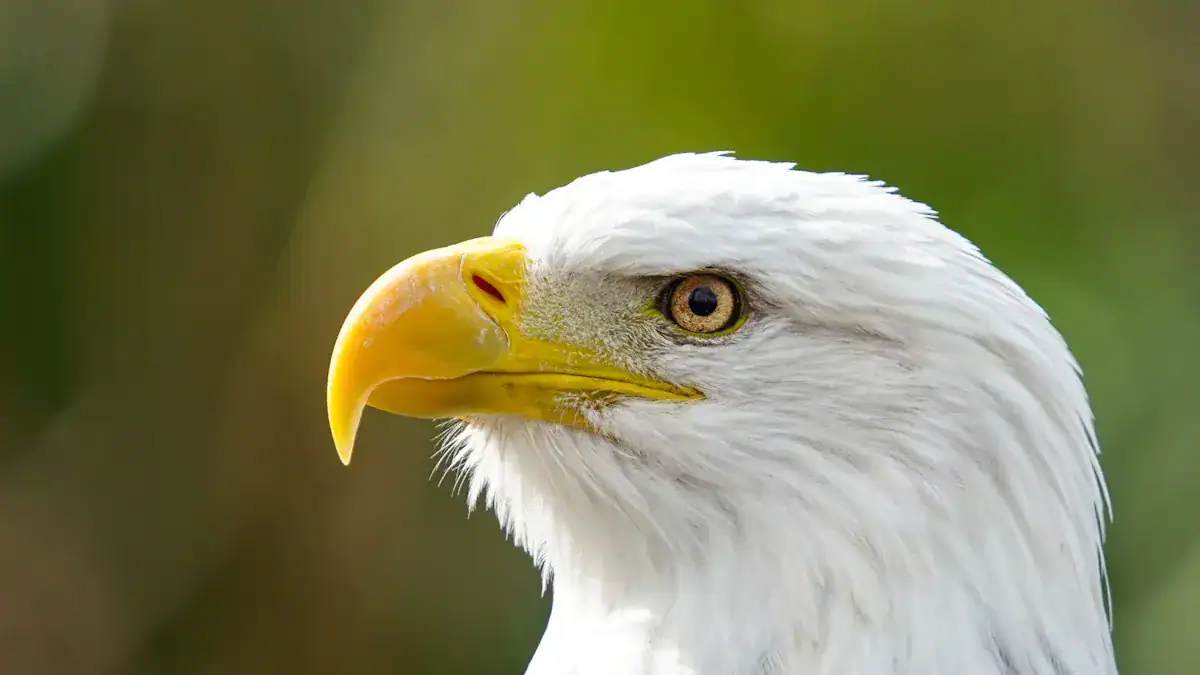
Plumage, or feather patterns, offers crucial clues. Adult eagles often have distinct markings. Juvenile eagles, however, show different plumages. A young bald eagle, for instance, has mottled brown feathers. It gradually develops the iconic white head and tail by 5.5 years of age. Immature birds show varied patterns. Some remain dark with white flecking. Others have mostly white bellies with brown flecking. The eyes also change color as the bird matures. Beak shape, leg and talon color, and flight patterns also help distinguish these magnificent birds of prey. Vocalizations, the sounds they make, provide another unique identifier.
Habitat and Range Clues
Geographical location and typical environments greatly assist identification. Different eagle species live in specific regions. For example, the Aquila genus includes “true eagles.” These birds often have feathered legs down to their toes. The Golden Eagle, a member of this genus, lives across North America, Eurasia, and North Africa.
Eagle Species | Geographical Range |
|---|---|
Golden Eagle (Aquila chrysaetos) | Holarctic: North America, Eurasia, and North Africa. |
Wedge-tailed Eagle (Aquila audax) | Australia, Tasmania, and southern New Guinea. |
Martial Eagle (Polemaetus bellicosus) | Sub-Saharan Africa. |
Harpy Eagle (Harpia harpyja) | Central and South America. |
Sea eagles, like the bald eagle, prefer areas near water. They hunt fish. These birds of prey are common along coasts, rivers, lakes, and reservoirs. Their presence is widespread in many states, especially during winter. Woodlands near large bodies of water are ideal habitats for them. Understanding where an eagle lives helps narrow down its identity.
10 Majestic Eagle Species: Your Eagle Identification Chart
1. Bald Eagle: Key Identification
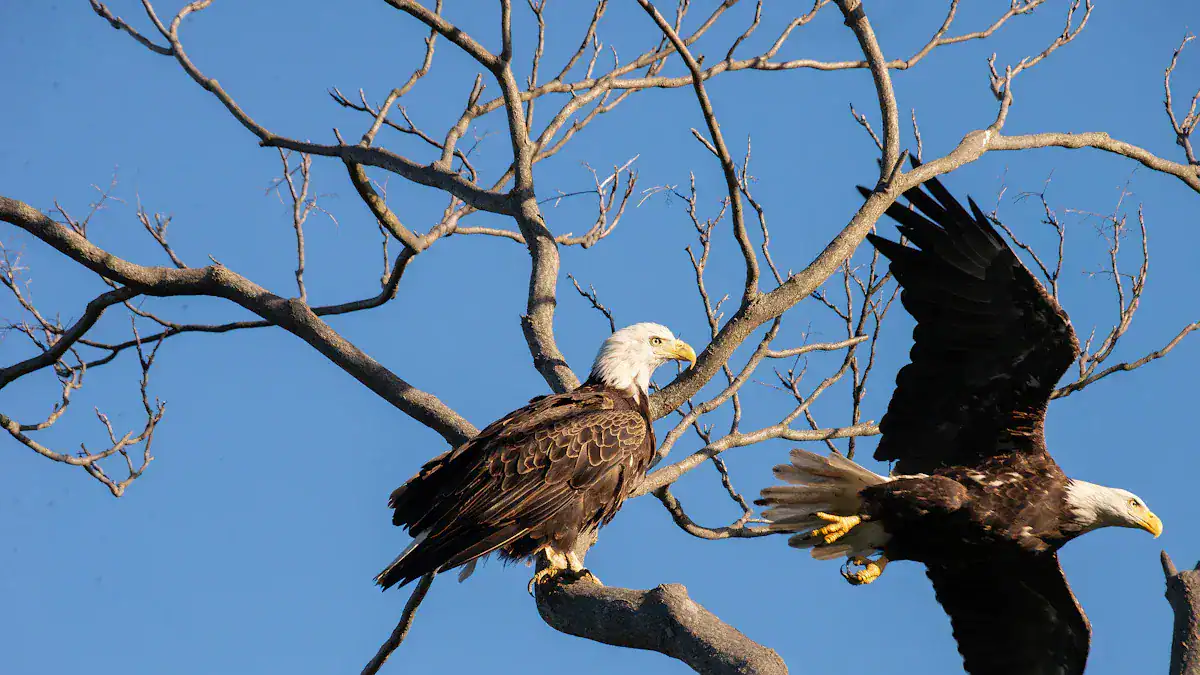
Description: Adult Bald Eagles have a distinctive white head and tail. Their bodies are dark brown. Juvenile Bald Eagles appear mottled brown. They gradually develop the adult plumage over several years. Their eyes also change color as they mature.
Habitat: Bald Eagles live across North America. They prefer areas near water, such as coasts, rivers, and large lakes. These environments provide abundant fish, their primary food source.
Key ID: The adult’s white head and tail are unmistakable. Their large size also helps with bald eagle identification. An adult Bald Eagle has an average wingspan of 6 feet 7 inches. Most males have a wingspan of about 76.8 inches. Most females have a wingspan of about 86.4 inches. Bald Eagles primarily eat fish. They also consume waterfowl, small mammals, turtles, and carrion. Fish are especially important during nesting season. These birds of prey are opportunistic foragers.
2. Golden Eagle: Distinctive Features
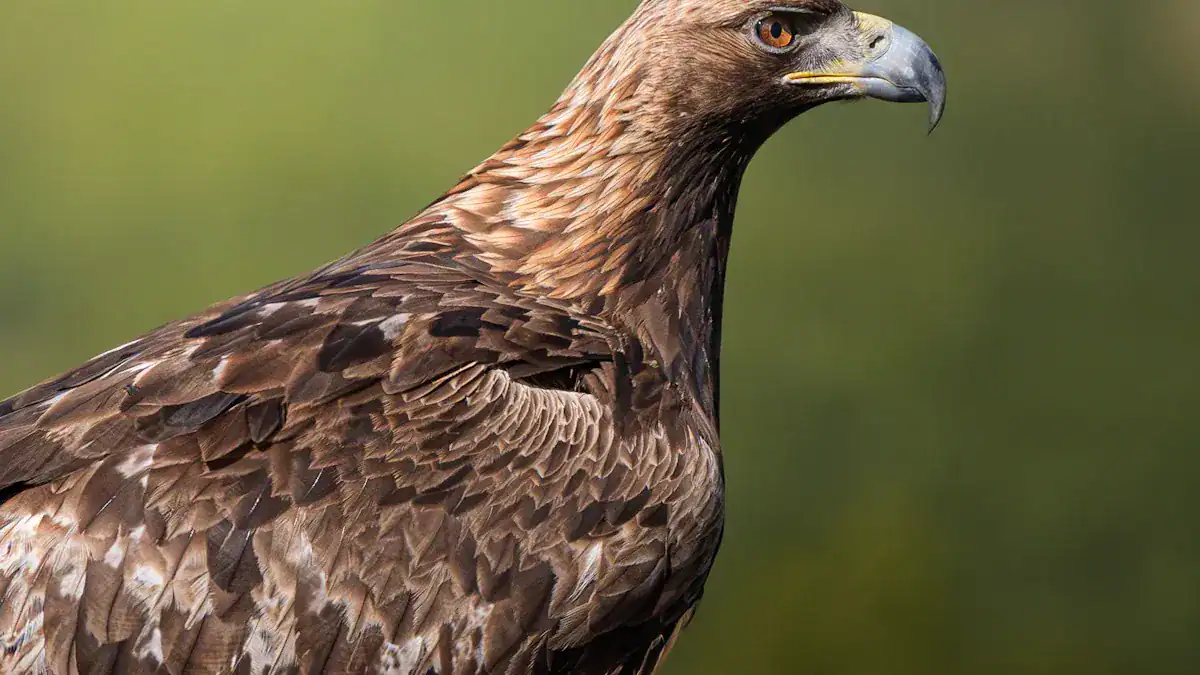
Description: Golden Eagles are large, dark brown birds. They have a golden-brown nape, the back of their neck. Juvenile birds look similar but may have white patches at the base of their primary flight feathers and a white tail with a dark band.
Habitat: Golden Eagles inhabit the Northern Hemisphere. They prefer open country, mountains, and hilly regions. They often hunt in grasslands and deserts.
Key ID: The golden nape is a key feature. Their powerful build and soaring flight are also distinctive. Golden Eagles are impressive hunters. They can glide at speeds up to 120 mph. When diving for prey, they reach speeds of 150 to 200 mph. Adult Golden Eagles weigh between 6.4 and 13.2 pounds. Females are typically larger than males.
3. Steller’s Sea Eagle: Unmistakable Traits
Description: Steller’s Sea Eagles are massive birds. They have dark brown bodies with striking white shoulders, thighs, and a wedge-shaped white tail. Their beak is huge and bright yellow-orange.
Habitat: These eagles live in Northeast Asia. They prefer coastal areas, especially rocky seacoasts and large rivers.
Key ID: Their immense size and striking white patches make them easy to identify. The huge yellow-orange beak is also a unique trait. Steller’s Sea Eagles are generally quiet outside of breeding season. During courtship, they become more vocal. Their primary call is a harsh, rasping series of repeated “ka-ka-ka” or “kra-kra-kra” sounds. The IUCN lists the Steller’s Sea Eagle as ‘Vulnerable’. Habitat loss in Russia from hydroelectric projects, logging, and pollution threatens them.
4. Harpy Eagle: Rainforest Giant
Description: Harpy Eagles have a grey head, black upperparts, and white underparts. They possess a distinctive double crest of feathers on their head.
Habitat: Harpy Eagles live in the rainforests of Central and South America. They prefer dense, undisturbed forests.
Key ID: Their large size, prominent crest, and powerful talons are key identifiers. Harpy Eagle talons are exceptionally long. Female talons average up to 4.8 inches. Male talons average about 3.4 inches. Harpy Eagles primarily hunt arboreal mammals. Their diet includes monkeys, sloths, opossums, and porcupines. They also eat large birds and reptiles.
5. Philippine Eagle: Unique Crest
Description: Philippine Eagles have brown upperparts and white underparts. They feature a unique, shaggy crest of long feathers on their head.
Habitat: These eagles are endemic to the rainforests of the Philippines. They require large areas of primary forest.
Key ID: The unique shaggy crest is their most distinguishing feature. They are critically endangered and very large. Scientists estimate the global population of the Philippine Eagle to be around 392 breeding pairs. Mindanao has about 233 pairs, Luzon has 128 pairs, and Eastern Visayas has 31 pairs. Deforestation is a major threat to the Philippine Eagle. Nearly 80% of the Philippines’ tropical rainforest has been lost since the 1970s. This loss is due to urban and agricultural development.
6. White-tailed Eagle: Coastal Hunter
Description: White-tailed Eagles are large, brown birds. Adults have a pale head and neck. They have a short, wedge-shaped white tail. Juveniles are darker and have a darker tail that gradually whitens with age.
Habitat: These eagles live across Eurasia. They prefer coastal areas and inland waters, such as large lakes and rivers. They often breed near lakes, peat bogs, and marshlands.
Key ID: Their large size, pale head, and white tail in adults are key features. They are powerful birds of prey.
7. African Fish Eagle: Iconic Call
Description: African Fish Eagles have a distinctive white head and chest. Their belly is chestnut, and their wings are black.
Habitat: They live in Sub-Saharan Africa. They are always found near water, including lakes, rivers, and reservoirs.
Key ID: The white head and chest are very distinctive. Their iconic call is also a key identifier. African Fish Eagles produce loud, far-carrying calls. These calls sound like “Weeah kyow-kow-kow.” Males have higher-pitched calls than females. They build large nests from sticks in tall trees near water.
8. Martial Eagle: Spotted Predator
Description: Martial Eagles have dark brown upperparts. Their underparts are white with dark spots. They also have a shaggy crest.
Habitat: These eagles live in Sub-Saharan Africa. They prefer open woodlands and savannas.
Key ID: Their very large size, spotted belly, and shaggy crest help identify them. Martial Eagles have a wingspan that can exceed 7.9 feet. They hunt from perches or by soaring high. They spot prey from great distances and dive down at high speed.
9. Wedge-tailed Eagle: Australian Icon
Description: Wedge-tailed Eagles are large, dark brown birds. They have a distinctive long, wedge-shaped tail.
Habitat: These eagles are found across Australia. They inhabit open country, including grasslands, woodlands, and deserts.
Key ID: The long, wedge-shaped tail is their most distinctive feature. Their large size also helps with identification. The average lifespan for a Wedge-tailed Eagle in the wild is 5.9 years. The longest recorded lifespan is about eleven years. Threats to Wedge-tailed Eagles include habitat loss, nest disturbance, and collisions with power lines or wind turbines.
10. Crowned Eagle: Forest Monarch
Description: Crowned Eagles have dark brown upperparts. Their underparts are rufous and barred. They have a prominent double crest on their head.
Habitat: These eagles live in African rainforests. They prefer dense forest environments.
Key ID: Their double crest is a key distinguishing feature. This crest gives them a striking, regal silhouette. They are powerful birds of prey and forest dwellers.
| Eagle Species | Scientific Name | Geographic Range | Size (Length / Wingspan) | Plumage Description | Habitat | Diet | Identification Tips |
|---|---|---|---|---|---|---|---|
| Bald Eagle | Haliaeetus leucocephalus | North America (U.S., Canada, Alaska) | 70–102 cm / 1.8–2.3 m | White head & tail, dark brown body, yellow beak & talons | Near large lakes, rivers, coasts | Fish, small mammals, carrion | Iconic white head and tail; broad wings; slow, powerful flight |
| Golden Eagle | Aquila chrysaetos | North America, Europe, Asia, N. Africa | 66–102 cm / 1.8–2.3 m | Dark brown body, golden nape, feathered legs | Mountains, cliffs, open terrain | Rabbits, hares, small mammals | Feathered legs; golden sheen on head; agile flyer |
| Harpy Eagle | Harpia harpyja | Central & South America (rainforests) | 86–107 cm / 1.8–2.2 m | Gray head, black chest band, white underside, feathered crest | Tropical rainforests | Monkeys, sloths | Huge size; double crest; short broad wings for forest hunting |
| White-tailed Eagle | Haliaeetus albicilla | Europe, Russia, N. Asia | 70–94 cm / 1.8–2.4 m | Brown body, pale head, white tail, yellow beak | Coastal cliffs, lakes, estuaries | Fish, seabirds, carrion | Similar to Bald Eagle but paler and lacks white head |
| Philippine Eagle | Pithecophaga jefferyi | Philippines (endemic) | 86–102 cm / up to 2.2 m | Brown upperparts, white belly, shaggy crest | Rainforests (mountainous areas) | Monkeys, snakes, small mammals | Large crest; fierce eyes; extremely rare and endangered |
| African Fish Eagle | Haliaeetus vocifer | Sub-Saharan Africa | 63–75 cm / 2.0–2.4 m | White head & chest, chestnut belly, black wings | Lakes, rivers, wetlands | Fish, water birds | Loud call (“African scream”); resembles Bald Eagle but smaller |
| Steller’s Sea Eagle | Haliaeetus pelagicus | Russia (Kamchatka), Japan, Korea | 85–105 cm / 2.0–2.5 m | Dark brown body, white shoulders, tail & legs, large yellow bill | Coastal areas, river mouths | Salmon, seabirds | Largest eagle; massive yellow beak; striking contrast in plumage |
| Martial Eagle | Polemaetus bellicosus | Sub-Saharan Africa | 78–96 cm / 2.1–2.6 m | Dark brown upperparts, white underparts with dark spots | Savannas, open woodlands | Birds, reptiles, mammals | Strong legs; spotted belly; powerful hunter |
| Wedge-tailed Eagle | Aquila audax | Australia | 85–106 cm / 2.3 m | Dark brown to blackish, wedge-shaped tail | Grasslands, forests, mountains | Kangaroos, carrion | Long wedge tail; long legs; gliding flight pattern |
| Crowned Eagle | Stephanoaetus coronatus | Central & Southern Africa | 80–99 cm / 1.5–1.8 m | Brown upperparts, barred underparts, crested head | Forests & woodlands | Monkeys, antelope | Short broad wings; loud calls; strong talons |
Responsible Eagle Watching
Ethical Observation Practices
Observing eagles in their natural habitat is a privilege. People must do this responsibly. Maintaining a safe distance protects these magnificent birds of prey. The New York State Department of Environmental Conservation suggests staying at least a quarter mile (about 400 meters) from bald eagles. This distance helps eagles conserve energy, especially in winter. If an eagle flies away, it means you are too close.
The National Park Service advises staying at least 1000 feet (about 305 meters) from active nests, roosts, or feeding areas. Binoculars or telescopes help view eagles from afar. If an eagle shows agitation, like vocalizing or moving away, observers should quietly leave. Disturbing eagles can cause them to abandon nests. This leaves eggs or eaglets vulnerable to predators or bad weather. The U.S. Fish and Wildlife Service also advises keeping drones at least a quarter mile from nesting eagles. Drone activity can cause nest abandonment and is illegal near flying eagles.
When photographing eagles, follow ethical guidelines:
Maintain at least 100 meters (330 feet) from active Bald Eagle nests. Federal law protects Bald and Golden Eagles from harassment.
Use spotting scopes and telephoto lenses. These tools allow observation from a safe distance.
Avoid photographing Golden Eagles at their nests. They are more sensitive to disturbance. This can lead to nest abandonment.
Do not try for extreme close-up shots in the wild. This disturbs the eagles. Consider photographing rescue birds at wildlife centers for close-ups.
Never bait eagles. This changes their natural behavior and can be illegal.
Prioritize the bird’s welfare over a perfect photo. If an eagle shows agitation, retreat immediately.
Supporting Conservation Efforts
Many organizations work to protect eagles. The American Eagle Foundation focuses on conservation and protection. They care for non-releasable birds, protect bald eagles, and manage a Nest Egg Fund. They also work on habitat protection and address lead toxicity in eagles.
The U.S. Fish and Wildlife Service manages and conserves bald and golden eagle populations. They provide guidance for living near eagles. They also enforce laws like the Bald and Golden Eagle Protection Act. This act protects both bald and golden eagles. The Grizzly & Wolf Discovery Center helps with the “Golden Eagle Lure bird” project. This project assesses lead poisoning and habitat issues in eagles. They work with Montana State University on important eagle research.
Successful reintroduction programs also help eagle populations. For example, the Bonelli’s eagle was reintroduced in Mallorca. This program started in 2011. It successfully established about 40 eagles, including nine breeding pairs. This shows how dedicated efforts can bring back endangered species.
Successfully identifying eagles in their natural habitats brings immense satisfaction. This guide, an eagle identification chart, now equips readers to distinguish 10 majestic eagle species. Continued practice and observation will enhance birdwatching skills. Understanding these magnificent birds fosters a deeper appreciation for their conservation. Readers play a vital role in protecting these majestic creatures for future generations.