


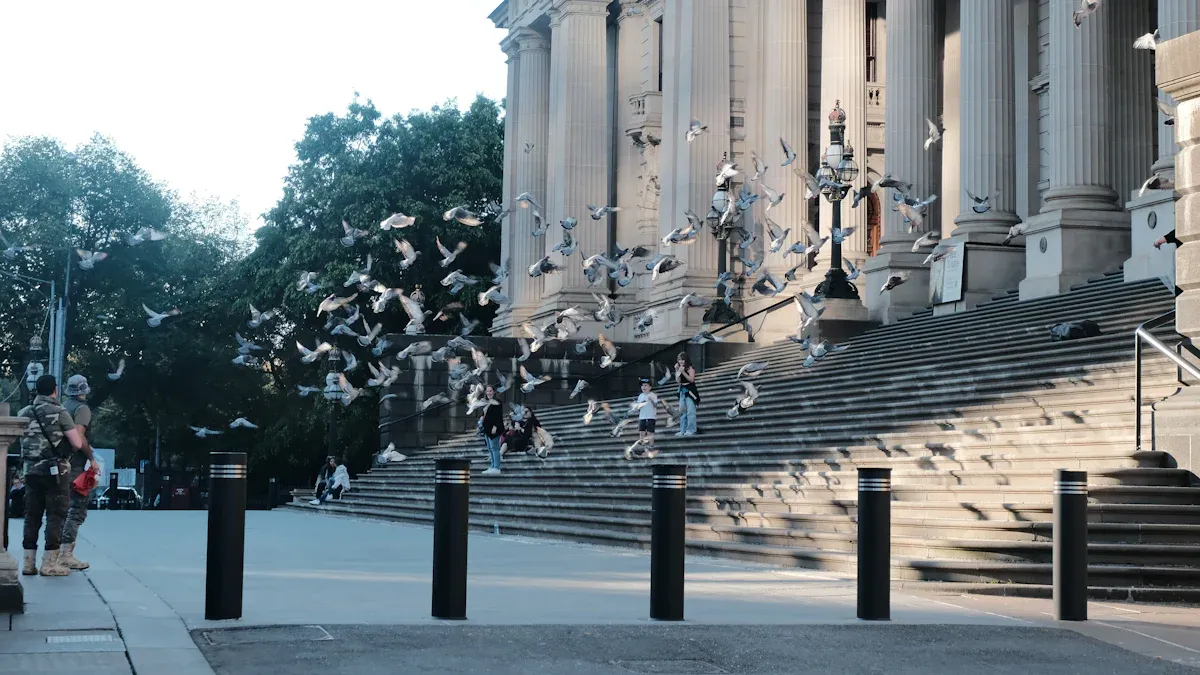
Melbourne holds surprising and vibrant urban birdlife. Rich avian diversity thrives beyond remote areas. Do you hear familiar chirps or see colorful wings daily? This guide provides a comprehensive checklist for identifying and appreciating urban and suburban Birds In Melbourne. Look closer at your local environment. Discover feathered residents. Local checklists and identification booklets can help you.
Key Takeaways
Melbourne has many different birds in its parks and backyards.
You can find birds in places like Yarra Bend Park and the Royal Botanic Gardens.
Look for birds by their size, color, sounds, and where they live.
Use binoculars and a bird guide to help you identify birds.
You can help birds by planting native plants and giving them water in your garden.
Top Birdwatching Spots
Melbourne offers many excellent places to observe its diverse birdlife. You can find prime birdwatching locations across the city. These spots provide different habitats for various species.
Yarra Bend Park
Yarra Bend Park is a large natural bushland area close to the city. It offers a peaceful escape for birdwatchers. You will often hear Rainbow Lorikeets and Noisy Miners. These birds are very common. They call noisily throughout the park. This makes them easy to spot.
Royal Botanic Gardens
The Royal Botanic Gardens Melbourne provides a beautiful setting for birdwatching. You can find many species here. Australian Wood Ducks and Crested Pigeons are common. Spotted Doves are also very frequent. Look for waterbirds like Dusky Moorhens, Eurasian Coots, and Pacific Black Ducks on the ponds. Purple Swamphens have become more common. Bell Miners call loudly from the trees. You might even see Nankeen Night-herons roosting. Common city birds like Willie Wagtails and Sulphur-Crested Cockatoos are also present.
Jells Park
Jells Park is a fantastic spot for waterbirds. Its large lake attracts many species. You can see Australian White Ibis, Wood Ducks, and Pelicans. Australasian Darters and various cormorants, like Little Pied and Great Cormorants, are often present. Look for Purple Swamphens, Eurasian Coots, and Pacific Black Ducks. You might also spot Freckled Ducks or Royal Spoonbills.
Westerfolds Park
Westerfolds Park is another excellent location. It features river frontage along the Yarra River. This park offers a mix of open spaces and bushland. You can find many bush birds here. It is a great place to explore different habitats.
Local Parks and Backyards
You do not need to travel far to see Birds In Melbourne. Your local parks and even your own backyard can be rich birding areas. Australian Magpies, Galahs, and Sulphur-Crested Cockatoos are common residents. You will also frequently see Currawongs, Noisy Miners, and Rainbow Lorikeets. Keep an eye out for Little Corellas and Butcher Birds. Even Common Mynas and Little Ravens are part of your local bird community.
Common Urban and Suburban Birds In Melbourne
Melbourne’s urban and suburban areas teem with diverse birdlife. You can easily spot many species right outside your door. Let’s explore some of the most frequently encountered birds you will find.
Parrots and Cockatoos
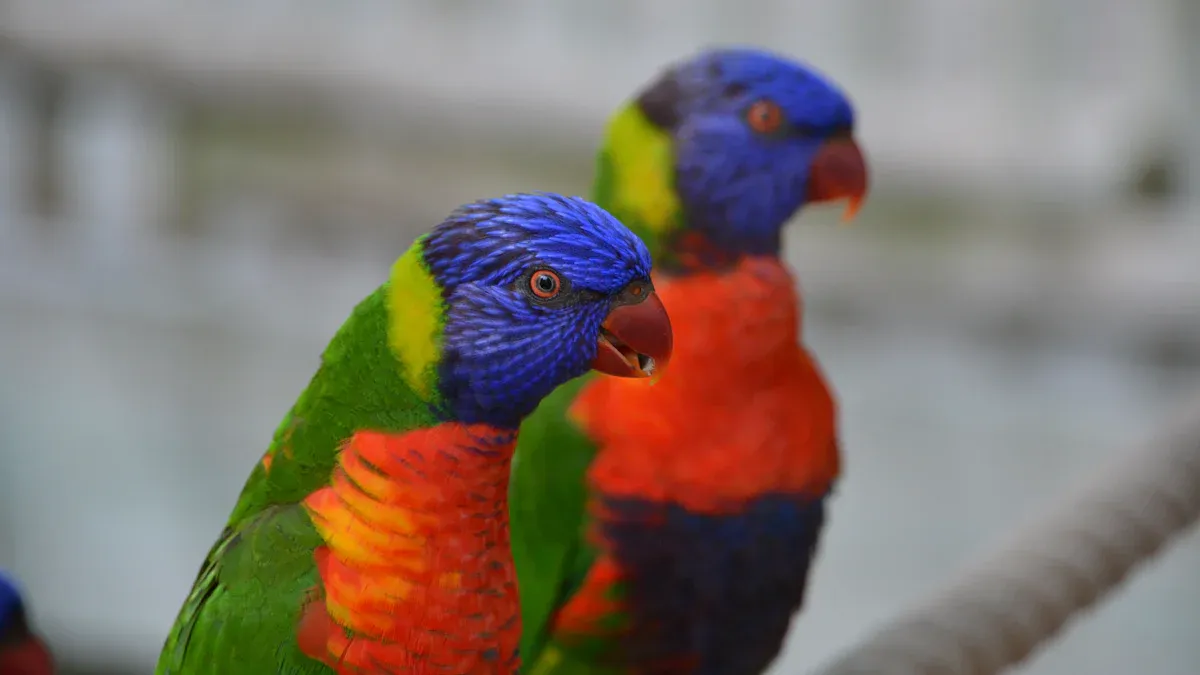
You will often see colorful parrots and cockatoos flying overhead or feeding in trees. Rainbow Lorikeets are a common sight. They thrive in coastal areas with flowering plants. These birds love nectar and fruits. You will find them increasingly common in urban coastal regions. They adapt well to human-modified landscapes. Their vibrant rainbow hues make them easy to identify. Listen for their continuous chattering sound as they feed. They are nectar eaters. Rainbow Lorikeets have a bright and conspicuous appearance. They have adapted well to city life. They feed on pollen, fruits, seeds, and insects. You will see them traveling in small flocks. These brazen birds often outcompete other parrot species in urban environments.
Galahs are another widespread cockatoo. They are more reserved and gentle than most Australian cockatoos. You will notice their light grey back, wings, and tail. Their face, chest, and belly are pink. They have a white crown and a light pink crest. Galahs are one of the most common cockatoos throughout Australia. They move in small groups. Sometimes, you might see them in massive flocks, up to a thousand individuals. These flocks can even mix with other bird species.
Magpies and Kookaburras
Australian Magpies are iconic Birds In Melbourne. You will recognize their loud, musical, flute-like song. They often perform this song as a duet or in groups. Some people even call them ‘Flute Birds’. Magpies can mimic over 35 species of native and introduced birds. They also mimic other animal calls, like dogs and horses. When they live near people, they can even mimic human speech. A lone magpie makes a quiet, musical warbling noise. This sound does not carry far. Pairs of magpies often engage in loud musical ‘carolling’. They do this to announce or defend their territory. Fledgling and juvenile magpies make a repeated, short, high-pitched begging call. When they feel threatened, magpies emit several high-pitched alarm calls.
Groups of up to 24 Australian Magpies live year-round in territories. All group members actively defend these territories. The group relies on its territory for feeding, roosting, and nesting. Magpies are generally sedentary and territorial. They live in groups that occupy and defend the same territory for many years. They spend much energy defending their territory from intruders, especially other magpies.
Kookaburras are also well-known. You will hear their distinctive laughing call, especially at dawn and dusk. These large kingfishers often perch on branches, watching for prey. They eat insects, worms, and small reptiles.
Wrens and Honeyeaters
Small, active birds like wrens and honeyeaters add charm to your garden. Superb Fairy-wrens are tiny, beautiful birds. Male Superb Fairy-wrens in breeding plumage display bold blue and black head markings. They might even show a ‘threat-posture’ with ear feathers partly raised. In non-breeding or ‘eclipse’ plumage, males become plain brown. However, their tail remains bright blue. Older or dominant males keep more blue and black head markings. Female Superb Fairy-wrens have orange around their eyes and orange lores. They have a brown bill and bluish tails. Juvenile Superb Fairy-wrens resemble females but have blue tail feathers.
New Holland Honeyeaters are also common. You will see them darting among flowering plants. They have a black and white striped head, a yellow wing patch, and a white eye. These birds feed on nectar, pollen, and insects. Other small native birds you might see include White-browed Scrubwrens, Brown Thornbills, Eastern Spinebills, and Willie Wagtails.
Waterbirds
Melbourne’s parks and waterways attract many waterbirds. You can spot various ducks, such as Pacific Black Ducks and Australian Wood Ducks. Eurasian Coots and Dusky Moorhens are common on ponds. Look for elegant Black Swans gliding on larger bodies of water. You might also see Australian White Ibis foraging on lawns.
Introduced Species
Melbourne also hosts several introduced bird species. These birds have adapted well to the urban environment. Common Mynas are easily recognizable with their dark brown bodies, black heads, and yellow eye patches. You will often see them in parks and gardens. Spotted Doves are another common introduced species. They have a distinctive spotted neck patch and a soft cooing call. House Sparrows and Common Starlings also thrive in urban areas.
Notable Melbourne Bird Sightings
Melbourne’s birdlife offers more than just common species. You can discover unique or less common birds in and around the city. These sightings add excitement to your birdwatching adventures.
Birds of Prey
You can often spot majestic birds of prey soaring above Melbourne. Look for Wedge-tailed Eagles circling high in the sky. You might also see Brown Falcons or Whistling Kites hunting over open fields. These powerful hunters play a vital role in the ecosystem.
Migratory Visitors
Melbourne welcomes many migratory birds throughout the year. These visitors travel long distances. For example, Red-necked Stints arrive in southeastern Australia from late August to mid-December. Adults typically arrive in September. Juveniles follow from November to mid-December. They depart for their breeding grounds from late March through April. You can see them leaving Victoria between April 11 and May 6.
Rare or Elusive Species
Melbourne and its surrounds host some truly special birds. You might spot a Gang-Gang Cockatoo, especially in winter along the Yarra River corridor. These birds prefer higher rainfall areas. The Purple-crowned Lorikeet, a small bird, prefers drier woodlands. You can find them around towns like Werribee and Lara. Look for the scarce Blue-winged Parrot in grasslands and saltmarshes at Werribee’s Western Treatment Plant, mainly in winter. The Orange-bellied Parrot, Australia’s most threatened bird, also winters at Werribee. You might even see a Black-eared Cuckoo in woodlands west of Melbourne. Nankeen Night-Herons roost in the Royal Botanic Gardens, especially in summer.
Recent Discovery! In February 2025, critically endangered Plains-wanderers were detected in Melbourne’s west. This marked their first sighting in over 30 years. Zoos Victoria used AI to analyze audio recordings. Human experts confirmed their distinctive ‘ooming’ calls.
Nocturnal Birds
Melbourne’s nights reveal a different set of feathered residents. The Tawny Frogmouth is a fascinating nocturnal bird. It often gets confused with the Southern Boobook. People sometimes incorrectly call the Tawny Frogmouth ‘mopoke’. Tawny Frogmouths have a wide range of calls. Their deep, continuous ‘oom-oom-oom’ grunting is common at night. They repeat this sound about eight times in five seconds. They also make a soft, breathy ‘whoo-whoo-whoo’ call. This call has lower intensity. Listen for their low-pitched, repetitive ‘ooom-ooom-ooom’ sound, especially during breeding season. Juvenile Tawny Frogmouths can make an unusual ‘huffing’ sound.
Your Melbourne Bird Checklist
Identifying birds can feel like a puzzle. You can solve this puzzle by looking at key features. This section gives you practical tips. You will learn how to identify the many Birds In Melbourne.
Size and Shape
Start by noticing a bird’s overall size and shape. Is it small like a sparrow or large like a crow? Does it have a long, slender body or a plump, round one? Look at its beak. Is it short and thick for cracking seeds? Is it long and thin for probing flowers? Does it have a hooked beak for tearing meat? Pay attention to its tail. Is it long, short, fanned, or forked? These basic observations help you narrow down the possibilities quickly.
Plumage and Coloration
A bird’s feathers, or plumage, offer many clues. Look at the colors and patterns. Are they bright or dull? Do they have stripes, spots, or solid blocks of color?
Bird Name | Key Plumage Patterns |
|---|---|
Unspecified Honeyeater (larger than average) | Grey crown, blackish mask, yellow throat, yellow ear tuft. |
Satin Flycatcher (Male) | Black undertail, glossier plumage (especially in sunlight), curved color boundary meeting wing at an acute angle. |
Satin Flycatcher (Female) | Brownish fringes to wing coverts and secondaries, bluish crown. |
You can also look for other common birds:
Bird Name | Key Plumage Patterns |
|---|---|
Common Myna | Brown body, black hooded head, bare yellow patch behind eye, bright yellow bill and legs, white patch on outer primaries, white wing lining. |
Eastern Rosella | Red head, white cheeks, white beak, red upper breast, yellow lower breast fading to pale green abdomen, black back/shoulder feathers with yellowish/greenish scalloped margins, bluish wings and lateral tail feathers, dark green tail. Females are duller with an underwing stripe. |
Common Starling | Glossy black plumage with metallic sheen, speckled with white at certain times of year. Young birds have browner plumage. |
These details help you tell one species from another.
Calls and Songs
Birds communicate through sounds. Their calls and songs are unique. Learning these sounds helps you identify birds even when you cannot see them. The Kookaburra is famous for its loud, distinctive, and laughing call. This sound often represents the Australian bush in old films. Listen for different types of calls. Some birds have alarm calls. Others sing to attract mates or defend their territory. You can use apps to learn and recognize these sounds.
Behavior and Habitat
A bird’s actions and where it lives provide important clues. Watch how a bird moves. Does it hop, walk, or run? Does it fly in a straight line or undulate?
Foraging Behavior:
Waterfowl, like Snow Geese, gather in large numbers.
Many flycatchers, such as the Eastern Phoebe, sit alone on exposed perches. They hunt insects from there.
Blackbirds and their relatives, like Brown-headed Cowbirds, often feed and roost in large, mixed-species flocks.
Vireos, such as Red-eyed Vireos, are typically solitary. They hop deliberately to scan for caterpillars.
Gulls are social. They form noisy colonies. You often find them in mixed-species flocks.
Herons hunt alone. However, they may nest in loose groups.
Belted Kingfishers patrol and hunt alone or in pairs.
Quail and grouse, like Willow Ptarmigans, live in tight groups called coveys.
Finches and crossbills travel in flocks to find seeds.
Solitary Sandpipers generally do not join large flocks. You can see them in small groups.
Nesting Behavior:
Nest site location helps. Tree and Violet-green Swallows nest only in cavities. You can identify them if you see a bird investigating a nest box.
A bird carrying food or nesting material means a nest is nearby.
Extreme agitation or distraction displays suggest a bird is defending a nest. This helps narrow down species. For example, a shorebird with a distraction display in the eastern US is likely a Killdeer or Spotted Sandpiper.
Birds flying with fecal sacs or eggshells are likely from a nest.
Courtship feeding or pair bonds also suggest nesting activity.
Nesting birds have stricter habitat needs. Habitat becomes a more reliable identification clue during this period.
Observe the bird’s habitat. Is it in a forest, a park, near water, or in your backyard? Different birds prefer different environments.
Using Field Guides and Apps
Modern tools make bird identification easier. Field guides and apps are excellent resources. They provide pictures, descriptions, and sound recordings.
Here are some highly recommended field guides for Australian birds:
The Australian Bird Guide by Peter Menkhorst, Danny Rogers, Rohan Clarke, Jeff Davies, Peter Marsack, and Kim Franklin (revised edition, CSIRO, 2019). This is a comprehensive identification guide.
The Compact Australian Bird Guide by Jeff Davies, Peter Menkhorst, Danny Rogers, Rohan Clarke, Peter Marsack, & Kim Franklin. This smaller version is an excellent traveling companion for birders.
Graham Pizzey & Frank Knight Field Guide to the Birds of Australia.
Simpson & Day Field Guide to the Birds of Australia (various editions).
The Slater Field Guide to Australian Birds by Slater.
Flegg Guide (known for real pictures).
Australian Birds (A concise photographic field guide) by Donald and Molly Trounson.
Photographic Field Guide to Birds of Australia by Flegg.
What Bird Is That? by Neville Cayley.
Many apps also exist. They let you record sounds and upload photos for identification. These tools help you become a skilled birdwatcher.
Practical Urban Birdwatching Tips

You can enhance your birdwatching experience with some practical advice. These tips help you observe birds effectively and ethically. They also allow you to contribute to bird conservation efforts.
Best Times for Activity
Birds are most active during specific times of the day. You will find them busy at dawn. They also show high activity levels at dusk. During these periods, birds forage for food. They also sing to attract mates or defend their territory. Early morning offers the best light for viewing. It also provides cooler temperatures. This makes your experience more comfortable.
Essential Gear
You do not need much specialized equipment to start birdwatching. However, some items greatly improve your experience.
Binoculars: A good pair of binoculars is your most important tool. They bring distant birds closer. This allows you to see fine details.
Field Guide or App: Carry a field guide specific to Australian birds. Alternatively, use a bird identification app on your phone. These resources help you identify species quickly.
Notebook and Pen: You can record your sightings. Note down behaviors or interesting observations.
Comfortable Shoes: You will likely walk a lot. Wear shoes suitable for various terrains.
Ethical Practices
Observing birds ethically ensures their well-being. You must prioritize the welfare of birds and their environment.
Exercise restraint and caution during observation. Avoid stressing birds. Do not expose them to danger.
Maintain a significant distance from nests, roosts, and feeding sites. Use blinds or natural cover if you need extended observation.
Use artificial light sparingly for photography. This is especially true for close-ups.
Stay on existing roads, trails, and paths. This minimizes habitat disturbance.
Respect all laws and regulations in public areas. Do not enter private property without permission.
Ensure artificial bird environments, like feeders, are safe. Keep them clean and free of disease.
Citizen Science
You can contribute valuable data to bird research. Citizen science programs allow you to help scientists.
Aussie Bird Count: This program helps understand local birds. It tracks trends in bird communities. You spend 20 minutes daily in October noting birds in your chosen outdoor space.
City Nature Challenge: This global program gathers data for scientists. It documents animals and plants, including birds, throughout Melbourne. It runs for 4 days from late April to early May each year. You use the iNaturalist app.
Great Southern Bioblitz: This is the largest biological survey in the Southern Hemisphere. It involves recording wild plants and animals, including birds. It takes place in October annually. You also use the iNaturalist app.
Attracting Birds to Your Garden
You can turn your garden into a bird-friendly haven. Plant native species. They provide food and shelter. Offer a clean water source. A bird bath or shallow dish works well. Avoid using pesticides. They harm birds and their food sources. Provide dense shrubs for shelter and nesting sites. This encourages birds to visit and stay.
Melbourne’s incredible birdlife thrives everywhere. You can discover diverse Birds In Melbourne right outside your door. Use your new knowledge. Explore local parks, gardens, and even your backyard. Birdwatching brings joy. It connects you to nature. Become an active participant. Observe and protect these amazing avian residents.
FAQ
What is the best time to see birds in Melbourne?
You will find birds most active at dawn and dusk. They forage for food and sing during these times. Early mornings offer the best viewing light. Cooler temperatures also make your experience more comfortable. 🌅
What essential gear do I need for birdwatching?
You need a good pair of binoculars. They bring distant birds closer. A field guide or a bird identification app helps you identify species. You can also bring a notebook to record your sightings. 📝
How can I help birds in my garden?
You can plant native species. They provide food and shelter. Offer a clean water source, like a bird bath. Avoid using pesticides. They harm birds and their food sources. Provide dense shrubs for nesting.
Can I use an app to identify birds?
Yes, many apps exist. They help you identify birds. Some apps let you record sounds. Others allow you to upload photos for identification. These tools make you a skilled birdwatcher. 📱
