



Florence, famous for its art, also boasts surprising avian life. You will find rich biodiversity here. This city offers unique birding opportunities for you. Both casual observers and dedicated birding enthusiasts enjoy the birding. This guide helps you identify common resident birds and fascinating migratory bird species. You will discover the best birding spots for birding in Florence, Tuscany’s capital. The blend of urban, riverine, and garden habitats contributes to this diversity. You will see many common birds here. Your birding experience will be rewarding. The birds in Florence offer a unique birding spectacle.
Key Takeaways
Florence has many different birds. You can see them in the city, along the river, and in nearby hills.
You can see birds in Florence all year. Spring and fall are best for seeing birds that travel.
Many common birds live in Florence. These include doves, sparrows, starlings, and blackbirds.
Florence has good places to watch birds. These include Parco delle Cascine and the Arno River.
Bring binoculars and a bird guide. These tools help you find and identify birds.
Florence’s Avian Landscape

Florence offers a surprisingly rich environment for birding. You might think of art and history first. However, the city’s unique geography creates a fantastic habitat for many birds. This makes Florence a prime location for birding enthusiasts.
Geographic Context
The Arno River flows right through Florence. It acts like a natural highway for birds. Many species use the riverbanks for nesting and feeding. You can find birds along its entire length. Urban parks, like the Cascine, provide green oases. These parks offer shelter and food for numerous birds. They are excellent spots for birding. The hills surrounding Florence, part of the beautiful Tuscany landscape, add even more diversity. These hills bring woodland and scrubland birds closer to the city. This mix of river, urban green spaces, and hills boosts the city’s biodiversity. It makes birding in Florence a truly special experience. You will discover many different birds here.
Birding Seasons
You can enjoy birding in Florence throughout the year. The city hosts many resident birds. These birds stay all year long. They breed and live in Florence permanently. Other birds are seasonal visitors. Spring and autumn are peak migration times. You will see many different birds passing through. Some birds come to Florence for the summer to breed. Others arrive in winter to escape colder climates further north. This constant change means your birding experiences will always be fresh. Each season brings new opportunities for birding. You can always find something new when birding in Florence. This makes birding here a continuous adventure.
Common Resident Birds in Florence
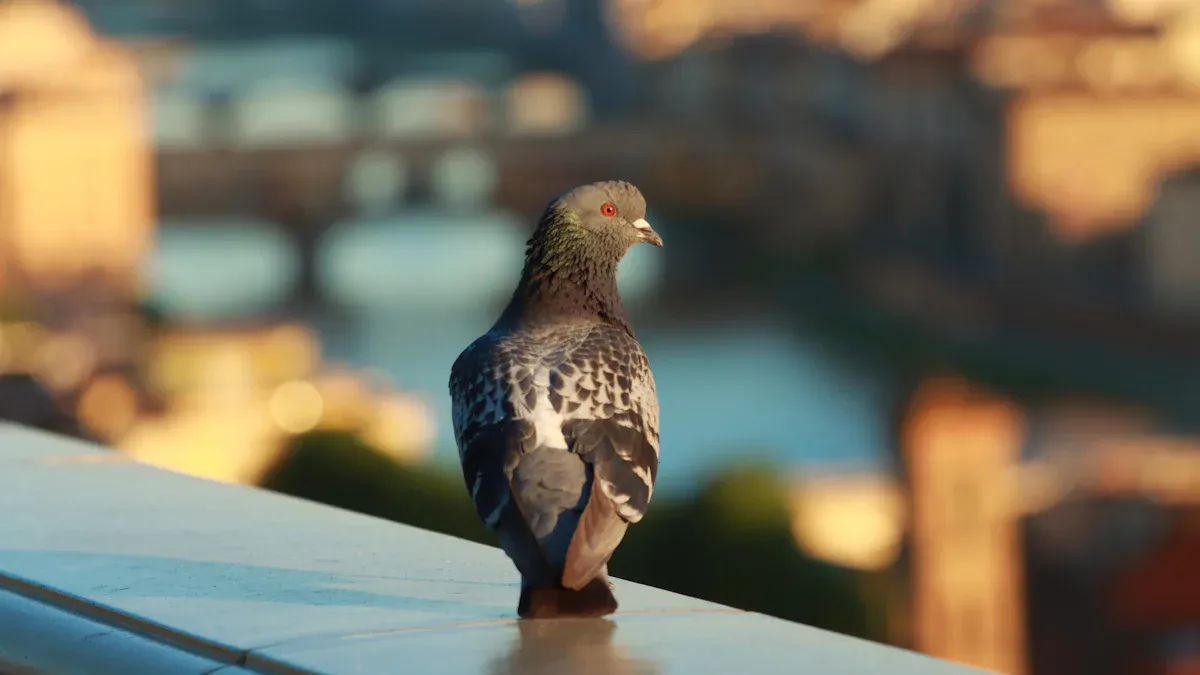
You will find many fascinating common birds living year-round in Florence. These resident species adapt well to urban life. They offer excellent birding opportunities right in the city. You can easily spot them in parks, gardens, and even bustling streets. Learning to identify these common birds enhances your birding experience.
Eurasian Collared Dove
You will often hear the soft, cooing call of the Eurasian Collared Dove. This common bird has pale, grayish-brown plumage. It features a distinctive black half-collar on its neck. You can see its white tail feathers when it flies. These doves are medium-sized. They often gather in small flocks. You will find them in urban areas, parks, and gardens. They frequently perch on buildings and wires.
House Sparrow
The House Sparrow is a very common sight in Florence. However, the sparrow you see here is often the Italian Sparrow. Many consider the Italian Sparrow the national bird of Italy. This bird is a hybrid. It results from cross-breeding between House Sparrows and Spanish Sparrows.
You can identify the male Italian Sparrow by its bright chestnut crown. It has a reddish-brown nape and white cheeks. A black bib surrounds its beak. Black markings outline its eyes and throat. Its back and wings are light brown or grayish. A fine male Italian Sparrow in Florence shows an entirely brown cap and white cheeks. These are characteristics of the Spanish Sparrow. Its other features are basically those of a House Sparrow. Genetic research shows it combines features like a chestnut head, black bib, and general body shape from both species. Its mitochondrial DNA is more similar to the Spanish Sparrow. Its nuclear DNA leans towards the House Sparrow. Some researchers classify it as a separate species.
The female Italian Sparrow looks like a female House Sparrow. She has a smaller size and more subdued colors. She lacks the black facial markings or bib of the male. Her plumage is brown with a lighter belly. Juvenile birds look similar to females. They display plain colors and no prominent black markings. These sparrows are plump, agile, and energetic. You often see them hopping or fluttering around human settlements. They give an impression of activity and curiosity. You will find them in urban areas, parks, and gardens. They are very common in these habitats.
European Starling
You will easily recognize the European Starling. It has glossy, iridescent black plumage. Small white spots cover its body, especially in winter. These spots fade in summer. Starlings are medium-sized birds. They have a short tail and a pointed bill. Their calls are varied. They include whistles, clicks, and mimicry of other birds. You often see them in large, noisy flocks. These flocks perform amazing aerial displays called murmurations. You can find them in urban areas, parks, and open fields. They are a very common sight.
Blackbird
The Blackbird is another common resident. The male is entirely black. He has a bright orange-yellow bill and eye-ring. The female is dark brown. She has a duller bill and no eye-ring. You will hear their rich, melodious song. It is one of the most beautiful common bird songs. They often forage on the ground. They hop and pause, listening for worms. You will find them in gardens, parks, and woodlands. They are very common in these green spaces.
Great Tit
The Great Tit is a small, active bird. It has a distinctive black head and a white cheek patch. Its back is olive-green. Its underparts are yellow with a broad black stripe down the middle. You will hear its clear, ringing “teacher-teacher” call. Great Tits are common in woodlands, parks, and gardens. They often visit bird feeders. You can easily spot them flitting through trees and shrubs.
Common Swift
You will see the Common Swift soaring high above the city. It has a sleek, dark body. Its wings are long and crescent-shaped. Swifts spend most of their lives in the air. They eat, drink, and even sleep while flying. They have a distinctive, screaming call. They nest in crevices of old buildings. You will see them from spring to late summer. They are a common sight in the skies over Florence. This makes for exciting birding.
Crested Lark
The Crested Lark is a ground-dwelling bird. It has streaky brown plumage. A prominent crest on its head gives it its name. You will often see it walking or running on open ground. It has a varied, melodious song. It often sings while perched or in flight. You can find this common bird in open fields, agricultural areas, and even urban fringes. It blends well with its surroundings.
Zitting Cisticola
The Zitting Cisticola is a small, shy bird. It has streaky brown upperparts and pale underparts. Its most distinctive feature is its “zitting” call. It sounds like “zit-zit-zit.” You will often hear it before you see it. It lives in tall grasses and reeds. You can find this common bird in wetlands, meadows, and agricultural areas. It can be a fun challenge for birding enthusiasts.
Migratory Birds in Florence
Florence welcomes many fascinating migratory birds throughout the year. These seasonal visitors add even more excitement to your birding adventures. You can observe them as they pass through, breed, or spend the winter months in the city. Each species brings unique colors, calls, and behaviors.
European Robin
You will easily spot the European Robin. It is a small, plump bird. Its most striking feature is its bright orange-red breast and face. Its upperparts are olive-brown. Robins are often quite tame. They allow you to approach them closely. You hear their sweet, warbling song. It has a melancholic quality. Robins are primarily winter visitors or passage migrants in Florence. They arrive in autumn and depart in spring. You find them in gardens, parks, and woodlands. They often forage on the ground.
White Wagtail
The White Wagtail is an elegant, slender bird. It has a distinctive black, white, and grey plumage. Its long tail constantly wags up and down. This movement gives the bird its name. You see them walking briskly on open ground. They chase insects. Their flight is undulating. They often call with a sharp “chissick” sound. White Wagtails are passage migrants and winter visitors in Florence. They prefer open areas, riverbanks, and urban spaces. You can often find them near water.
Barn Swallow
You will recognize the Barn Swallow by its deeply forked tail. It has iridescent blue upperparts. Its underparts are creamy white. A rusty-red face and throat complete its look. Swallows are agile flyers. They perform acrobatic displays as they catch insects in mid-air. You hear their cheerful, twittering calls. Barn Swallows are summer breeders in Florence. They arrive in spring and leave in autumn. You find them in open countryside, near farms, and on the urban fringes. They often nest on buildings.
Common Kestrel
The Common Kestrel is a small, graceful falcon. You identify it by its rusty-brown back with dark spots. Males have a grey head and tail. Females have a brown head. Kestrels are famous for their hovering flight. They hang motionless in the air. They scan the ground for prey. You see their pointed wings and long tail. Kestrels are resident birds in Florence, but some populations are migratory. You find them in open country, farmlands, and even urban areas. They often perch on high vantage points. This offers great birding.
Grey Heron
The Grey Heron is a large, stately water bird. It has long legs and a long, S-shaped neck. Its plumage is mostly grey. It has a white head with a black stripe extending from the eye. You see it standing motionless in shallow water. It waits patiently for fish or amphibians. Its flight is slow and deliberate. It has deep wing beats. You hear a harsh “fraaank” call. Grey Herons are resident birds in Florence. However, some individuals migrate. You can often spot them along the Arno River. One was observed from a grassy park. This park was a few blocks upstream from the Ponte Vecchio bridge. This sighting happened while birding from a stone wall overlooking a field. You find them in wetlands, rivers, and lakes.
European Bee-eater
The European Bee-eater is one of the most colorful birds you will see. It has brilliant green, blue, yellow, and chestnut plumage. Its long, slender, slightly downcurved bill is distinctive. You hear their characteristic “pruup” call. Bee-eaters are summer breeders in Florence. They arrive in late spring. They nest in colonies in sandy banks. You find them in open country with scattered trees. They feed on flying insects, especially bees and wasps. This makes for vibrant birding.
Hoopoe
The Hoopoe is an unmistakable bird. It has a striking fan-like crest. Its plumage is pinkish-brown. Black and white stripes mark its wings and tail. You see its crest raise and lower. It probes the ground with its long, slender bill. You hear its distinctive “oop-oop-oop” call. Hoopoes are summer breeders in Florence. They arrive in spring and depart in autumn. You find them in open woodlands, orchards, and vineyards. They are a truly unique sight for birding.
Common Redstart
The Common Redstart is a small, active bird. The male has a black face and throat. Its breast is orange-red. Its crown and nape are grey. The female is duller. She has a warm brown plumage. Both sexes have a bright orange-red tail. They constantly quiver this tail. You hear their soft, warbling song. Redstarts are passage migrants and summer breeders in Florence. They arrive in spring. You find them in open woodlands, parks, and gardens. They often perch on branches.
Top Birdwatching Spots in Florence
Florence offers many fantastic locations for bird observation. You can discover diverse habitats and unique bird species. Your birding trip to Florence will be unforgettable.
Parco delle Cascine
Parco delle Cascine is Florence’s largest public park. It stretches along the Arno River. This vast green space provides a home for many birds. You can find common resident species here. Look for Blackbirds and Great Tits. The park’s mature trees and open lawns offer excellent birding.
Giardino di Boboli
The Giardino di Boboli, behind the Pitti Palace, is a formal Italian garden. Its manicured hedges and ancient trees attract smaller birds. You can enjoy quiet birding among the sculptures and fountains. Keep an eye out for European Robins and various finches.
Along the Arno River
The Arno River itself is a prime birding location. You can walk along its banks. You will see Grey Herons patiently fishing. White Wagtails dart along the water’s edge. This is a great spot for riverine birding. You might even spot a Common Kingfisher.
Oltrarno Gardens
The smaller, less formal gardens in the Oltrarno district offer intimate birding experiences. These hidden gems provide unique birding opportunities. You can observe House Sparrows and Eurasian Collared Doves up close.
Il Boschetto
Il Boschetto is a true birding hotspot. This area has observed at least 150 bird species. It is a highlight for any birding trip. You will find many birds here. Look for Tawny Owls and Great Spotted Woodpeckers. Eurasian Green Woodpeckers are also present. You might spot a Sparrowhawk. Firecrests, Sardinian Warblers, and Pied Flycatchers frequent this area. It offers fantastic birding. The best time for birdwatching here is during migration (April-May or September-October). Plan your birding trip during these months.
Foce Scolmatore Arno
This wetland area, where the Arno’s overflow channel meets the sea, is excellent for waterbirds. It is a bit outside the city center. This area is perfect for wetland birding. You can see various ducks and waders.
Fiesole Hills
The Fiesole Hills, just outside Florence, offer rewarding birding. You will find woodland species here. Raptors like the Common Kestrel soar overhead. You will see many different birds in this elevated landscape. Florence, in Tuscany, offers diverse birding.
Tips for Bird Identification
You can enhance your birdwatching experience in Florence with some practical advice. These tips will help you identify the many birds you encounter. You will feel more confident in your observations.
Essential Gear
You need a few key items for successful birdwatching in Florence. First, bring a good pair of binoculars. They help you see details of distant birds. You can observe their plumage and markings clearly. Next, carry a local field guide. This guide shows you pictures and descriptions of birds in the region. It helps you identify what you see quickly. Finally, pack a small notebook and a pen. You can write down your observations. This includes the date, time, location, and specific bird features. These tools make your birding experience much better and more organized.
Listening for Calls and Songs
Birds communicate through sounds. You can learn to identify birds by their calls and songs. Listen for unique patterns and tones. Some birds have short, sharp calls. Others sing long, complex melodies. A good guide often includes descriptions or even QR codes for bird sounds. This helps you match what you hear to the correct species. Practice listening actively. You will soon recognize common bird calls. This skill adds another layer to your birding enjoyment. It also helps you find birds hidden in foliage.
Observing Behavior and Habitat
Watch what birds do. Their behavior gives you important clues. Does a bird hop on the ground looking for worms? Does it fly high in the sky catching insects? Does it perch on a specific type of tree or building? Also, consider where you see the bird. Its habitat is a big hint. A bird in a city garden might be different from one by the Arno River. Your guide will tell you about typical behaviors and preferred habitats for each species. This information is a helpful guide for identification. Combine what you see, hear, and know about their environment. You will become a more skilled birdwatcher.
You have discovered the surprising variety of bird species in Florence. They range from everyday urban dwellers to fascinating seasonal travelers. With a little knowledge and careful observation, you can appreciate the vibrant avian life. It thrives amidst Florence’s historic beauty. Explore the city’s green spaces and riverbanks. You will gain a new perspective. This fosters a deeper connection to its natural side. Grab your binoculars. Discover the feathered residents and visitors. Enjoy the birds in Florence.
FAQ
What is the best time for birdwatching in Florence?
You will find excellent birdwatching year-round. Spring (April-May) and autumn (September-October) are best for migratory birds. Resident birds are always present. You can enjoy birding in any season.
Which common birds can I easily spot in Florence?
You will often see Eurasian Collared Doves, House Sparrows, and European Starlings. Blackbirds and Great Tits are also very common. Look for Common Swifts flying overhead in summer. These birds are easy to find.
Do I need special equipment for birdwatching in Florence?
You should bring binoculars for better views. A local field guide helps you identify species. A notebook is useful for recording your sightings. These tools enhance your birding experience. 🔭
Where can I find migratory birds in Florence?
You can find migratory birds in parks like Parco delle Cascine. The Arno River banks are also good spots. Il Boschetto is a top location during migration seasons. You will see many different species there.