


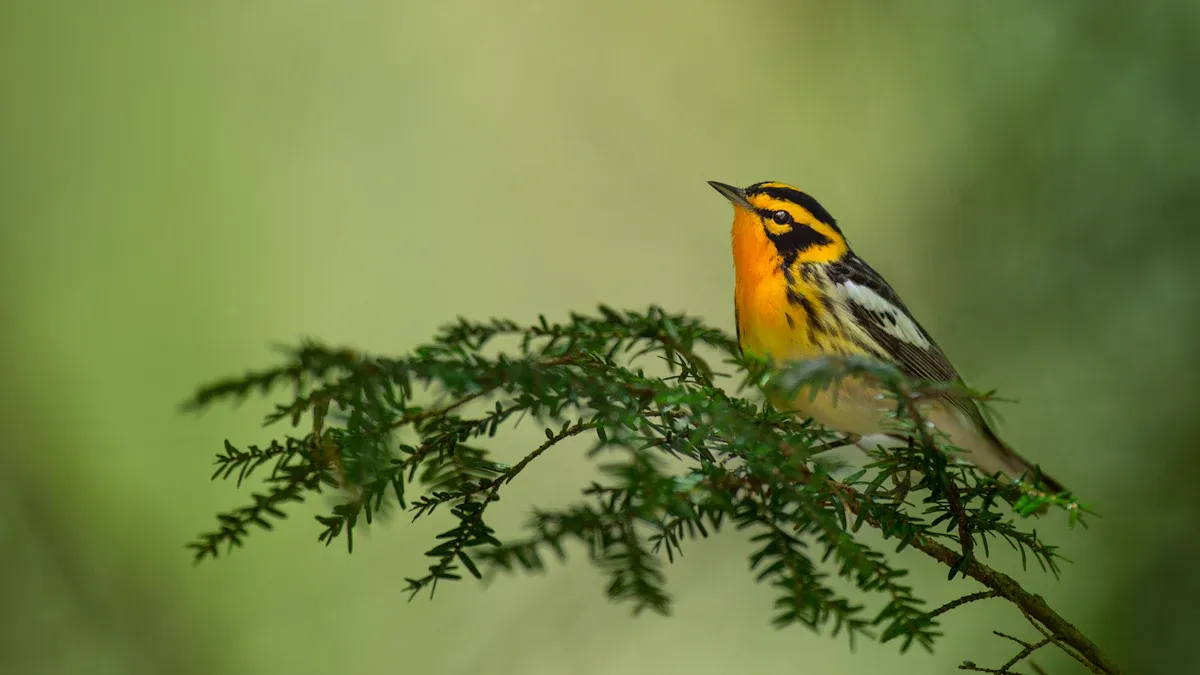
Birdwatching is a thrilling adventure, especially when it comes to spotting those vibrant little warblers. These colorful birds, with their unique songs, can be tricky to identify, which is why mastering Warbler Bird Identification is essential. Did you know that there are 55 types of warblers commonly found in North America? Their lively presence marks the arrival of spring, making them favorites among birdwatchers. Recognizing their distinct features and behaviors not only enhances your experience but also deepens your appreciation for nature’s beauty. So, get ready to sharpen your skills in Warbler Bird Identification and enjoy the hunt for these delightful creatures!
Key Takeaways
Warblers are colorful birds with unique songs, making them exciting to identify. There are 55 species in North America, each with distinct features.
Key identification features include color patterns, size, shape, and behavior. Observing eye ring color, wing bars, and tail movements can help distinguish species.
Understanding regional differences in warblers enhances identification. Eastern and western species have unique traits and habitat preferences.
Using field guides and apps can improve your identification skills. Practice observing in the field and listening to their songs for better recognition.
Joining birdwatching groups and participating in citizen science projects can provide valuable learning experiences and enhance your birdwatching journey.
Identification Features
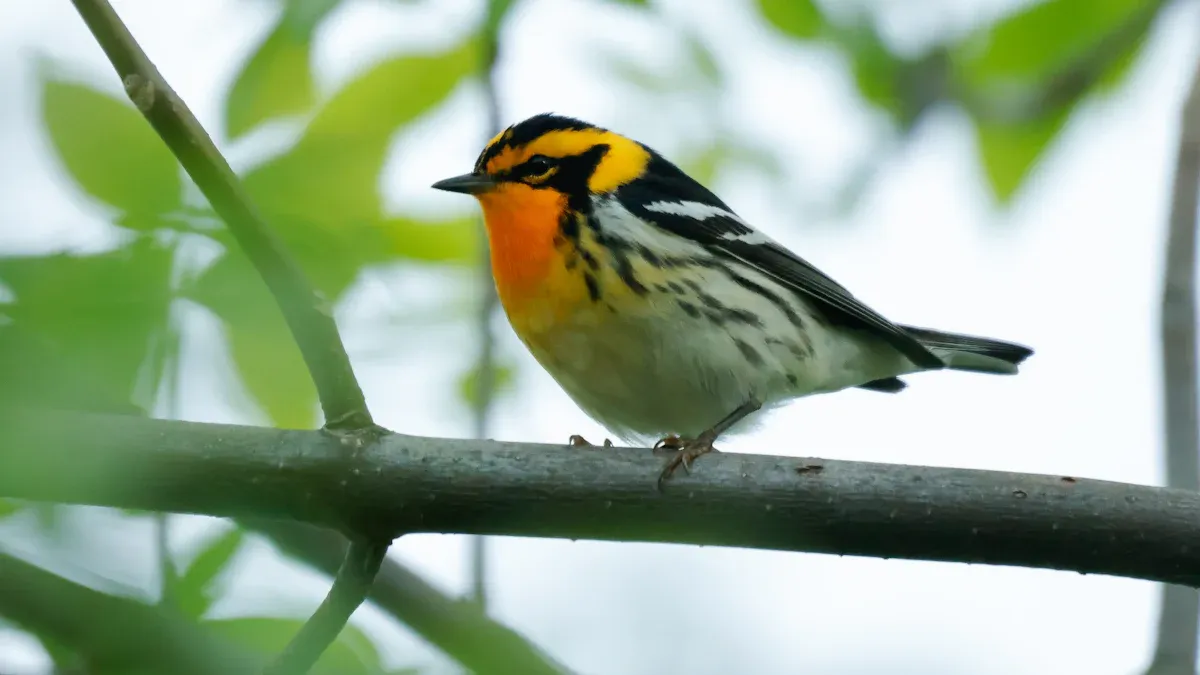
When it comes to warbler bird identification, you’ll find that certain features stand out. Let’s dive into the key aspects that make identifying these birds easier and more enjoyable.
Color Patterns
Color patterns play a crucial role in distinguishing warbler species. You’ll notice that warblers can be broadly categorized into two types: those with plain brown plumage and subtle streaking, like the ovenbird, and those that are brightly colored with distinct patterns, such as the Prothonotary Warbler. Here are some key features to observe:
Eye ring color: This can vary significantly among species.
Stripes around the eye: Some warblers have striking facial markings.
Cheek or rump color patches: These can be vibrant and help in identification.
Throat or breast streaking: Look for unique patterns that can set species apart.
Wing bars and underparts: These features often provide additional clues.
For example, the Blue-winged Warbler showcases predominantly yellow underparts and a bright yellow throat. In contrast, the Golden-winged Warbler has a white belly, a black throat patch, and a face mask. Interestingly, hybrid offspring of these two species can exhibit a mix of coloration, making them even more challenging to identify.
Seasonal changes also affect plumage color patterns. Research shows that more colorful males tend to attract mates more quickly, linking color patterns to reproductive success. This means that as seasons change, so might the colors you observe in warblers.
Evidence Description | Findings |
|---|---|
The evolution of breeding plumages in birds follows a multiple-step pathway to seasonal dichromatism. | This supports the idea that seasonal changes significantly influence the plumage color patterns of warblers, adapting to their life-history strategies. |
Size and Shape
Size and shape are equally important in warbler identification. Each species has unique body shapes and bill structures that can help you differentiate them. For instance:
The pine warbler is rather tubby and thickset, with a relatively big bill and a long tail.
The magnolia warbler features a distinctive white stripe across its tail, which it often flares.
The hooded warbler flicks its tail to reveal copious white, a key identifying feature.
The American redstart has a unique tail pattern that is orange or yellow-and-black, which it flares to help with identification.
These physical traits can be subtle, but they make a big difference when you’re trying to identify a warbler in the field.
Behavior
Behavior is another critical aspect of warbler identification. You’ll find that warblers are very active birds, often moving quickly between branches or rocks. Here are some common behavioral traits to look for:
Trait | Description |
|---|---|
Activity Levels | Warblers are very active, rarely staying still. |
Tail Behavior | Many warblers have long tails that they may cock, bob, or fan when landing or defending territory. |
Foraging Behavior | Some species, like the Palm Warbler, forage on open ground or low vegetation, which aids in identification. |
Vocalizations | The songs of warblers are crucial for identification, as each species has distinct vocal patterns. |
For example, the Palm Warbler often exhibits tail-wagging behavior, which can help you spot it among the foliage. Additionally, vocalizations are vital for identifying different species. Each warbler has its own unique song, making it easier for you to recognize them by ear.
Warbler Species | Vocalization Description |
|---|---|
Yellow-rumped Warbler | A variable loose trill, usually with two parts. |
American Redstart | A short, sharp, quick phrase, usually with about five notes and dropping off at the end – ZEE-ZEE-ZEE-ZEE-o. |
Hooded Warbler | Mnemonic: i-wanna-rent-a-VI-de-o or a-whee-ta-whee-ta-WHEE-te-o. |
Black-throated Blue Warbler | Mnemonic: I’m so la-ZEE or beer-beer-beer-BEE. |
By paying attention to these features—color patterns, size and shape, and behavior—you’ll enhance your warbler bird identification skills and enjoy your birdwatching adventures even more.
Warbler Bird Identification by Region
When you venture into birdwatching, understanding how regional differences affect warbler identification can significantly enhance your experience. Warblers adapt to their habitats, leading to variations in appearance and behavior. For instance, Wilson’s Warbler shows brighter yellow coloration in western populations compared to those in the east. This difference highlights how distinct habitats influence the physical traits of these birds.
Eastern Warblers
In the eastern United States, you’ll encounter a variety of warblers that are easy to spot during migration. Here’s a quick look at some common eastern-breeding species:
Warbler Species | Distinguishing Features | Habitat Description |
|---|---|---|
Magnolia Warbler | Easy to spot, migrates through eastern U.S. to Canada, found in low shrubs and trees. | Eastern half of the U.S. during spring migration. |
American Redstart | Male has black plumage with orange-red patches, very active. | Eastern forest edges. |
Hooded Warbler | Black hood around yellow face, forages close to the ground. | Shady undergrowth in the southeast and northeast. |
Yellow Warbler | Bright yellow color, sings a distinctive tune. | Widespread across the U.S. and Canada in shrubland. |
Black-Throated Blue Warbler | Black and white plumage with rich blues in males. | Dense forest understory from southern Appalachians. |
Chestnut-Sided Warbler | Olive-yellow cap and rufous sides. | Migrates through the eastern U.S. on forest edges. |
Yellow-Throated Warbler | Vibrant yellow throat, forages high in the canopy. | Southeastern U.S. in swamp and pine forests. |
Prairie Warbler | Streaky-faced, males have chestnut-colored marks. | Dense thickets throughout the eastern U.S. |
Black-Throated Green Warbler | Olive backs, recognizable song. | High in coniferous or mixed forests in the northeast. |
Yellow-Rumped Warbler | Sometimes eats berries, last to head south in fall. | Returns north early in spring migration. |
These warblers thrive in various habitats, from dense forests to open shrublands. Their unique features make them easier to identify, especially during migration.
Western Warblers
As you move west, the landscape changes, and so do the warblers. Western-breeding species often have different habitat preferences and appearances. For example, the Golden-winged Warbler prefers specific habitats that vary across its breeding range from Canada to Georgia. This variation reflects the availability of suitable environments, which influences both behavior and habitat selection.
Some common western warblers include:
MacGillivray’s Warbler: Recognizable by its olive-gray back and yellow underparts, often found in shrubby areas.
Townsend’s Warbler: Features a striking black-and-yellow face and prefers coniferous forests.
Wilson’s Warbler: Bright yellow with a distinctive black cap, often seen in wet thickets.
Migratory Patterns
Understanding migratory patterns is essential for warbler identification. Many warblers follow specific routes during migration, which can affect your chances of spotting them. Here are some key points about their migratory behavior:
The Central Flyway stretches over 5,000 miles, starting in Texas and passing through several states up to Canada.
Birds often use the eastern edge of the Rocky Mountains and the American prairie as navigational guides during migration.
Pre-Saharan migrants tend to stay longer at stopovers and are more selective about favorable wind conditions.
Trans-Saharan migrants prioritize minimizing energy costs and are less time-constrained.
These migratory routes and behaviors help you identify various warbler species regionally. For instance, understanding that the Yellow-rumped Warbler is one of the last to head south in the fall can guide your birdwatching efforts.
By familiarizing yourself with the warblers in your region and their migratory habits, you’ll enhance your warbler bird identification skills and enjoy your birdwatching adventures even more.
Tips for Beginners
Getting started with warbler bird identification can feel overwhelming, but with the right tools and techniques, you can enhance your skills quickly. Here are some tips to help you on your journey.
Using Field Guides
Field guides are essential for any birdwatcher. They provide valuable information about different species, their habitats, and behaviors. Here are some highly recommended guides:
The Warbler Guide: This book is praised for its comprehensive coverage of North American warblers. Experts say, “If you’ve ever struggled with warbler identification, there won’t be any more excuses if you use this book to its fullest potential.”—Geoffrey Carpentier, Ontario Birding News.
Peterson Field Guide to Birds of North America: This classic guide offers clear illustrations and descriptions, making it easy to identify various birds.
Digital apps can also be incredibly helpful. For instance, the Warbler Guide app allows you to compare species using 3-D models and listen to song recordings. This interactive approach enhances your identification skills beyond what traditional guides offer.
Observing in the Field
When you’re out in the field, certain strategies can improve your chances of spotting warblers. Here are some best practices:
Start at the forest edge and scan for motion.
Use ‘pishing’ to attract birds, but do so discreetly.
Listen for calls and focus on one bird at a time to learn its characteristics.
Warblers often prefer moist woodlands with thick understory and mature canopy trees. Arriving at first light can maximize your birdwatching success, as this is when they are most active. Remember to remain still and wear camouflage to increase your chances of close encounters.
Joining Birdwatching Groups
Connecting with other birdwatchers can significantly enhance your learning experience. Birdwatching groups often provide access to resources like The Warbler Guide, which offers innovative tips for identifying warblers by sight and sound. They also highlight important identification clues, such as color impressions and foraging behavior.
Participating in citizen science projects, like the Great Backyard Bird Count, can further improve your skills. These projects invite you to submit bird sightings, making it suitable for all skill levels. You’ll learn from experienced birders while contributing to valuable research.
By utilizing field guides, observing effectively, and engaging with birdwatching communities, you’ll find that warbler bird identification becomes an enjoyable and rewarding pursuit.
Common Warblers
Yellow Warbler
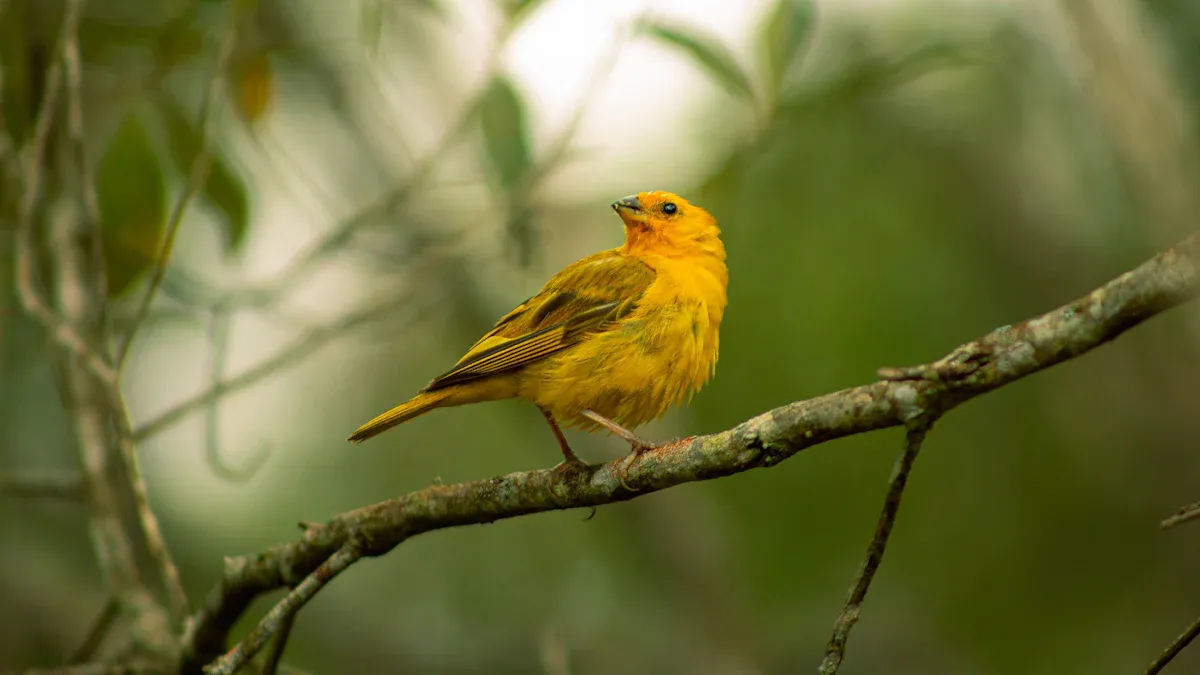
The Yellow Warbler is one of the most recognizable warblers you’ll encounter. Males are a bright egg-yolk yellow, often with reddish streaks on their chests. You can spot them easily thanks to their uniform yellow head and face, which sets them apart from similar species like the Wilson’s Warbler, which has a yellow eyebrow and darker cap. Here are some key features to help you identify the Yellow Warbler:
Bright yellow coloration, especially in males.
Flashing yellow patches in the tail.
These birds prefer high-quality habitats like riparian forests and agricultural areas during winter. They thrive in environments that offer better foraging opportunities, which influences their visibility.
Evidence Description | Findings |
|---|---|
Yellow Warblers prefer high-quality habitats like riparian forests and agriculture for wintering. | These habitats provide better foraging opportunities and smaller home ranges, influencing survival rates. |
Home ranges of Yellow Warblers are smaller in riparian forests compared to coastal vegetation. | Indicates that coastal vegetation is a lower-quality habitat for wintering. |
Black-throated Blue Warbler
Next up is the Black-throated Blue Warbler. This bird is a stunner! Adult males sport vivid dark blue plumage with a striking black face. Females, on the other hand, are more subdued, appearing olive-brown. Here are some features to help you identify them:
Males have a midnight blue head, back, and tail, with a black throat and white undersides.
Both sexes have a unique white base on their primary feathers, forming a ‘pocket handkerchief’ marking.
You’ll often hear their song, which consists of a series of buzzy notes that culminate in an upward slur. Remember the mnemonic “I’m so lay-ZEEE” to help you recognize it!
Common Yellowthroat
Finally, let’s talk about the Common Yellowthroat. This small warbler has a round body with olive-brown plumage and a bright yellow throat and breast. It’s easy to spot due to its distinctive black face mask. Here’s how it compares to other warblers:
Feature | Common Yellowthroat | Other Warblers (e.g., Hooded Warbler) |
|---|---|---|
General Appearance | Small, round body, olive-brown plumage, bright yellow throat and breast, black face mask | Varies by species, often lacks distinct face mask |
Habitat | Prefers swamps, marshes, and wet thickets | Favors mixed hardwood and cypress-gum swamps |
The Common Yellowthroat nests low in dense vegetation and often performs aerial courtship displays. You’ll find them in wetlands, making them a delightful sight during your birdwatching adventures.
Identifying warblers is an exciting journey that brings immense satisfaction. You’ll find that the thrill of spotting these colorful birds adds a unique element to your birdwatching experience. Many birders hear warblers before they see them, which heightens the anticipation. The challenge of spotting these elusive birds can lead to a rewarding experience when you finally make a successful identification. Plus, the beauty of warblers during migration enhances your enjoyment of nature.
To deepen your skills, consider exploring resources like:
Learn Warblers Online: A live course by Cornell Bird Academy focusing on warbler identification and song ID.
Be a Better Birder: Warbler Identification: This course includes video instruction and quizzes to sharpen your skills.
As you practice your identification skills in the field, you’ll not only connect with nature but also enjoy the long-term benefits of birdwatching, such as cognitive stimulation and a sense of accomplishment.
FAQ
What is the best time to observe warblers?
You’ll have the best luck spotting warblers during spring migration, typically from late March to early June. Early mornings are ideal since warblers are most active then, singing and foraging for food.
How can I attract warblers to my yard?
To attract warblers, plant native shrubs and trees that provide food and shelter. Offer water sources like birdbaths and keep your yard free of pesticides. You can also hang feeders with suet or mealworms.
Are all warblers migratory?
Most warblers are migratory, traveling long distances between breeding and wintering grounds. However, some species, like the Yellow-rumped Warbler, may remain in certain areas during winter if conditions are favorable.
How can I improve my warbler identification skills?
Practice is key! Use field guides, apps, and join local birdwatching groups. Spend time observing their behavior and listening to their songs. The more you watch, the better you’ll become at identifying these beautiful birds.
What should I do if I find an injured warbler?
If you find an injured warbler, contact a local wildlife rehabilitation center. They can provide the necessary care. Avoid handling the bird unless absolutely necessary, as this can cause additional stress.