


Goldfish can live outside in winter with proper care. You must understand their specific needs during this chilly season to ensure that goldfish live outside comfortably. Common challenges include temperature changes, chemical runoff, and predation from rats. Unsuitable living conditions can lead to suffering and even death for your goldfish. By learning how to address these issues, you can help ensure your goldfish thrive even in the cold months while living outside.
Key Takeaways
Ensure your pond is at least 18 inches deep to protect goldfish from freezing temperatures.
Maintain a hole in the ice to allow oxygen exchange, preventing harmful gas buildup.
Stop feeding goldfish when water temperatures drop below 45°F to avoid water pollution.
Clean the pond before winter to remove debris that can decompose and harm water quality.
Use a pond de-icer to keep a small opening in the ice for gas exchange and fish safety.
Goldfish Hibernation
What is Hibernation?
Hibernation is a state of dormancy that many animals enter during cold months. For goldfish, this process is known as torpor. When water temperatures drop to between 45 and 50 degrees Fahrenheit, goldfish slow down significantly. Their metabolism decreases, leading to lethargy and a reduced need for food. This adaptation helps them survive harsh winter conditions while living outside.
How Goldfish Hibernate
As winter approaches, you may notice changes in your goldfish. Here are some signs that indicate they are entering hibernation:
Goldfish will float upright and tuck in their fins.
They may remain suspended in the water with very slow movement.
Fish may face in the same direction, indicating a state of dormancy.
During this time, goldfish do not require much food. Their bodies conserve energy, and they rely on stored nutrients. You should avoid overfeeding them, as uneaten food can pollute the water and harm their environment.
Several environmental factors influence the success of goldfish hibernation outdoors. The table below summarizes these factors:
Environmental Factor | Description |
|---|---|
Water Temperature | Goldfish can survive in temperatures as low as 45°F, but optimal hibernation occurs in controlled environments to prevent extreme cold. |
Presence of Plants | Plants help maintain water quality and provide oxygen, which is crucial for goldfish during hibernation. |
Sunlight Exposure | Adequate sunlight can help regulate water temperature, impacting the hibernation process. |
Oxygen Levels | Sufficient oxygen is necessary for goldfish to breathe, especially in colder months when their activity decreases. |
By understanding the hibernation process, you can better care for your goldfish during winter. Ensuring they have a suitable environment will help them thrive even in the cold months while living outside.
Pond Depth for Goldfish Live Outside
Ideal Depth
To ensure your goldfish thrive during winter, the pond should have a minimum depth of 18 inches. This depth helps protect them from freezing temperatures. Here are some key points to consider:
Water can freeze at depths of 18 to 24 inches, depending on the weather conditions.
A depth of 2 feet is recommended to safeguard against predators and extreme temperature fluctuations.
In colder climates, deeper ponds provide a refuge for fish, allowing them to survive harsh conditions.
Minimum Depth | Benefits |
|---|---|
18″ / 45cm | Protects fish from freezing and predators |
24″ / 60cm | Better protection and stability |
4ft / 120cm | Provides ample space for larger fish during winter |
Temperature Effects
Pond depth significantly influences water temperature stability during freezing weather. Here’s how:
Deeper ponds maintain a more stable temperature due to the slower heating and cooling properties of water compared to air.
In winter, fish retreat to deeper areas where the water is warmer, indicating that depth is crucial for their survival.
The surrounding ground can insulate the pond, aiding in temperature regulation during freezing weather.
By ensuring your pond meets these depth requirements, you create a safe and stable environment for your goldfish to live outside during winter. Proper depth not only protects them from freezing but also helps maintain a suitable temperature for their health.
Ice Management
Preventing Ice
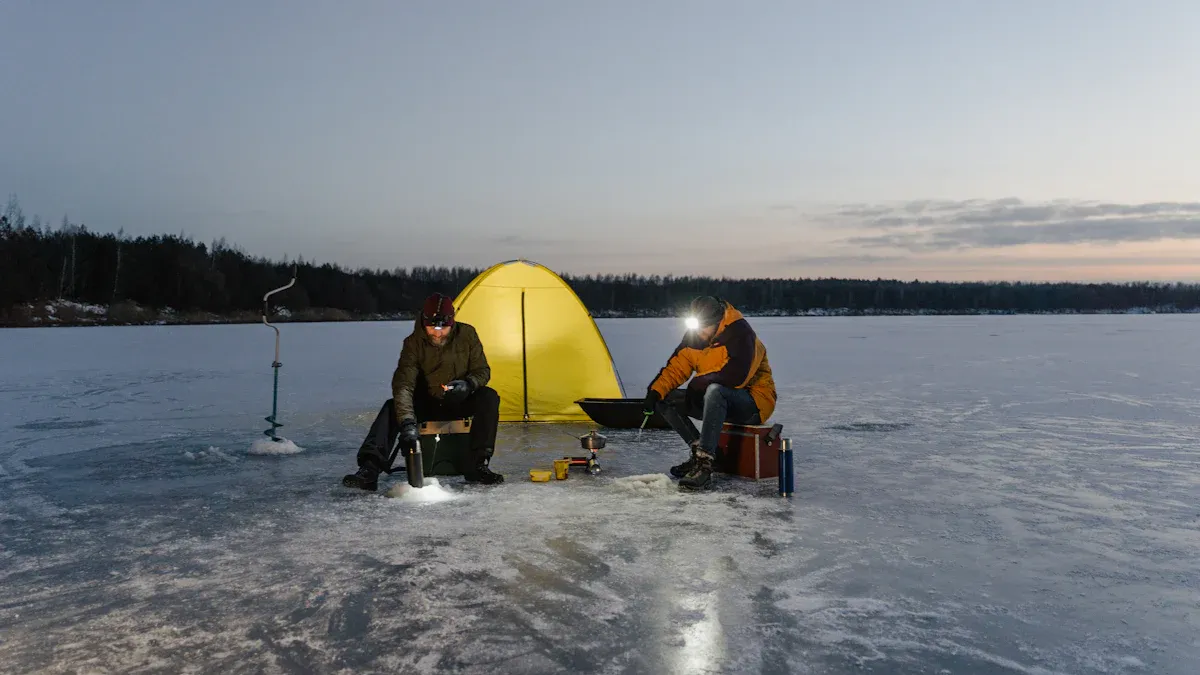
To keep your goldfish safe during winter, you must manage ice formation in your pond. Here are some effective methods to prevent ice from forming:
Install a pond de-icer: This device maintains an opening in the ice, allowing for gas exchange. It helps prevent harmful gases from building up under the ice.
Use floating devices: Items like ping pong balls or saltwater bottles can reduce ice accumulation. They create movement on the water’s surface, which helps prevent freezing.
Employ a solar-powered water heater: This sustainable solution keeps the water temperature up, reducing the chances of ice formation.
Manually break ice: During sudden freeze events, you can break the ice to maintain openings. This allows gases to escape and keeps oxygen levels stable.
Safe Ice Management
Improper ice management can lead to serious risks for your goldfish. Here are some potential issues:
Without proper circulation, ice can block sunlight and reduce oxygen levels, leading to fish kills.
Ice can create structural problems, including cracks in pond liners. These issues can worsen over time and lead to costly repairs.
If sediment decays under the ice, it releases toxic gases. These gases can deplete oxygen levels vital for fish survival. Keeping a hole open in the ice is essential to allow these gases to escape.
To manage ice safely, consider using the following devices:
Device Name | Power | Features |
|---|---|---|
Aquascape 300-Watt Floating Pond De-Icer | 300W | Stainless steel, energy-efficient, built-in thermostat, LED light, 22 ft cord, 3-year warranty |
TetraPond Floating Pond De-Icer | 300W | Rock-style finish, automatic shut-off, rated to -20°F, UL listed, 3-year warranty |
TURBRO PD400A 400W Pond De-Icer | 400W | Full stainless housing, SCR temperature control, waterproof plug, 32.8 ft UL-approved cord |
Using a pond de-icer creates a small opening in the ice, allowing for gas exchange. Pairing a de-icer with an aerator enhances water circulation and oxygen levels. This combination provides a more stable environment for your goldfish during winter. Remember, a de-icer is essential for preventing fish suffocation if the aerator fails. It serves as a backup during extreme cold conditions when other methods may not suffice.
By implementing these ice management strategies, you can help ensure your goldfish remain healthy and safe throughout the winter months.
Feeding Goldfish in Winter
What to Feed
During winter, you must adjust your goldfish’s diet to match their reduced activity levels. When water temperatures drop below 45°F, it is best to stop feeding them entirely. Goldfish enter a state of dormancy known as torpor, which slows their metabolism. This means they do not require food, and any uneaten food can pollute the water.
Here’s a quick reference for feeding based on temperature:
Temperature Range | Recommendation |
|---|---|
Below 45°F | Stop feeding entirely |
In warmer months, goldfish thrive on a diet rich in wheat germ-based foods. These foods provide essential nutrients and energy. However, during winter, their nutritional needs change significantly.
Feeding Frequency
As temperatures decrease, goldfish exhibit a significant reduction in foraging activity and food consumption. Here are some key points to consider:
Goldfish show less interest in food as water temperatures drop.
A study revealed that goldfish acclimated at warmer temperatures had higher foraging activity compared to those in colder conditions.
The decline in feeding responses at lower temperatures relates to changes in gene expression that control appetite.
In winter, you should monitor the water temperature closely. If it falls below 45°F, refrain from feeding your goldfish. This practice helps maintain water quality and prevents health issues. Any food consumed may not digest properly, leading to potential internal problems as it decomposes within their system.
By understanding what and when to feed your goldfish, you can help them thrive even in the cold months while living outside. Proper care during winter ensures their health and longevity.
Cleaning and Maintenance
Importance of Maintenance
Regular pond maintenance is crucial for the health of your goldfish during winter. Neglecting this task can lead to serious problems. Here are some reasons why you should prioritize maintenance:
Prevents toxic gas buildup: Decomposing debris under the ice can release harmful gases. Regular cleaning helps avoid this issue.
Ensures proper aeration: Good water quality is essential for fish survival in their semi-dormant state. Maintaining oxygen levels keeps your goldfish healthy.
Allows gas exchange: Keeping a hole open in the ice lets harmful gases escape and fresh oxygen enter the water.
Cleaning Tips
Cleaning your pond before winter sets in can make a significant difference. Here are some effective tips for maintaining your outdoor goldfish pond during the cold months:
Remove leaves and debris: Clean the pond one last time before winter. This step prevents debris from accumulating and decomposing under the ice.
Consider using a net: Covering the pond with a net can help keep leaves and other debris out.
Decide on equipment operation: In colder regions, it’s often best to shut down pond equipment. However, if you choose to keep it running, ensure water movement is minimal to avoid disturbing hibernating fish.
Use an aerator or de-icer: These devices maintain oxygen levels and prevent complete freezing of the pond surface.
Create a hole in the ice carefully: If ice forms, use hot water to melt a hole instead of breaking the ice. This method protects your fish from injury.
Avoid disturbing your goldfish during their hibernation. A pond with a filter typically does not need a complete cleanout. Instead, maintain some natural balance in the pond to support the ecosystem. By following these cleaning and maintenance tips, you can help ensure your goldfish thrive even in the cold months while living outside.
In summary, ensuring your goldfish survive the winter outdoors requires careful attention to their needs. Here are some key takeaways:
Ensure the pond is at least 3 feet deep to prevent complete freezing.
Maintain a hole in the ice for oxygen exchange.
Feed goldfish high-quality food in autumn to build fat reserves for winter hibernation.
Clean the pond in late autumn to remove debris that could cause ammonia pockets in spring.
By following these precautions, you can help your goldfish thrive even in the cold months. Remember, a little preparation goes a long way in keeping your aquatic friends safe! 🐟
FAQ
Can goldfish survive in a frozen pond?
Goldfish can survive in a frozen pond if the water is deep enough. They hibernate at the bottom where temperatures remain stable. Ensure you maintain a hole in the ice for oxygen exchange.
How do I know if my goldfish are hibernating?
You’ll notice your goldfish become less active. They may float upright, tuck in their fins, and stay in one spot. This behavior indicates they are entering a state of dormancy.
Should I feed my goldfish in winter?
You should stop feeding goldfish when water temperatures drop below 45°F. Their metabolism slows down, and they do not require food. Uneaten food can pollute the water.
What happens if my pond freezes completely?
If your pond freezes completely, your goldfish may suffocate due to a lack of oxygen. Ensure your pond is deep enough and use a de-icer to prevent total freezing.
How can I keep my pond clean during winter?
Regularly remove debris before winter. Use a net to keep leaves out. If ice forms, create a hole carefully to allow gas exchange and maintain water quality.
