

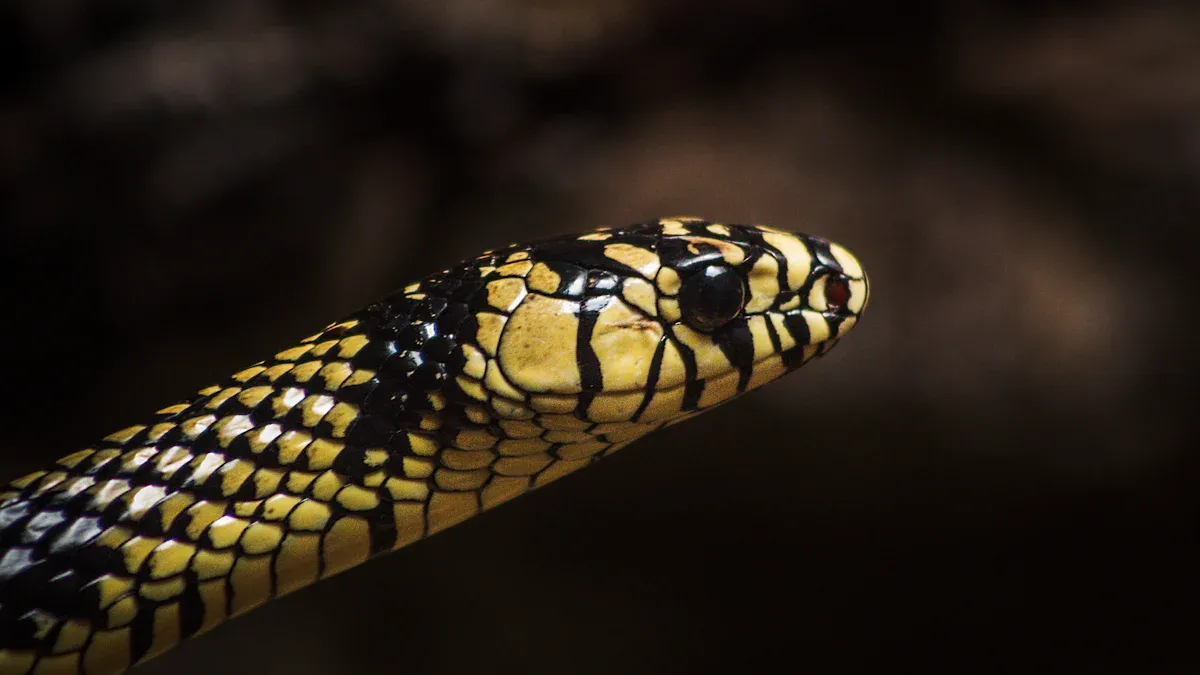
In India, the Big 4 snakes represent some of the most dangerous species. These snakes cause nearly 60,000 deaths from snake bites each year. Understanding how to identify these venomous snakes is crucial. Awareness of their habitats can help you avoid dangerous encounters. The venom from the Big 4 snakes poses serious risks, leading to severe health complications. Educating yourself about these snakes can be a life-saving measure.
Key Takeaways
Learn to identify the Big 4 snakes: Russell’s Viper, Common Krait, Indian Cobra, and Saw-scaled Viper. Recognizing their unique features can help you avoid dangerous encounters.
Understand the habitats of these snakes. They often live in rural areas, fields, and urban settings. Awareness of where they might be found reduces your risk of a bite.
Know the symptoms of snake bites. Common signs include swelling, pain, and discoloration. Seek medical help immediately if bitten to improve your chances of recovery.
Educate yourself and others about snake safety. Community awareness can lead to better prevention and treatment knowledge, ultimately saving lives.
Act quickly in case of a snake bite. Follow first aid measures and get to a health facility promptly. Timely medical intervention is crucial for survival.
Big 4 Snakes Overview
The Big 4 snakes in India include some of the deadliest snakes in the world. These snakes are responsible for a significant number of snakebite fatalities each year. Understanding their characteristics can help you stay safe. Here’s a brief overview of these four venomous snakes:
Common Name | Scientific Name |
|---|---|
Russell’s viper | Daboia russelii |
Common krait | Bungarus caeruleus |
Indian cobra | Naja naja |
Indian saw-scaled viper | Echis carinatus |
Each of these snakes has unique features that make identification easier. For instance, the Indian cobra has a distinctive hood, while the common krait displays a striking black and white banding pattern. Recognizing these features can help you avoid dangerous encounters.
Understanding the behavior of these snakes is equally important. They often inhabit rural areas, fields, and even urban settings. You may encounter them during the day or night, depending on the species. Knowing when and where to expect these snakes can reduce your risk of a bite.
The venom from these snakes varies in potency. Some can cause severe symptoms within minutes, while others may take longer to affect you. Awareness of their venomous nature is crucial. If you ever find yourself in a situation involving one of these snakes, remember to stay calm and seek immediate medical attention.
By learning about the Big 4 snakes, you empower yourself with knowledge. This knowledge can save your life and help you educate others about the dangers of these venomous creatures.
Indian Cobra
Identification
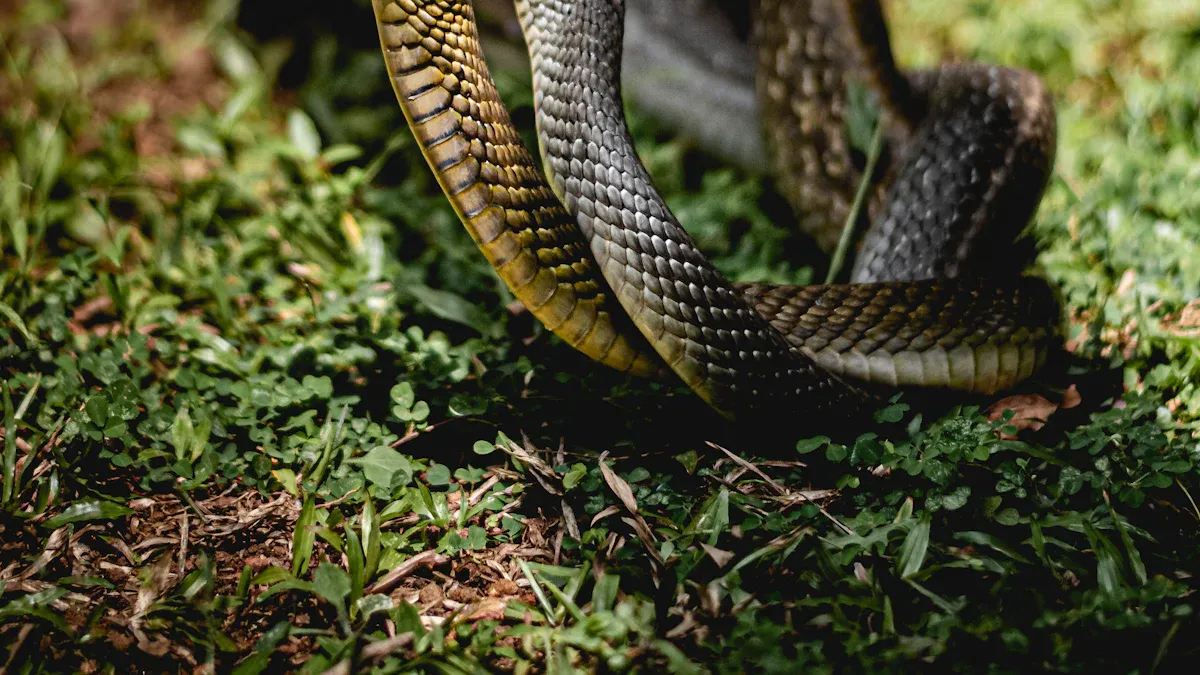
You can easily identify the Indian Cobra by its distinctive features. This snake has a large hood that expands when threatened, displaying two black circular ring patterns outlined in white. Its body is long, typically weighing between 5 to 6 pounds, but it can reach up to 20 pounds. The skin colors vary, including shades of white, yellow, brown, or black. Here are some key characteristics to help you recognize the Indian Cobra:
Characteristic | Description |
|---|---|
Hood | Large hood with two black circular ring patterns outlined in white. |
Body Length | Long body, typically around 5 to 6 pounds, can reach up to 20 pounds. |
Scale Texture | Smooth scales. |
Coloration | Skin colors can be white, yellow, brown, or black. |
Fangs | Sharp non-retractable fangs that deliver venom. |
When you see a snake with these features, exercise caution. The Indian Cobra is one of the most venomous snakes in the world.
Habitat
The Indian Cobra thrives in various habitats across the Indian subcontinent. You can find it in dense or open forests, plains, agricultural lands, and even urban areas. Its adaptability allows it to occupy diverse environments. Here’s a closer look at its geographic distribution:
Habitat Type | Geographic Distribution |
|---|---|
Native Regions | India, Pakistan, Sri Lanka, Bangladesh, Nepal |
Specific States | West Bengal, Sikkim, Assam, Meghalaya, etc. |
Habitat Characteristics | Dense/open forests, plains, agricultural lands, urban areas |
This versatility in habitat preference contributes to its widespread presence. Be aware of your surroundings, especially in rural or agricultural areas where these snakes may reside.
Venom Effects
The venom of the Indian Cobra is highly potent and can cause severe symptoms. When bitten, you may experience a range of effects. Here are some common symptoms associated with Indian Cobra venom:
Flushing
Breathlessness
Palpitations
Dizziness
Tightness in the chest
Sweating
Vomiting
Blurring of vision
Heaviness of eyelids
The venom has neurotoxic effects, which can lead to paralysis. Initial signs of paralysis may appear within 15 minutes, affecting the face, palate, and neck muscles. If untreated, this can result in respiratory failure. The cardiotoxic effects can also be serious, causing arrhythmias and hypotension.
If you suspect a snake bite, seek medical attention immediately. Antivenom can reverse the effects of the venom, but timely intervention is crucial.
Common Krait
Identification
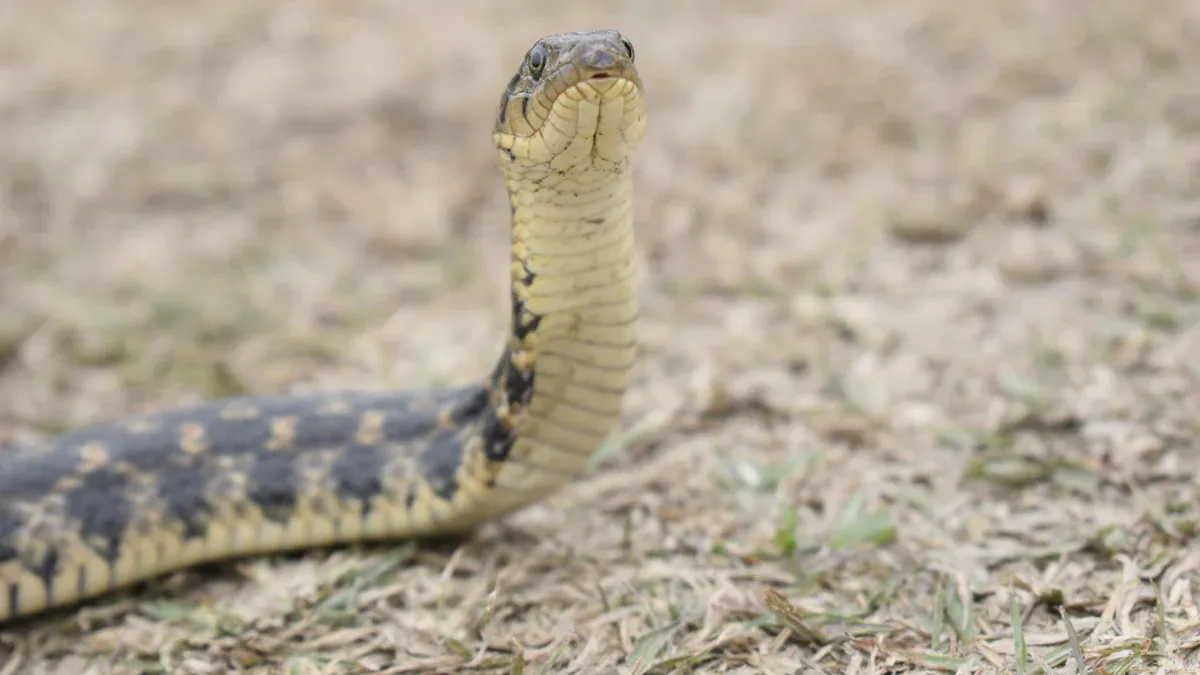
You can identify the Common Krait by its unique features. This snake has a cylindrical body that tapers towards the tail. Its head appears flat, and the neck is hardly visible. Here are some key characteristics to help you recognize the Common Krait:
Feature | Description |
|---|---|
Average Length | Typically 0.9 m (2 ft 11 in), can grow to 1.75 m (5 ft 9 in) |
Body Shape | Cylindrical, tapering towards the tail, with a flat head and hardly visible neck |
Tail | Short and rounded |
Eye Characteristics | Small eyes with rounded pupils, indistinguishable in life |
Scale Arrangement | Highly polished scales in 15–17 rows; vertebral row distinctly enlarged and hexagonal |
Coloration | Generally black or bluish-black with about 40 thin, white crossbars, which may be indistinct |
Distinctive Markings | Young have conspicuous crossbars; older individuals may have connected spots |
Additional Features | A white preocular spot may be present; upper lips and belly are white |
When you see a snake with these features, exercise caution. The Common Krait is one of the most venomous snakes in the world.
Habitat
The Common Krait prefers various environments across the Indian subcontinent. You can find it in fields, low scrub jungles, and even human settlements. Here’s a closer look at its habitat:
Region/Environment | Description |
|---|---|
Indian Subcontinent | Found in fields, low scrub jungles, and human settlements. |
Specific Countries | India, Pakistan, Bangladesh, Nepal, Sri Lanka. |
Specific States in India | Rajasthan, Gujarat, Maharashtra, Uttar Pradesh, Bihar. |
Environments | Forests, fields, human settlements, near water sources, rural and urban areas. |
This adaptability allows the Common Krait to thrive in diverse settings. Be vigilant in areas where these snakes may reside, especially during the night when they are most active.
Venom Effects
The venom of the Common Krait is highly potent and can lead to severe consequences. When bitten, you may experience various symptoms. Here are some effects associated with Common Krait venom:
Muscular paralysis due to disrupted nerve-muscle communication
Severe paralysis requiring mechanical ventilation in some cases
Neurological symptoms may appear within approximately 3 hours after a bite
If left untreated, the venom can be life-threatening. The duration from bite to death can be nearly 6 hours, especially if you seek alternative remedies instead of medical treatment.
Antivenom treatment is crucial for those experiencing severe paralysis. However, it does not reverse paralysis that has already developed. Fortunately, most patients recover naturally over time, with no permanent damage observed after 6 to 9 months.
If you suspect a snake bite, seek medical attention immediately. Understanding the risks associated with Common Krait venom can help you respond effectively in an emergency.
Russell’s Viper
Identification
You can identify Russell’s Viper by its unique physical features. This snake exhibits a variety of colors, including deep yellow, tan, and brown. Its body displays three rows of dark brown spots, each with distinctive rings. Here are some key identification markers:
Identification Marker | Description |
|---|---|
Coloration | Varies from deep yellow, tan, and brown |
Body Patterns | Three rows of dark brown spots with distinctive rings |
Fangs | Large fangs and vertical pupils |
Movement | Moves slowly with a thick, sturdy body and ridged scales |
Head Markings | Pinkish or brownish X or V markings on temples |
Average Length | Grows to be around 120-166 cm |
Abdomen | White, yellow, or pink, often spotted and flecked |
Warning Behavior | Unleashes a piercing whistle-like hiss when threatened |
When you encounter a snake with these characteristics, exercise caution. Russell’s Viper is a venomous snake and can pose a serious threat.
Habitat
Russell’s Viper adapts well to various environments. You can find it in rural areas on the outskirts of towns and cities. This snake thrives in human-dominated landscapes. Here are some common habitats where you might encounter Russell’s Viper:
Agricultural fields
Scrublands
Forest edges
Urban areas
Being aware of these habitats can help you avoid dangerous encounters. Always stay vigilant in areas where this snake may reside.
Venom Effects
The venom of Russell’s Viper is highly toxic and can cause severe health issues. When bitten, you may experience significant alterations in cell morphology, including rounding of cells and loss of cell–cell contact. Here are some effects associated with Russell’s Viper venom:
Induces apoptosis in human cells
Causes myotoxicity and edema
Leads to dramatic hemorrhage and renal failure
If you suspect a bite, seek medical attention immediately. The effects of the venom can escalate quickly, making timely intervention crucial.
Saw-scaled Viper
Identification
You can identify the Saw-scaled Viper by its distinct physical traits. This snake is relatively small, typically measuring between 12 to 30 inches (31 to 76 cm) in length. Here are some key features to help you recognize it:
Stout body with saw-like scales that produce a rasping sound.
Coloration includes light brown, gray, or reddish with dark, irregular patterns for camouflage.
The head has a distinctive trident-type pattern, setting it apart from other snakes.
The base color can vary, appearing grayish, reddish, pale tan, olive, or brown. You may also notice whitish spots bordered by dark brown edges. The belly is pale to pinkish, often with brown spots.
Habitat
The Saw-scaled Viper thrives in various regions across India. You can find it in arid and semi-arid areas, particularly in Rajasthan. Historically, this snake was common in Chennai, Tiruvallur, and Kancheepuram, but its populations have drastically declined in these regions. Here’s a closer look at its habitat:
Common Regions: Rajasthan is particularly prevalent for Saw-scaled Vipers.
Former Habitats: Once found in Chennai, Tiruvallur, and Kancheepuram, their numbers have decreased significantly.
Being aware of these habitats can help you avoid encounters with this venomous snake.
Venom Effects
The venom of the Saw-scaled Viper can lead to serious health complications. When bitten, you may experience various symptoms, including:
Symptoms/Complications | Description |
|---|---|
Localized swelling | Swelling at the site of the bite, spreading later |
Pain | Immediate pain felt after the bite |
Hemorrhage | Internal bleeding that may occur |
Coagulation defects | Issues with blood clotting |
Acute kidney failure | Potential kidney failure due to complications |
Oliguria or anuria | Reduced urine output within hours to days post-bite |
The Saw-scaled Viper is responsible for approximately 5,000 human fatalities each year in India. This statistic highlights the importance of recognizing this snake and understanding its venomous nature. If you suspect a bite, seek medical attention immediately.
Prevention of Snake Bites
Preventing snake bites requires awareness and education. You can take several steps to reduce your risk of encountering venomous snakes. Here are some effective strategies:
Strategy | Description |
|---|---|
Engagement of experts | Involve forest departments and herpetologists for snake identification and mapping. |
Community empowerment | Work with community leaders to raise awareness on prevention and first aid. |
Training traditional healers | Educate healers to recognize urgent cases needing healthcare referrals. |
Recognizing snake bites is crucial. If you or someone else gets bitten, look for these signs:
Two puncture wounds at the bite site
Swelling and redness around the area
Pain that may spread from the bite site
If you suspect a snake bite, follow these first aid measures recommended by the World Health Organization:
Move away from the area of the bite and remove anything tight from the bitten area.
Reassure the victim and immobilize the affected limb.
Avoid using a tight arterial tourniquet and traditional remedies.
Transport the victim to a health facility promptly.
Timely medical intervention significantly impacts survival rates for snake bite victims. The likelihood of death increases if antivenom is not administered within six hours. Many victims in South Asia do not receive timely medical help due to reliance on traditional healers or clinics lacking proper treatment resources. Access to essential medical interventions like dialysis and ventilators is often inadequate, which can affect survival rates.
Educating yourself and others about snake bites can save lives. Understanding the risks and knowing how to respond can make a difference in emergencies.
In summary, understanding the Big 4 snakes—Russell’s Viper, Common Krait, Indian Cobra, and Saw-scaled Viper—can significantly enhance your safety. Here are the key takeaways:
Russell’s Viper: Known for a mortality rate of around 2.6% in India, it can strike from five feet away.
Common Krait: Has an 80% fatality rate if untreated, with venom that can shut down the nervous system.
Indian Cobra: Responsible for many venomous bites, its toxic venom can lead to respiratory distress.
Saw-Scaled Viper: The smallest of the four, it causes the most medically significant snakebites.
Awareness and education play vital roles in reducing snakebite incidents. Community education can improve prevention and treatment knowledge. Training medical staff ensures timely responses, while better antivenom distribution can save lives. By staying informed, you can protect yourself and others from these dangerous encounters. 🐍
FAQ
What should I do if I encounter a snake?
If you see a snake, stay calm. Do not approach or attempt to handle it. Slowly back away and give the snake space to escape.
How can I identify a venomous snake?
Look for specific features like hood shapes, color patterns, and body size. Research local species to familiarize yourself with their characteristics.
What are the symptoms of a snake bite?
Common symptoms include swelling, pain, and discoloration at the bite site. You may also experience nausea, dizziness, or difficulty breathing. Seek medical help immediately.
How can I prevent snake bites?
Wear boots and long pants when walking in tall grass or rocky areas. Stay alert and avoid reaching into hidden spaces where snakes may hide.
Is antivenom effective for all snake bites?
Antivenom works best when administered promptly after a bite. It may not reverse paralysis already present but can prevent further complications. Always seek medical attention.
