



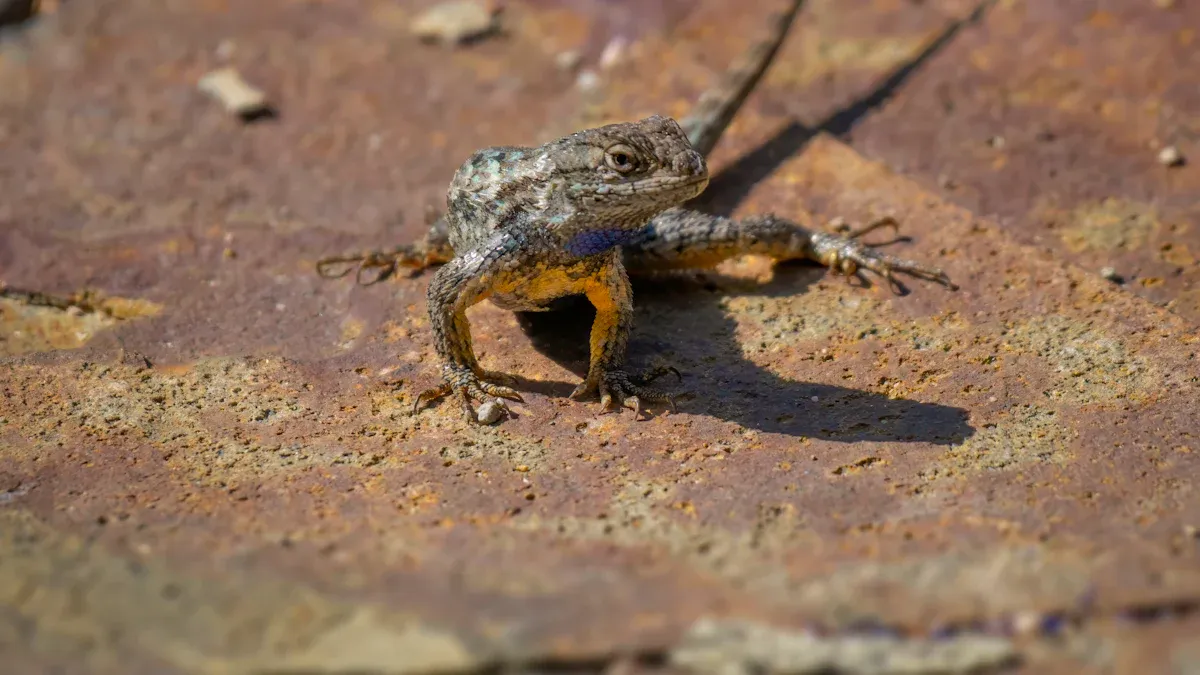
The Western Fence Lizard thrives in various environments, such as grasslands and woodlands. You should recognize its role in maintaining ecosystem balance. Understanding its diet helps in conservation efforts and promotes the health of this adaptable species, allowing you to appreciate its significance in local wildlife.
Key Takeaways
Western Fence Lizards primarily eat insects like ants and crickets, which are essential for their growth and survival.
Their diet changes with the seasons, increasing in warmer months when insects are more abundant.
Calcium is crucial for their health, helping to prevent metabolic bone disease; a diet rich in calcium-rich insects supports this need.
Western Fence Lizard Diet
Common Food Sources
The Western Fence Lizard primarily thrives on a diet rich in insects. As an insectivore, you will find that these lizards consume a variety of live prey. Their common food sources include:
Ants
Crickets
Gnats
Spiders
Other invertebrates
This diverse diet allows the Western Fence Lizard to obtain essential nutrients necessary for its growth and survival. The consumption of insects and other invertebrates plays a crucial role in their carnivorous diet. By feeding on these organisms, they help control insect populations, contributing to the balance of their ecosystem.
Dietary Preferences
When it comes to selecting prey, the Western Fence Lizard shows remarkable adaptability. Their dietary preferences can vary based on availability and nutritional value. Here’s a closer look at how these lizards choose their food:
Evidence Description | Details |
|---|---|
Variation in Diet | Individual lizards exhibit significant differences in their diet composition. Some rely heavily on marine resources, while others prefer terrestrial prey. |
Influence of Habitat | The topography of the transition zone between marine and terrestrial environments affects the availability of prey. This leads to niche diversification among lizards. |
Resource Specialization | Lizards at the same beach site show varying degrees of marine resource consumption, indicating specialization based on local resource availability. |
The Western Fence Lizard’s ability to adapt its diet based on environmental factors ensures its survival in diverse habitats. This flexibility is vital for maintaining their health and supporting their role in the ecosystem.
Natural Diet of Western Fence Lizards
Age-Related Dietary Changes
As Western Fence Lizards grow, their dietary habits evolve. Young lizards primarily consume smaller insects, which are easier for them to catch and digest. As they mature, they expand their diet to include larger prey. Adult lizards often hunt a wider variety of insects, allowing them to meet their increased nutritional needs. This shift in diet helps them thrive in their environment.
Seasonal Dietary Changes
The diet of Western Fence Lizards also varies with the seasons. During warmer months, you will find that they consume a higher percentage of insects, particularly those that are abundant in their habitats. The table below illustrates the changes in prey types throughout different seasons:
Prey Type | Percentage (%) |
|---|---|
Orthoptera | 52.1 |
Coleoptera | 18.1 |
Hymenoptera | 10.6 |
Hemiptera | 2.0 |
Homoptera | 0.1 |
Lepidoptera | 5.5 |
In cooler months, their diet shifts to include fewer insects, as many species become less active or disappear. This seasonal variation ensures that Western Fence Lizards adapt to their environment and maintain their health. Environmental factors, such as temperature and humidity, significantly influence the availability of insects, impacting the dietary habits of Western Fence Lizards.

Nutritional Needs of Lizards
Importance of Calcium
Calcium plays a vital role in the health of Western Fence Lizards. You need to understand that this mineral is crucial for bone development and maintenance. A calcium-rich diet helps prevent metabolic bone disease, a common issue in reptiles. You can ensure these lizards receive enough calcium by providing them with a diet that includes calcium-rich insects, such as crickets and mealworms. Additionally, offering calcium supplements can further support their nutritional needs.
Other Essential Nutrients
In addition to calcium, Western Fence Lizards require other essential nutrients for optimal health. Here are some key nutrients you should consider:
Zinc: This mineral is essential for immune function. It acts as an antioxidant and aids in wound healing.
Iron: Iron is crucial for oxygen transport in the body. It supports healthy growth and development.
A complete diet for lizards should include a variety of insects to meet these nutritional requirements for survival. You should also ensure that they have access to clean water, as hydration is essential for their overall health. By understanding the nutritional needs of these reptiles, you can help maintain their well-being and support their role in the ecosystem.
Foraging Habits of Western Fence Lizards

Hunting Strategies
Western Fence Lizards employ several effective hunting strategies to capture their prey. You can observe their techniques in action:
Positioning: They often find an elevated perch that offers good visibility. This allows them to spot potential prey from a distance.
Vigilance: While perched, they remain motionless, scanning their surroundings for movement. This patience is key to their success.
Pursuit: Once they detect prey, they use rapid bursts of speed to close the distance quickly.
Consumption: After catching their prey, they make quick head movements to seize and crush it, ensuring they can eat efficiently.
These strategies highlight the lizard’s adaptability and skill in foraging for insects.
Habitat Preferences
Western Fence Lizards thrive in various habitats, which influence their foraging behavior. They often adapt to their surroundings, especially in urban environments. For example, they may develop shorter limbs and toes to navigate smoother surfaces. The urban heat island effect allows them to forage longer due to warmer temperatures, but they must also adjust their activity to avoid overheating.
Here are some common habitats where you can find Western Fence Lizards foraging:
Habitat Type | Description |
|---|---|
Elevated Areas | Found on large boulders along mountain or hill sides, preferring higher elevations. |
Arboreal Habitats | In California, they prefer wooded or rocky areas, old buildings, wood piles, and fences. |
Climbing Structures | They are often seen basking or displaying on objects that provide climbing opportunities. |
These habitat preferences play a crucial role in their ability to find insects and thrive in their environment.
Impact of Diet on Health and Behavior
Health Implications
The diet of the Western Fence Lizard significantly influences its health. A well-balanced diet ensures that these lizards receive the necessary nutrients for growth, reproduction, and overall well-being. When their diet lacks essential nutrients, they can face serious health issues. Here are some common health problems related to poor diet:
Metabolic Bone Disease: This condition arises from a lack of vitamin D3 and an improper calcium to phosphorus ratio. It can lead to deformed limbs and irreversible damage.
Vitamin A Imbalance: Insufficient vitamin intake can cause swelling of the eyes, affecting growth and overall health.
Obesity: Overfeeding often leads to obesity, which can result in diabetes, joint issues, and a shortened lifespan.
You should pay attention to the quality of food provided to these lizards. Research shows that food supplementation can enhance their immune response. For instance, lizards with elevated testosterone levels exhibited improved immune function when given a better diet. The interaction between food and testosterone highlights the importance of energetic resources for balancing reproduction and immunity.
Evidence Description | Findings |
|---|---|
Food supplementation increases immune response in lizards | Enhanced immune response was observed, particularly in lizards with elevated testosterone levels. |
Increased food availability enhances immune function | The interaction between food and testosterone suggests that energetic resources are crucial for balancing reproduction and immunity. |
Behavioral Changes
Diet also plays a crucial role in shaping the behavior of Western Fence Lizards. When these lizards have access to a varied and nutritious diet, they exhibit more active and exploratory behaviors. A healthy diet can lead to increased energy levels, allowing them to engage in activities such as basking, foraging, and mating.
Conversely, a poor diet can lead to lethargy and reduced activity. Lizards that do not receive adequate nutrition may become less responsive to their environment. This change in behavior can affect their ability to hunt effectively and evade predators.
Human Interactions and Diet
Habitat Disruption
Human activities significantly disrupt the natural habitats of Western Fence Lizards. Urban development, agriculture, and deforestation reduce the availability of insects, their primary food source. When you pave over land or clear forests, you eliminate the diverse ecosystems that support these lizards. This loss of habitat can lead to decreased insect populations, making it harder for lizards to find food.
Feeding by Humans
Some people may attempt to feed Western Fence Lizards, thinking they are helping. However, this practice can harm their natural foraging habits. When you provide food, lizards may become reliant on human sources instead of hunting for themselves. This reliance can lead to nutritional imbalances.
Conservation efforts focus on protecting the natural habitats of Western Fence Lizards. You can support these efforts by advocating for the preservation of local ecosystems. Here are some ways you can help:
Participate in local conservation programs: Join groups that work to protect lizard habitats.
Educate others: Share information about the importance of maintaining natural environments.
Support sustainable practices: Encourage local businesses to adopt eco-friendly practices that protect wildlife.
By understanding how your actions impact the diet and health of Western Fence Lizards, you can contribute to their conservation and ensure they thrive in their natural habitats.
Conservation Implications
Importance of Diet in Conservation
Understanding the diet of the Western Fence Lizard is crucial for its conservation. You need to recognize that a healthy diet supports the lizard’s growth, reproduction, and overall well-being. When you protect their food sources, you help maintain their populations. A balanced diet allows these lizards to thrive in their natural habitats.
Conservation efforts must focus on preserving the insects that make up the Western Fence Lizard’s diet. Without these food sources, the lizards struggle to survive. You can contribute to these efforts by promoting awareness about the importance of insect diversity in local ecosystems.
Protecting Natural Habitats
Protecting the natural habitats of the Western Fence Lizard is essential for their survival. Urban development, agriculture, and pollution threaten these environments. You can take action by supporting local conservation initiatives that aim to preserve these habitats.
Here are some ways you can help:
Participate in habitat restoration projects: Join local groups that work to restore natural areas.
Advocate for sustainable land use: Encourage local governments to adopt policies that protect wildlife habitats.
Educate your community: Share information about the importance of conserving the Western Fence Lizard and its diet.
By taking these steps, you play a vital role in the conservation of Western Fence Lizards and their ecosystems.
Understanding the diet of the western fence lizard is essential for its conservation and health. Recent studies show that these lizards adapt their diets based on habitat, consuming both terrestrial and marine prey. By protecting their food sources, you help maintain their populations and support ecosystem balance.
FAQ
What do Western Fence Lizards primarily eat?
Western Fence Lizards mainly eat insects like ants, crickets, and spiders.
How does the diet of Western Fence Lizards change with the seasons?
Their diet shifts seasonally, with more insects consumed in warmer months and fewer in cooler months.
Why is calcium important for Western Fence Lizards?
Calcium supports bone health and prevents metabolic bone disease, crucial for their overall well-being.
