


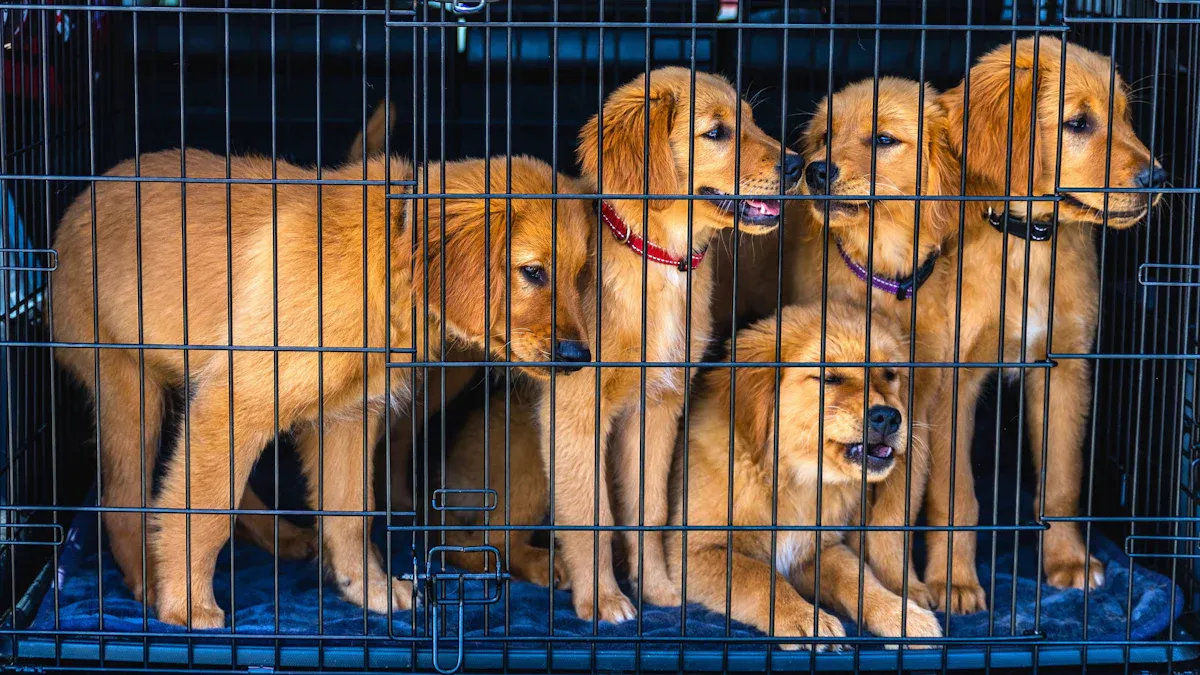
You want the best for your new puppy, and effective crate training offers immense benefits. This positive tool becomes your puppy’s safe den, providing security and a sense of calm. Crate training helps significantly with house-training, preventing accidents and managing behavior for your dog. It also leverages your dog’s natural den instinct, creating a secure refuge. A study found that 25.4% of dog owners use a crate, primarily for training purposes. This guide provides an easy, step-by-step method for successful crate training your puppy without distress. You can achieve great success with your puppy becoming crate trained.
Key Takeaways
Crate training helps your puppy feel safe. It also helps with house-training and good behavior.
Choose the right crate size. Make it comfortable with bedding and safe toys.
Introduce the crate slowly. Use treats and praise to make it a happy place.
Never use the crate as a punishment. This makes your puppy dislike it.
Be patient and consistent. This helps your puppy learn to love their crate.
Why Crate Training Helps Your Puppy
Puppy’s Den Instinct & Security
Your puppy needs a safe space. A crate provides this security. While the idea of a “den instinct” for all dogs is a myth, your puppy still benefits from a secure, personal area. Dogs often seek small, dark spaces for comfort or to escape noise.
A crate offers your puppy a cozy spot, much like a den, where they feel protected. This safe haven prevents your puppy from engaging in dangerous behaviors, such as chewing electrical cords, when you cannot supervise them. The crate becomes a place of comfort and solitude, ensuring your puppy’s safety.
House-Training & Behavior Management
Crate training is a powerful tool for managing your puppy’s behavior. It significantly aids in housetraining. Dogs instinctively avoid soiling their sleeping areas. This natural tendency helps your puppy learn to hold their bladder until you take them outside. Crate training also prevents destructive behaviors when your puppy is unsupervised. It teaches your puppy independence and calmness when alone, which can help prevent separation anxiety. You can manage common puppy problems like inappropriate elimination and destructive chewing with consistent crate training.
Dispelling Common Crate Myths
You might hear that every dog must be crate trained. This is a common misconception. Crate training is not a universal solution for every puppy. Some dogs experience anxiety or stress in a crate. It is crucial to evaluate your dog’s individual needs and temperament. If crate training is right for your puppy, introduce it gradually. Always link the crate with positive experiences. Dogs with separation-related distress often do not adapt well to crates, especially when left alone. Understand your puppy’s needs to make the best choice for them.
Setting Up for Crate Training Success
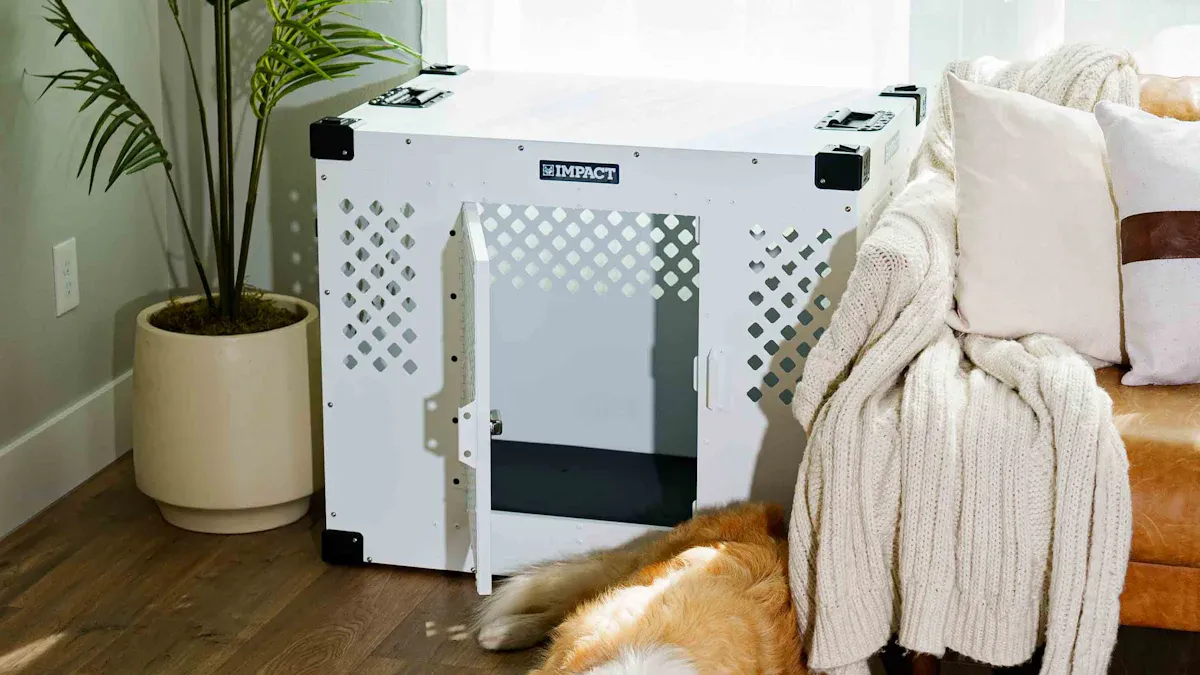
You want your puppy to love their crate. Making it a safe and comfortable space is crucial for successful crate training. Place the crate in a central area. Your puppy will feel like part of the family. This helps them feel secure and connected.
Right Crate Size & Type
Choosing the correct size and type of crate is your first step. Your puppy needs enough room to stand, turn around, and lie down comfortably. However, too much space can encourage accidents. A divider panel helps adjust the size as your puppy grows.
Dog Size Category | Crate Internal Dimensions (L x H x W) | Example Breeds (Height, Weight) |
|---|---|---|
Small | 25” x 18.5” x 17.4” | Boston Terriers (15-17 in, 12-25 lbs), Pugs (10-13 in, 14-18 lbs) |
Medium | 31.9” x 21.6” x 20.4” | Beagles (13-15 in, 20-30 lbs), Shiba Inus (13-17 in, 15-24 lbs) |
Intermediate | 39” x 25” x 28” | Standard Schnauzers (18-20 in, 31-44 lbs), Australian Shepherds (19-22 in, 47-58 lbs) |
Remember to add extra space for any pad or bed you use. For example, add 2 inches to your dog’s height if you use a Snooz pad.
Crate Comforts & Accessories
Make the crate inviting. Comfortable bedding and safe toys turn the crate into a cozy den.
Bedding options:
Chew-proof bedding works for chewers.
Puppy pads manage nighttime accidents.
Lightweight fleece blankets provide warmth.
Orthopedic pads offer comfort and support.
Rugged, customizable beds resist bites and scratches.
Versatile beds with bolstered headrests support your dog’s head.
Choose bedding that is perfectly sized, high-quality, durable, and easy to clean.
Safe toys:
Interactive puzzle feeders stimulate your puppy.
Durable chew toys prevent destructive chewing.
Comfort toys help your puppy feel calm.
Large, soft plastic balls are safe.
Avoid rawhide chews, rope toys, real bones, and small balls.
Optimal Crate Placement
The right location helps your puppy feel secure. Place the dog crate where your family spends time. This helps your puppy feel included. It balances security with social comfort.
Tranquility: Choose a quiet corner. Avoid busy areas or noisy appliances.
Stay Connected: Position the crate where your dog can see you. This reduces feelings of isolation.
Den of Serenity: Use a crate cover for anxious dogs. This creates a secluded, den-like space.
Puppy Considerations: Place a new puppy’s crate in your bedroom. Your presence eases separation anxiety. You can offer gentle reassurance if your puppy cries.
How to Crate Train a Puppy: Step-by-Step
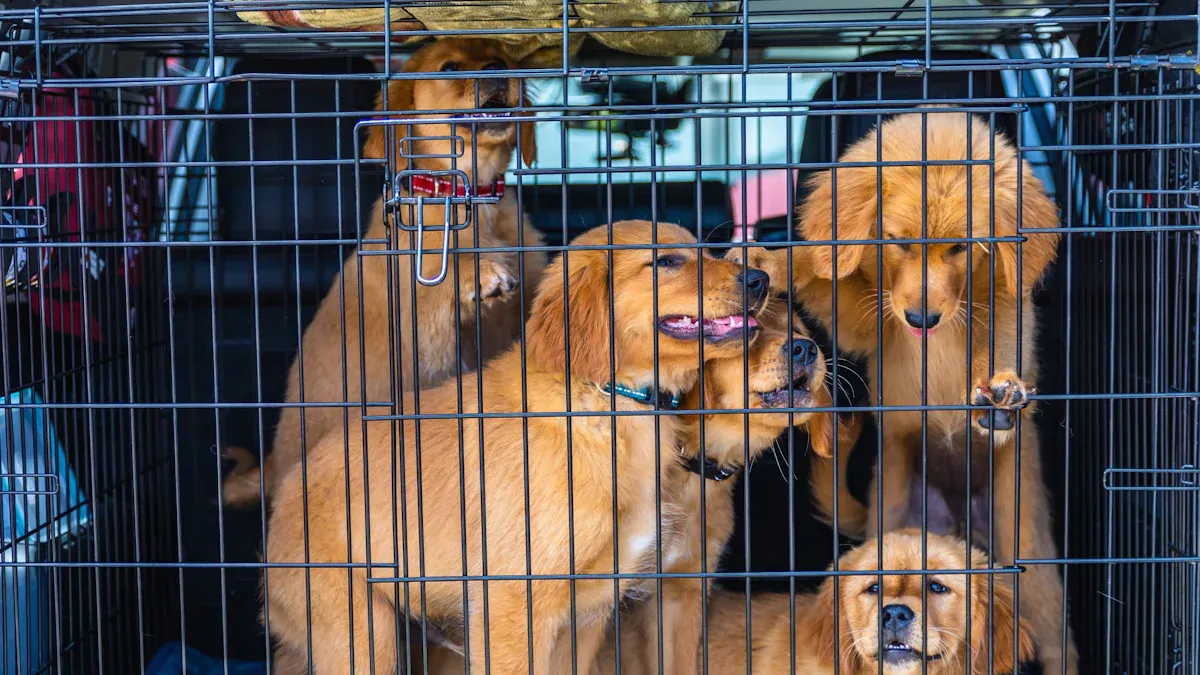
You can successfully teach your puppy to love their crate. This step-by-step guide shows you how to crate train a puppy with patience and positive reinforcement. Following these steps helps your puppy become crate trained and comfortable.
Step 1: Positive Crate Introduction
Introduce your puppy to the crate in a positive way. Make the crate a fun and inviting place. Start by placing the crate in an area where your family spends a lot of time. Keep the door open. Encourage your puppy to explore it. Toss high-value treats or a favorite chew toy into the crate. This makes it more inviting for your dog. High-value treats like pieces of chicken, cheese, or freeze-dried liver work well. You can also use your dog’s favorite toy.
Play games by throwing treats just inside the crate, then further in. Use a consistent command like “kennel” or “crate” as your puppy enters. Reward them with praise and treats for voluntary entry. Do not lock your puppy in at this stage. This creates positive associations with the crate.
Step 2: Feeding Meals in the Crate
Feeding your puppy’s meals inside the crate builds strong positive feelings. Place your puppy’s food bowl near the crate. Gradually move it inside. Once your puppy eats comfortably inside, close the door briefly while they eat. Open the door immediately after they finish. Do this before they start to fuss. This helps your puppy associate the crate with good things like food.
Step 3: Gradual Door-Closed Time
Once your puppy eats meals in the crate without anxiety, begin closing the door for short periods. Start with 15-second intervals with the door closed. Provide verbal encouragement and treats during these short stints. Release your puppy for praise and more treats. You can also start with 1 minute of door-closed crate time after eating. Gradually increase the duration to about 10 minutes. If your puppy whines, reduce the duration for subsequent sessions.
Your puppy shows comfort when they willingly enter the crate without prompting. They also stay in the crate with the door open. They eat snacks, bones, or enrichment toys happily while in the closed crate when you are present. These are signs your puppy is ready for longer periods.
Step 4: Practicing Short Absences
After your puppy is comfortable with the door closed while you are present, start practicing short absences. Close the crate door. Leave the room for a few minutes. Return before your puppy gets anxious or starts to whine. Gradually increase the time you are out of sight. Always reward calm behavior when you return. This teaches your puppy that you will come back.
Step 5: Overnight Crating Routine
Establish a consistent overnight crating routine. Ensure your puppy sees you going to bed when crated for the night. Always ensure they relieve themselves before bedtime. Take them out for a final potty break right before you put them in the crate. Manage their eating and drinking schedules. Feed the last meal 3-4 hours before bedtime. Young puppies should go outside about 10 minutes after drinking water.
Help your puppy burn pre-bedtime energy. Engage them in appropriate physical and mental activities. This encourages restful sleep. Set up the crate area for nighttime rest. Ensure the crate is the right size. Consider using calming aids like pheromone diffusers. Set alarms for preemptive potty breaks, especially for young puppies. Gradually extend the time between breaks as they mature. Keep nighttime potty breaks “all business, no pleasure.”
Step 6: Extending Crate Time
Begin extending crate time once your puppy is comfortable eating in their crate. Use a consistent command like “Kennel up” or “Go to your crate.” Reward obedience with a treat. Gradually increase the time your puppy spends in the crate while you are out of sight. Initially, sit quietly near the crate for up to 20 minutes. Then, gradually move to another room. This allows your puppy to become comfortable independently.
Repeat this process multiple times daily. Slowly increase the time you are out of sight. Once your puppy can remain calm in the crate for 30 minutes, you can extend periods or allow overnight stays. Be prepared for frequent potty breaks, especially with 8-week-old puppies. Their bladders are small. Ideally, a puppy should not be left in their crate for more than a couple of hours at a time during the day. This prevents stress. Leaving a puppy in a crate for too long can lead to separation anxiety.
Troubleshooting Crate Training Challenges
You may face some challenges during crate training. This is normal. Understanding common issues helps you overcome them. You can help your puppy adjust to their crate.
Managing Whining & Barking
Your puppy might whine or bark in the crate. This is a common behavior. You need to understand why your puppy vocalizes. Then you can respond correctly.
Positive Reinforcement: Reward your puppy for quiet behavior. Give treats, praise, or toys when your puppy is calm in the crate. Feed your puppy inside the crate. Use a happy tone of voice.
Crate Comfort: Make the crate cozy. Put a soft blanket or a pad inside. Include an old t-shirt with your scent. Provide water and safe toys. A Kong filled with treats works well. Ensure good airflow in the crate.
Interactive Toys: Give your puppy puzzle toys. These toys challenge your puppy. They fight boredom. Make sure the toys are safe for unsupervised use.
Calming Aids: Talk to your vet about calming aids. Organic, all-natural soft chews can help. They support stress levels. They manage hyperactivity. They help with fear and nervousness.
Your Energy: Your puppy can sense your stress. Stay calm. A calm environment helps your puppy relax.
You might hear different types of vocalizations:
Panicked Whining/Barking: This sounds high-pitched and repetitive. Your puppy might pace, pant, or lick their lips.
Do not yell or hit the crate. This makes fear worse.
Do not let your puppy “cry it out.” Soothe them instead.
Use a calm, reassuring voice. Sleep next to the crate. Gently pet your puppy through the crate.
Open the crate periodically. Pet your puppy while they are inside. Gently close the door again.
Check if the bedding makes your puppy too hot.
Move the crate closer to your bed. You can even put it on a bedside table.
Fill the crate with fun toys, chews, and treats. Change them often to keep your puppy interested.
Attention-Seeking Barking: This is demanding and repetitive. It is not high-pitched. Your puppy watches you.
Try to ignore this barking. First, make sure your puppy does not need to go potty.
Use soothing tactics. Do not take your puppy out of the crate. This teaches your puppy that barking does not get them out.
Needing to Go Potty: Your puppy might pace or move around the crate. This happens before they vocalize.
Quietly take your puppy out of the crate. Move them to a designated potty area.
Accidents Inside the Crate
Accidents in the crate can be frustrating. Several reasons cause them. You can address these issues.
Medical Conditions: Your puppy might have health problems. Intestinal parasites cause diarrhea. Urinary tract infections increase urination. Both lead to accidents. See your vet to rule out these issues.
Nutrition: Overfeeding your puppy can cause more frequent defecation. Food with many fillers also increases waste. Talk to your vet about your puppy’s diet. This can reduce accidents.
Insufficient Outdoor Potty Time: Your puppy needs enough chances to relieve themselves outside. Not enough potty breaks lead to accidents in the crate.
Past Living Situations: Some puppies learn bad habits. Puppies from mills or pet stores may soil their living space. Dogs kept in crates for too long may also do this. Dogs raised outdoors might not understand appropriate potty areas.
Stress or Distress: Your puppy might have accidents due to stress. Signs of stress include panting, shaking, drooling, pacing, and vocalizations.
When Your Puppy Refuses the Crate
Sometimes your puppy consistently refuses to enter the crate. You can take steps to help.
Make the crate appealing: Add items with your puppy’s scent. This makes the space feel safe and theirs. Ensure the crate is clean. Remove any smells from past accidents.
Feed meals and treats inside: Use food to create positive feelings about the crate. This replaces any negative feelings.
Restart crate training patiently: Begin the training process again. Use what you know about your dog’s reactions. Go at your dog’s speed. Do not overwhelm your puppy. Avoid creating new negative feelings.
Enhance crate comfort: Make the crate as cozy as possible. Add a memory foam pad, toys, and blankets.
Consult a vet: If these tips do not work, ask your veterinarian for advice.
Crate Issues vs. Separation Anxiety
It is important to tell the difference between normal crate protest and separation anxiety.
Behavior | Normal Puppy Behavior | Sign of Separation Anxiety |
|---|---|---|
Chewing | Explores items out of curiosity or during teething. | Destructively chews doors, windows, or furniture when left alone. |
Vocalization | Brief whining or barking when seeking attention. | Excessive howling or barking for long durations when owner is absent. |
Potty Accidents | Occasional accidents during training. | Frequent accidents indoors, even after being properly trained. |
Restlessness | Playful energy or zoomies during active times. | Pacing or repetitive behavior when left alone. |
Clinginess | Follows owner but tolerates brief separations. | Becomes extremely distressed when the owner is out of sight. |
Separation Anxiety Signs:
Your puppy vocalizes excessively. This means continuous barking or howling.
Your puppy shows severe distress and unease.
Your puppy acts destructively. They chew or scratch at doors or windows. This shows panic.
Your puppy has inappropriate elimination. They soil the house.
Your puppy salivates excessively. They drool or pant a lot.
Your puppy is restless. They pace.
Your puppy tries to escape. They risk injury.
Protest Behavior Signs:
Your puppy vocalizes to get attention. This barking or whining is not too long.
Your puppy acts mildly destructive. They might scratch or chew a little. This does not cause severe damage.
Your puppy feels temporary discomfort. This often lessens as your dog gets used to being alone.
Consider your puppy’s age. For puppies 8-10 weeks old, crying, whining, and barking are typical. They often quiet down with soothing. They might need to potty. By 10-16 weeks, crate training usually stops the crying. If a puppy 16 weeks or younger shows worsening separation behaviors, this is a concern. For older puppies, adolescents, or young adults, telling normal from abnormal behavior is harder.
Look at the intensity of vocalization and escape behaviors. Vocalizing for 15 minutes or less is typical. Vocalizing for over an hour with stress signals indicates separation anxiety. Stress signals include excessive salivation or bloodshot eyes. Extreme separation anxiety means your puppy breaks out of secure crates. They injure themselves trying to escape. They might have bloody gums or paws. They destroy exit areas of your home. This includes blinds, baseboards, or doorframes.
Tips for Crate Training Success
You can make crate training your puppy a positive experience. Follow these simple tips for the best results. These tips for crate training a puppy will help your dog feel secure and happy.
Consistency & Patience are Key
Consistency and patience are crucial for successful crate training. Do not rush the process. The time it takes can vary for each puppy. Establish a fixed potty break schedule. Take your puppy out first thing in the morning. Go out after every meal, about 15-30 minutes later. Also, go out after playtime or naps. Implement a consistent bedtime routine. Engage your puppy in 10-30 minutes of physical and mental exercise before bed. Dim the lights.
Consider playing calming music or using calming oils or toys. Repeat this routine nightly. Maintain a calm response to whining or barking. Avoid yelling. If your puppy tests you, do not reinforce the behavior. If they communicate a need, use keywords for potty breaks. Observe their response.
Make the crate inviting. Add blankets or a comfortable pad. Reward good behavior with treats when your puppy approaches or enters the crate. Encourage entry with food. Place their food and water dishes near the crate. Gradually move them inside. Once comfortable, begin closing the crate door for short periods. Start with a few seconds. Gradually increase the duration. This teaches your puppy the crate is a safe space.
Never Use Crate as Punishment
Never use the crate as punishment. This is very important. Using a crate as punishment is cruel. It harms your dog’s psychological well-being. Misusing crates for punishment creates negative associations. Your puppy will quickly learn to hate the crate. This can cause lasting psychological harm. The crate should always be a safe, positive place.
Exercise Before Crating
Exercise your puppy before crating them. This helps them relax. Mental exercises are more beneficial than just physical activity for promoting relaxation. Incorporate enrichment exercises. These challenge your puppy mentally. Practice daily training sessions. Include obedience commands.
Work on challenging impulse control. For example, make your puppy wait for permission to go through doorways. Make them wait for their food bowl. Avoid over-stimulating your puppy right before crating. Ensure your puppy is in a calm state of mind. Work through simple obedience commands calmly. Ignore your puppy for a while. This helps them de-escalate before crating.
Pre & Post-Crate Potty Breaks
Always take your puppy out to potty before putting them in the crate. This prevents accidents. Take them out immediately after you release them from the crate. This reinforces good house-training habits. A full bladder can make your puppy uncomfortable. This makes them dislike the crate.
Successful crate training your puppy brings many rewards. You gain a well-adjusted puppy and a harmonious household. Remember these key principles: positive reinforcement, gradual steps, and consistency. Your puppy will learn to love their crate. This training builds a strong bond with your dog. Patience is crucial. The effort is well worth it for a happy, secure puppy. You will achieve success with a well-crate trained dog.