


Kentucky offers a unique opportunity to observe remarkable winter birds. You can find over 350 bird species documented in Kentucky, including many resilient winter residents. You will discover the joy and educational value of backyard bird watching, which helps you connect with nature. This activity offers opportunities to support common Kentucky birds and even spot rare ones. You gain feelings of awe and mindfulness from bird watching. This guide will teach you how to identify common winter birds in Kentucky and provide practical ways to attract them to your backyard. Embrace the colder months and connect with nature.
Key Takeaways
Winter birdwatching in Kentucky is special. You can see many birds easily against bare trees and snow.
You can identify common winter birds. Look for Northern Cardinals, American Robins, and Dark-Eyed Juncos.
Attract winter birds to your yard. Give them high-energy food like suet and sunflower seeds.
Provide water for birds in winter. Use a heated birdbath or add warm water often.
Offer shelter to birds. Dense bushes, brush piles, and leaf litter keep them safe and warm.
Winter Birdwatching in Kentucky
Why Winter Birding Matters
Winter transforms Kentucky’s natural spaces. It offers a special opportunity to watch birds. You can see them more easily against bare branches and snow-covered ground. Many birds become more visible. This season highlights their amazing resilience. You witness their survival skills firsthand. Birding also brings a peaceful quiet. It connects you deeply with nature during colder months. You discover the unique beauty of these birds. Observing them helps you understand their world. It is a rewarding hobby. You learn about different species. You also appreciate the quiet beauty of the landscape. This time of year provides clear views. You can easily identify winter birds without dense foliage. This makes winter birdwatching in Kentucky a truly special experience.
Kentucky Birds: Year-Round Residents
Not all birds leave Kentucky when the cold arrives. Many species call this state home all year. These are your year-round residents. You can spot them even when temperatures drop. For example, American Crows are a common sight across the state. Mallard ducks often stay on open water, even when ice forms. Dark-eyed juncos also remain here throughout the cold season, foraging on the ground. You will frequently see House Sparrows around your home, seeking shelter and food. Mourning Doves are regular visitors to backyard feeders, known for their gentle cooing. The Eurasian Collared-dove is another resident you might notice, expanding its range in Kentucky. Even ground-dwelling woodcocks can be found in this region during this time, probing for food in soft soil. These birds adapt well to the harsh conditions. They show incredible toughness. Observing them helps you appreciate Kentucky’s diverse wildlife. You learn about their unique behaviors and adaptations.
Identifying Common Winter Birds in Kentucky
You can easily identify many fascinating winter birds in Kentucky. Knowing their unique features helps you appreciate them more. This guide will help you recognize common species you might see in your backyard during winter.
Northern Cardinal
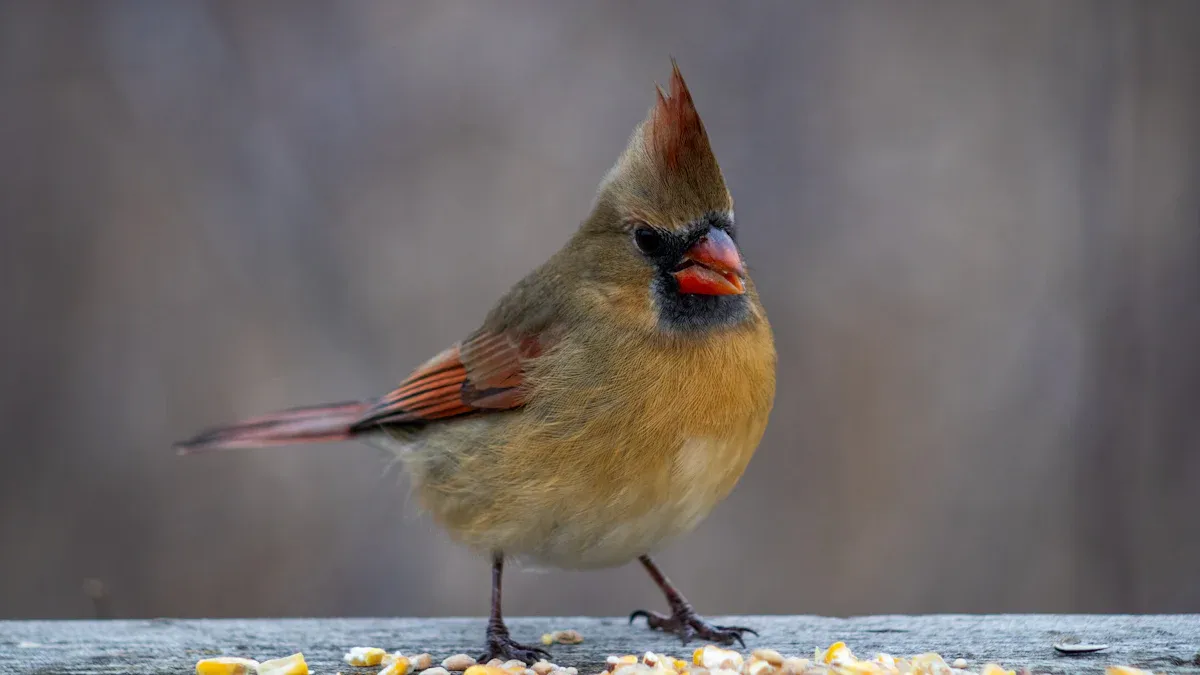
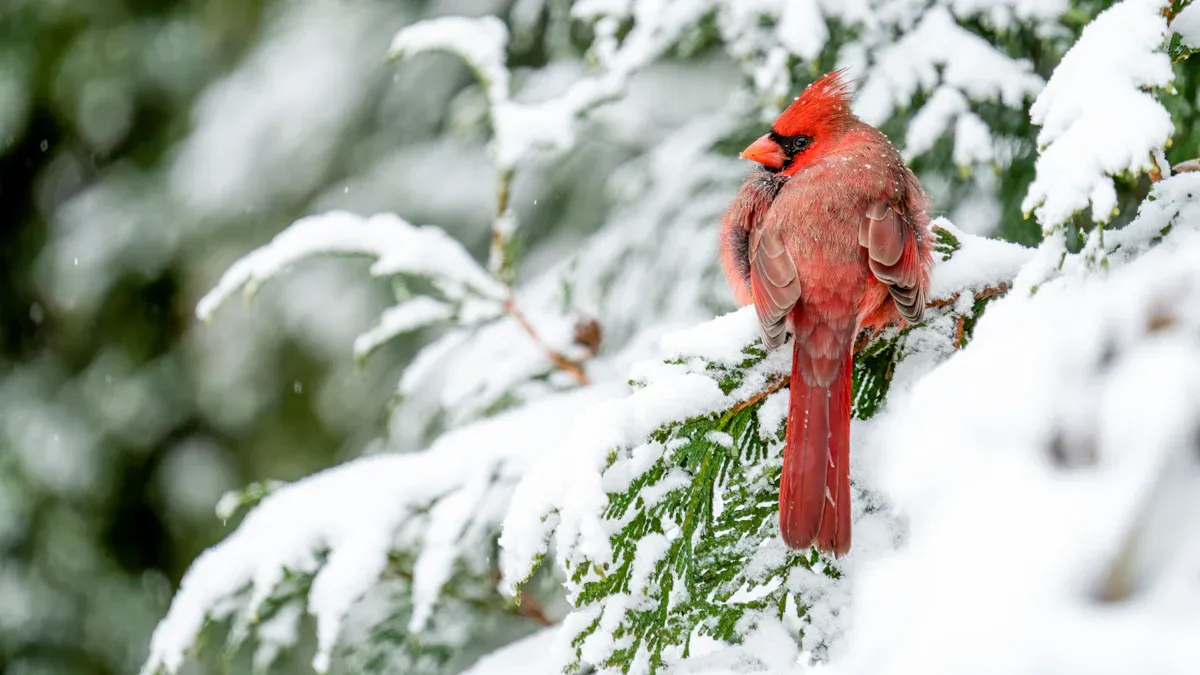
You will easily spot the northern cardinal with its vibrant red color. The male bird boasts brilliant red feathers all over its body. It has a distinctive crest on its head and a black mask around its bright orange, conical bill. Female cardinals are a duller reddish-brown. They also have a crest and red accents on their wings and tail. These birds are medium-sized. They often visit feeders, adding a splash of color to your yard. You can find them in shrubs, trees, and dense thickets across Kentucky.
American Robin
The american robin is a familiar sight, even in winter. You recognize it by its gray back and rusty orange breast. It has a dark head and a yellow bill. Robins are medium-sized songbirds. In winter, their diet changes. They switch from eating protein-rich invertebrates to vitamin-rich fruits and berries. Look for them eating junipers, hollies, crabapples, and hawthorns. Robins become nomadic in winter. They search widely for cold-weather food. Heavy snowfall can make them move to new areas. They form large flocks, sometimes hundreds or thousands strong. This helps them find food and spot predators. You will hear them less often in winter. Males only begin to sing as spring approaches. These birds often gather in wooded areas with plenty of berries.
Dark-Eyed Junco
You will often see the dark-eyed junco foraging on the ground. This medium-sized sparrow has a rounded head and a short, stout, pink bill. Its most striking feature is its white outer tail feathers. These flash brightly when the bird flies. Juncos are generally dark gray or brown. The Slate-colored Junco is common in Kentucky.
Form | Key Field Marks |
|---|---|
Slate-colored Junco | Dark gray hood, back, and flanks, contrasting with a white belly. Females and young birds are often brownish-gray. |
You can find juncos in open woodlands, parks, and backyards. They are frequent visitors to feeders, especially when you offer millet or cracked corn.
Downy and Hairy Woodpeckers
You will often see two common woodpecker species in Kentucky: the Downy and Hairy Woodpeckers. Both have black and white plumage. They show a white back stripe and black and white barred wings. Males have a small red patch on the back of their heads. Telling them apart can be tricky, but size and bill length are key.
Feature | Downy Woodpecker | Hairy Woodpecker |
|---|---|---|
Size | Usually smaller; about 6.5 inches long. | Usually larger; about 9.25 inches long, around the size of a robin. |
Bill Length Relative to Head | Shorter than the head. | About as long as the head. |
The Downy Woodpecker has a small, dainty bill. The Hairy Woodpecker has a much longer, chisel-like bill. You can find both at suet feeders.
Tufted Titmouse and Chickadee
You will recognize the Tufted Titmouse by its gray crest, white belly, and peachy flanks. It has large black eyes. The Carolina Chickadee is smaller. It has a black cap, a black bib, and white cheeks. Both are active songbirds. They often visit feeders. Their calls can sometimes sound similar.
David Sibley suggests that Tufted Titmice typically produce “lower-pitched whistles.” A higher-pitched sound might be characteristic of a Carolina Chickadee. He advises caution in identifying birds by sound alone.
The Tufted Titmouse often sings a clear, two-noted “peter-peter-peter” song. Its calls include a “tshica dee-dee” sound. Carolina Chickadees have their own distinct “chick-a-dee-dee-dee” call and a “phoebe” whistle.
White-Breasted Nuthatch
You will notice the White-Breasted Nuthatch by its blue-gray back, white face, and black cap. It has a short tail and a long, pointed bill. This bird has a unique way of foraging. It creeps up, down, and sideways on tree trunks. It often descends headfirst. It probes bark crevices for insects and seeds. When it finds large nuts, it wedges them into bark. Then, it hammers them open with its bill. It also stores food under loose bark. You might see it at suet feeders.
Blue Jay
The Blue Jay is a striking bird. You will easily identify it by its vibrant blue, black, and white plumage. It has a prominent crest. Blue Jays are intelligent and vocal. They often mimic the calls of hawks. In winter, nuts and seeds are a fundamental part of their diet. They have a strong preference for acorns. They cache these for later consumption. You can attract them to your yard with peanuts and sunflower seeds.
Carolina Wren
The Carolina Wren is a small but chunky bird. You will see its rusty brown back and warm buffy-orange underside. It has a distinct white eyebrow stripe. Its tail often cocks upward. Its bill is long, slender, and slightly down-curved.
Size: A fairly large wren, 4.7–5.5 inches long.
Coloration: Rusty brown on the back, lighter cinnamon or buff on the underside.
Head Features: A distinct white stripe above and beyond the eye.
This wren has a loud, cheerful song. It often sounds like “teakettle-teakettle-teakettle.” You can find them in dense thickets and brush piles.
Mourning Dove
You will recognize the Mourning Dove by its slender body and soft, muted colors. It has a small head and a pointed tail. Its plumage is generally grayish-brown. It has a light underside. You might notice small black spots on its wings. Mourning Doves have ultraviolet ‘tear-drops’ on their cheeks. These are visual cues for other birds. They are often seen foraging on the ground. They visit feeders for seeds. Their gentle cooing sound is very distinctive.
Red-Bellied Woodpecker
The Red-Bellied Woodpecker is a common sight in Kentucky. You will identify it by its black and white barred back. It has a pale underside. Despite its name, you will rarely see its red belly. The red belly is often obscured by feathers. Instead, look at its head. Males have red on their forehead, crown, and nape. Females only have red on their nape. Their black and white zebra-like pattern on their backs is a reliable mark. This woodpecker often visits suet feeders.
European Starling and House Sparrow
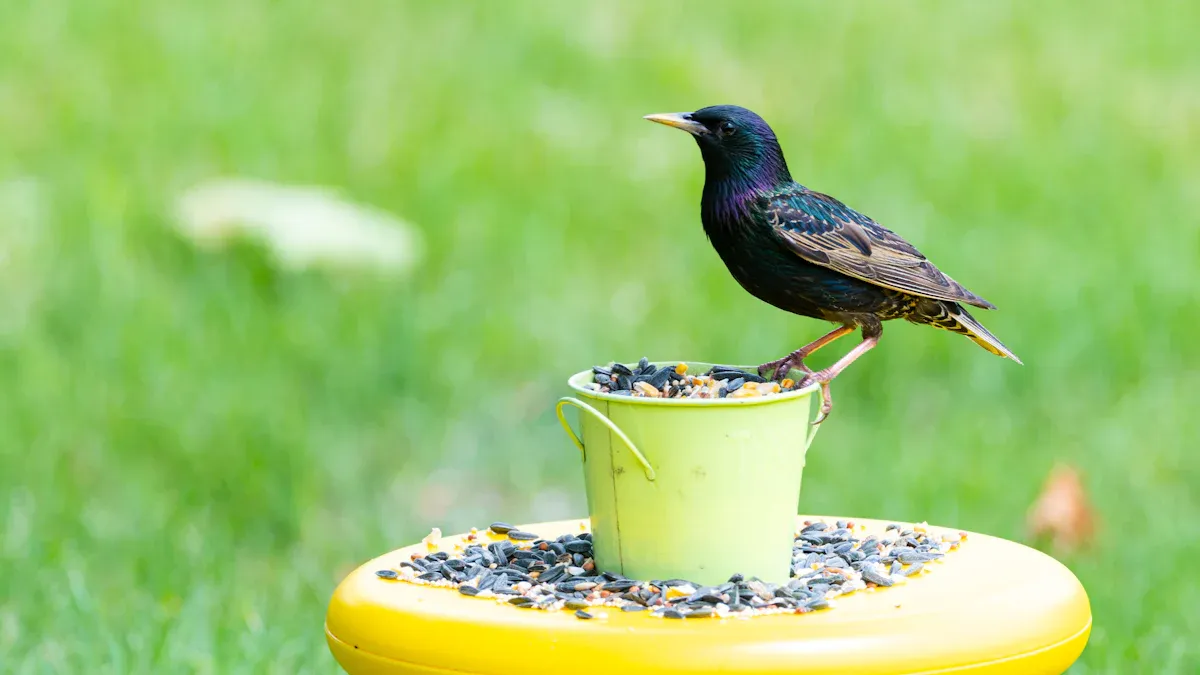
You will often see the European Starling and House Sparrow in urban and suburban areas. The European Starling is a medium-sized bird. It has iridescent black plumage with purple and green sheens. In winter, its feathers are heavily spotted with white. It has a short tail and a pointed bill. The House Sparrow is smaller. Males have a gray crown, chestnut nape, and black bib. Females are duller brown.
These two species are not native to Kentucky. They can negatively impact native songbirds. Introduced House Sparrows aggressively compete for nesting sites. They can drive out native species like Eastern Bluebirds. European Starlings often evict native birds from their nests. This raises concerns about their effect on other species. They are known for aggressively taking over nest boxes.
Attracting Winter Birds to Your Backyard
You can make a big difference for winter birds in Kentucky. Providing food, water, and shelter helps them survive the cold months. Your backyard can become a vital refuge. You will enjoy watching many different species.
Food: Fueling Winter Survival
Birds need high-energy foods during winter. These foods help them stay warm. You should choose quality seeds and suet. Avoid cheap fillers. Mixtures containing red millet, oats, and other ‘fillers’ are generally not attractive to most birds. These can lead to waste. European Starlings will happily eat safflower and milo seeds. These are often in birdseed blends. Sunflower seeds are very attractive to squirrels.
You can offer specific foods to attract different species. Here are some high-energy options:
Bird Species | High-Energy Foods Recommended for Winter in Kentucky |
|---|---|
Dark-Eyed Junco | Millet, hulled sunflower seed, cracked corn, peanut hearts |
Downy/Hairy Woodpecker | Suet (especially peanut flavored), sunflower seeds |
Purple Finch | Sunflower seed, safflower seed, nyjer |
Red Bellied Woodpecker | Suet, sunflower seeds, peanuts |
Red Breasted Nuthatch | Peanuts, suet, sunflower seeds |
Robin | Fruits (apples, oranges, berries, raisins), mealworms |
Goldfinch | Sunflower chips, nyjer seed |
House Finch | Sunflower seed, safflower seed, nyjer seed |
Suet is especially important. It provides crucial fats and calories. You can find many types of suet feeders:
Singles
Doubles
With tail props
Upside down
For Pileated Woodpeckers
Large suet and seed block feeders
Caged suet feeders
These feeders come in different materials:
Metal (some in stainless steel)
Wood
Recycled plastic
Place your backyard feeders in a safe spot. Keep them clean to prevent disease.
Water: A Lifeline in Winter
Water is just as important as food. Birds need to drink and bathe. Natural water sources often freeze in Kentucky. You can provide unfrozen water.
Consider these methods for providing water:
Purchase a heated birdbath or a birdbath heater. This needs an outdoor electrical outlet.
Manually add hot (not boiling) water to the birdbath when it freezes. You might need to do this often.
Place an unbreakable shallow bowl of water outside. Bring it in once ice forms.
Add an immersion-style water heater to a birdbath. This prevents freezing.
Reposition the birdbath in sunny areas. South or west-facing walls work best. This slows freezing.
Darken the birdbath’s base. This absorbs more heat and light. You can paint it black or use dark rocks.
Fill birdbaths to the brim. A greater surface area delays freezing. Ensure the bath is shallow, no deeper than 2 inches.
Place small floatable objects like tennis balls in the birdbath. Winter winds move them. They can break new ice.
A heated bird bath offers many benefits:
It provides a reliable water source for drinking. Songbirds need to drink at least twice daily.
It allows birds to bathe. Bathing is crucial for maintaining feather condition.
It supports daily preening. Birds clean and oil their feathers. This waterproofs them and traps insulating air.
It ensures feathers are well-maintained for flight and warmth. This is critical for survival.
It offers water during deep freezes or droughts. Natural water sources become scarce.
It attracts a wider variety of wild birds. This includes non-seed eaters.
Do not add substances like glycerin to the water. It can harm birds.
Shelter: Safe Havens
Birds need shelter from cold winds and predators. You can create safe havens in your backyard.
Natural plant structures provide excellent shelter:
Dense thicketed areas (from planted shrubs, hedges, or vines)
Dead limbs and trees (providing insects and cavities)
Brush piles (made from dead branches)
Untidy yards with dead seed heads (from annuals like coneflowers)
Fallen leaves (raked under shrubs, harboring insects)
Brush piles and leaf litter are very beneficial. Wildlife uses brush piles for nesting, resting, and evading predators. Small animals find warmth and cover in brush piles during winter. This attracts predators like foxes. Doug Hitchcox of Maine Audubon says brush piles are valuable real estate for birds. They provide cover and shelter for sparrows, warblers, and wrens. Wrens are especially drawn to brush piles. Many other bird species use them for cooling in heat waves or warming in snowstorms. They also forage for spiders or seeds. Decaying wood in these piles attracts insects. This provides meals for birds.
Leaving leaf litter on your property nourishes the soil. It provides habitat for birds, amphibians, and overwintering insects. Allowing perennial stalks and seedheads to remain through winter offers another good food source for birds.
Habitat: Beyond Feeders
Creating a bird-friendly habitat goes beyond just feeders. You need to consider the entire environment. This includes protecting birds from predators.
Common predators of backyard birds in Kentucky include hawks and owls. Red-tailed, Red-shouldered, and Cooper’s hawks prey on birds during the day. Great Horned Owls are common at night.
You can take steps to deter these predators:
Improve fencing and housing. Use movable or electrified fences.
Eliminate perch sites within 9 meters (100 yards) of your bird areas. Remove isolated trees.
House birds at night or use covered runs. Orange netting can be effective.
Use confined pens with covered tops. Bury hardware cloth at least 30.5 centimeters (12 inches) into the ground. This deters digging predators.
Have birds roost in secured locations at night. Keep the area clean. Promptly remove sick or dead birds.
Consider well-trained guardian dogs for free-ranging flocks.
Contact state and federal wildlife services for assistance. Hawks and owls are federally protected species.
Visual deterrents can also help. These include decoys of predators like owls or reflective tape. However, birds can get used to them. You may need to move them often.
By providing food, water, and shelter, you create a thriving habitat. You help many birds survive the cold months in Kentucky.
You now understand the rewarding experience of observing and supporting winter birds in Kentucky. You have learned how to identify common species and apply effective attraction techniques. Your backyard efforts make a positive impact on these birds’ survival during winter. You also gain joy from connecting with nature. Continue to appreciate and conserve Kentucky’s local wildlife. You help protect the diverse bird populations across Kentucky.
FAQ
What are the most common winter birds you can see in Kentucky?
You will often see Northern Cardinals, Dark-Eyed Juncos, and American Robins. Woodpeckers like Downy and Hairy are also common. Tufted Titmice and Carolina Chickadees frequent feeders. These birds adapt well to cold weather.
What kind of food should you offer winter birds?
Offer high-energy foods like black oil sunflower seeds, suet, and peanuts. Millet and cracked corn attract ground feeders. Avoid cheap fillers. Quality food helps birds stay warm and healthy during cold months.
What is the best way to provide water for birds in winter?
You can use a heated birdbath or a birdbath heater. Manually add hot water to prevent freezing. A shallow, dark-colored birdbath in a sunny spot also helps. Unfrozen water is vital for drinking and bathing.
What kind of shelter do winter birds need in your backyard?
Birds need dense shrubs, evergreens, and brush piles for protection. Leave leaf litter and dead seed heads. These natural elements offer refuge from cold winds and predators. They also provide foraging opportunities.
