


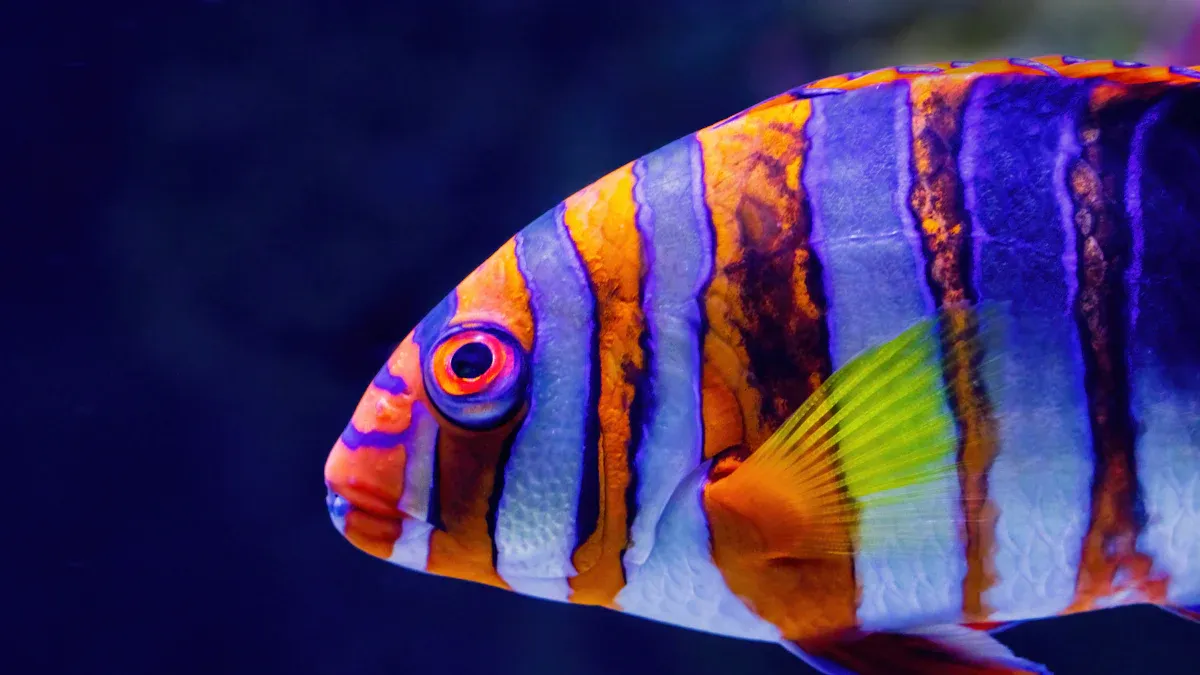
Fish in the ocean captivate you with their vibrant colors and graceful movements, showcasing some of the most beautiful fish in the world. But what truly makes a fish beautiful? Is it their dazzling hues, unique shapes, or intricate patterns? Here are some scientific criteria that define the beauty of these most beautiful fish:
Color heterogeneity and saturation
Well-defined patterns and body shapes
Ecological traits like size and behavior
These features contribute to the allure of colorful saltwater fish, inviting you to explore the underwater world.
Key Takeaways
Explore the vibrant world of fish. Their colors, patterns, and shapes make them captivating.
Clown fish form a unique bond with sea anemones, providing safety and cleaning services.
Betta fish are known for their stunning colors and flowing fins, thriving in secure environments.
Support conservation efforts to protect beautiful fish like the Banggai Cardinal Fish from habitat destruction.
Create a balanced diet for aquarium fish to maintain their health and vibrant colors.
Clown Fish
Look
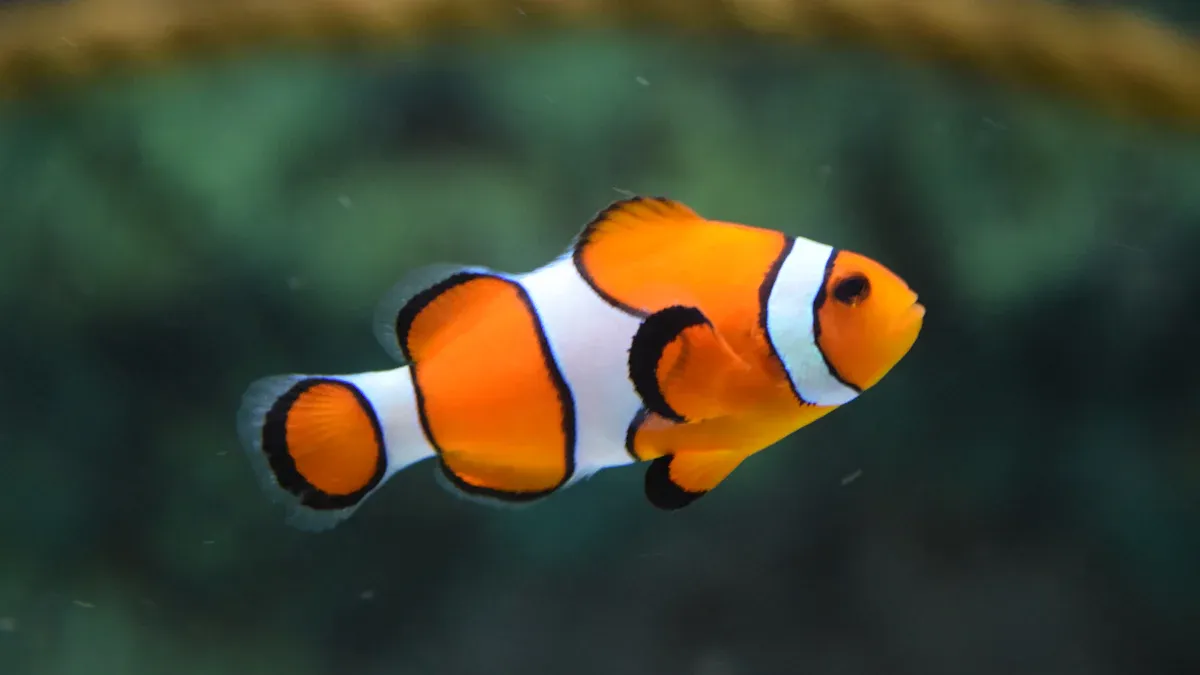
Clown fish are some of the most recognizable and colorful saltwater fish in the ocean. Their bright orange bodies, adorned with unique white stripes, make them stand out in any reef. You’ll notice that they can have a background of red, yellow, brown, or even black. Each clown fish has zero to three white vertical bars lined with black, and these patterns can vary among species. For example, the cinnamon clownfish might have different stripe formations compared to the saddleback clownfish. This vibrant coloration comes from special pigment cells called xanthophores and melanophores, which create their stunning hues.
Home
You can find clown fish primarily in the warm waters of the Pacific and Indian Oceans. They thrive in coral reefs, where they form a symbiotic relationship with sea anemones. This partnership provides them with protection from predators while the clown fish help keep the anemones clean. Their habitat is crucial for their survival, as they rely on these anemones for shelter.
Food
Clown fish are omnivores, meaning they eat both plant and animal matter. In the wild, they primarily feed on small zooplankton, algae, and leftover food from their anemone hosts. In aquariums, you can provide them with a diet of high-quality flakes, pellets, and frozen foods to keep them healthy and vibrant.
Life
Clown fish are fascinating creatures with a unique social structure. They live in groups led by a dominant female, who is the largest fish in the group. The male, usually smaller, is her mate. If the female dies, the male will change sex and become the new female. Their popularity soared after the release of the movie “Finding Nemo,” inspiring many to bring these colorful fish into their homes. However, this demand has led to overfishing, with about 90% of clown fish sold coming from the wild, impacting their populations in places like Thailand and Indonesia.
Betta Fish
Look
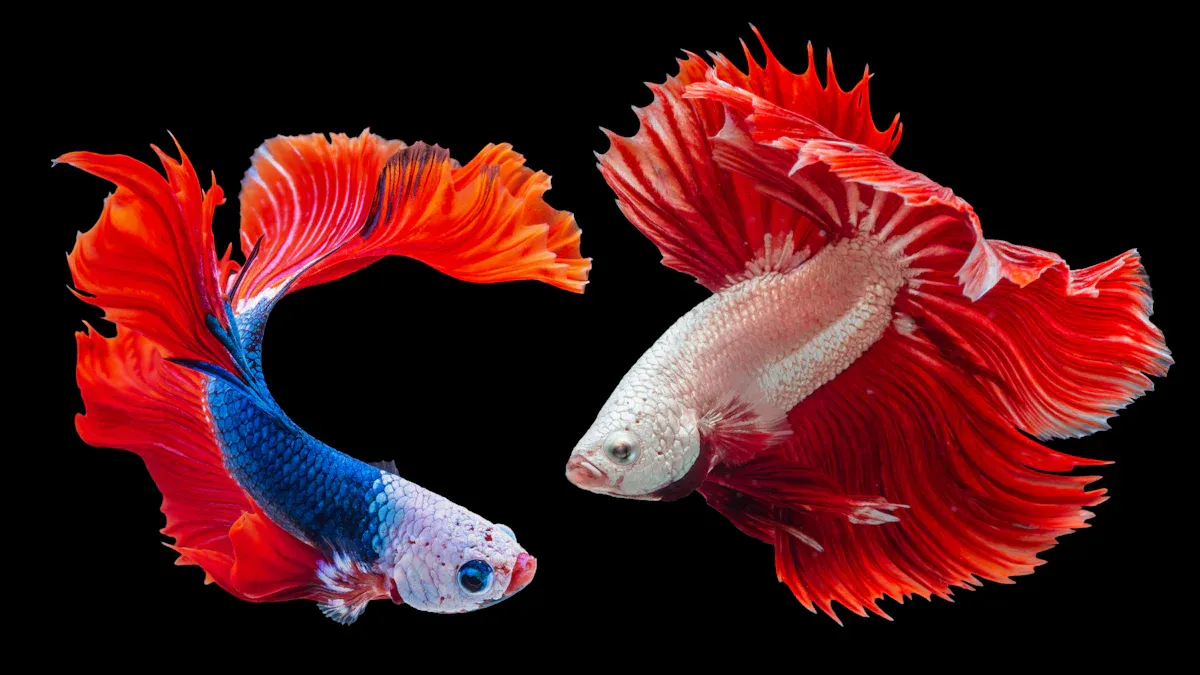
Betta fish are truly stunning creatures. You’ll be amazed by their vibrant colors and flowing fins. These colorful fish come in a variety of shades, making them a favorite among aquarium enthusiasts. Some common color variations include:
Red
Teal and dark blue
Copper pink halfmoon
Koi
Gold
Albino
Their long, flowing fins can resemble delicate silk, adding to their beauty. Each betta fish has a unique pattern, which makes them even more special. You might find some with striking combinations of colors, like red, white, and blue stripes or even a mesmerizing rose gold hue.
Home
You can find betta fish in the warm, shallow waters of Southeast Asia. They thrive in rice paddies, ponds, and slow-moving streams. Bettas prefer a habitat with plenty of hiding spots, such as plants and decorations. This environment helps them feel secure and reduces stress. If you decide to keep a betta fish at home, make sure to provide a tank with a lid, as they can jump!
Food
Betta fish are carnivorous, so they need a protein-rich diet. In the wild, they feast on insects and larvae. When you keep them as pets, you should feed them high-quality pellets specifically designed for bettas. You can also offer them frozen or live foods like brine shrimp and bloodworms. Just remember to avoid overfeeding, as this can lead to health issues.
Life
Betta fish are known for their vibrant personalities. They can be quite territorial, especially males, so it’s best to keep them alone or with compatible tank mates. Their lifespan typically ranges from three to five years, but with proper care, some can live even longer. Betta fish have gained immense popularity among freshwater fish enthusiasts due to their beauty and unique behaviors. You’ll find them in many homes, bringing joy and color to aquariums around the world.
Banggai Cardinal Fish
Look
The Banggai Cardinal Fish is a true gem of the ocean. You’ll be captivated by its striking black and white coloration. This colorful saltwater fish has a silver body adorned with three vertical black bands. Between these bands, you’ll spot unique white dots that decorate its fins, except for the front dorsal fin. Each fish has its own distinct pattern of these dots, making every Banggai Cardinal Fish one-of-a-kind. This beautiful appearance makes it a popular choice for aquariums, where its elegance can truly shine.
Home
You can find the Banggai Cardinal Fish in the warm waters of Indonesia, particularly around Banggai Island. They prefer shallow lagoons and coral reefs, where they can hide among the rocks and corals. This habitat not only provides safety from predators but also offers plenty of food sources. Unfortunately, their natural environment faces threats from overharvesting and habitat destruction, which puts their survival at risk.
Food
In the wild, Banggai Cardinal Fish primarily feed on small crustaceans and zooplankton. If you decide to keep one as a pet, you should provide a varied diet that includes high-quality flakes, frozen foods, and live brine shrimp. This diet helps maintain their vibrant colors and overall health. Just remember to avoid overfeeding, as this can lead to health issues.
Life
Banggai Cardinal Fish are social creatures that often form small groups. They exhibit fascinating behaviors, such as pairing up during breeding. Unfortunately, their conservation status is concerning. The Banggai Cardinal Fish is classified as Threatened under the Endangered Species Act. This classification highlights significant concerns regarding its conservation status in the wild. Major threats include overharvesting and habitat destruction. By choosing to keep these beautiful fish responsibly, you can help raise awareness about their plight and contribute to their conservation.
Blue-faced Angel Fish
Look
The Blue-faced Angel Fish is one of the most stunning colorful saltwater fish you’ll ever encounter. Its bright yellow body contrasts beautifully with its vibrant blue face. This fish showcases a unique coloration that changes as it matures.
Here’s a quick look at its coloration at different stages:
Stage | Coloration Description |
|---|---|
Juvenile | Over blue-black color with multiple white and blue bars. |
Adult | Yellow overall with blue-highlighted scales, blue face, yellow band from eye to eye, yellow tail, dorsal, anal, and pectoral fin. |
You can easily spot this fish in coral reefs, where its colors pop against the vibrant backdrop of marine life.
Home
You’ll find the Blue-faced Angel Fish primarily in the Eastern Tropical Indo-Pacific region. It thrives in coral reefs, where it enjoys the shelter and food sources these ecosystems provide. Here are some specific locations where you might encounter this beautiful fish:
Region | Description |
|---|---|
Eastern Tropical Indo-Pacific | Common habitat for Blue-faced Angelfish |
Maldives | Part of the range |
Malaysia | Part of the range |
Indonesia | Part of the range |
Japan | Part of the range |
Taiwan | Part of the range |
Philippines | Part of the range |
Northern Australia | Part of the range |
Micronesia | Part of the range |
Florida | Occasionally observed |
Food
As an omnivore, the Blue-faced Angel Fish enjoys a varied diet. In the wild, it feeds on algae, small invertebrates, and coral polyps. If you decide to keep one in your aquarium, you should provide a balanced diet that includes high-quality pellets, frozen foods, and fresh vegetables. This variety helps maintain its vibrant colors and overall health.
Life
The Blue-faced Angel Fish is known for its curious and social nature. It often swims in pairs or small groups, exploring its coral reef home. These fish can live up to 15 years in captivity with proper care. Their beauty and unique behaviors make them a favorite among marine enthusiasts. However, be mindful of their habitat, as coral reefs face threats from pollution and climate change. By supporting conservation efforts, you can help protect these stunning fish and their homes.
Butterfly Fish
Look
Butterfly fish are some of the most stunning and colorful saltwater fish you’ll encounter in the ocean. Their vibrant patterns make them a favorite among divers and aquarium enthusiasts alike. You can spot various designs on their bodies, including:
Spots: These contrasting patterns may help them evade predators or communicate with each other.
Eyespots: Concentric rings of color can confuse predators, making it harder for them to target the fish.
Stripes: These add to the overall beauty and diversity of their appearance.
With their bright colors and intricate designs, butterfly fish truly stand out in the underwater world.
Home
You’ll find butterfly fish primarily in tropical waters, where they thrive in coral reefs. Approximately 129 species inhabit these vibrant ecosystems across the Atlantic, Indian, and Pacific Oceans. These colorful saltwater fish prefer shallow waters, where they can easily find food and shelter. The reefs provide a rich habitat filled with hiding spots and abundant food sources. Interestingly, there may be even more species yet to be discovered, adding to the allure of these beautiful fish.
Food
Butterfly fish are omnivores, which means they enjoy a varied diet. In the wild, they primarily feed on small invertebrates, algae, and coral polyps. If you keep them in an aquarium, you should provide a balanced diet that includes high-quality flakes, frozen foods, and live options like brine shrimp. This variety helps maintain their vibrant colors and overall health.
Life
Butterfly fish are social creatures that often swim in pairs or small groups. They display fascinating behaviors, such as establishing territories and engaging in courtship rituals. Their lifespan can reach up to 10 years in captivity with proper care. However, like many marine species, they face threats from habitat destruction and pollution. By supporting conservation efforts, you can help protect these beautiful fish and their delicate ecosystems.
Mandarin Fish
Look
The Mandarin Fish is one of the most colorful saltwater fish you’ll ever see. Its vibrant hues create a stunning display that captures your attention. You’ll notice a striking combination of green, orange, and blue, reminiscent of an Imperial Chinese mandarin. These bright colors serve a purpose, helping the fish evade larger predators. The Mandarin Fish also produces a blue pigment that enhances its unique patterns, making it a true underwater gem.
Home
You can find Mandarin Fish in the shallow, tropical waters of the Indo-Pacific region. They thrive around coral reefs and lagoons, where they prefer sheltered environments like crevices in coral and sand patches. Here are some key details about their habitat:
They typically inhabit depths ranging from 3 to 30 meters (10 to 100 feet).
You’ll often spot them in waters with temperatures between 24 to 26ºC.
During spawning season, they venture into the open ocean but usually stay hidden under foliose and dead coral.
Food
Mandarin Fish are carnivorous, feeding primarily on small invertebrates. In the wild, they hunt for tiny crustaceans and other small creatures that inhabit their coral reef homes. If you keep a Mandarin Fish in an aquarium, you should provide a diet rich in live or frozen foods, such as brine shrimp and small worms. This diet helps maintain their vibrant colors and overall health.
Life
Mandarin Fish are known for their unique mating rituals. They often pair up during breeding, showcasing their beautiful colors in a mesmerizing dance. These fish typically live for about 5 to 10 years in captivity, but their populations face threats from habitat destruction and overfishing. By supporting sustainable practices, you can help protect these colorful saltwater fish and their delicate ecosystems.
Regal Blue Tang
Look
The Regal Blue Tang is one of the most stunning colorful saltwater fish you’ll encounter. You can’t help but admire its vibrant royal blue body, which features a distinctive black ‘palette’ design and a bright yellow tail. This unique flat body shape adds to its striking appearance. You might recognize this fish from the animated films “Finding Nemo” and “Finding Dory,” which boosted its popularity even more. Many people are drawn to its beauty and charm, making it a favorite among aquarium enthusiasts.
Home
You’ll find Regal Blue Tangs in the warm waters of the Indo-Pacific region. They thrive in coral reefs, where they enjoy the shelter and food these ecosystems provide. These fish prefer to stay in shallow waters, usually between 1 to 30 meters deep. The coral reefs offer plenty of hiding spots and abundant food sources, making it an ideal home for them.
Food
Regal Blue Tangs are herbivores, which means they primarily eat plant matter. In the wild, they graze on algae and other marine plants. If you keep one in your aquarium, you should provide a diet rich in high-quality algae-based foods, pellets, and fresh vegetables. This diet helps maintain their vibrant colors and overall health. Just remember to avoid overfeeding, as this can lead to health issues.
Life
These fish are social creatures that often swim in groups. They display fascinating behaviors, such as establishing territories and interacting with other fish. Regal Blue Tangs can live up to 8 years in captivity with proper care. However, their popularity has led to increased demand in the aquarium industry. After the release of “Finding Dory,” there was a notable rise in global online searches for blue tang fish. While many people wanted to bring these beautiful fish home, the actual imports into the US didn’t see a significant increase. This highlights the importance of responsible fishkeeping and conservation efforts to protect these colorful saltwater fish and their habitats.
Queen Angelfish
Look
The Queen Angelfish is one of the most stunning colorful saltwater fish you’ll encounter. Its dazzling palette features a brilliant electric blue body, complemented by vibrant yellow scales. You’ll also notice light purple and orange highlights that enhance its regal appearance. Check out the table below for a closer look at its color traits:
Color Trait | Description |
|---|---|
Electric Blue | The body features a striking electric blue color. |
Vibrant Yellows | Bright yellow scales create a vivid contrast. |
Purples and Oranges | Light purple and orange highlights are present. |
Crown-like Spot | A distinctive spot on the forehead enhances their regal appearance. |
Home
You can find Queen Angelfish in the tropical and subtropical regions of the Western Atlantic Ocean. They inhabit areas along the coasts and islands of the Americas, ranging from Florida through the Gulf of Mexico and the Caribbean Sea down to Brazil. They even extend east to Bermuda and the Saint Peter and Saint Paul Archipelago. These fish thrive in coral reefs, where they find plenty of food and shelter.
Food
Queen Angelfish are omnivores, which means they enjoy a varied diet. In the wild, they primarily feed on algae, sponges, and small invertebrates. If you decide to keep one in your aquarium, provide a balanced diet that includes high-quality pellets, frozen foods, and fresh vegetables. This variety helps maintain their vibrant colors and overall health.
Life
These fish are known for their curious and social nature. They often swim in pairs or small groups, exploring their coral reef homes. Queen Angelfish can live up to 15 years in captivity with proper care. However, like many marine species, they face threats from habitat destruction and pollution. By supporting conservation efforts, you can help protect these beautiful fish and their delicate ecosystems.
Guppy
Look
Guppies are among the most colorful freshwater fish you can find. Their vibrant colors and unique patterns make them a favorite for aquarium enthusiasts. You’ll see a wide range of hues, including:
Black
Orange
Iridescent Blue
Golden
Blue
These color morphs create a stunning display in any tank. Each guppy has its own distinct pattern, which adds to its charm. You might even find some with intricate designs that look like tiny works of art!
Home
You can find guppies in the warm waters of South America, particularly in rivers and streams. They thrive in freshwater environments, often preferring areas with plenty of vegetation. This habitat provides them with hiding spots from predators and a place to breed. If you decide to keep guppies at home, make sure to create a cozy environment with plants and decorations. They love to explore!
Food
Guppies are omnivores, which means they enjoy a varied diet. In the wild, they feast on algae, small insects, and plant matter. When you keep them in an aquarium, you should provide high-quality flakes, pellets, and occasional treats like brine shrimp or daphnia. This balanced diet helps maintain their vibrant colors and keeps them healthy. Just remember not to overfeed them, as this can lead to health issues.
Life
Guppies are social fish that thrive in groups. They often display playful behaviors, swimming together and exploring their surroundings. You’ll find that they have a relatively short lifespan, typically living around 2 to 3 years. However, with proper care, some can live longer. Guppies are also known for their ability to breed quickly, so if you’re not careful, you might find yourself with a lot more guppies than you started with! Their lively nature and beautiful colors make them a delightful addition to any aquarium.
Discus Fish
Look
Discus Fish are some of the most visually appealing fish you’ll encounter. Their flat, rounded body shape resembles a discus, which is how they got their name. You’ll be amazed by the variety of vibrant colors they display, including shades of blue, red, and green. Each fish showcases unique patterns that can change based on age, mood, and environmental conditions. This ability to shift colors makes them even more captivating in your aquarium. You might find them in stunning combinations, like a bright red with blue accents or a deep green with intricate markings.
Home
You can find Discus Fish in the warm, slow-moving waters of the Amazon River basin. They thrive in freshwater environments, particularly in areas with plenty of vegetation and hiding spots. These fish prefer soft, acidic water, which mimics their natural habitat. If you decide to keep them, create a cozy environment with plants and driftwood to help them feel secure. Remember, they do best in groups, so consider adding a few friends to their tank!
Food
Discus Fish are omnivores, which means they enjoy a varied diet. In the wild, they primarily feed on small invertebrates and plant matter. When you keep them at home, provide high-quality flakes, pellets, and frozen foods like brine shrimp or bloodworms. This balanced diet helps maintain their vibrant colors and overall health. Just be careful not to overfeed them, as this can lead to health issues.
Life
Discus Fish are known for their social nature. They often swim in pairs or small groups, displaying fascinating behaviors. These fish can live up to 10 years in captivity with proper care. However, they can be sensitive to changes in their environment, so maintaining stable water conditions is crucial. Their beauty and unique personalities make them a favorite among aquarium enthusiasts. By providing them with the right care, you can enjoy their stunning presence in your home for years to come.
Neon Tetra
Look
The Neon Tetra is one of the most colorful freshwater fish you can find. You’ll love its slender, torpedo-shaped body that glimmers in the light. Here are some of its striking features:
A dazzling blue stripe runs from its nose to the adipose fin.
An iridescent red stripe stretches from the mid-body to the caudal fin.
Its fins and body are transparent, adding to its charm.
You’ll notice the bright blue hue on its head and back, which makes it stand out in any aquarium. The deep blue stripe from eye to tail enhances its beauty, making it a favorite among fish enthusiasts.
Home
You can find Neon Tetras in the warm waters of the Amazon River basin. They thrive in slow-moving streams and rivers, where they enjoy plenty of vegetation. This environment provides them with hiding spots from predators. If you decide to keep them, create a cozy tank with plants and decorations. They feel more secure in a well-planted aquarium.
Food
Neon Tetras are omnivores, so they enjoy a varied diet. In the wild, they feast on small insects and plant matter. When you keep them at home, provide high-quality flakes, pellets, and occasional treats like brine shrimp. This balanced diet helps maintain their vibrant colors and overall health. Just remember not to overfeed them, as this can lead to health issues.
Life
Neon Tetras are social fish that thrive in groups. You should keep them in schools of at least six to eight to help them feel secure. These fish typically live for about 5 years in captivity. Interestingly, approximately 2 million Neon Tetras are sold each month in the U.S., translating to about 24 million annually. They rank as the second most common fish imported to the U.S. Their vibrant colors and friendly nature make them a delightful addition to any aquarium.
Humphead Wrasse
Look
The Humphead Wrasse is one of the most colorful saltwater fish you’ll encounter. Males display bright electric blue to green hues, while females show off red-orange to pale ventral surfaces. One of the most distinctive features is the prominent hump on the forehead of males, which becomes more pronounced as they age. This fish also has a unique parrot-like beak formed by tough teeth, allowing it to munch on hard-shelled prey. You might be surprised to learn that these fish can grow up to 90 inches long, although they usually measure around 24 inches.
Home
You can find Humphead Wrasse in the warm waters of the Indo-Pacific region. They prefer coral reefs, where they enjoy the shelter and food these ecosystems provide. These fish often inhabit depths ranging from 3 to 50 meters. The reefs offer plenty of hiding spots and abundant food sources, making it an ideal home for them.
Food
Humphead Wrasse are carnivorous and have a varied diet. They primarily feed on hard-shelled invertebrates like mollusks and crustaceans. Their strong jaws and specialized teeth allow them to crack open shells with ease. If you’re lucky enough to see one in the wild, you might catch it hunting for its favorite snacks among the coral.
Life
These fish are known for their social nature. They often swim alone or in small groups, exploring their coral reef homes. Humphead Wrasse can live up to 30 years in the wild, but their populations face threats from overfishing and habitat destruction. According to the IUCN Red List, their conservation status has changed over the years. In 1996, they were classified as Vulnerable, and by 2004, they were listed as Endangered. Protecting their habitats is crucial for their survival.
Year | Conservation Status |
|---|---|
1996 | Vulnerable |
2004 | Endangered |
By supporting conservation efforts, you can help protect these stunning fish and their delicate ecosystems.
Boesemani Rainbowfish
Look
The Boesemani Rainbowfish is a true spectacle in the aquatic world. You’ll be amazed by its stunning neon blue front and vivid orange tail, creating a striking visual contrast. This colorful saltwater fish exhibits a two-toned coloration, featuring a blue/purple head and an orange/red back end. This unique combination makes it one of the most recognized rainbowfish. When you see one swimming, it’s hard not to admire its beauty!
Home
You can find the Boesemani Rainbowfish in the Vogelkop Peninsula of Indonesia, particularly around Lakes Aitinjo, Hain, and Ayamaru. These areas boast pristine, shallow, mineral-rich, alkaline waters, often surrounded by dense vegetation. The fish thrives in environments characterized by hard and alkaline water, which supports a rich ecosystem. This habitat not only provides safety but also offers plenty of food sources for these vibrant fish.
Food
In the wild, Boesemani Rainbowfish are omnivores, enjoying a varied diet. They primarily feed on small insects, crustaceans, and plant matter. If you decide to keep them in your aquarium, provide high-quality flakes, pellets, and occasional treats like brine shrimp. This balanced diet helps maintain their vibrant colors and overall health. Just remember not to overfeed them, as this can lead to health issues.
Life
Boesemani Rainbowfish are social creatures that thrive in groups. They often swim together, displaying playful behaviors. In captivity, they can live up to 5 years with proper care. Their lively nature and beautiful colors make them a delightful addition to any aquarium. However, like many fish, they face threats from habitat destruction. By supporting conservation efforts, you can help protect these stunning fish and their delicate ecosystems.
Pufferfish
Look
Pufferfish are some of the most fascinating and colorful saltwater fish you’ll encounter. Their unique appearance comes from several adaptations that help them survive in the wild. You’ll notice their round, bulging bodies, which allow them to inflate dramatically when threatened. This inflation can make them several times their normal size! Their skin is highly elastic, enabling them to gulp water or air quickly. When they puff up, sharp spines emerge, making them look unappetizing to predators. Here’s a quick look at some of their unique physical adaptations:
Adaptation | Description |
|---|---|
Body Structure | Round and bulging bodies that affect movement and enable inflation. |
Color | Brown, gray, yellowish, or cream colors for camouflage in their habitat. |
Patterns | Dark spots or stripes that help them hide on reefs and in coastal areas. |
Spines | Sharp spines that are erected as a defense mechanism when danger is sensed. |
Inflation Ability | Ability to inflate their bodies with air or water, enhancing the effectiveness of their spines. |
Home
You can find Pufferfish in warm, shallow waters across the globe. They thrive in coral reefs, lagoons, and coastal areas. These habitats provide plenty of hiding spots and food sources. Pufferfish often prefer environments rich in vegetation, where they can blend in and avoid predators.
Food
Pufferfish are carnivorous and enjoy a varied diet. In the wild, they primarily feed on hard-shelled prey like crustaceans. Their beak-like front teeth, formed from fused dental plates, are perfect for cracking open these tough shells. If you keep a Pufferfish in your aquarium, provide a diet that includes high-quality pellets, frozen foods, and live options like shrimp. This balanced diet helps maintain their vibrant colors and overall health.
Life
Pufferfish are social creatures that often swim alone or in small groups. They can live up to 10 years in captivity with proper care. However, their populations face threats from overfishing and habitat destruction. You can help protect these colorful saltwater fish by supporting sustainable fishing practices and conservation efforts.
You’ve explored some of the most beautiful fish in the world. Each one dazzles with unique colors and patterns. From the vibrant clown fish to the stunning Mandarin fish, these creatures showcase the ocean’s diversity. Remember, appreciating marine life goes beyond admiration. You can help protect these fish and their habitats. Consider supporting ocean conservation efforts by reducing plastic use, participating in beach clean-ups, or donating to marine organizations. Together, you can make a difference!
FAQ
What is the most colorful fish in the world?
The Mandarin Fish is often considered the most colorful fish. Its vibrant hues of blue, orange, and green create a stunning display that captivates anyone who sees it.
How long do tropical fish live?
Lifespan varies by species. For example, Betta Fish live around 3 to 5 years, while Queen Angelfish can live up to 15 years with proper care.
Can I keep multiple species of fish together?
Yes, you can keep different species together, but ensure they are compatible. Research each fish’s temperament and habitat needs to avoid conflicts and stress.
What do I need to start an aquarium?
To start an aquarium, you need a tank, filter, heater, substrate, decorations, and water conditioner. Don’t forget to choose the right fish for your setup!
How can I help protect marine life?
You can help by reducing plastic use, participating in beach clean-ups, and supporting marine conservation organizations. Every small action counts in protecting our oceans!
