


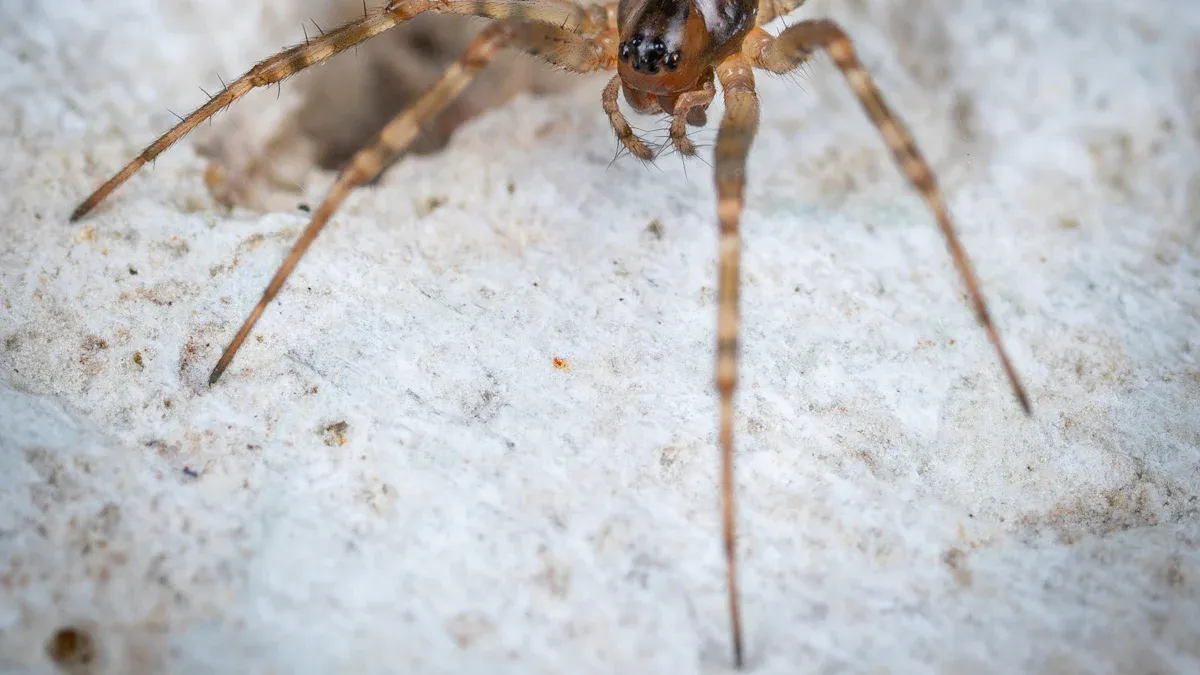
Many people feel apprehension or curiosity when they see spiders in their home. Arachnophobia, a significant fear of spiders, affects between 3.5% and 6.1% of the global population. This blog provides an easy-to-use spider identification chart. Through spider identification, individuals gain peace of mind. They can understand which common house spiders pose no significant danger to humans or pets.
Key Takeaways
Learning about spiders helps you know which ones are harmless. Most spiders in your home are not dangerous.
Identifying spiders reduces fear. Knowledge helps you react calmly when you see a spider.
Dangerous spiders like the Black Widow and Brown Recluse have special markings. Look for a red hourglass or a violin shape.
You can safely remove most spiders from your home. Use a cup and paper to take them outside.
Spiders help control pests like flies and mosquitoes. Many spiders are good to have around.
Why Spider Identification is Important

Know Your House Spiders
Understanding the spiders living in your environment offers significant advantages. It allows individuals to differentiate between species. This knowledge helps manage expectations and reactions when encountering these creatures. Knowing the specific types of spiders helps people feel more in control.
Harmless vs. Harmful Spiders
Distinguishing between harmless and harmful spiders is crucial for peace of mind. Most spiders encountered indoors pose no threat to humans. However, a few species are venomous and require caution. For example, the Black Widow spider has a shiny black body with a distinctive red hourglass marking on its abdomen. Its venom is toxic to humans. The Brown Recluse spider, another venomous species, often has a violin-shaped marking on its back.
Here is a comparison of key features:
Feature | Harmless Spiders (e.g., House, Cellar, Jumping, Wolf) | Harmful Spiders (Black Widow, Brown Recluse) |
|---|---|---|
Appearance | Varied: golden brown/tan, long/thin legs, hairy | Shiny black with red hourglass, tan/brown with violin-shaped marking |
Bite Severity | Minimal venom, not dangerous, mild reaction | Potentially fatal, necrotic venom, severe pain |
Key Markings | Mottled/speckled, two enlarged eyes, chevron | Red hourglass on abdomen, violin-shaped marking on abdomen |
Many common house spiders, like Cellar spiders, have long, thin legs and pale bodies. They are harmless to humans. Wolf spiders are larger and hairy. They pose no danger unless provoked. Identifying these differences helps people understand which spiders are truly dangerous. This knowledge reduces unnecessary alarm about venomous spiders.
Reducing Fear Through Knowledge
Knowledge about spider species helps reduce fear and anxiety. Fearful individuals often overestimate spider sizes. They experience high unpleasantness. Experts, however, accurately perceive spider sizes. They show low unpleasantness. This suggests expertise can lessen the emotional impact and perceptual biases linked to spider fear. Learning about the spiders in your home can transform apprehension into understanding. It empowers individuals to react appropriately to these small creatures.
Your Spider Identification Chart: 12 Common Species
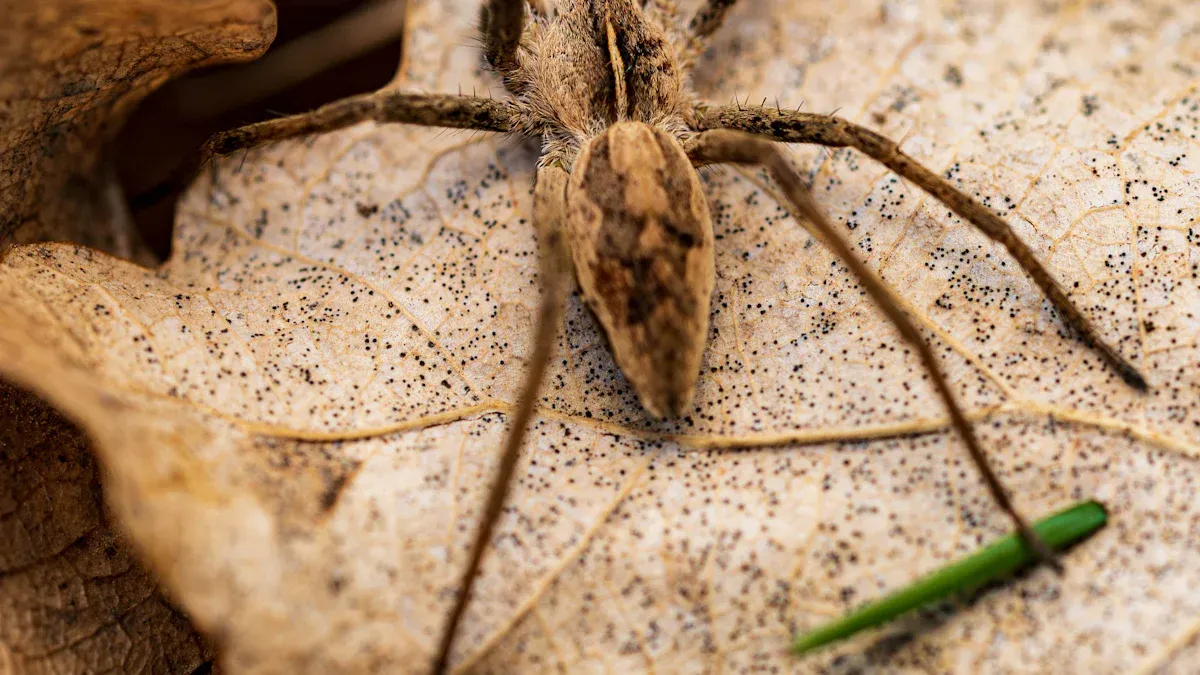
This spider identification chart helps you recognize various types of spiders you might encounter. Knowing these common species provides valuable insight into their behavior and potential risks. This guide covers many types of spiders found in homes.
American House Spider
The American House Spider, Parasteatoda tepidariorum, is a very common house spider. These spiders typically inhabit the corners and nooks of homes. They also live in attics, garages, and garden sheds. They prefer areas with good airflow, such as near windows or pipes.
Key Identification Features:
Size: Females measure 3/16 to 5/16 inches. Males are smaller, 1/8 to 3/16 inches.
Color: They are generally dull brown. Males have yellow legs, and females have orange legs.
Body Patterns: Their bodies feature patterns with various shades for camouflage.
Abdomen: Females have a bulbous abdomen. Males have an elongated abdomen.
Legs: They have long, skinny legs with comb-like hairs on their ankles.
Behavior: They spin tangled, messy webs. They wait for prey to get caught. They are not aggressive. They often feign death if cornered.
Danger Level/Bite Information: American House Spiders are generally harmless. They only bite in self-defense or when provoked. Their venom is neurotoxic but not considered dangerous to humans. Bites can cause pain lasting up to several days. Swelling, itching, and redness may also occur.
Cellar Spider
Cellar spiders belong to the family Pholcidae. Scientific names include Pholcus spp. and Crossopriza lyoni. They are also known as “daddy long-legs” due to their appearance.
Key Identification Features:
Legs: They have elongated and slender legs. These long, delicate legs account for most of their body length. This gives them a spindly appearance.
Body Size: Their body measures around 1/4 to 3/8 of an inch in length. It has an oval shape. Their color is typically pale yellowish or light brown.
Eyes: They have eight eyes arranged in two horizontal rows. This provides a wider field of view.
Webs: They build loose, tangled webs. These webs are often found in undisturbed corners of basements, crawl spaces, and other dark, damp areas.
Typical Habitat: They prefer dark, cool, and damp environments. Basements and cellars are common places. They can live indoors year-round.
Behavior: When alarmed, they rapidly vibrate or bounce in their webs. This creates a blur. It makes them practically invisible to predators. They are known as “vibrating spiders.” They construct non-adhesive, unorganized, messy-looking cobwebs. These webs are typically in corners or crevices. They often form large communities. They cohabit in shared web spaces. They sometimes work together to maintain webs and share food. They eat various small arthropods. This includes mosquitoes, flies, other insects, and even other spiders. They use mild venom to subdue prey. They can travel to other webs. They mimic trapped insects to lure prey. They will leave their webs to pursue prey.
Danger Level/Bite Information: Cellar spiders are harmless to humans. They are beneficial. They prey on other household pests like mosquitoes, flies, and ants. Their venom is primarily for subduing insect prey. Bites are rare and generally not harmful to humans. They result in only mild symptoms.
Wolf Spider
Wolf spiders are robust and agile arachnids. They do not build webs to catch prey.
Key Identification Features:
Size: They range from 1/2 inch to 2 inches long.
Appearance: They are hairy. Their color ranges from brown to gray. They have various markings or lines.
Eyesight: They have excellent eyesight. They have two large forward-facing eyes. Their distinctive eye pattern is “4-2-2.” This means a front row of four tiny eyes, a middle row of two large eyes, and an upper row of two medium eyes.
Eye Shine: Their large middle eyes have a reflective layer. This causes a characteristic green eye-shine when illuminated at night.
Typical Habitat: Wolf spiders live in many places. These include dry inland shrublands and wet coastal forests. They also live in alpine meadows and suburban gardens. You can find them in stream-side gravel beds and montane herb-fields. They hide in the soil, under boards, stones, and firewood. They also hide under siding and in similar protected areas. Some prefer moist habitats or places near water.
Behavior: They are cursorial predators. They actively hunt prey. They stalk or ambush insects. They use excellent vision and vibration-sensing. They can sprint at 0.4-1.1 meters per second. This is roughly 1 mile per hour. They cover over 20 body lengths per second.
Danger Level/Bite Information: Wolf spiders are generally not aggressive towards humans. They may bite if threatened. Their venomous bites are typically not dangerous. They cause mild symptoms. These include redness, swelling, and localized pain. This is similar to a bee sting. Allergic reactions are rare. Sensitive individuals like children, the elderly, or those with compromised immune systems may experience negative reactions.
Jumping Spider
The scientific name for the Jumping Spider is Salticidae. These spiders are known for their excellent vision and impressive jumping abilities.
Key Identification Features:
Size: They are small, typically under half an inch long.
Eyes: They have eight eyes. The two largest are positioned at the front.
Body: They have a hairy body and short legs. Their body is compact and stout. It appears more robust than web-building spiders.
Coloration: Their color can be black, brown, tan, or gray. Some have colorful markings. Some species have bright or iridescent colors. These include metallic greens, blues, and oranges.
Movement: They have quick, jerky movements. They actively scan their surroundings. They often rotate or tilt their bodies to follow movement.
Typical Habitat: Jumping spiders are often found outdoors in gardens, on fences, and on walls. They also enter homes.
Behavior: Jumping spiders use their jumps for navigation. They escape danger and catch prey. They primarily use their third or fourth pair of legs, or both, for jumping. Their internal hydraulic system allows them to jump without large muscular legs. They can jump varying distances. Some species reach 38 times their body length. They are carnivorous. They hunt and feed on small insects. Some species also consume pollen and nectar. Before jumping, they tether a silk dragline. This helps with braking, stabilization, and climbing back if a jump fails.
Danger Level/Bite Information: Jumping spiders pose no significant threat to humans. They are not dangerous to humans or pets. They generally do not bite unless threatened or in danger of being squashed. Their venom is mild. Bites cause only temporary irritation. This is similar to a mosquito bite. They are beneficial in pest control. They reduce insect populations.
Sac Spider
The Sac Spider, scientifically known as Cheiracanthium inclusum, is a nocturnal hunter.
Key Identification Features:
Size: They have a small body, typically 1/4 to 1/2 inch. They have long legs.
Color: Their color ranges from pale yellow to light green or tan. They often have a darker stripe on the abdomen.
Web: They do not build webs for hunting. They construct small silk sacs in corners, crevices, or under furniture. These are for resting or egg-laying.
Behavior: They are nocturnal hunters. They can bite if provoked or trapped.
Typical Habitat: Sac spiders construct silk tube-like sacs. These are beneath ground debris and within man-made structures. They hide there during the day. They can also be found rolled up in leaves or other protective tight spaces. This species inhabits diverse environments. These include trees, forest floors, fruit orchards, and agricultural areas. They are often inadvertently brought indoors. This happens via agricultural products like grapes or fruit. They may seek shelter in warm homes during colder weather. They are adept climbers. They can climb even on slick surfaces.
Behavior: They are nocturnal. They build silk sacs for shelter.
Danger Level/Bite Information: Sac spiders are considered mildly venomous. Bites may result in localized redness and itching.
Common House Spider
The Common House Spider is the same species as the American House Spider, Parasteatoda tepidariorum. Please refer to the “American House Spider” section for detailed identification features, habitat, behavior, and danger level. These spiders are synanthropic. They build tangled webs in or near human dwellings. They often choose secluded areas. They prey on a wide variety of smaller invertebrates. These are often considered pests in homes. This makes them beneficial. They are not aggressive towards humans or pets. Bites are rare. They usually feel like a pinprick due to small fangs.
Orb Weaver Spider
Orb Weaver Spiders belong to the scientific family Araneidae. They are known for their intricate, circular webs.
Key Identification Features:
Abdomens and Legs: They have plump, round abdomens and long legs.
Color and Patterns: They display diverse color patterns. These range from vibrant yellows, reds, or greens to muted browns or grays. They have intricate designs.
Size: Their size varies significantly by species. It ranges from less than 1 centimeter to over 3 centimeters in length.
Webs: Their most distinctive feature is the circular, wheel-shaped web. These webs are often symmetrical and carefully engineered.
Spinnerets: They typically possess three pairs of spinnerets. These are specialized organs at the rear of their abdomen. They use them for silk production.
Typical Habitat: Orb Weaver Spiders can be found in many habitats. These include gardens, grasslands, and cities. They are often seen near nightlights, fences, and tree branches. They also live in weeds and tall grass.
Behavior: They typically rest in the middle of their webs. They also hide nearby during the day. They wait for prey vibrations. When disturbed, they tend to drop from their webs or retreat. They are not aggressive.
Danger Level/Bite Information: Orb weavers possess venom. It is primarily for subduing insect prey. It is not considered medically significant to humans. Bites are rare. They usually occur when the spider is accidentally pressed against the skin. Effects are mild. They are similar to a bee sting. They cause slight redness or irritation. They are not dangerous to people or pets. They are generally docile and non-aggressive. They prefer to retreat or drop from their web when threatened. They do not bite. Their large webs can be a nuisance. They block pathways. Their size can be intimidating. They pose no real threat.
Brown Recluse Spider
The Brown Recluse Spider, Loxosceles reclusa, is a spider of medical concern. This recluse spider is known for its distinctive marking.
Key Identification Features:
Size: They typically measure 1/4 to 3/4 inch in body size. This excludes their legs.
Color: Their color ranges from light tan to dark brown.
Distinguishing Mark: They feature a violin-shaped marking on their back. It starts at the head and points towards the abdomen. This earns them nicknames like “fiddleback” or “violin” spider. This mark can sometimes be faint or irregularly shaped.
Eye Pattern: Brown recluse spiders have a semi-circular arrangement of six eyes. These are three groups of two. This is a definitive diagnostic feature. Most other spiders have eight eyes. This feature often requires a hand lens to observe.
Typical Habitat: Brown recluse spiders are reclusive. They construct webs as trigger systems. They build silk retreats for daytime hiding. These nocturnal spiders emerge at night. They actively hunt or wait for prey near their retreats. At dawn, they seek shelter in dark places. These include clothing or shoes. Mature males roam in search of females. These behaviors often lead to contact with humans. In natural settings, they are found in cracks and crevices of rocks. They also live under loose bark of dead trees. They thrive in human-altered environments. They are found under trash cans, plywood, tarps, rubber tires, and in storage boxes. This makes them ‘house’ spiders.
Behavior: They are typically reclusive. They build webs as trigger systems and retreats. They hide during the day. They are nocturnal. They emerge at night to actively hunt prey or wait near their retreats. When alarmed, they may lower their body. They withdraw their front two legs defensively. They use their rear legs for lunging. They usually flee when threatened. They often avoid conflict with quick rotating movements or playing dead. They do not typically jump unless touched brusquely. Their avoidance movement is more of a horizontal lunge. They do not leave a silk line when running. They display autotomy as a defense mechanism. They shed a leg to prevent venom spread. They adjust their gait to compensate for the loss.
Danger Level/Bite Information: The brown recluse spider has a venomous bite. The venom contains enzymes. These can cause necrosis, or tissue death, around the wound. Initial symptoms are often mild. They include a slight stinging sensation, redness, swelling, and mild itching or discomfort. Symptoms progress within 24-36 hours. Pain intensifies. A blister may form and darken into an ulceration. This indicates necrotic tissue. Systemic reactions like fever, chills, and rash can occur.
Brown recluse bites are rare. These spiders are not aggressive. They only bite when threatened or pressed against the skin. Children and the elderly are more susceptible to severe reactions. This is due to less robust immune systems. Children’s smaller body size allows toxins to spread faster. The elderly may have exacerbated effects due to age-related skin and immunity changes. This recluse spider requires caution.
Black Widow Spider
The Black Widow Spider, Latrodectus hesperus, is a highly venomous spider. This widow spider is easily recognized.
Key Identification Features:
Female Black Widow:
Body: Deep, glossy, jet-black.
Size: Adult body is about half an inch long. It is 1.5 inches with legs spread.
Abdomen: Large, spherical, bulbous. It resembles a perfect black globe.
Hourglass: Bright red or reddish-orange marking on the underside of the abdomen. It can be complete or broken into two triangles or spots.
Male Black Widow:
Size: Tiny, often 1/4 the size of the female.
Color: Typically tan or brown, not black.
Markings: Complex pattern of red, orange, and white stripes and spots. These are primarily on its back.
Juvenile Black Widows: They often resemble males. They have orange, white, and brown markings. They gradually become blacker with each molt.
Typical Habitat: Black widow spiders inhabit warmer regions of the United States. This includes all four deserts of the American southwest. They live under ledges, rocks, plants, and debris. They typically build webs close to the ground. They can also be found in trash cans, trash piles, and under or around houses. During colder weather, they may seek shelter inside homes. Their habitat regions include temperate and terrestrial biomes. These are specifically desert or dune. They are also found in urban, suburban, and agricultural areas. Other widow spiders, like the brown widow spider, also prefer similar habitats.
Behavior: Black widow spiders are shy, sedentary, and not aggressive. They only bite defensively. This happens when they are trapped or pressed against skin.
Danger Level/Bite Information: The black widow spider’s bite is a serious medical emergency. Its potent neurotoxin, latrotoxin, is 15 times stronger than rattlesnake venom by weight. However, the amount injected is minuscule. The venom attacks the nervous system. It causes uncontrollable muscle contractions, known as latrodectism. Fatalities are extremely rare in modern times. This is especially true for healthy adults. The bite causes agonizing, body-wide muscle spasms. It also causes severe pain, abdominal rigidity, and other symptoms. These include sweating, nausea, and high blood pressure. The primary danger is intense pain and discomfort, not death.
Those most at risk are the very young, very old, or individuals with pre-existing health conditions. While male black widow spiders rarely bite, females may bite in defense. This is particularly true after laying eggs. Pain is usually almost immediate. It reaches its maximum in 1-3 hours. It can continue for one to three days. Fatalities from a black widow spider bite are unlikely. This is provided proper medical treatment is sought in a timely manner.
Funnel Weaver Spider
Funnel Weaver Spiders belong to the family Agelenidae. They are named for their funnel-shaped webs.
Key Identification Features:
Webs: They construct a flat, non-sticky sheet web. It has a funnel-shaped retreat.
Speed: They are known for being very fast runners.
Barn Funnel Weaver Spider:
Size: Females are 7.5 to 11.5 mm long. Males are 6 to 9 mm long.
Cephalothorax: Red-brown with pale-yellow hairs. It has two pale-gray longitudinal lines.
Abdomen: Pinkish to pale flesh color with gray to black patches.
Legs: Spiny with very pale gray annulations at the distal end of the femurs.
Typical Habitat: They build their webs in undisturbed areas. These include basements, corners, and dense vegetation.
Behavior: The spider waits in the funnel. When an insect lands on the web, it quickly rushes out. It bites and subdues the prey with fast-acting venom. The prey is then dragged back into the funnel for safety while eating. Funnel weavers are typically nocturnal. They possess good vision. They are photosensitive. They retreat quickly when perceiving threats.
Danger Level/Bite Information: Barn Funnel Weaver Spiders are extremely fast and shy. There are no documented cases of bites. Assumed symptoms would not exceed those of grass spiders. These include pain, swelling, redness, itching, and duration of symptoms. Some Funnel Web Spiders, like the Sydney funnel web, are considered among the most dangerous spiders globally. They possess powerful fangs. These can penetrate soft-soled shoes. Male venom is more toxic than female venom. Bites from certain species can be deadly. They potentially cause death in 15 minutes without treatment. However, these are not the common house spiders found in North America.
Ground Spider
The scientific name for the Ground Spider is Gnaphosidae. These spiders are nocturnal hunters.
Key Identification Features:
Appearance: They are typically dark-colored. They have a somewhat flattened body.
Eyes: They have eight eyes. These are arranged in two rows.
Typical Habitat: They spend their days in silken retreats. These are often found under various materials on the ground or floors. They hide during the day under materials on the ground or floors. They often construct a silk tube.
Behavior: They hunt at night. They do not build webs for catching prey.
Danger Level/Bite Information: Ground spiders are generally harmless to humans. Their bites are rare and usually cause only mild irritation.
Hobo Spider
The scientific name for the Hobo Spider is Eratigena agrestis. It was formerly known as Tegenaria agrestis.
Key Identification Features:
Color: Light to medium brown color. They often have a dark stripe down the center. They have light brown legs.
Size: Females are 1/2 to 2/3 inches. Males are 1/4 to 1/3 inches.
Markings: A distinct zigzag (herringbone) pattern on the top side of the abdomen.
Legs: They have evenly colored, fairly smooth legs. Rings on legs indicate it is not a hobo spider.
Eyes: They have 8 eyes in 2 rows.
Males: Males have two large palps between the two front legs. These resemble boxing gloves. They are often mistaken for venom sacs. They are male genitalia.
Typical Habitat: Hobo spiders construct funnel-shaped silk structures. They wait at the narrow end for prey insects. These insects become entangled in their webs. They prefer to stay on the ground. They build webs in low-lying, dark, and damp areas. These are typically in undisturbed areas like basements.
Behavior: Their behavior is primarily solitary. They live in isolation on their webs or in hiding. They only come together for mating. Females wait for males at their webs for this purpose. They are opportunistic hunters. They rely on flat, sheet-like webs with funnel-shaped retreats. They wait for insects to get entangled. They then immobilize them with a venomous bite. They consume them at the retreat. They exhibit distinctive jerky movements when hunting or exploring. Vibrations from prey alert the spider. It then rushes out to bite and immobilize it.
Danger Level/Bite Information: Hobo spiders rarely bite people. Their bites are almost painless. It is no longer believed that hobo spider bites cause tissue damage or skin death, known as necrosis. According to the Centers for Disease Control and Prevention, hobo spider venom is not considered toxic to humans. While previously considered dangerous due to beliefs about necrosis, recent studies indicate their venom is less harmful than once thought.
They are not as aggressive as other spiders. They are not aggressive but will bite when threatened or pressed against skin. Their venom is not strong enough to cause life-threatening complications. Bites can cause pain and other unpleasant symptoms. These include severe headache, extreme nausea, weakness, fatigue, temporary memory loss, and vision impairment. Medical attention is recommended if a bite is suspected.
What to Do When You Find Them
Finding a spider in your home can cause alarm. However, most spiders are harmless. Knowing how to react helps maintain peace. It also ensures safety for both you and the spider.
Coexisting Peacefully
Many spiders are beneficial. They eat other insects. Consider leaving harmless spiders alone. They often control pests like flies and mosquitoes. Spiders usually stay in undisturbed areas. They do not bother people. You can appreciate their natural pest control. This creates a balanced indoor environment.
Safe Removal Methods
You can safely remove spiders if you prefer. Use a glass or cup. Place it over the spider. Slide a piece of paper or cardboard under the opening. This traps the spider inside. Then, carry the spider outside. Release it far from your home. This method prevents harm to the spider. It also keeps you safe from potential bites. 🕷️
When to Call for Help
Sometimes, you need professional help. Call an expert if you suspect a dangerous spider. Black Widows or Brown Recluses require caution. Contact pest control for large infestations. They can identify the species. They also offer safe removal solutions. Seek medical attention for severe bite reactions. This includes intense pain, swelling, or systemic symptoms.
Most house spiders are harmless and beneficial. They help control other insect populations. Readers can use this spider identification chart to understand common species. This knowledge reduces fear. People can coexist peacefully with these often misunderstood creatures. They play a vital role in our ecosystem.