


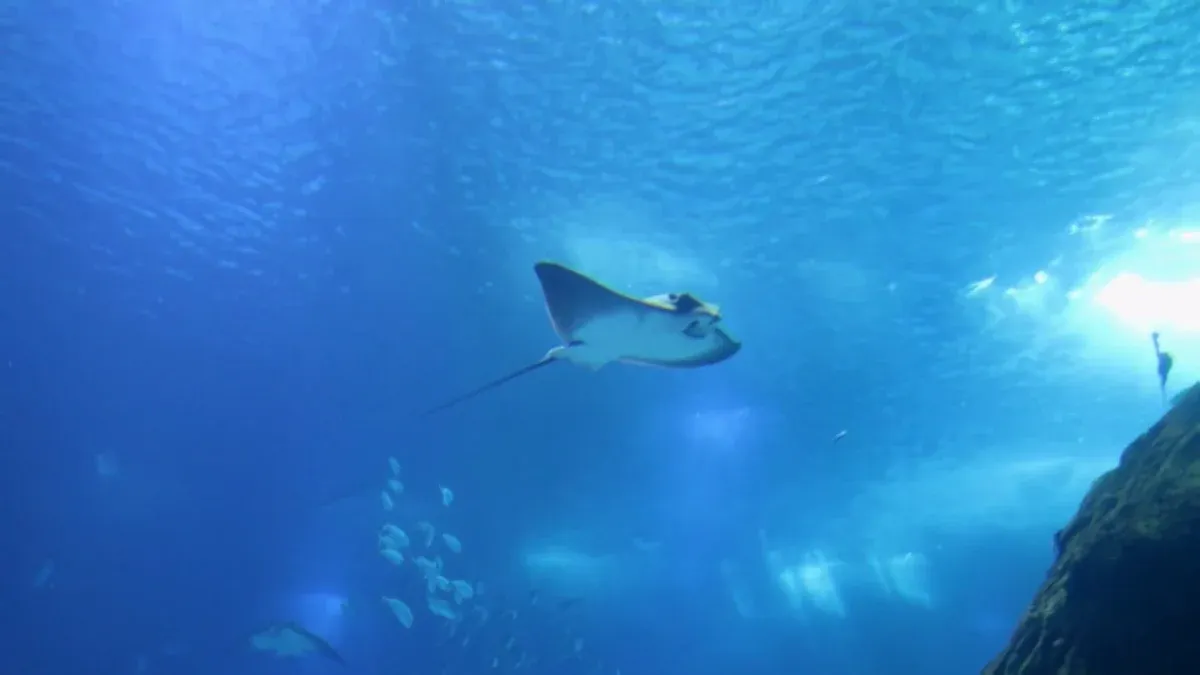
Carcharocles Megalodon, the largest shark to ever roam the oceans, fascinates many with its immense size and predatory prowess. Fossil evidence shows that this giant shark had a cosmopolitan distribution, thriving in temperate and subtropical waters. You can find megalodon remains from the northernmost regions of Spitsbergen in the Arctic Circle to the southernmost areas around Cape Foulwind, New Zealand. This remarkable range highlights the adaptability of this powerful predator in various marine environments.
Key Takeaways
Carcharocles megalodon thrived in warm, shallow seas during the Miocene and Pliocene epochs, existing for about 14 million years.
Fossilized teeth provide crucial insights into megalodon’s diet and hunting strategies, showing adaptations over time to catch large marine mammals.
Megalodon played a vital role as an apex predator, influencing marine ecosystems and the population dynamics of its prey.
Environmental changes, including climate shifts and competition from other predators, contributed to the extinction of megalodon around 2.6 million years ago.
Scientists use various dating methods, such as radiometric dating and stratigraphic analysis, to estimate the age of megalodon fossils and understand its evolutionary history.
Carcharocles Megalodon Age
Time Periods of Existence
Carcharocles megalodon lived during two significant geological epochs: the Miocene and the Pliocene. These periods spanned from approximately 23 million years ago to about 2.6 million years ago. The Miocene epoch lasted from 23 to 5.3 million years ago, while the Pliocene epoch extended from 5.3 to 2.6 million years ago.
Epoch | Date Range (Million Years Ago) |
|---|---|
Miocene | 23 – 5.3 |
Pliocene | 5.3 – 2.6 |
During these epochs, megalodon thrived in warm, shallow seas. Fossil records indicate that this massive predator dominated marine environments for around 14 million years. You can find evidence of megalodon in deposits from both the late Miocene and Pliocene epochs. The distinct adaptations in the size and shape of its teeth reflect changes in prey and hunting strategies over time.
Fossil Evidence
Fossil evidence plays a crucial role in determining the age of Carcharocles megalodon. The most significant fossils are its teeth, which provide insights into its evolutionary history and ecological role. You will notice that older specimens from the early Miocene are more robust and triangular. In contrast, those from the late Miocene and Pliocene are elongated and slender. This evolution indicates shifts in prey preferences and hunting strategies.
Fossilized remains of baleen whales with deep gashes attributed to megalodon’s teeth further support the idea that this shark actively hunted large marine mammals during its existence. Additionally, the widespread distribution of megalodon teeth across all continents shows its ability to adapt to various marine environments.
To determine the age of megalodon fossils, scientists use several dating methods. These include isotopic analysis and radiometric dating, which help refine the stratigraphic context of the fossils. The Optimal Linear Estimation (OLE) model also aids in inferring extinction dates based on the temporal distribution of the most recent sightings.
Megalodon Evolution

Ancestral Origins
The evolutionary history of Carcharocles megalodon traces back to several ancestral species. The genus Carcharocles includes a lineage that leads directly to megalodon. The direct ancestor is Otodus obliquus, which lived during the Paleocene and Eocene epochs. Here’s a simplified sequence of its evolutionary path:
Otodus obliquus
Carcharocles aksuaticus
Carcharocles auriculatus
Carcharocles angustidens
Carcharocles chubutensis
Carcharocles megalodon
Carcharocles chubutensis serves as a crucial link in this lineage. It shows significant adaptations that paved the way for the emergence of megalodon.
Paleontologists often debate the classification of megalodon. Some place it within the family Lamnidae due to its shared ancestry with modern Great White Sharks. Others argue that similarities arise from convergent evolution, suggesting megalodon belongs to the Otodus lineage. This debate highlights the complexity of megalodon evolution.
Key Developments
Several key evolutionary adaptations occurred in the lineage leading to Carcharocles megalodon. These adaptations include:
Size Increase: Over time, the body size of these ancient sharks increased significantly. This change allowed megalodon to become the apex predator of its time.
Tooth Adaptations: The teeth of Carcharocles evolved to become larger and more serrated. This adaptation improved its ability to grasp and tear through prey.
Loss of Lateral Cusps: Carcharocles chubutensis, the immediate ancestor of megalodon, exhibited a loss of lateral cusps on its teeth. This change indicates a shift in feeding strategies.
The lineage of Carcharocles is considered a case of chronospecies, showing gradual evolutionary changes over millions of years. The earliest known fossils of this lineage date back to the late Pliocene, with Otodus obliquus marking the beginning of this evolutionary journey. During the middle Eocene, Otodus obliquus evolved into Carcharocles auriculatus, which displayed reduced side cusps and slight serration.
The late Oligocene saw the emergence of Carcharocles angustidens, characterized by a significant increase in body size and further tooth adaptations. Eventually, Carcharodon megalodon evolved from Carcharocles angustidens in the early Miocene, marked by an increase in size and further development of serrated teeth.
Paleontologists use comparative analysis with other extinct shark species to refine the evolutionary timeline of Carcharocles megalodon. This approach helps them understand the ecological roles and adaptations of these ancient sharks.
Megalodon Shark Dominance
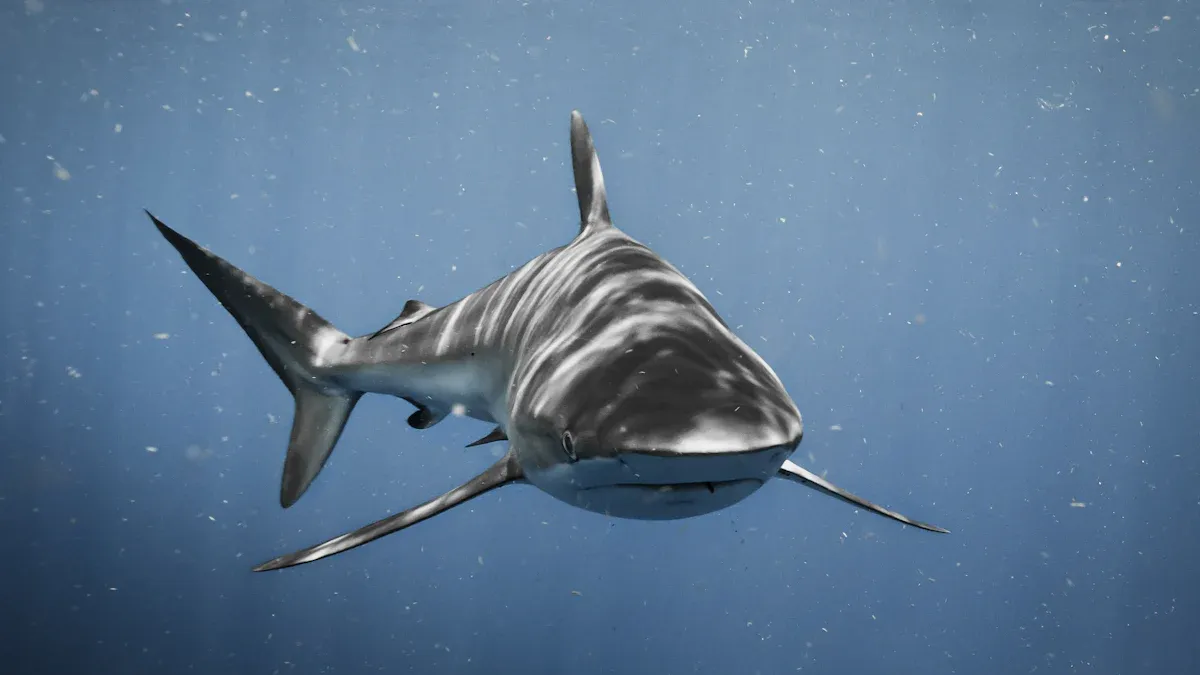
Ecological Role
Carcharocles megalodon played a vital role in prehistoric marine ecosystems. As an apex predator, you can see how it influenced the population dynamics of large marine mammals. The presence of megalodon helped shape the structure of marine communities. It specifically targeted large prey, such as whales and seals. Fossil evidence shows bite marks on ancient whale bones, confirming that megalodon actively hunted these massive creatures.
Here are some key points about the ecological role of megalodon:
The extinction of megalodon linked to climate changes affected the availability of its prey.
Its predation on large marine mammals demonstrated its importance in maintaining ecological balance.
The decline of megalodon may have led to shifts in marine biodiversity, as other species filled the ecological void.
Competition
Megalodon faced competition from other large marine predators. You might find it interesting that several formidable species coexisted with this fearsome predator. For instance, large predatory whales and great white sharks likely competed for similar prey.
Here’s a brief overview of the competition megalodon encountered:
The extinction of megalodon around 2.6 million years ago coincided with a decline in filter-feeding whales.
Changes in climate and ecological shifts played a role in the decline of megalodon populations.
Juvenile megalodons may have been vulnerable to predation by other large sharks, such as great hammerhead sharks.
The emergence of new competitors likely influenced megalodon’s behavior and distribution. As large predatory whales and great white sharks appeared, megalodon had to adapt to survive. The decline in its geographical range suggests that competition significantly impacted its habitat preferences.
Extinction of Megalodon
Contributing Factors
The extinction of Carcharocles megalodon resulted from several significant factors. Major environmental changes played a crucial role. You should note that climate shifts, such as the cooling of mid-latitude temperatures, greatly impacted megalodon’s habitat. The rise of the Isthmus of Panama altered ocean currents, preventing warm water from reaching polar regions. This change reduced suitable habitats for megalodon, leading to a decline in food availability.
Global temperatures decreased from the warmer Miocene to the cooler Pliocene.
Fossil records indicate a significant reduction in megalodon presence in colder waters.
The decline in mid-sized baleen whales, primary prey for megalodon, further contributed to its extinction.
Biological challenges also affected megalodon. As a large predator, it required substantial food resources. The loss of upwelling in the western North Atlantic may have left megalodon unable to sustain itself, leading to starvation. Additionally, the reduction in nursery areas due to lowered sea levels increased the vulnerability of its young to predation.
Extinction Timeline
Scientific estimates suggest that Carcharocles megalodon went extinct around 2.6 million years ago. Researchers from the University of Zurich and the University of Florida analyzed fossil records to arrive at this conclusion. However, some analyses propose an earlier extinction around 3.6 million years ago.
Fossil occurrences indicate that megalodon likely went extinct by 2.6 million years ago.
The Optimal Linear Estimation (OLE) model applied to fossil data suggests a modal extinction date of 3.6 million years ago.
Well-dated fossil records from California and Baja California provided crucial data for estimating extinction dates.
The extinction rates of marine megafauna during the Pliocene suggest a significant decline in large marine species, which may have included megalodon. As you can see, the combination of environmental changes and biological challenges ultimately led to the demise of this magnificent shark.
Megalodon Teeth and Scientific Methods
Importance of Teeth
Megalodon teeth are crucial for understanding this giant shark’s biology and ecology. You can learn a lot from these fossils. Here are some key insights they provide:
Diet and Hunting Strategies: Megalodon teeth reveal what this predator ate and how it hunted. The sharp serrations on the teeth show adaptations for catching large marine mammals. This indicates megalodon was a top predator in its ecosystem.
Fossil Record: The fossil record of megalodon teeth is extensive. These sharks continuously shed their teeth, allowing researchers to gather a wealth of information. This abundance helps scientists study megalodon’s biology over millions of years.
Chemical Analysis: Scientists can analyze the chemical composition of megalodon teeth. This analysis provides data on ancient ocean conditions, such as water temperature and salinity. Understanding these factors is essential for reconstructing megalodon’s habitat.
Evolutionary Changes: The evolution of megalodon teeth over time reflects changes in prey availability and environmental conditions. By studying these adaptations, you can see how megalodon responded to its surroundings.
Carcharocles megalodon teeth are notably larger than those of other prehistoric sharks. They can exceed 7 inches in length, while modern great white shark teeth measure only 2 to 3 inches. The wide bases and finely serrated edges of megalodon teeth were designed for slicing through thick whale blubber and bone.
Age Estimation Techniques
Scientists use various methods to estimate the age of megalodon teeth. These techniques help researchers understand when megalodon lived and how it evolved over time. Some common methods include:
Stratigraphic Analysis: This method involves studying the layers of rock where megalodon teeth are found. By examining the age of these layers, scientists can estimate when megalodon existed.
Radiometric Dating: This technique measures the decay of radioactive isotopes in the surrounding sediment. It provides precise age estimates for the fossils.
Isotopic Analysis: Researchers analyze the isotopic composition of megalodon teeth. This analysis can reveal information about the environmental conditions during the shark’s life.
These scientific methods allow you to piece together the timeline of megalodon’s existence and understand its place in the evolutionary history of sharks.
Carcharocles megalodon remains a captivating subject in paleontology. Its evolutionary journey showcases remarkable adaptations that allowed it to thrive as an apex predator. Here are some key takeaways from recent studies:
Ancestor Species | Tooth Characteristics | Time Period (Million Years Ago) | Evolutionary Change Description |
|---|---|---|---|
Otodus obliquus | Three-pronged teeth for grasping and tearing fast-moving fishes | 23-20 | Earliest ancestor with teeth suited for different prey types. |
Carcharocles auriculatus | Serrated teeth with lateral cusplets | 20-14.5 | Transition to serrated teeth for better predation on larger marine mammals. |
Carcharocles megalodon | Flattened, bladelike teeth with uniform serrations and no cusplets | 14.5-3.6 | Final evolution into the ultimate cutting tool, ideal for preying on large marine mammals like whales and dolphins. |
Understanding megalodon’s extinction helps you appreciate the interconnectedness of ancient marine ecosystems. The decline of this giant shark illustrates how environmental changes can impact predator-prey relationships. Ongoing research continues to fill gaps in our knowledge, revealing the complexities of megalodon’s life and its role in prehistoric oceans.
FAQ
What is Carcharocles megalodon?
Carcharocles megalodon is an extinct species of shark that lived approximately 23 to 2.6 million years ago. It is known for being the largest shark ever, reaching lengths of up to 60 feet.
How did megalodon hunt its prey?
Megalodon used its powerful jaws and serrated teeth to catch large marine mammals. It likely ambushed its prey, targeting whales and seals, which were abundant in its habitat.
Why did megalodon go extinct?
Megalodon went extinct due to climate changes and a decline in its prey. The cooling oceans and the rise of new competitors contributed to its inability to survive.
Where have megalodon fossils been found?
Fossils of megalodon have been discovered on every continent, including North America, Europe, and Australia. These findings highlight its wide distribution in ancient oceans.
How can scientists estimate the age of megalodon fossils?
Scientists estimate the age of megalodon fossils using methods like stratigraphic analysis and radiometric dating. These techniques help determine when megalodon lived and how it evolved over time.
