


You’ll want low‑dust, chemical‑free substrates that balance burrowing, humidity control, and easy cleaning. Top picks include coconut husk chips (BabiChip or Riare bricks) for moisture retention and digging, Riare’s 10 lb chip brick for large enclosures, SuperMoss Galápagos fir bark for tropical setups, and Aspen Digs shavings for safe, soft digging without resins. Match depth and mixes to your species and upkeep routine — scroll on to see specific pros, packing sizes, and care tips.
| BabiChip Coconut Husk Substrate for Reptile Terrariums |

| Best Moisture Control | Material Type: Coconut husk chips (coco-husk) | Intended Use: Terrarium/terrarium substrate for reptiles & amphibians | Dust-Reduced / Processed Clean: Sorted/refined to remove dust and debris | VIEW LATEST PRICE | Read Our Analysis |
| SuperMoss Galápagos (05024) Jurassic Fir Bark Bedding 8-Quart Natural |
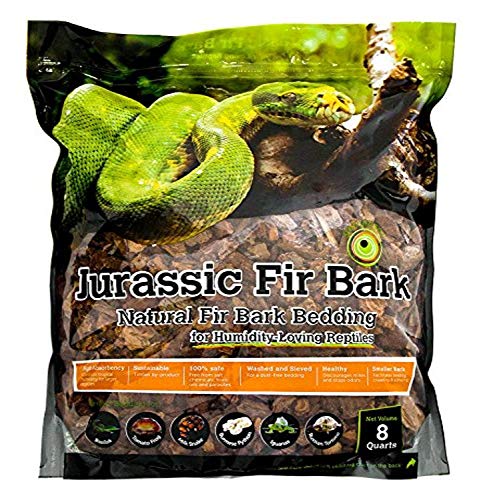
| Best Tropical Humidity | Material Type: Fir bark | Intended Use: Terrarium/substrate bedding for reptiles | Dust-Reduced / Processed Clean: Washed and sieved for dust reduction | VIEW LATEST PRICE | Read Our Analysis |
| Galápagos (05064) Aspen Digs Shavings Bedding 8-Quart Natural |

| Best for Diggers | Material Type: Aspen wood shavings | Intended Use: Bedding/substrate for snakes, reptiles & small animals | Dust-Reduced / Processed Clean: Processed to remove dust and debris (low-dust) | VIEW LATEST PRICE | Read Our Analysis |
| Riare Coconut Husk Chips Substrate for Reptiles |

| Compact & Expandable | Material Type: Coconut husk chips (coco-husk) | Intended Use: Substrate for reptiles & amphibians (terrarium use) | Dust-Reduced / Processed Clean: Compressed; chunky chips without dust or sharp impurities | VIEW LATEST PRICE | Read Our Analysis |
| Riare Coconut Chip Reptile Substrate (10 lb 72 qt) |

| Best Coverage | Material Type: Coconut husk (compressed brick → chips when expanded) | Intended Use: Reptile/amphibian terrarium substrate | Dust-Reduced / Processed Clean: Processed/clean (compressed brick intended to expand into clean substrate) | VIEW LATEST PRICE | Read Our Analysis |
More Details on Our Top Picks
BabiChip Coconut Husk Substrate for Reptile Terrariums
Provided that you keep species that need flexible humidity control—like tortoises, geckos, or ball pythons—BabiChip’s small coconut husk chips are a smart choice: you can use them dry for arid setups or moisten them to hold excellent humidity and create a burrowable, natural-feeling substrate that’s odor-absorbing and ready-to-use straight from the bag. You’ll find 6 quarts of cleaned, small-sized coco husk chips sorted in the US to remove dust. They’re 100% organic, sustainably sourced, and work alone or mixed in bioactive builds. Use dry for desert species, dampen for tropical species, and enjoy improved odor control.
- Material Type:Coconut husk chips (coco-husk)
- Intended Use:Terrarium/terrarium substrate for reptiles & amphibians
- Dust-Reduced / Processed Clean:Sorted/refined to remove dust and debris
- Absorbency / Odor Control:Odor-absorbing; encapsulates waste
- Biodegradable / Environmentally Friendly:100% organic coconut husk; sustainably sourced
- Supports Natural Behaviors:Loose chips allow burrowing and naturalistic texture
- Additional Feature:Ready-to-use dry
- Additional Feature:Small-sized chip grading
- Additional Feature:US-sorted and refined
SuperMoss Galápagos (05024) Jurassic Fir Bark Bedding 8-Quart Natural
Choose SuperMoss Galápagos Jurassic Fir Bark should you want a natural, dust-free substrate that’s safe for all reptile life stages—its washed, sieved fir bark comes from sustainable timber via-products and’s free of salts, chemicals, oils, and parasites. You’ll appreciate its high absorbency and humidity control, which suits larger tortoises and tropical setups. It mimics materials found in wild habitats, so your pet gets a familiar footing. Being dust-free reduces respiratory risk and keeps enclosures cleaner. Use it as a primary terrarium substrate or mixed with other media for texture and moisture balance. Replace as needed to maintain hygiene and ideal humidity.
- Material Type:Fir bark
- Intended Use:Terrarium/substrate bedding for reptiles
- Dust-Reduced / Processed Clean:Washed and sieved for dust reduction
- Absorbency / Odor Control:High absorbency; controls humidity (implies odor control)
- Biodegradable / Environmentally Friendly:Sustainable timber by-product
- Supports Natural Behaviors:Fir bark mimics natural ground cover for larger reptiles
- Additional Feature:Large-volume 8-quart
- Additional Feature:Washed and sieved
- Additional Feature:Safe from parasites
Galápagos (05064) Aspen Digs Shavings Bedding 8-Quart Natural
Should you need a low-dust, chemical-free substrate that encourages digging and burrowing, Galápagos Aspen Digs Shavings is a smart pick for snake and small-animal enclosures. You’ll get an 8-quart, 1.1-pound bag of 100% pure aspen wood shavings processed to remove dust and debris. Aspen lacks harmful resins, so it’s safer than pine or cedar for reptiles, rodents, and small mammals. Its fine, soft texture supports tunneling, nesting, and hiding while offering good absorbency and odor control. Lightweight and biodegradable, it simplifies spot-cleaning and full changes, fitting tanks, terrariums, and small-animal cages.
- Material Type:Aspen wood shavings
- Intended Use:Bedding/substrate for snakes, reptiles & small animals
- Dust-Reduced / Processed Clean:Processed to remove dust and debris (low-dust)
- Absorbency / Odor Control:High absorbency; odor neutralization
- Biodegradable / Environmentally Friendly:100% pure aspen; biodegradable; timber by-product
- Supports Natural Behaviors:Fine texture permits digging, tunneling, nesting
- Additional Feature:Fine digging texture
- Additional Feature:Low-dust formulation
- Additional Feature:Multi-species suitable
Riare Coconut Husk Chips Substrate for Reptiles
Should you keep tropical reptiles or burrowing species, Riare’s compressed coconut husk chips are a strong choice thanks to their chunky, dust-free texture that lets animals dig and hides waste while retaining moisture. You’ll get two compressed bricks (8.2 × 4.1 × 2.2 inches each) that expand to about 30 liters whenever hydrated, making setup simple and compact to store. The soft, natural husk allows natural behavior without sharp fragments, controls humidity, and absorbs odors to keep enclosures fresh. Mist to restore moisture, then replace or repurpose spent substrate as mulch or soil amendment to cut waste.
- Material Type:Coconut husk chips (coco-husk)
- Intended Use:Substrate for reptiles & amphibians (terrarium use)
- Dust-Reduced / Processed Clean:Compressed; chunky chips without dust or sharp impurities
- Absorbency / Odor Control:Absorbs odors; hides and breaks down excrement
- Biodegradable / Environmentally Friendly:Natural organic coco husk; reusable as garden mulch
- Supports Natural Behaviors:Soft chips allow burrowing and natural behavior
- Additional Feature:Compressed 2-pack bricks
- Additional Feature:Expands after watering
- Additional Feature:Reusable as mulch
Riare Coconut Chip Reptile Substrate (10 lb 72 qt)
Whenever you keep burrowing reptiles or amphibians that need consistent humidity, Riare’s compressed coconut chip substrate is a smart pick — a 10 lb brick expands to 72 qt of soft, odorless coconut fiber that holds moisture and lets animals dig, sleep, breed, and hatch naturally. You’ll add water, let it fluff, then squeeze out excess to achieve a loose, textured surface that encourages burrowing and retains heat and humidity. Made from biodegradable coconut husk fibers, it absorbs odors and waste,’s easy to compost, and covers large enclosures. It suits snakes, tortoises, geckos, frogs, bearded dragons, salamanders, and other burrowers.
- Material Type:Coconut husk (compressed brick → chips when expanded)
- Intended Use:Reptile/amphibian terrarium substrate
- Dust-Reduced / Processed Clean:Processed/clean (compressed brick intended to expand into clean substrate)
- Absorbency / Odor Control:Strong odor and waste absorption
- Biodegradable / Environmentally Friendly:Biodegradable, renewable coconut fiber; compostable
- Supports Natural Behaviors:Loose textured surface stimulates digging and burrowing
- Additional Feature:Large expansion volume
- Additional Feature:Heavy 10 lb brick
- Additional Feature:Strong waste absorption
Factors to Consider When Choosing Tortoise Beddings and Substrates
Upon choosing bedding, you’ll want to match moisture retention to your species’ needs and pick a particle size that prevents impaction. Consider odor control and a natural texture that lets your tortoise burrow, and make sure the material is chemical-free. These factors together keep your tortoise healthy and comfortable.
Moisture Retention Needs
Often you’ll need to match substrate moisture to your tortoise’s natural habitat: desert species prefer fast-draining, low-moisture mixes to prevent shell rot, while tropical and temperate species benefit from humidity-retentive substrates that aid shedding and digestion. Choose materials with appropriate water-holding capacity—peat, coconut coir, or blended topsoils keep local microclimates humid for days; coarse sand or aspen dries in hours. Aim for balance: a 50/50 mix of moisture-retentive media and chunky drainage (coir plus coconut chips or bark) reduces anaerobic pockets and mold. Use a hygrometer to monitor daytime relative humidity and target species-specific ranges (roughly 60–80% for many temperate/tropical, 30–50% for deserts). Keep deeper moist bedding ventilated and away from direct heat elements.
Particle Size Safety
Matching moisture needs is only part of substrate choice — particle size directly affects your tortoise’s health and safety. Avoid fine dust and powdery particles under ~1 mm; they can irritate lungs and cause impaction whether inhaled or swallowed, so pick low-dust or well-processed materials. Stay away from very small granular substrates (under ~2 mm), since juveniles that investigate or eat substrate are especially at risk for gastrointestinal impaction. Prefer larger, loose particles in the 5–20 mm range for adults: they provide stable footing, allow natural digging, and are too big to swallow. Reject sharp, irregular particles and wood splinters to prevent cuts or mouth injuries. Should you mix substrates, make certain the smallest component remains above the safe ingestion size and monitor for accidental ingestion or respiratory signs.
Odor Control Capacity
Because bedding soaks up and traps your tortoise’s waste, odor control starts with choosing materials that absorb moisture and limit bacterial volatilization. Pick high-absorbency substrates—wood-based shavings, coconut coir, or bark—to trap urine and fecal moisture so less free liquid produces strong smells. Use organic, fibrous materials that encapsulate waste particles; they physically trap odor compounds and slow bacterial release. Keep bedding relatively dry: consistently wet substrates emit more ammonia, so monitor humidity and spot-clean damp areas immediately. Choose low-dust, contaminant-free options to reduce microbial growth on particles and avoid musty decomposition odors. Finally, recall maintenance beats material: daily spot-cleaning and scheduled full changes based on load are the single biggest factor controlling persistent odors.
Natural Burrowing Texture
Encouraging natural digging starts with choosing a substrate that’s loose and forgiving so your tortoise can excavate shallow burrows without the material compacting into hard clumps. Pick particulate textures—small chips, shredded fibers, or fine loam—with particle sizes around 1–10 mm to support tunneling; steer clear of overly fine dust that compacts and risks respiratory problems. Favor compressible, resilient materials like loose coco fiber or aspen shavings that spring back, letting your tortoise push aside substrate and maintain tunnel shape. Use substrates that hold some moisture yet stay friable when damp so burrows persist and microclimates stabilize, but never waterlog. Steer clear of sharp fragments, dusty mixes, or materials that cement when wet, since those hinder digging, injure limbs, or cause collapses.
Chemical-Free Materials
While you pick bedding for your tortoise, insist on truly chemical-free materials—100% natural or organic substrates like coconut coir, aspen, fir bark, or untreated topsoil—to avoid pesticides, fungicides, fire retardants, dyes, and fragrances that can irritate skin, damage the liver, or trigger respiratory problems. Choose substrates labeled 100% natural or organic and avoid woods with aromatic oils or resins (pine, cedar), which can cause respiratory irritation and liver stress even provided marketed as “natural.” Prefer washed, sieved, or dust‑reduced materials to lower particulate inhalation and infection risk. Avoid chemically bleached, dyed, or fragranced products—bright colors or strong scents are red flags. Whenever unsure, request manufacturer purity statements or a material safety data sheet to confirm no added chemicals, oils, or parasites.
Temperature And Insulation
Upon choosing bedding, keep in mind it does more than look right—you’re creating a thermal buffer that helps stabilize daytime highs and nighttime drops; aim for 2–4 in (5–10 cm) for small tortoises and 4–8 in (10–20 cm) for larger or burrowing species. Pick substrates with thermal mass—compacted soil mixes or coconut coir blended with soil hold heat longer than loose, airy materials and can moderate nighttime drops by several degrees. Don’t over-insulate heat sources or create hot spots; maintain a surface gradient appropriate for your species, commonly 85–95°F (29–35°C) warm side and 70–75°F (21–24°C) cool side. Bear in mind moisture lowers insulation: wetter substrates conduct heat more, so adjust humidity and always verify temps with surface and substrate probe thermometers.
Ease Of Cleaning
Because bedding choice directly affects how often you’ll scrub or replace the whole substrate, pick materials that clump or compact whenever soiled, stay low-dust, and have good absorbency—those traits let you spot-clean feces and urates quickly, reduce airborne irritants, and cut down on full-bedding changes and ammonia buildup. Choose damp organic fibers or wood shavings that compact for fast scooping; avoid fine dusty substrates that create respiratory risks and cake whenever wet. Balance particle size and depth: coarser mixes hide waste but can need hand-sifting, while finer materials sift easily but are prone to compacting. Prioritize high liquid retention and odor control to stretch replacement intervals. Finally, consider compostability—biodegradable beds let you refresh a top layer and reuse as mulch, while synthetics demand full removal and bagging.