


Choose the right substrate by matching your animal’s needs and your care style. Coco coir and ZeeDix work great for humid, burrowing species; Fluker’s loose coconut fiber is gentle for eggs and delicate invertebrates.
Soil Sunrise or Josh’s Frogs ABG are ideal for planted, bioactive tropical setups, while Zilla Jungle Mix suits frogs and rainforest geckos. Add Legigo charcoal for toxin filtration and Halatool clay pebbles or pumice for drainage; match particle size and depth to avoid compaction, impaction, and mold.
| Zilla Coconut Husk Brick Organic Reptile Bedding |

| Best for Humidity | Composition: 100% coconut fiber (coconut husk) | Intended Use / Application: Tropical terrariums, reptile bedding, egg incubation | Moisture Management: High moisture retention (maintains humidity) | VIEW LATEST PRICE | Read Our Analysis |
| Legigo 2 QT Horticultural Charcoal (Biochar) |
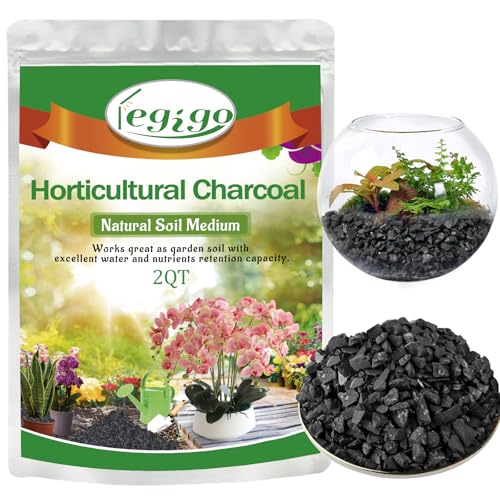
| Best for Drainage | Composition: Natural hardwood horticultural charcoal (biochar) | Intended Use / Application: Potting mixes, orchids, bonsai, terrarium bottom layer | Moisture Management: High water absorption; improves drainage and permeability | VIEW LATEST PRICE | Read Our Analysis |
| ZeeDix Coconut Coir Substrate Bricks (2 Pack) |
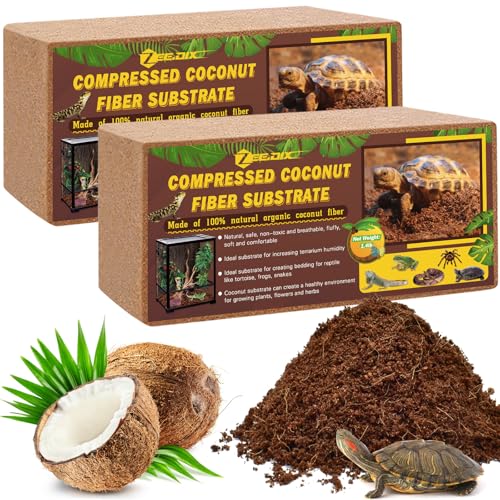
| Space-Saving Pack | Composition: 100% coconut fiber (coco coir) | Intended Use / Application: Reptile/amphibian bedding and horticulture (potting/planting) | Moisture Management: High liquid/water absorption and retention | VIEW LATEST PRICE | Read Our Analysis |
| Soil Sunrise Terrarium Potting Mix (8 Qt) |

| Best Terrarium Blend | Composition: Blend — coco coir + horticultural charcoal + pumice | Intended Use / Application: Indoor terrariums and fairy gardens (soilless terrarium mix) | Moisture Management: Increased water retention with improved drainage (balanced) | VIEW LATEST PRICE | Read Our Analysis |
| Zilla Reptile Terrarium Bedding Substrate Jungle Mix 8 Quart |
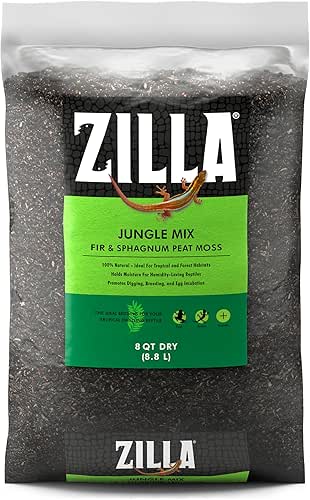
| Best Tropical Mix | Composition: Aged Douglas fir bark + sphagnum peat moss (organic blend) | Intended Use / Application: Tropical/forest reptile & amphibian habitats, breeding/incubation | Moisture Management: Highly absorbent; maintains enclosure humidity | VIEW LATEST PRICE | Read Our Analysis |
| Fluker’s Loose Coconut Fiber Bedding for Reptiles and Arachnids 5QT |

| Best for Incubation | Composition: All-natural coconut husks (coconut fiber) | Intended Use / Application: Reptiles and arachnids; tropical habitat and incubation | Moisture Management: Absorbs moisture with little decay; helps humidity control | VIEW LATEST PRICE | Read Our Analysis |
| Josh’s Frogs ABG Mix Tropical Terrarium Substrate |

| Best for Bioactive Setups | Composition: Multi-ingredient ABG mix (peat, bark, fiber, etc. per ABG recipe) | Intended Use / Application: Bioactive terrariums and tropical plants; culturing microfauna | Moisture Management: Designed to break down slowly while retaining moisture suitable for bioactive setups | VIEW LATEST PRICE | Read Our Analysis |
| Halatool Clay Pebbles Reptile Terrarium Substrate (2QT) |
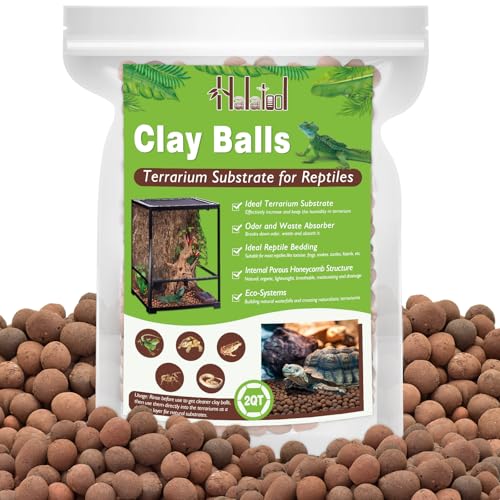
| Best Drainage Layer | Composition: 100% expanded clay (fired natural clay pellets) | Intended Use / Application: Drainage/base layer for terrariums, hydroponics, reptile tanks | Moisture Management: Porous; absorbs and slowly releases moisture; excellent drainage layer | VIEW LATEST PRICE | Read Our Analysis |
More Details on Our Top Picks
Zilla Coconut Husk Brick Organic Reptile Bedding
Provided you want a natural, eco friendly bedding that holds humidity and lets your pet dig, Zilla Coconut Husk Brick is a great choice. You’ll like that it’s 100% organic coconut fiber, so you’re using a sustainable substrate that feels safe. It soaks up moisture and helps keep tropical enclosures humid, whenever makes it good for egg incubation too. You can wet it and watch it expand up to five times, covering a 55 gallon tank base whenever prepared. Animals such as chameleons, rainforest geckos, frogs, and toads enjoy burrowing in the soft texture, which encourages natural behavior.
- Composition:100% coconut fiber (coconut husk)
- Intended Use / Application:Tropical terrariums, reptile bedding, egg incubation
- Moisture Management:High moisture retention (maintains humidity)
- Suitability for Egg/Breeding or Burrowing (Reproduction / Behavior):Suitable for egg incubation; encourages burrowing
- Reusability / Longevity / Decomposition Rate:Organic — will decompose over time (replace as needed)
- Suitable Species / Compatibility:Chameleons, rainforest geckos, frogs, toads, more tropical reptiles/amphibians
- Additional Feature:Expands up to 5×
- Additional Feature:Covers 55-gallon base
- Additional Feature:Sustainable eco-friendly material
Legigo 2 QT Horticultural Charcoal (Biochar)
In case you want a light, airy substrate that keeps roots healthy and makes mixing easy, Legigo 2 QT Horticultural Charcoal is a smart choice. You’ll love its small 3–7 mm hardwood pieces that resist compaction and mix smoothly into potting blends. The black charcoal warms soil a bit, which helps seeds sprout faster, while its high water uptake improves drainage and keeps pockets of moisture. It also adsorbs nutrients and buffers fertilizer release, so roots get steady feeding. Use it in orchids, bonsai, succulents, terrariums, or indoor pots, and pair it with perlite for extra airflow.
- Composition:Natural hardwood horticultural charcoal (biochar)
- Intended Use / Application:Potting mixes, orchids, bonsai, terrarium bottom layer
- Moisture Management:High water absorption; improves drainage and permeability
- Suitability for Egg/Breeding or Burrowing (Reproduction / Behavior):Not specified for eggs; used in soil mixes (not a primary incubation medium)
- Reusability / Longevity / Decomposition Rate:Stable charcoal — long-lasting, does not decompose quickly
- Suitable Species / Compatibility:Orchids (many genera), indoor/potted plants, bonsai, succulents, terrariums
- Additional Feature:3–7 mm particle size
- Additional Feature:Increases soil temperature
- Additional Feature:Mesh-screened uniformity
ZeeDix Coconut Coir Substrate Bricks (2 Pack)
Should you want a simple, natural bedding that soaks up moisture and keeps your pet’s home fresh, ZeeDix Coconut Coir Substrate Bricks are a solid pick. You get two compact bricks that expand upon being soaked, so storage is easy and set up is quick. The coco coir is 100% natural, breathable, biodegradable, and non toxic, which helps you feel safe about your pet’s space. It absorbs liquids and waste well, reducing odors while supporting cleaner, healthier habitats for reptiles, amphibians, and invertebrates. Wash before use for sensitive species, and mix during hydrating to speed expansion and fluff.
- Composition:100% coconut fiber (coco coir)
- Intended Use / Application:Reptile/amphibian bedding and horticulture (potting/planting)
- Moisture Management:High liquid/water absorption and retention
- Suitability for Egg/Breeding or Burrowing (Reproduction / Behavior):Recommended for animal bedding; promotes comfortable environment (used for egg-laying in some species)
- Reusability / Longevity / Decomposition Rate:Biodegradable — will break down; longevity depends on use (wash before use)
- Suitable Species / Compatibility:Tortoise, bearded dragon, leopard gecko, snake, hermit crabs, frogs, tarantula, turtles, lizards (and plants)
- Additional Feature:Low electrical conductivity
- Additional Feature:Two compact bricks
- Additional Feature:Recommend pre-wash for worms
Soil Sunrise Terrarium Potting Mix (8 Qt)
Should you want a fuss-free base that keeps tiny terrarium plants healthy, Soil Sunrise Terrarium Potting Mix (8 Qt) is often the best choice for beginners and hobbyists alike. You’ll get a 2 gallon bag that covers about 4.5 square feet at 4 inches deep, so you won’t run out quickly. It blends coco coir, horticultural charcoal, and pumice to balance drainage and water holding. The charcoal filters and helps decompose toxins, while pumice adds air spaces. Because it’s custom made for indoor terrariums and fairy gardens, you’ll find planting easier and less stressful.
- Composition:Blend — coco coir + horticultural charcoal + pumice
- Intended Use / Application:Indoor terrariums and fairy gardens (soilless terrarium mix)
- Moisture Management:Increased water retention with improved drainage (balanced)
- Suitability for Egg/Breeding or Burrowing (Reproduction / Behavior):For terrarium plants/gardens (not specified for eggs; supports planted vivaria)
- Reusability / Longevity / Decomposition Rate:Hand-blended soilless mix — formulated for terrariums; longevity improved by charcoal/pumice
- Suitable Species / Compatibility:Terrarium plants and decorative fairy gardens (plant-focused; general terrarium use)
- Additional Feature:Coco coir + pumice
- Additional Feature:Custom terrarium blend
- Additional Feature:Includes filtering charcoal
Zilla Reptile Terrarium Bedding Substrate Jungle Mix 8 Quart
Pick this Zilla Jungle Mix provided you want an easy, natural substrate that keeps humidity steady for tropical pets and lets them dig and nest like they would in the wild. You’ll find an 8 quart bag made from aged Douglas fir bark and sphagnum peat moss, so it feels soft and smells earthy. It soaks up moisture to hold steady humidity for frogs, rainforest geckos, toads, snakes, and live plants. You can set it 1 to 2 inches deep so animals can dig and lay eggs. Remove waste daily and refresh the bedding monthly or sooner provided it looks soiled.
- Composition:Aged Douglas fir bark + sphagnum peat moss (organic blend)
- Intended Use / Application:Tropical/forest reptile & amphibian habitats, breeding/incubation
- Moisture Management:Highly absorbent; maintains enclosure humidity
- Suitability for Egg/Breeding or Burrowing (Reproduction / Behavior):Encourages digging, breeding, nesting, egg incubation
- Reusability / Longevity / Decomposition Rate:Organic mix — will break down; requires regular replacement (monthly or as needed)
- Suitable Species / Compatibility:Frogs, rainforest geckos, toads, snakes, and similar tropical/forest species
- Additional Feature:Aged Douglas fir bark
- Additional Feature:Earthy natural scent
- Additional Feature:Recommended 1–2″ depth
Fluker’s Loose Coconut Fiber Bedding for Reptiles and Arachnids 5QT
Should you care for tropical reptiles or sensitive invertebrates, Fluker’s Loose Coconut Fiber Bedding often becomes the go-to substrate because it holds moisture well without breaking down quickly. You’ll like that it’s made from all-natural coconut husks, so it absorbs moisture while staying fresh longer. This helps maintain steady humidity and a clean habitat that supports frogs, toads, turtles, lizards, snakes, and arachnids. You can use it for egg laying and incubation since it keeps eggs stable and healthy. It’s versatile, gentle, and reliable, and it makes setting up and caring for humid enclosures much easier.
- Composition:All-natural coconut husks (coconut fiber)
- Intended Use / Application:Reptiles and arachnids; tropical habitat and incubation
- Moisture Management:Absorbs moisture with little decay; helps humidity control
- Suitability for Egg/Breeding or Burrowing (Reproduction / Behavior):Ideal for egg laying and incubation; supports reproduction
- Reusability / Longevity / Decomposition Rate:Coconut fiber with little decay — moderate longevity but biodegradable
- Suitable Species / Compatibility:Frogs, toads, turtles, lizards, snakes, invertebrates, arachnids
- Additional Feature:Little decay over time
- Additional Feature:Supports tropical health
- Additional Feature:Egg-laying friendly medium
Josh’s Frogs ABG Mix Tropical Terrarium Substrate
In case you want a ready-made substrate that helps tropical plants thrive, Josh’s Frogs ABG Mix is a solid choice for your terrarium. You’ll get a proven Atlanta Botanical Gardens recipe in a 4 quart or 1 gallon bag that’s supported through decades of use. It breaks down slowly, so you won’t be rehabbing the floor often, and it supports lots of tropicals and houseplants. Multiple precise ingredients create balance and help you culture springtails, isopods, and other microfauna for a healthy vivarium. Take into account it’s not suitable for hermit crabs or pac-man frogs, so choose biobeddings for those pets.
- Composition:Multi-ingredient ABG mix (peat, bark, fiber, etc. per ABG recipe)
- Intended Use / Application:Bioactive terrariums and tropical plants; culturing microfauna
- Moisture Management:Designed to break down slowly while retaining moisture suitable for bioactive setups
- Suitability for Egg/Breeding or Burrowing (Reproduction / Behavior):Supports ecosystems for breeding microfauna; good for vivarium life cycles (not for certain species)
- Reusability / Longevity / Decomposition Rate:Formulated to break down slowly — long-lasting for bioactive systems
- Suitable Species / Compatibility:Tropical plants and bioactive vivaria inhabitants (springtails, isopods; not for hermit crabs/pac-man frogs)
- Additional Feature:Atlanta Botanical Gardens recipe
- Additional Feature:Cultures microfauna well
- Additional Feature:Not for hermit crabs
Halatool Clay Pebbles Reptile Terrarium Substrate (2QT)
Should you want a low-maintenance, safe drainage layer that helps keep your terrarium dry and fresh, Halatool clay pebbles are a great choice for hobbyists and beginners alike. You’ll find 2 quarts of 4–16 mm expanded clay balls that won’t disintegrate or leach anything harmful. Their porous structure soaks up excess water, then releases moisture slowly to steady humidity. They trap odors and rinse clean, so you can reuse them after air drying. Low dust and durable, they support respiratory health and work well under soil, with plants, or beneath bedding for many reptiles and amphibians.
- Composition:100% expanded clay (fired natural clay pellets)
- Intended Use / Application:Drainage/base layer for terrariums, hydroponics, reptile tanks
- Moisture Management:Porous; absorbs and slowly releases moisture; excellent drainage layer
- Suitability for Egg/Breeding or Burrowing (Reproduction / Behavior):Not a substrate for incubation; used as drainage/base (not for burrowing or egg incubation)
- Reusability / Longevity / Decomposition Rate:Fired clay — will not decompose; reusable after cleaning
- Suitable Species / Compatibility:Bearded dragon, leopard gecko, tortoise, frog, lizard, ball python (as drainage or substrate component)
- Additional Feature:Fired high-temperature clay
- Additional Feature:Reusable after rinsing
- Additional Feature:Low dust, durable balls
Factors to Consider When Choosing Terrarium Substrate
Whenever you pick substrate, consider about how much moisture your animals need and how well the material holds or sheds water. You’ll also want to match particle size and drainage so roots, burrows, and airflow stay healthy while compatible microbes and plants can thrive. Keep maintenance and longevity in mind too, since easier cleaning and longer-lasting layers save you time and worry down the road.
Habitat Moisture Needs
You’ll often find that the substrate you pick controls how damp the whole terrarium stays, so choosing the right material is one of the most vital steps you can take for your animal’s comfort. Match water-holding capacity to the habitat: use coconut coir or sphagnum-rich mixes for tropical enclosures and clay pebbles, pumice, or coarse bark for arid setups. Consider evaporation and depth because deeper moisture-retentive layers hold humidity longer while thin layers dry fast. Combine drainage and capillary action through using well-graded mixes or a dedicated drainage layer so excess water can escape and roots stay healthy. For breeding or egg incubation select substrates that stay moist without compacting. Monitor humidity with a hygrometer and adjust substrate or misting to keep conditions steady.
Particle Size Choice
Pick substrate particle size like you’d pick the right shoe for a walk: it has to fit the animal’s needs and setting. In case your pet likes to burrow or you’re incubating eggs, fine particles under about 2 mm feel gentle and hold moisture well. They can compact, though, so watch for reduced airflow and bacterial spots. Medium particles about 2 to 7 mm offer a good balance. They keep moisture without packing down and help burrows and roots breathe. Large particles above 7 mm drain quickly and stop oxygen-poor pockets, but they won’t keep humidity for moisture-loving species. You can blend sizes to get moisture-holding fines plus coarse structure for gas exchange. Match choices to behavior and habitat, and adjust should you see digging, eggs, or humidity issues.
Drainage And Aeration
You’ve already thought about particle size to match digging and moisture, so next consider about how water and air move through the whole substrate. You want porous pieces like pumice, clay pebbles, or coarse charcoal to create voids that stop waterlogging and let excess water flow away from roots and burrows. Combine fine absorbent materials with larger aggregates sized about 3 to 16 mm to improve aeration and prevent compaction over time. A graded profile or dedicated drainage layer beneath the finer top keeps moisture from saturating the habitat surface while stabilizing humidity. Good aeration supplies oxygen to roots and burrows because high porosity and low bulk density promote gas exchange and limit anaerobic pockets. Monitor and fluff or replace organic fines as they decompose.
Biological Compatibility
Because the wrong substrate can make an animal sick, consider about how biology and behavior should guide your choice before you buy anything. Ponder about texture and particle size initially, since burrowers need fine, moist mixes and desert dwellers need coarser, fast-draining media to avoid impaction. Next check chemical safety, because low salinity and species-appropriate pH protect skin and internal balance; avoid fertilizers or additives that could cause poisoning. Also weigh moisture dynamics and decomposition together, since high water-holding capacity supports tropical species and egg care, while quick-draining materials keep arid enclosures healthy. Finally, factor in microbial and invertebrate compatibility, because springtails and isopods help decompose waste and keep a stable, beneficial community for bioactive setups.
Maintenance And Longevity
Whenever you’re choosing substrate, consider about how long it will stay fresh and what maintenance it needs, because different materials wear out at very different rates. You’ll find organic mixes like peat, coir, or bark decompose faster and need partial or full replacement every 4 to 12 weeks provided humidity and bioload are high. In contrast, inorganic media such as clay pebbles, charcoal, or pumice last for months or years and you can clean and reuse them. Moisture retentive substrates need more spot cleaning and can develop mold or odors sooner, while well draining mixes stay fresher. Adding springtails, isopods, and live plants helps slow decay through processing waste. Do daily waste removal, replace top layers periodically, and watch for ammonia or foul smells to know whenever to act.