


Diabetic cats do best on low‑carb food packed with high‑quality protein. This helps stabilize blood sugar, protect muscle, and support urinary health.
Top vet‑recommended picks include Purina Pro Plan Veterinary Diets DM (dry and wet) and Hill’s Prescription Diet w/d and m/d (several wet options).
Your vet will guide prescriptions, food transitions, and insulin changes, and the details below cover ingredients, feeding tips, and at‑home monitoring.
| Purina Pro Plan Veterinary Diets DM Dry Cat Food |

| Vet-Recommended | Intended purpose: Support glucose control / diabetes management | Protein / carbohydrate profile: High protein, low carbohydrate | Urinary health: Promotes urinary environment unfavorable to struvite/calcium oxalate (St/Ox Defense) | VIEW LATEST PRICE | Read Our Analysis |
| Purina Pro Plan Veterinary Diets DM Dry Cat Food |
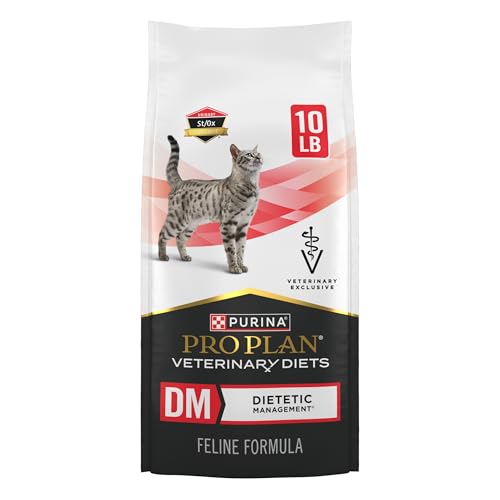
| Best for Diabetes Management | Intended purpose: Support glucose control / diabetes management | Protein / carbohydrate profile: High protein, low carbohydrate | Urinary health: Promotes urinary environment unfavorable to struvite/calcium oxalate (St/Ox Defense) | VIEW LATEST PRICE | Read Our Analysis |
| Purina Pro Plan Veterinary Diets DM Wet Cat Food |
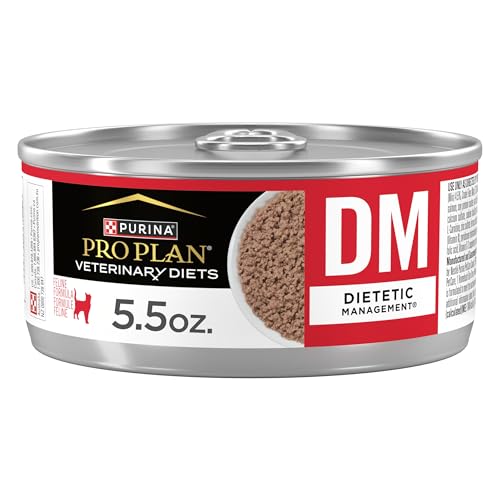
| Wet Food Favorite | Intended purpose: Support glucose control / diabetes management | Protein / carbohydrate profile: High protein, low carbohydrate | Urinary health: Promotes urinary environment unfavorable to struvite/calcium oxalate (St/Ox Defense) | VIEW LATEST PRICE | Read Our Analysis |
| Purina Pro Plan Veterinary DM Dry Cat Food |

| Travel-Friendly Size | Intended purpose: Support glucose control / diabetes management | Protein / carbohydrate profile: High protein, low carbohydrate | Urinary health: Promotes urinary environment unfavorable to struvite/calcium oxalate (St/Ox Defense) | VIEW LATEST PRICE | Read Our Analysis |
| Hill’s Prescription Diet w/d Chicken Wet Cat Food |

| Weight & Glucose Control | Intended purpose: Manage glucose and weight / diabetic support | Protein / carbohydrate profile: Formulated for weight/glucose control (higher protein / fiber; calorie-controlled) | Urinary health: Supports urinary tract health (reduced magnesium/sodium) | VIEW LATEST PRICE | Read Our Analysis |
| Hill’s Prescription Diet m/d GlucoSupport Chicken & Liver Cat Food |

| GlucoSupport Formula | Intended purpose: Support glucose and weight management / diabetic support | Protein / carbohydrate profile: High protein, optimized (controlled) carbohydrates | Urinary health: Promotes urinary environment that reduces struvite/calcium oxalate risk | VIEW LATEST PRICE | Read Our Analysis |
More Details on Our Top Picks
Purina Pro Plan Veterinary Diets DM Dry Cat Food
Whenever your diabetic cat needs a controlled-carb, high-protein diet to help stabilize blood sugar and preserve lean muscle, Purina Pro Plan Veterinary Diets DM Dry Cat Food is a strong choice; it’s formulated specifically to support healthy glucose levels while also discouraging struvite and calcium oxalate crystal formation. You’ll find a low-carb, high-protein formula that helps maintain lean body mass and ideal condition, with St/Ox Defense to promote a urinary environment unfavorable to crystals. It’s rich in antioxidants, comes as dry kibble (with canned loaf and Savory Selects available), and offers great-tasting nutrition cats typically accept.
- Intended purpose:Support glucose control / diabetes management
- Protein / carbohydrate profile:High protein, low carbohydrate
- Urinary health:Promotes urinary environment unfavorable to struvite/calcium oxalate (St/Ox Defense)
- Form factors available:Dry (kibble) and canned formats available
- Veterinary / clinical formulation:Veterinary diet (prescription/clinical formulation)
- Antioxidants / immune support:Rich in antioxidants
- Additional Feature:Great taste/palatability
- Additional Feature:Low-carb high-protein
- Additional Feature:St/Ox urinary defense
Purina Pro Plan Veterinary Diets DM Dry Cat Food
Choose Purina Pro Plan Veterinary Diets DM should you need a veterinary-formulated, low-carbohydrate, high-protein dry food designed to help manage feline diabetes and support lean body mass. You’ll get a 10 lb bag (about 18 cups) from Nestle Purina Pro Plan, initially available April 15, 2024, formulated for diabetes, persistent hyperglycemia, hepatic lipidosis and critical illness. Use only as directed by your veterinarian and shift gradually; provide fresh water and store dry. The kibble supports glucose control, lean mass, and urinary health (St/Ox Defense), contains antioxidants, and comes with Purina’s satisfaction guarantee and broad positive reviews.
- Intended purpose:Support glucose control / diabetes management
- Protein / carbohydrate profile:High protein, low carbohydrate
- Urinary health:Promotes urinary environment unfavorable to struvite/calcium oxalate (St/Ox Defense)
- Form factors available:Dry (kibble) and canned formats available
- Veterinary / clinical formulation:Veterinary diet (prescription/clinical formulation)
- Antioxidants / immune support:Rich in antioxidants
- Additional Feature:~18 cups per bag
- Additional Feature:Purina satisfaction guarantee
- Additional Feature:Detailed packaging dimensions
Purina Pro Plan Veterinary Diets DM Wet Cat Food
Ideal for cats needing tight glucose control, Purina Pro Plan Veterinary Diets DM Wet Cat Food delivers a high-protein, low-carbohydrate formula that helps you maintain healthy blood sugar while preserving lean body mass. You’ll find it in 5.5 oz cans (pack of 24) and in loaf or Savory Selects textures, so picky eaters usually accept it. The formula supports glucose control and ideal body condition, and St/Ox Defense promotes a urinary environment that discourages struvite and calcium oxalate crystals. It also contains antioxidants to support general health. Pair it with veterinary guidance to monitor insulin and adjust portions as needed.
- Intended purpose:Support glucose control / diabetes management
- Protein / carbohydrate profile:High protein, low carbohydrate
- Urinary health:Promotes urinary environment unfavorable to struvite/calcium oxalate (St/Ox Defense)
- Form factors available:Wet (canned) — also available as dry per listing
- Veterinary / clinical formulation:Veterinary diet (prescription/clinical formulation)
- Antioxidants / immune support:Contains antioxidants
- Additional Feature:5.5 oz individual cans
- Additional Feature:Canned loaf/Savory Selects
- Additional Feature:Convenient multipack format
Purina Pro Plan Veterinary DM Dry Cat Food
Purina Pro Plan Veterinary DM is a top pick should you need a low‑carbohydrate, high‑protein dry food specifically formulated to help manage feline diabetes and maintain lean body mass. You’ll get a 3.5 lb bag (about 18 cups) developed by Purina nutritionists and vets to support healthy glucose levels, prevent hepatic lipidosis, and aid recovery in critical illness. It also includes St/Ox Defense for urinary health and antioxidants. Use only as directed by your veterinarian, shift gradually, and offer fresh water. Available in dry kibble with complementary canned formats; store in a cool, dry place. Reviews average 4.7/5.
- Intended purpose:Support glucose control / diabetes management
- Protein / carbohydrate profile:High protein, low carbohydrate
- Urinary health:Promotes urinary environment unfavorable to struvite/calcium oxalate (St/Ox Defense)
- Form factors available:Dry (kibble) and canned formats available
- Veterinary / clinical formulation:Veterinary diet (prescription/clinical formulation)
- Antioxidants / immune support:Rich in antioxidants
- Additional Feature:Science-developed formulation
- Additional Feature:~18 cups per bag
- Additional Feature:Specific model/ASIN listed
Hill’s Prescription Diet w/d Chicken Wet Cat Food
Should your cat needs help controlling blood glucose while losing or maintaining weight, Hill’s Prescription Diet w/d Chicken Wet Cat Food delivers a targeted solution: a low-calorie, fiber-balanced, veterinary-formulated wet diet with therapeutic L-carnitine to support fat metabolism and lean muscle. You’ll find a prescription chicken formula that manages glucose and weight, supports digestion, and promotes urinary tract health through reduced magnesium and sodium. Its ideal soluble/insoluble fiber mix aids stool quality and satiety. Packaged in 5.5 oz cans (24-pack), it’s backed as the #1 US veterinarian-recommended therapeutic cat food. Consult your veterinarian to confirm suitability for your cat.
- Intended purpose:Manage glucose and weight / diabetic support
- Protein / carbohydrate profile:Formulated for weight/glucose control (higher protein / fiber; calorie-controlled)
- Urinary health:Supports urinary tract health (reduced magnesium/sodium)
- Form factors available:Wet (canned) — available in multipack (24 × 5.5 oz)
- Veterinary / clinical formulation:Prescription therapeutic diet formulated by Hill’s nutritionists/veterinarians
- Antioxidants / immune support:Includes clinically relevant nutrients (implied immune/digestive support; therapeutic formulation)
- Additional Feature:Fiber-focused formula
- Additional Feature:Therapeutic L-carnitine levels
- Additional Feature:Weight-management emphasis
Hill’s Prescription Diet m/d GlucoSupport Chicken & Liver Cat Food
Should your cat needs veterinary support for blood sugar and weight control, Hill’s Prescription Diet m/d GlucoSupport Chicken & Liver offers a high-protein, controlled-carb wet formula developed through vets and nutritionists to help stabilize glucose while keeping meals palatable. You’ll get 2.9 oz cans in a 24-pack (model 604351), a veterinary diet proven for glucose and weight management. It’s enriched with arginine, antioxidants, and promotes urinary health to reduce crystal risk. Made in the USA with global ingredients, it’s #1 vet recommended; consult your veterinarian for suitability, follow feeding/transition guidelines, and adjust amounts to maintain ideal weight.
- Intended purpose:Support glucose and weight management / diabetic support
- Protein / carbohydrate profile:High protein, optimized (controlled) carbohydrates
- Urinary health:Promotes urinary environment that reduces struvite/calcium oxalate risk
- Form factors available:Wet (canned) multipack (2.9 oz cans) — part of clinical diet line (also available in other formats)
- Veterinary / clinical formulation:Prescription therapeutic diet developed by Hill’s nutritionists/veterinarians
- Antioxidants / immune support:Contains clinically proven antioxidants
- Additional Feature:Arginine-enriched recipe
- Additional Feature:Made in USA (global ingredients)
- Additional Feature:100% satisfaction guarantee
Factors to Consider When Choosing Cat Food for Diabetic Cats
Whenever choosing food for a diabetic cat, you’ll want to focus on carbohydrate content, protein quality, and calorie density to help stabilize blood sugar and maintain weight. Also consider fiber and digestibility, which affect glucose response and stool quality. Finally, check whether a veterinary prescription is required before switching to certain therapeutic diets.
Carbohydrate Content
Because carbohydrates drive post-meal blood glucose, choosing a low‑carbohydrate diet (generally under about 10–12% of metabolizable energy) can help blunt glucose spikes and lower insulin needs in diabetic cats. You should prefer formulas that minimize available carbs and rely on protein and fat for energy. Pay attention to carbohydrate type: simple sugars and rapidly digested starches produce larger, faster glycemic responses than complex, slowly digested carbs. Always evaluate carbs as a percentage of metabolizable energy (or available carbohydrate), not raw grams, because moisture and fat alter nutrient density. Finally, keep carbohydrate content and feeding times consistent—varying carb amount or type between meals makes insulin dosing and glycemic control less predictable, increasing risk of hypo- or hyperglycemia.
Protein Quality
Focus on protein quality: diabetic cats need high‑quality, complete proteins rich in essential amino acids to preserve lean mass and support muscle repair, which in turn improves insulin sensitivity. You should choose diets with higher protein (often >40% calories on a dry matter basis) to promote satiety and reduce muscle breakdown for gluconeogenesis. Prefer highly digestible proteins with high biological value; they lower metabolic cost of assimilation and help stabilize postprandial glucose. Make certain adequate protein during weight loss or illness to protect against hepatic lipidosis and maintain lean tissue. Also monitor protein sources for phosphorus content and contaminants, since excess phosphorus or poor‑quality protein can strain kidneys, a common comorbidity in diabetic cats.
Calorie Density
High‑quality protein is essential for diabetic cats, but calorie density determines how much energy those proteins (and other nutrients) deliver per meal, so you’ll need to use kcal values to set precise portion sizes. Use kcal per cup, gram, or milliliter to calculate daily calories for weight and glycemic control rather than volumetric measures. Should you need weight loss, pick a food with a known kcal/g so you can reduce calories while keeping protein adequate. High-calorie diets risk inadvertent overfeeding, higher insulin needs, and unstable glucose should you not adjust portions. Whenever you change formulas, recalculate amounts from the new calorie density. After any change, monitor body weight and blood glucose and, alongside your vet, adjust daily calories and insulin as needed.
Fiber And Digestibility
Balancing fiber and digestibility matters while you’re choosing a diet for a diabetic cat: soluble fibers (like psyllium or guar) slow gastric emptying and blunt postprandial glucose spikes, while moderate insoluble fiber adds bulk to promote satiety without excessively diluting calories or impairing nutrient uptake. Aim for moderate total fiber (about 6–10% DM) so you get glycemic benefits without harming protein and fat digestibility. Prefer highly digestible formulas with high biological value proteins and easily absorbed fats to preserve lean mass and lower hepatic lipidosis risk during calorie restriction. Whenever comparing options, check digestibility coefficients or clear nutrient analyses and look for targeted soluble-to-insoluble ratios. That balance helps control glucose while maintaining nutrient uptake and body condition.
Veterinary Prescription Requirement
Because many therapeutic diabetic formulas require clinical oversight, you’ll often need a veterinary prescription before you can get them; that prescription confirms a vet has reviewed your cat’s history, current glucose control and any comorbidities, and lets them monitor response and adjust insulin or diet safely after the change. A prescription also documents medical need for clinics or insurers and guarantees follow-up for glucose, weight and body condition. Should you be unable to access a specific prescription diet, your vet can design and supervise an alternative feeding plan that targets low carbohydrates and higher protein while managing adjustment risks. Always follow veterinary guidance whenever changing diets so insulin dosing and monitoring can be adjusted to prevent hypoglycemia and other complications.