

You want a reliable medicated shampoo that stops infections and soothes your dog fast, and these five deliver: Dechra MiconaHex + Triz uses chlorhexidine and miconazole to fight bacteria and yeast while replenishing ceramides; Veterinary Formula Clinical Antiparasitic Antifungal pairs salicylic acid, coal tar, and sulfur for stubborn scaling; Miracle Vet adds hydrocortisone plus antifungal agents for quick itch relief; Pet Honesty blends chlorhexidine and ketoconazole with aloe; Veterinary Formula Antiseptic Antifungal offers aloe and lanolin for gentle healing, and you’ll find usage tips, safety remarks, and picking guidance ahead.
| Dechra MiconaHex + Triz Shampoo for Dogs Cats & Horses (8oz) |

| Veterinary Strength | Purpose: Medicated antibacterial/antifungal shampoo for skin infections | Target species: Dogs, cats, horses | Medicated / Active actives: Medicated (includes agents that continue working after rinse; contains ceramides) | VIEW LATEST PRICE | Read Our Analysis |
| Veterinary Formula Clinical Antiparasitic Antifungal Dog Shampoo |

| Intensive Treatment | Purpose: Antiparasitic, antiseborrheic (antibacterial/antifungal) medicated shampoo | Target species: Dogs | Medicated / Active actives: Medicated (salicylic acid, coal tar, micronized sulfur) | VIEW LATEST PRICE | Read Our Analysis |
| Miracle Vet Medicated Dog Shampoo for Itchy Skin |

| Fast Itch Relief | Purpose: Medicated antifungal and antipruritic (antibacterial/antimicrobial) shampoo | Target species: Dogs | Medicated / Active actives: Medicated (hydrocortisone + antifungal/antimicrobial actives) | VIEW LATEST PRICE | Read Our Analysis |
| Pet Honesty Chlorhexidine Itch Relief Shampoo for Pets |
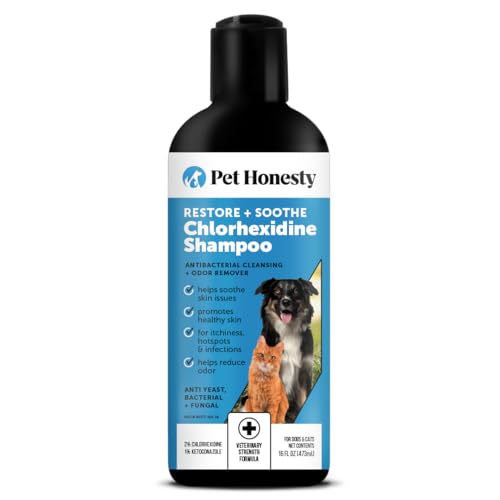
| Gentle Every-Day Care | Purpose: Antibacterial and antifungal shampoo for skin healing and itch relief | Target species: Dogs and cats | Medicated / Active actives: Medicated (chlorhexidine and ketoconazole) | VIEW LATEST PRICE | Read Our Analysis |
| Veterinary Formula Antiseptic Antifungal Medicated Pet Shampoo |

| Multi-Pack Value | Purpose: Antiseptic and antifungal medicated shampoo | Target species: Dogs and cats | Medicated / Active actives: Medicated (antiseptic/antifungal formulation with aloe/lanolin) | VIEW LATEST PRICE | Read Our Analysis |
More Details on Our Top Picks
Dechra MiconaHex + Triz Shampoo for Dogs Cats & Horses (8oz)
Whenever your pet needs medicine for a stubborn skin infection and you want a gentle, no-fuss option, Dechra MiconaHex + Triz Shampoo is a strong choice. You’ll feel relief appreciating it’s made in the USA and works for dogs, cats, and horses. It’s medicated, so it fights bacteria and fungi and keeps working after you rinse. You’ll like the fragrance-free formula that won’t irritate sensitive noses. It adds moisture with ceramides to help repair dry, damaged skin while treating infection. You can use it for treatment and maintenance, in an easy 8 oz bottle that fits your routine.
- Purpose:Medicated antibacterial/antifungal shampoo for skin infections
- Target species:Dogs, cats, horses
- Medicated / Active actives:Medicated (includes agents that continue working after rinse; contains ceramides)
- Skin-soothing / moisturizing agents:Ceramides (moisturizing / repairing)
- Usage instructions / topical use:Topical veterinary shampoo for treatment and maintenance (rinse after use)
- Safe for sensitive skin / formulated gentle:Fragrance-free; suitable for affected/damaged skin
- Additional Feature:Continues working after rinse
- Additional Feature:Contains ceramides
- Additional Feature:Fragrance-free formulation
Veterinary Formula Clinical Antiparasitic Antifungal Dog Shampoo
Should your dog is battling flaky, itchy, or inflamed skin from parasites or fungal infections, Veterinary Formula Clinical Antiparasitic & Antiseborrheic Medicated Dog Shampoo is a strong choice because it combines targeted ingredients like salicylic acid, coal tar, and micronized sulfur with soothing agents such as colloidal oatmeal and vitamin E to calm irritation while treating the cause. You’ll like that it’s pH balanced for dogs, soap free, dye free, and paraben free. Use it two to three times weekly, lather and soak for ten to fifteen minutes, test a small area initially, and call your vet should problems persist.
- Purpose:Antiparasitic, antiseborrheic (antibacterial/antifungal) medicated shampoo
- Target species:Dogs
- Medicated / Active actives:Medicated (salicylic acid, coal tar, micronized sulfur)
- Skin-soothing / moisturizing agents:Colloidal oatmeal, allantoin, vitamin E
- Usage instructions / topical use:Topical use; lather and leave 10–15 minutes; initial 2–3× weekly
- Safe for sensitive skin / formulated gentle:pH-balanced, paraben/dye/soap-free; gentle cleansers
- Additional Feature:Contains coal tar
- Additional Feature:Micronized sulfur included
- Additional Feature:Paraben- and dye-free
Miracle Vet Medicated Dog Shampoo for Itchy Skin
Should your dog keeps scratching, has red, flaky skin, or smells like yeast, Miracle Vet Medicated Dog Shampoo for Itchy Skin could be the choice that helps turn things around quickly. You’ll notice fast itch relief from hydrocortisone while antifungal agents fight yeast and ringworm. At the same time antibacterial and broad-range ingredients clean infections and ease pain. Oatmeal and moisturizers soothe dry, sensitive skin and support healing. The formula treats hot spots, reduces spreading, and restores the skin barrier, so your dog feels better sooner. Gentle, hypoallergenic ingredients let you use it regularly without harsh reactions.
- Purpose:Medicated antifungal and antipruritic (antibacterial/antimicrobial) shampoo
- Target species:Dogs
- Medicated / Active actives:Medicated (hydrocortisone + antifungal/antimicrobial actives)
- Skin-soothing / moisturizing agents:Oatmeal and moisturizing agents (hypoallergenic)
- Usage instructions / topical use:Topical medicated shampoo for targeted/regular use (follow directions)
- Safe for sensitive skin / formulated gentle:Hypoallergenic; gentle for sensitive/allergy-prone skin
- Additional Feature:Contains hydrocortisone
- Additional Feature:Fast hot-spot relief
- Additional Feature:Odor-control antifungal
Pet Honesty Chlorhexidine Itch Relief Shampoo for Pets
Should you want a reliable shampoo that tackles both bacteria and fungus while soothing sore skin, Pet Honesty Chlorhexidine Itch Relief Shampoo is a strong fit for pets with sensitive or inflamed skin. You’ll notice itch relief quickly because chlorhexidine and ketoconazole work together to fight microbes and reduce inflammation. The aloe calms while the formula avoids sulfates, parabens, phthalates, alcohol, and artificial colors. It deodorizes and helps heal hot spots, while promoting a shiny coat and less shedding. It’s safe for dogs and cats, made in the USA, lightly scented cucumber melon, and comes in recycled plastic packaging.
- Purpose:Antibacterial and antifungal shampoo for skin healing and itch relief
- Target species:Dogs and cats
- Medicated / Active actives:Medicated (chlorhexidine and ketoconazole)
- Skin-soothing / moisturizing agents:Aloe (soothing)
- Usage instructions / topical use:Topical shampoo suitable for routine use on affected skin (follow label)
- Safe for sensitive skin / formulated gentle:Free of sulfates/parabens/phthalates/alcohol; gentle for sensitive skin
- Additional Feature:Contains ketoconazole
- Additional Feature:Light cucumber-melon scent
- Additional Feature:Recycled-plastic packaging
Veterinary Formula Antiseptic Antifungal Medicated Pet Shampoo
In case your dog or cat is coping with itchy, scaly, or smelly skin, Veterinary Formula Antiseptic & Antifungal Medicated Shampoo is a strong choice that can help bring relief fast. You’ll get two 16 ounce bottles, and the formula blends aloe vera and lanolin to soothe and restore moisture while targeting fungal or bacterial issues. Use on pets 12 weeks and older, wet the coat, lather well, leave five to ten minutes, then rinse. Apply twice weekly until better, then once weekly. Test a small area initially, keep your pet from licking, and call your vet should problems continue.
- Purpose:Antiseptic and antifungal medicated shampoo
- Target species:Dogs and cats
- Medicated / Active actives:Medicated (antiseptic/antifungal formulation with aloe/lanolin)
- Skin-soothing / moisturizing agents:Aloe vera and lanolin (soothing and moisturizing)
- Usage instructions / topical use:Topical use; lather 5–10 minutes; twice weekly until improved, then maintenance
- Safe for sensitive skin / formulated gentle:pH-balanced, paraben/dye/soap-free; formulated to soothe sensitive skin
- Additional Feature:Includes aloe vera
- Additional Feature:Lanolin for moisture
- Additional Feature:Sold as 2-pack
Factors to Consider When Choosing Antibacterial And Antifungal Dog Shampoos
Whenever you pick an antibacterial or antifungal shampoo for your dog, check the active ingredients initially so you know what will actually fight infections and how gentle it will be. Consider about your pet’s species and age and any skin sensitivities they have, because puppies, seniors, and different breeds can react very differently to the same product. Also ask how often the shampoo should be used and whether it leaves a residual action after rinsing so you can plan treatments that help healing without causing irritation.
Active Ingredients Profile
Because your dog’s skin problem matters and you want the right help, look initially at what each shampoo actually contains and how those ingredients work together. You’ll often see chlorhexidine listed foremost. It fights many bacteria and some fungi, so it’s a good backbone for infected skin. For stubborn yeast or ringworm, look for ketoconazole or miconazole at about one to two percent. Should scaling or thick crusts slow treatment, salicylic acid helps by loosening flakes and letting other actives reach the skin. Coal tar and micronized sulfur can help oily or parasitic issues, but they have limits and could smell or be restricted. Supportive ingredients like ceramides, oatmeal, aloe, or lanolin won’t kill microbes, yet they soothe and restore the barrier so antimicrobials work better.
Species And Age Safety
You’ve already looked at which actives work best for infections, and now you need to match those ingredients to your pet’s species and age so treatment is safe and effective. Always check the product label for species. Some antiparasitic or coal tar shampoos are made for dogs only and can harm cats, so use formulas labeled safe for the species you have. Watch age limits too. Many medicated shampoos list minimum ages, often 8 to 12 weeks, because young animals absorb more through thin skin. Ingredients like chlorhexidine or ketoconazole can be used in both dogs and cats provided the label allows. But avoid hydrocortisone or some pyrethroids in very young, pregnant, or weakened pets unless a vet approves. For puppies, kittens, seniors, pregnant, or immunocompromised animals, choose gentle, fragrance free, pH balanced formulas and always patch test.
Skin Sensitivity Considerations
Choosing a shampoo for a dog with sensitive skin means looking beyond brand names and focusing on how ingredients and formulation will affect your pet’s comfort and healing. Check active ingredients like chlorhexidine, ketoconazole, salicylic acid, sulfur, and hydrocortisone, and avoid ones that have previously caused irritation. Patch-test any new product on a small area and wait 24 to 48 hours for redness, swelling, or itching. Prefer pH-balanced, soap-free formulas without harsh sulfates, parabens, dyes, or strong fragrances, since these strip oils and worsen irritation. In case skin is dry or damaged, choose shampoos with ceramides, colloidal oatmeal, aloe, lanolin, or vitamin E to moisturize and repair the barrier. Use steroid-containing shampoos only under veterinary guidance, and consult your vet for puppies, seniors, pregnant, or ill pets.
Application Frequency Guidelines
Often you’ll need to treat active bacterial or fungal infections more than you expect, and how often you bathe your dog matters for healing and comfort. For active infections, use medicated antibacterial or antifungal shampoo two to three times per week. Keep each bath on the skin for the labeled contact time, usually five to fifteen minutes, then rinse well. You’ll usually see improvement over two to six weeks. Once signs clear, reduce baths to once weekly or every one to two weeks based on skin health and vet advice. For severe flare ups, ask your veterinarian about temporary increased frequency, but don’t use medicated shampoos daily unless prescribed. Recheck with your vet provided things worsen or you see excess dryness, irritation, or hair loss.
Post-Rinse Residual Action
Once a shampoo leaves active ingredients on your dog’s skin after rinsing, that lingering action can keep fighting bacteria and fungi between baths, and that can make treatment easier and less stressful for both of you. Post-rinse residual action means the ingredient keeps working after you rinse. It depends on chemistry and formulation. Ingredients like chlorhexidine and some antifungals bind to skin proteins, so they can protect for hours or days. Skin oiliness, how well you rinse, and whether you use conditioners affect how long it lasts. Whenever you depend on residual activity for a skin problem, choose products with proven residual efficacy and follow contact times and treatment schedules. Should you rush rinsing or skip labeled steps, you might lose those benefits.
Fragrance And Additives
Post-rinse residual protection helps keep microbes in check between baths, but what you leave on your dog in the bottle matters just as much as what stays on their skin. Whenever choosing a shampoo, pick fragrance-free formulas for pets with sensitive or inflamed skin because perfumes can sting and worsen itching. Look for labels that say sulfate-free, paraben-free, and alcohol-free since those ingredients can strip oils and slow healing. You’ll want medicated actives like chlorhexidine or ketoconazole balanced with mild surfactants and moisturizers so repeated use won’t overdry. Soothing additives such as colloidal oatmeal, aloe, ceramides, or lanolin can restore moisture and help barrier repair. Always patch-test a new product and avoid strong fragrances or essential oils should your dog have allergies.
Veterinary Guidance Needed
Because skin problems can hide deeper issues, you should talk with your veterinarian before using an antibacterial or antifungal shampoo on your dog. Your vet can check whether the problem is bacterial, fungal, allergic, or parasitic through doing cytology, cultures, or scrapings. That matters because topical shampoo alone might not fix infections that need oral medicine. Tell your vet should your pet be very young, old, pregnant, or immunocompromised since some treatments are unsafe. Your vet will pick the right active ingredient and concentration for your dog and species and will advise you how long to leave the shampoo on, how often to bathe, and how to rinse. Should things get worse, your dog shows fever or lethargy, or there’s no improvement, call your vet quickly.