


You want to stop your cat from shredding furniture and keep your home looking calm, so pick clear, low-profile protectors and sticky sheets that give instant feedback while you teach replacement behavior.
Try Anti-Cat guards for corners, Tape Sheets for fabric surfaces, Sofisti-Cat double-sided tape for quick deterrence, the 20-pack vinyl sheets for larger coverage, and the XMZCYMyo set for extra pieces. Each option balances discretion, tested adhesion, and easy removal, and you’ll learn how to pair them with posts and rewards as you go.
| Anti-Cat Scratch Furniture Protectors (12-Pack) |

| Best for Corners | Form: Rigid clear guards (sheets/guards) | Color / Appearance: Transparent / clear | Intended Use: Protect furniture (corners, edges), deter scratching | VIEW LATEST PRICE | Read Our Analysis |
| Cat Scratch Furniture Protector Tape Sheets (18-Pack) |

| Best Value | Form: Double-sided adhesive sheets | Color / Appearance: Clear / invisible | Intended Use: Protect furniture, train cats from scratching | VIEW LATEST PRICE | Read Our Analysis |
| Sofisti-Cat Double-Sided Cat Scratch Deterrent Tape |
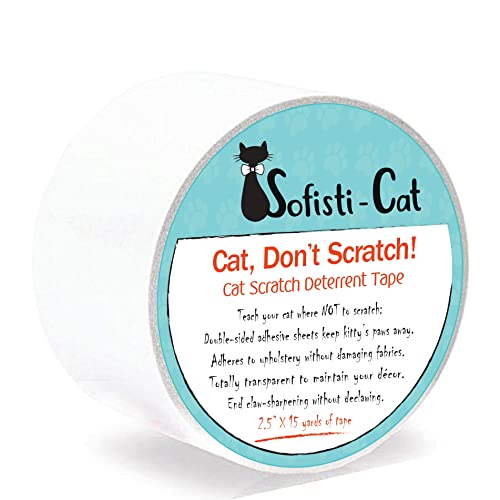
| Training Essential | Form: Double-sided adhesive tape (roll) | Color / Appearance: Clear/white (white roll but unobtrusive) | Intended Use: Protect furniture, provide scratching feedback/training | VIEW LATEST PRICE | Read Our Analysis |
| Cat Scratch Deterrent Double-Sided Furniture Protector Tape |

| Large Coverage Pick | Form: Double-sided adhesive sheets/strips | Color / Appearance: Transparent / clear | Intended Use: Protect furniture, deter scratching on multiple surfaces | VIEW LATEST PRICE | Read Our Analysis |
| XMZCYMyo Anti-Cat Scratch Furniture Protectors (11PCS) |

| Simple & Effective | Form: Double-sided adhesive sheets | Color / Appearance: Clear / transparent | Intended Use: Protect furniture, deter scratching and train cats | VIEW LATEST PRICE | Read Our Analysis |
More Details on Our Top Picks
Anti-Cat Scratch Furniture Protectors (12-Pack)
In case you want a simple, low-visibility way to stop your cat from shredding couch corners and door frames, these FixZilla clear guards are a practical choice. You’ll get a 12-pack with six larger and six smaller protectors plus 52 twist pins. You peel the self-adhesive, press the guard in place, and add pins when needed. The plastic is thick yet flexible so it fights claws without ruining your room look. Don’t use them on leather or velvet. You can hand wash them and swap pieces as your cat learns. Should pins come loose, skip them for safety.
- Form:Rigid clear guards (sheets/guards)
- Color / Appearance:Transparent / clear
- Intended Use:Protect furniture (corners, edges), deter scratching
- Not Recommended On:Leather, faux leather, velvet, microfiber
- Installation Method:Peel-and-stick adhesive; optional twist pins for securing
- Care / Removal:Hand wash only; adhesive designed to leave no sticky residue on removal
- Additional Feature:Includes 52 twist pins
- Additional Feature:Mixed XL + L sizes
- Additional Feature:Clear heavy-duty plastic
Cat Scratch Furniture Protector Tape Sheets (18-Pack)
Provided you’re tired of coming home to shredded couch corners, the 18 Pack Cat Scratch Furniture Protector Tape Sheets are a smart, low-fuss choice that helps protect upholstery while you train your cat. You get 8 XL, 8 Large, and 2 Medium clear, plastic double-sided sheets that stick to cotton, linen, and polyester. They’re invisible, have peel tabs for quick application, and remove cleanly with no residue. Avoid leather, velvet, and microfiber and always test a concealed spot initially. Use them near problem areas and scratching posts to redirect behavior. Panther Armor offers 30 days support for the Tape18 model.
- Form:Double-sided adhesive sheets
- Color / Appearance:Clear / invisible
- Intended Use:Protect furniture, train cats from scratching
- Not Recommended On:Leather, velvet, microfiber (test first)
- Installation Method:Peel tabs; peel-and-stick application
- Care / Removal:Leaves fabric clean; no sticky residue after removal; indoor use
- Additional Feature:Double-sided sticky sheets
- Additional Feature:Peel tabs for removal
- Additional Feature:Leaves no residue
Sofisti-Cat Double-Sided Cat Scratch Deterrent Tape
Provided you want an easy, gentle way to stop your cat from shredding furniture, Sofisti-Cat double-sided training tape is a smart pick that works for most pet owners. You’ll get a 2.5″ across 15′ roll of clear polyethylene tape that sticks to upholstery and gives cats instant feedback whenever paws meet sticky. It’s humane, simple to apply, and protects surfaces without changing your decor. You should test concealed areas on bonded or faux leather initially, and avoid washing the tape. Store it cool and dry to keep adhesion. The tape fits all life stages and most breeds, and it’s lightweight and discreet.
- Form:Double-sided adhesive tape (roll)
- Color / Appearance:Clear/white (white roll but unobtrusive)
- Intended Use:Protect furniture, provide scratching feedback/training
- Not Recommended On:Some bonded or faux leather (test first)
- Installation Method:Peel backing and apply tape (cut to length)
- Care / Removal:Do not wash tape; store dry/cool; remove and replace as needed
- Additional Feature:Long continuous roll
- Additional Feature:Polyethylene material
- Additional Feature:Behavior-trained deterrent
Cat Scratch Deterrent Double-Sided Furniture Protector Tape
Should you want a simple, low-cost way to stop your cat from shredding furniture, this double-sided transparent tape is a great choice because it taps into cats’ dislike of sticky surfaces and still stays nearly invisible on most fabrics. You get a 20-pack of 12 across 8 inch vinyl sheets that bend and cut for corners. One side protects fabric while the other traps hair and dust. Peel the red sticker to separate layers, stick after cleaning, and remove the blue backing. It peels off without damage for most surfaces. Test initially on sensitive materials like leather or suede.
- Form:Double-sided adhesive sheets/strips
- Color / Appearance:Transparent / clear
- Intended Use:Protect furniture, deter scratching on multiple surfaces
- Not Recommended On:Leather, faux leather, velvet, microfiber, suede (test first)
- Installation Method:Clean surface, cut to size, peel backing and apply
- Care / Removal:Peels off without staining/damaging most surfaces; replace when debris accumulates
- Additional Feature:Hair/debris collection side
- Additional Feature:Red isolation peel tab
- Additional Feature:Ultra-thin large pieces
XMZCYMyo Anti-Cat Scratch Furniture Protectors (11PCS)
Should you want a simple, no-fuss way to keep your couch and chairs safe while you teach your cat better scratching habits, the XMZCYMyo Anti-Cat Scratch Furniture Protectors are a great fit for busy pet owners who care about their furniture and their cat. You get 11 clear plastic sheets, five XL and six L, that stick flat to corners and broad surfaces. They use double-sided adhesion for wide coverage, stay put during training, and lift off clean. Apply where your cat scratches, replace when worn, and rely on the maker’s satisfaction guarantee in case something goes wrong.
- Form:Double-sided adhesive sheets
- Color / Appearance:Clear / transparent
- Intended Use:Protect furniture, deter scratching and train cats
- Not Recommended On:(implicitly) Sensitive surfaces — similar fabric cautions; test first (best for upholstery)
- Installation Method:Peel-and-stick sheets; press to adhere
- Care / Removal:Replace as needed; residue-free removal; minimal care
- Additional Feature:Flat pre-cut sheets
- Additional Feature:Strong adhesion performance
- Additional Feature:100% satisfaction guarantee
Factors to Consider When Choosing Cat Scratch Deterrents
When you pick a cat scratch deterrent, consider about the material compatibility and how the adhesive will stick to your furniture so it actually stays in place. Also check the surface coverage size and how easily the product can be removed without leaving residue, since you don’t want damage after it serves its purpose. Finally, weigh pet safety considerations like nontoxicity and comfort so your cat stays safe and you can feel confident using the deterrent.
Material Compatibility
Before you choose a scratch deterrent, take a close look at the material you want to protect so you don’t swap one problem for another. You’ll check upholstery initially since tapes and clear guards usually work on cotton, linen, and polyester. But leather, faux leather, velvet, suede, and some microfibers can react badly or repel adhesives. Test any adhesive or protective sheet on a concealed spot for 24 to 48 hours to make sure it won’t discolor, lift dyes, or leave residue. Also consider about texture because smooth, clean surfaces hold adhesives better than loose weaves or worn fabrics where edges lift. For delicate finishes like painted walls, vintage fabrics, or varnished wood, pick non-adhesive or low-tack choices and remove them often. Finally, factor in climate since humidity and temperature change durability.
Adhesive Strength
Pick a protector with the right stick and you’ll save your furniture without making a bigger mess. You want adhesive strong enough to stay put under repeated paws, roughly the peel adhesion of light-duty mounting tapes, about 1 to 3 N per cm. Yet you also don’t want glue that strips fabric or leaves residue whenever you remove it. Look for controlled tack formulas that promise clean removal.
Think about the surface you’re protecting. Porous fabrics like cotton and linen need higher initial tack, while wood and plastic need less. Leather and microfiber can delaminate or stain even with moderate adhesives, so test initially. Temperature and humidity change tack below 10 C or above 40 C. Use peel-off tabs or optional fasteners where sticky backing is a risk of ingestion or pulling.
Surface Coverage Size
Because cats aim for the easiest, most exposed spot, you want protectors that actually cover the full area they target so they can’t nibble around the edges. Measure height and width of high contact zones like couch arms, corners, and door edges and pick protectors or tape that fully cover those spots. Larger sheets cut down seams and gaps, so choose pieces that overlap or span a whole panel, for example ten to fourteen inches across for common sofa arms. For vertical surfaces, allow for six to eighteen inches of scratch height. Use adjustable or cut to fit materials for rounded corners and tapered arms. Prioritize full coverage where damage is worst and use smaller patches elsewhere to balance appearance and protection.
Removability And Residue
Whenever you’re choosing a scratch deterrent, contemplate about how it will come off later and whether it will leave goo or damage behind. You want products that advertise residue-free removal or explicitly say they leave no sticky film. Also look for removable styles like peel-off tapes, self-adhesive protectors, or pinned shields, and note if the maker recommends pins or glue. Pins avoid goo but can puncture upholstery, so weigh that trade-off.
Check recommended surfaces and patch-test a concealed area, since fabric and some treated fibers handle adhesives better than leather, faux leather, microfiber, or delicate finishes. Consider about intended wear time. Short-term training adhesives usually lift cleanly. Read care and removal steps, including temperature, warm soapy water, or safe adhesive removers.
Pet Safety Considerations
Keeping your cat safe starts with choosing deterrents that won’t harm them should they sniff, lick, or rub against treated areas. Pick products labeled pet-safe and non-toxic so grooming won’t expose them to chemicals. Check adhesives on a concealed patch of upholstery initially and watch for redness or breathing changes. Don’t use items with small detachable parts like pins or loose strips that a curious cat could swallow. For barriers, make sure edges are smooth and nothing can trap a paw, tail, or collar. Avoid rigid pieces that could injure a cat should they jump into them. Never stick tape to fur or paws and remove anything causing irritation or stress. Watch behavior closely during the opening days and act fast should you see problems.
Ease Of Installation
You’ll want a deterrent that’s quick to fit and easy to remove, because a frustrating install will keep you from using it consistently. Check whether it uses adhesive pads, peel-and-stick sheets, twist pins, or no-adhesive placement. Measure the target area first and match sheet or guard dimensions so you won’t cut pieces or create seams. Look for peel tabs, colored backings, or layered designs that make peeling and precise placement fast and clean. Consider optional fasteners like pins or tacks when you need long-term security, or rely on adhesive for a temporary, rental-safe option. Review care and removal instructions, including residue-free removal claims, washing, storage, and replacement needs to protect your upholstery.
Aesthetic Discretion
In case you want protection that nearly disappears into your home, choose clear or ultra-thin guards that sit flush against the fabric. You’ll want transparent or clear-finish deterrents whenever you don’t want to change a sofa’s color or pattern. Pick ultra-thin materials under a few millimeters so the protector hugs the surface and stays out of sight. Use discreet attachment methods like clear self-adhesive pads or concealed fasteners instead of visible straps or bulky clips that call attention. Size pieces to cover only problem spots such as corners, armrests and edges so the furniture still looks whole. Also avoid glossy or highly textured finishes that contrast with a matte weave, since reflections make guards obvious.
Training Effectiveness
Whenever you want a change that lasts, pair deterrents with clear training steps and welcoming alternatives so your cat learns where to scratch and why. You’ll get fastest results whenever you use sticky surfaces that give immediate feedback, since cats respond to clear, predictable sensations. At the same time offer good scratching posts nearby and reward your cat for using them, because deterrents alone won’t teach a replacement behavior. Be consistent and cover all problem spots, or your cat will keep practicing where deterrents are missing. Expect progress over days to weeks and track incident frequency. Refresh adhesive or swap products whenever tackiness fades, and keep praise and treats flowing until your cat reliably chooses approved targets and your furniture stays safe.