


For 2026, consider these five: Manna Pro Omega Egg Maker for omega‑3s, yolk color and shell support; Brewer’s Yeast + Probiotics (72‑oz) for molt, gut health and recovery; the 20‑oz Brewer’s Yeast jar for targeted feather and metabolic support; Sav‑A‑Chick electrolyte & vitamin strips for heat, transport or illness rehydration; and Rooster Booster B‑12 liquid for appetite and post‑stress enhancement — keep using them with label doses and sensible diet adjustments, and you’ll find more details ahead.
| Manna Pro Omega Egg Maker Chicken Feed Supplement |

| Best for Egg Enrichment | Intended use: Laying hen supplement / egg production support | Target species: Chickens (laying hens) | Format / form: Crumble feed supplement (mix into feed) | VIEW LATEST PRICE | Read Our Analysis |
| Brewer’s Yeast Probiotic Vitamin Supplement for Poultry |

| Best for Stress & Molting | Intended use: Poultry digestive, molt, egg quality, stress recovery | Target species: Chickens, ducks, poultry (all ages) | Format / form: Dry powder (pouch / mix into feed or free-choice) | VIEW LATEST PRICE | Read Our Analysis |
| Brewer’s Yeast Probiotic Vitamin Supplement for Poultry |

| Best for Daily Maintenance | Intended use: Poultry molt, stress, development, egg quality | Target species: Chickens, ducks, poultry | Format / form: Dry powder/jar (mix into feed) | VIEW LATEST PRICE | Read Our Analysis |
| Sav-A-Chick Electrolyte & Vitamin Supplement Strips (9-Pack) |

| Best for Hydration & Heat | Intended use: Hydration and stress recovery (electrolyte & vitamin) | Target species: Chickens, ducks, turkeys, other domestic poultry | Format / form: Pre‑measured powder packets (mix into water) | VIEW LATEST PRICE | Read Our Analysis |
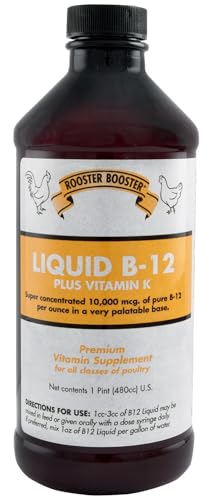
| Rooster Booster B-12 Liquid 16-Ounce |
| Best for Quick Recovery | Intended use: Poultry vitamin supplement (B‑12) for appetite and vitality | Target species: Poultry (all classes) | Format / form: Liquid concentrate (dilute / measured dosing) | VIEW LATEST PRICE | Read Our Analysis |
More Details on Our Top Picks
Manna Pro Omega Egg Maker Chicken Feed Supplement
Should you keep laying hens and want eggs that are richer in omega‑3s and more consistent in quality, Manna Pro Omega Egg Maker is a smart choice — it’s formulated to improve yolk pigmentation and shell strength while being easy to mix into regular feed. You’ll add a flaxseed-rich crumble that increases omega‑3s and uses marigold extract for deeper yolks. It supplies calcium, phosphorus, protein, vitamins and minerals without antibiotics or artificial additives. Direct‑fed microbials support digestion, nutrient absorption and immunity, improving feather condition and liveliness. Use it regularly to stabilize lay rates, strengthen shells and augment the nutritional profile of your eggs.
- Intended use:Laying hen supplement / egg production support
- Target species:Chickens (laying hens)
- Format / form:Crumble feed supplement (mix into feed)
- Key benefit category:Egg enrichment (omega‑3s, shell strength, yolk pigmentation) and gut health
- Contains vitamins/minerals:Fortified vitamins and minerals (plus calcium, phosphorus)
- Use instructions (mixing / dosing):Mix crumble into regular feed for consistent intake
- Additional Feature:Boosts egg omega-3s
- Additional Feature:Marigold yolk pigment
- Additional Feature:Direct-fed microbials
Brewer’s Yeast Probiotic Vitamin Supplement for Poultry
In case you raise chickens or ducks and need a multi-purpose recovery and daily-support supplement, Brewer’s Yeast + Probiotics + Niacin + Vitamins is a strong choice — especially for flocks facing molt, stress, or egg-quality issues. You’ll get brewer’s yeast, probiotics, prebiotics, niacin, amino acids and vitamins in a 72-ounce resealable foil pouch (also sold as 70 x 10 oz pouches), made by Nature INTENDED, a veteran-owned Midwest business. Use free-choice or mix into feed at recommended rates (1 tbsp per lb feed; 1 cup per 16 lbs). It supports digestion, feather regrowth, egg shell strength, yolk color and development.
- Intended use:Poultry digestive, molt, egg quality, stress recovery
- Target species:Chickens, ducks, poultry (all ages)
- Format / form:Dry powder (pouch / mix into feed or free-choice)
- Key benefit category:Gut health, feather/feeder recovery, egg quality, stress relief
- Contains vitamins/minerals:Vitamins (including niacin), minerals and amino acids
- Use instructions (mixing / dosing):Mix into feed or offer free‑choice; specified tablespoon/cup rates
- Additional Feature:Resealable foil pouch
- Additional Feature:Free-choice or mixable
- Additional Feature:30-day money-back
Brewer’s Yeast Probiotic Vitamin Supplement for Poultry
In case you’re managing laying hens, molting birds, or young chicks, this brewer’s yeast probiotic vitamin supplement is a smart choice for supporting feather regrowth, stress recovery, and egg quality. You’ll get brewer’s yeast blended with probiotics, prebiotics, niacin, vitamins, minerals, essential amino acids, carotenoids and xanthophylls to support metabolism, immunity, gut balance and nutrient absorption. Use it during molt, breeding, severe stress or initial development to improve feather condition, help recovery, and bolster egg shell strength and yolk color. Packaged in a 20-ounce PET jar, it’s made in the USA via a veteran-owned Midwestern family business.
- Intended use:Poultry molt, stress, development, egg quality
- Target species:Chickens, ducks, poultry
- Format / form:Dry powder/jar (mix into feed)
- Key benefit category:Gut health, feather growth, egg formation, development
- Contains vitamins/minerals:Vitamins, minerals and essential amino acids
- Use instructions (mixing / dosing):Mix into feed (feeding context provided)
- Additional Feature:PET plastic jar
- Additional Feature:Made in USA
- Additional Feature:Veteran-owned brand
Sav-A-Chick Electrolyte & Vitamin Supplement Strips (9-Pack)
In case you keep chickens, ducks, turkeys, or other backyard poultry and want an easy, pre-measured way to support hydration during heat or stress, Sav-A-Chick Electrolyte & Vitamin Supplement Strips are a smart choice — each of the nine single-use packets mixes into one gallon of drinking water so you can dose quickly and accurately whenever birds need help recovering. You add one packet per gallon whenever birds face heat stress, illness, or transport recovery. Packaged as nine pre-measured powders, they simplify dosing. Check the manufacture date—product is good 24 months—and follow the PAO symbol for months-after-opening guidance to guarantee potency.
- Intended use:Hydration and stress recovery (electrolyte & vitamin)
- Target species:Chickens, ducks, turkeys, other domestic poultry
- Format / form:Pre‑measured powder packets (mix into water)
- Key benefit category:Hydration and rapid recovery from heat/stress
- Contains vitamins/minerals:Electrolytes plus vitamins
- Use instructions (mixing / dosing):Add one packet to one gallon of drinking water
- Additional Feature:Single-use packets
- Additional Feature:Mixes per gallon
- Additional Feature:24-month shelf-life
Rooster Booster B-12 Liquid 16-Ounce
Choose Rooster Booster B-12 Liquid should you want a fast, super‑concentrated vitamin improvement for all classes of poultry—each ounce contains 10,000 mcg of cyanocobalamin so you can dose precisely for sick, stressed, or recovering birds. You’ll use the 16‑ounce bottle as a measured supplement, diluting or dosing per package directions. It’s designed to stimulate appetite, oxygenate blood, and increase alertness, making it useful after transport, illness, or during molting. Keep it as a targeted tool rather than everyday feed; follow dosing instructions carefully since the formulation is potent. Store tightly closed and out of reach of children.
- Intended use:Poultry vitamin supplement (B‑12) for appetite and vitality
- Target species:Poultry (all classes)
- Format / form:Liquid concentrate (dilute / measured dosing)
- Key benefit category:Metabolic support (B‑12) — appetite, blood oxygenation, alertness
- Contains vitamins/minerals:High‑concentration vitamin B‑12
- Use instructions (mixing / dosing):Dilute/measure per package directions (liquid concentrate)
- Additional Feature:Super-concentrated formula
- Additional Feature:10,000 mcg/ounce
- Additional Feature:Stimulates appetite
Factors to Consider When Choosing Vitamins for Chickens
Whenever choosing vitamins for your chickens, you’ll want to match the product’s nutrient coverage to their specific needs rather than buying a one-size-fits-all supplement. Consider life stage and production status, formulation and delivery method, and how bioavailable the nutrients are so the birds actually absorb them. Also factor in any stress or recovery needs—illness, moulting, or temperature changes often call for targeted support.
Nutrient Coverage Needed
Although you might suppose a simple multivitamin will do, you need a mix that covers both fat‑soluble vitamins (A, D3, E) and water‑soluble B‑complex (including B12 and niacin) plus key minerals like calcium, phosphorus, magnesium, zinc, manganese and selenium, because those nutrients work together to support vision, bone formation, eggshell quality, immunity and metabolic energy. Check formulations for bioavailability—natural versus synthetic forms and delivery method matter for uptake and retention. Match concentrations to expected needs and stressors without overdoing fat‑soluble vitamins; A and D can accumulate and cause toxicity should they be dosed excessively. Verify amounts per bird or per gallon and prefer products with clear mg/IU labeling and balanced mineral cofactors so vitamins can perform enzymatic and structural roles effectively.
Life Stage Requirements
Because chickens’ nutrient needs shift as they grow and cycle, you’ll want vitamins customized to each life stage rather than a one‑size‑fits‑all mix. For chicks and pullets, prioritize B‑vitamins (niacin, B12) and easily digestible protein to support rapid growth, leg strength, and nervous system development. Laying hens need extra calcium, phosphorus, vitamin D3 and vitamin A for strong shells and reproductive health, plus vitamin E and selenium to enhance hatchability and immunity. Breeding and broody birds benefit from added folic acid, vitamin E and trace minerals (zinc, copper, manganese) to support embryo development and sperm quality. During molt or stress, increase A, D, E, B‑complex and bioavailable amino acids for feather regrowth. Senior hens typically need more antioxidants and joint‑support nutrients to preserve mobility and immune function.
Formulation And Delivery
Should you want vitamins to actually benefit your flock, pick formulations and delivery methods that match bird physiology and your management style. Choose forms birds can use efficiently — readily absorbed chelated minerals and appropriate B12 forms — and match nutrient balance to life stage: more niacin and amino acid precursors during molt, extra calcium and vitamin D for layers. Decide between feed-mixed crumbles/pellets, water-soluble powders, or concentrated liquids based on your ration type and whether additives will reach every bird. Prefer products with probiotics, prebiotics, or enzymes to support gut health and efficacy. Check stability and shelf life, avoid heat- or light-degraded forms, and follow manufacturer reconstitution and dosing so intended concentrations reach the birds.
Bioavailability Of Nutrients
At the moment you pick vitamins for your flock, focus on bioavailability — the portion of a nutrient that actually gets absorbed and used — because form, diet, and gut health often determine whether supplements work. Choose chelated or organic-bound minerals whenever possible; they’re absorbed better than inorganic salts (ferrous glycinate versus ferrous sulfate, for example). Keep in mind water-soluble vitamins absorb well but flush quickly, so consider delivery frequency. Fat-soluble vitamins need dietary fat or emulsifiers and good gut function to be effective. Support digestion with probiotics, prebiotics, or enzymes to raise absorption. Watch antagonists and interactions: excess calcium, high phytate, or unfavorable gut pH can block zinc, iron and other trace minerals. Balance formulation and feeding strategy, not just label amounts, to get real nutrient uptake.
Stress And Recovery Needs
Whenever your flock faces stress—from molting and heat waves to transport or predator scares—you’ll want to boost specific vitamins and supportive nutrients to speed recovery and prevent longer-term losses. Increase B-complex vitamins, especially B12 and niacin, to restore appetite, energy metabolism, and nervous system function. Offer electrolytes (sodium, potassium, chloride) with glucose in drinking water for 24–72 hours after acute dehydration to reestablish fluid and osmotic balance. Use probiotics and prebiotics after antibiotics, coccidiosis, or feed changes to rebuild the gut microbiome and improve nutrient absorption. Provide higher dietary protein and essential amino acids (methionine, lysine) plus zinc and selenium for feather regrowth and tissue repair. Include vitamins A, D3, and E during prolonged or repeated stress for mucosal integrity, calcium handling, and antioxidant protection.
Egg Production Support
During the period you’re choosing vitamins to support egg production, prioritize nutrients that directly affect shell quality, yolk formation, and laying rate: adequate calcium (about 3–4% of the layer diet) with available phosphorus, vitamin D3 for calcium absorption, sufficient protein and the essential amino acids methionine and lysine, plus B‑complex vitamins and trace minerals like zinc and manganese to support reproductive physiology. You’ll also want formulations that include probiotics or prebiotics and digestive aids to enhance nutrient absorption and feed conversion, helping maintain consistent lay during stress or molt. Choose products from reputable manufacturers with clear ingredient lists so you can match supplements to your flock’s diet. Monitor egg size, shell quality, and laying frequency to evaluate effectiveness and adjust nutrition sources rather than overdosing supplements.
Safety And Dosage
Because vitamins can help or harm depending on dose and delivery, you should treat supplementation with the same care you give medications: follow label directions, convert concentrations to per‑bird amounts whenever possible, and adjust for life stage, diet, and environmental factors like heat that change water or feed intake. Follow label dosing exactly and, whenever labels list mcg or mg per ounce, convert to micrograms/milligrams per bird per day to avoid accidental overdosing. Know upper limits for fat‑soluble vitamins A, D, and E—these accumulate and chronic excess (especially D) can cause hypercalcemia, kidney damage, or skeletal and reproductive issues. Water‑soluble vitamins are safer but can still upset digestion in very high doses. Account for intake variability when mixing into water or feed and adjust doses for chicks, moulting, stressed, or medicated birds.
Storage And Shelf Life
Keeping vitamins effective and safe starts after you buy them: storage and shelf life determine whether a product will still deliver the nutrients you intended. Check manufacture or lot dates and pick powders with 12–24 months left and liquids with at least 6–12 months once opened. Store products in a cool, dry, dark spot (50–70°F / 10–21°C), away from sunlight and heat to protect vitamins A, D and some B vitamins. Keep powders and pellets sealed in airtight containers with desiccants to limit moisture and microbial growth. Refrigerate only provided the label says so. Follow Period‑After‑Opening or expiry guidance—discard reconstituted mixes and opened liquids after the recommended time. Inspect before use for off‑odors, color changes, clumps, mold or separation and discard spoiled items.