


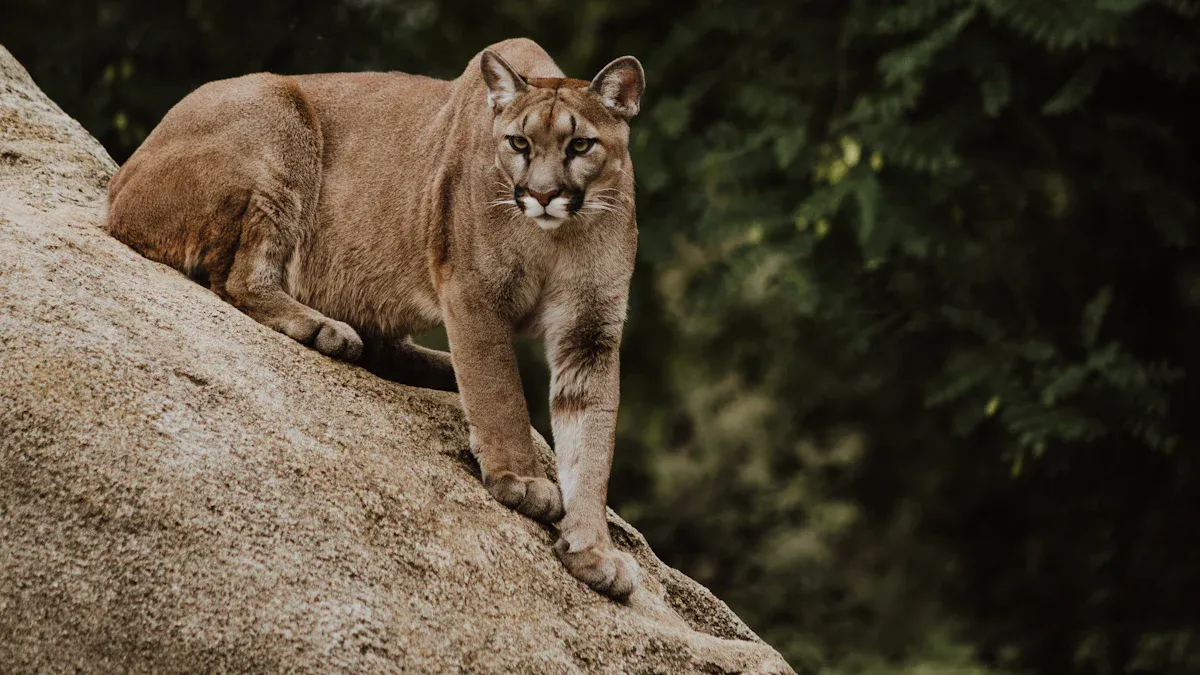
You must be aware and prepared when you are in mountain lion habitats. Recognizing subtle and obvious signs is critical. Knowing how to react is also paramount for personal safety. This guide equips you with essential knowledge. You will learn to identify mountain lion presence. You will also implement crucial mountain lion safety measures to help you stay safe.
Key Takeaways
Look for specific signs of mountain lions. These include tracks without claw marks, scat with fur and bones, and partially eaten prey covered with debris.
Do not run if you see a mountain lion. Make yourself look big and loud. Maintain eye contact to show you are not prey.
Fight back if a mountain lion attacks you. Use anything you have. Aim for its face and eyes.
Hike in groups. Keep children and pets close to you. Avoid hiking at dawn and dusk when mountain lions are most active.
Mountain Lion Behavior
Understanding mountain lion behavior is crucial for your safety in their habitat. These powerful predators have specific patterns you should recognize. Their actions are often driven by instinct and survival.
Activity Patterns
Mountain lions are most active from dusk to dawn. They primarily hunt at night. You might see them traveling or hunting during daylight hours too. In areas with many people, mountain lions become more nocturnal. They avoid human interaction. In remote regions, they are more active at dawn and dusk. This flexible behavior helps them coexist with humans. You should know that dawn and dusk are prime times for their activity in less populated areas. They are more likely to be active at night in populated areas. This hunting behavior is a key part of their survival.
Solitary Nature
Mountain lions live solitary lives. They prefer not to be seen or noticed. You will rarely spot one. They are elusive animals. The only exception is a mother raising her cubs. They are shy around humans but also curious. They often observe people in their habitat without being detected. This solitary behavior helps them remain hidden.
Territorial Habits
Mountain lions are territorial animals. They mark their territory to communicate with other mountain lions. They create ‘scrapes’ by pushing together debris with their hind feet. Then, they mark these spots with urine spray or scat. Adult males use scrapes when they court females. Their home territory can be very large. A male’s territory can span hundreds of square miles. Female home ranges are typically smaller than males. This territorial behavior ensures they have enough space and prey. Their overall behavior helps them thrive in the wild.
Direct Signs of Presence
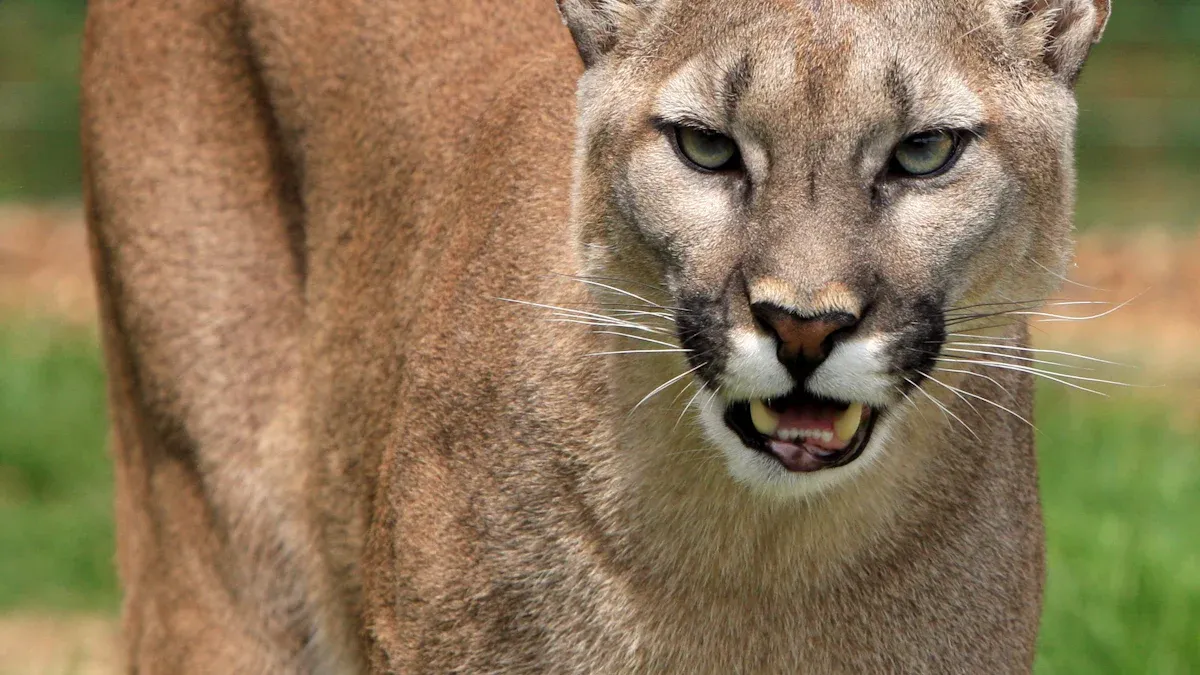
You can find direct signs of a mountain lion’s presence. These physical clues offer strong evidence. Recognizing them helps you understand if a mountain lion is nearby.
Tracks and Paw Prints
You can often find mountain lion tracks in soft ground or snow. These tracks are a very reliable sign. They show distinct features. Mountain lion tracks typically do not show claw marks. They keep their claws retracted when walking. This differs from dog tracks, which usually show claws.
Look for an asymmetrical toe alignment. One toe often leads the others. This creates an unbalanced look. Dog tracks appear more symmetrical. The individual toe pads are often teardrop-shaped. The heel pad is also unique. It has an M-shape with three lobes at the rear. This is a characteristic feature of cat tracks.
Mountain lion paw prints typically range from 3 to 4 inches long. They are 3 to 5 inches wide. This combines measurements for both front and hind feet. A large mountain lion track can approach four inches in width. The metacarpal pad is trapezoidal. It can be as large as all four toes combined. Its front part is wide, sometimes flat or bi-lobed. It resembles an ‘m’ shape. You will see three visible lobes at the back. Front feet toes are arranged unevenly around the pad. The third toe is the longest. Front feet are generally wider and more asymmetrical than hind feet. Hind feet can appear very symmetrical. They sometimes resemble canine tracks.
Scat and Droppings
You might find mountain lion scat, or droppings. This is another strong indicator of their presence. Mountain lion scat is often tubular. It contains hair and bone fragments. It can be brown, black, or grayish-white. It appears “ropey,” like a cord with segments. It can also be a solid piece. Scat ranges from 5 to 9.5 inches long. It can be up to 1 inch wide or more. The ends may be blunt or pointy like a tail. You will unlikely find berry seeds or fruits in it.
Mountain lion scat often appears like “little round balls.” It is quite firm. You cannot easily squash it with a stick. It is segmented with rounder ends than canine scat. It can be over an inch in diameter when dried. Old scat can whiten from weathering. This happens due to high calcium content from bones. You will find bone fragments and fur inside. This fur often comes from their last meal.
You can differentiate mountain lion scat from other animals. Mountain lion scat is typically 1 inch or more in diameter. It is large, thick, and has tubular segments. The ends are blunt. Canid scat (like coyote or fox) has tapered ends. Bobcat scat is about 0.8 inches in diameter. Mountain lions are obligate carnivores. Their diet consists almost entirely of meat. This results in specific contents in their scat. They sometimes scratch near their droppings. This marks territory or covers their scat.
Feature | Mountain Lion Scat | Canid Scat (Coyote/Fox) | Felid Scat (Bobcat) |
|---|---|---|---|
Diameter | 1 inch or more | Varies (e.g., Coyote: 0.6 inches, Fox: 0.6 inches) | 0.8 inches |
Shape | Large, thick, tubular segments; blunt ends | Tapered ends (common for dog family) | Blunt ends |
Length | One long piece | Varies (e.g., Coyote: ~3 inches, Fox: ~2 inches) | Up to 3 inches |
Contents | High calcium content (white/light color from bone) | Diverse diet (meat, fruits, berries, plants); hair, bones | Mostly meat; occasionally insects or plants |
Color | Can be white or very light (due to bone) | Varies with diet (dark, brown, gray) | Varies with diet |
Consistency | Firm | Varies | Dry scat falls apart |
Associated Signs | Scratch marks nearby; sometimes buried with dirt scrapings | Occasionally scratch near piles to mark territory | Sometimes covered with dirt and other debris |
Diet Type | Obligate carnivore (meat only) | Diverse diet (meat, fruits, berries, plants) | Mesocarnivore (mostly meat, some insects/plants) |
Tree Scratches
You might also find tree scratches. Mountain lions use trees for sharpening their claws. They also mark their territory this way. Look for parallel claw marks on tree trunks or logs. These marks can be quite high on trees. This indicates a large animal made them. Bear claw marks are typically deeper and more gouging. They often show five parallel lines. Mountain lion scratches are usually less deep.
Prey Carcasses
Finding a prey carcass is a very reliable sign. Mountain lions often partially eat their prey. They then cover it with debris. This is called caching. They do this to save it for later consumption. They typically cache their kills under cover. This includes trees or thick brush. They move the carcass to different feeding spots. This deters insect scavengers. They also remove and bury the stomach of their prey nearby. This prevents spoilage of the meat.
You will often find puncture marks on the neck or base of the skull. This indicates a precise kill. Mountain lions often start eating from the hindquarters or internal organs. They usually drag kills to a secluded spot. Deer are a frequent prey animal. This includes black-tailed bucks, yearlings, and fawns. They also kill mesocarnivores like gray foxes, raccoons, and coyotes. Smaller prey like rabbits or mice are often eaten whole. This makes their kill sites harder to interpret. Mountain lions have also killed domestic animals. This includes goats and house cats.
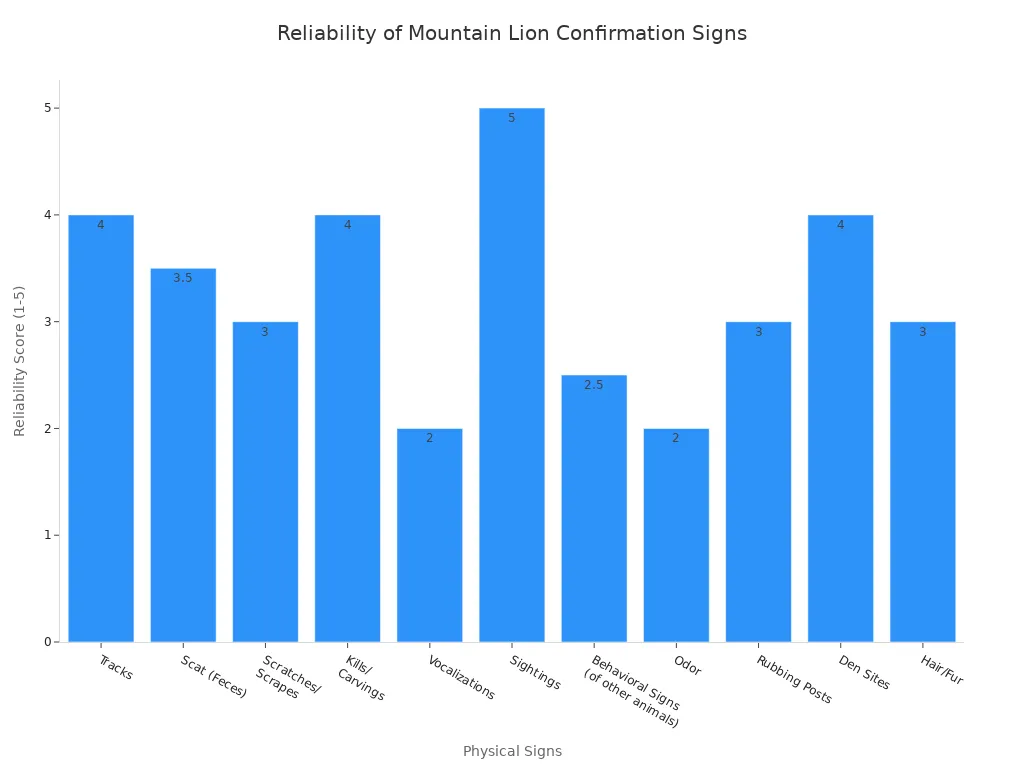
You can assess the reliability of these direct signs.
Indirect Signs of Presence
You can also notice indirect signs of a mountain lion’s presence. These clues come from observing changes in the environment. They often involve the behavior of other animals.
Unusual Animal Behavior
Watch for changes in local wildlife behavior. Deer, elk, or other prey animals may act skittish. They might appear unusually alert or nervous. You may see them staring intently into one area. Sometimes, these animals become completely absent from their usual feeding grounds. This sudden change in their behavior suggests a predator is nearby. Their natural instincts tell them to avoid danger. This altered behavior is a strong indicator of a mountain lion’s presence. You should pay attention to these subtle shifts in animal behavior.
Missing Pets
Missing pets can be a concerning indirect sign. This is especially true in rural or wilderness-adjacent areas. Mountain lions are opportunistic hunters. They often target easy prey. Domestic pets like cats and small dogs are very vulnerable. They face a high risk when left outdoors unsupervised. Poultry and other small domestic animals also face significant risk. This includes chickens, ducks, geese, goats, and sheep. Even young cows can be targets. Your pets are more vulnerable when not securely enclosed, especially at night. A mountain lion’s hunting behavior often leads them to target these animals. This type of behavior is common for predators.
Unexplained Sounds
Mountain lions usually make little noise. They are very quiet animals. However, they do make specific sounds. You might hear chirps or whistles. These are often used for communication between mountain lions. They can sound like birds or even human whistling. Females sometimes scream during mating season. This sound attracts males. It can travel long distances. People describe it as a loud, piercing human scream. Males also scream to announce their presence. You might also hear hisses if they feel agitated. Growls are rare but possible. Remember, many “blood-curdling screams” people attribute to mountain lions are actually other animals. Mountain lions cannot roar. Their vocal behavior is unique.
Sign Type | Mountain Lion Characteristics | Differentiating Features from Other Animals |
|---|---|---|
Sounds | Little noise; sometimes sound like whistling or bird chirping; growl like overgrown house cat; kittens have raspy purr | Many “blood-curdling screams” attributed to mountain lions are actually other animals |
Encounter Safety Measures
You must know how to react if you find yourself in a mountain lion encounter. Your actions can determine the outcome. These safety measures help you protect yourself.
Do Not Run
Never run from a mountain lion. Running triggers their chase instinct. A mountain lion might mistake you for prey. Even moderate levels of rapid or erratic movement increase the risk of an attack. Lynn Cullens, executive director of the Mountain Lion Foundation, suggests mountain lions might mistake runners for deer. This misidentification can lead to dangerous encounters. You must stand your ground.
Look Big and Loud
You need to make yourself appear larger and more threatening. This is a key predator aversion technique. Raise your arms above your head. Open your jacket if you wear one. Stand tall. Shout loudly and firmly. You can talk or yell regularly. Make steady waving motions with your arms and objects. Do not bend over. Bending makes you appear smaller. It makes you look more like prey. Get small children or dogs behind you. This protects them. It also helps you focus on the mountain lion.
Maintain Eye Contact
Maintain direct eye contact with the mountain lion. This challenges the animal. It shows your awareness. A local Department of Fish and Game warden advises keeping eye contact. This action helps deter the animal. It also keeps you facing the mountain lion. Mountain lions prefer to attack the head and neck area from the rear. Facing them directly prevents this. You show you are not an easy target.
Actions for Scaring Mountain Lions Away
You can take specific actions for scaring mountain lions away. If a mountain lion approaches, try to appear intimidating. Raise your arms. Wave them slowly. Speak in a firm, loud voice. If the animal is not deterred, throw objects. Do not crouch or turn away. Throw stones, branches, or other available objects. Aim for the ground in front of the mountain lion. Do not throw directly at it at first. The goal is to convince the mountain lion you are not prey. You want it to see you as a danger.
If the mountain lion continues to advance, throw objects directly at its body. Aim as accurately as possible. Have bear and mountain lion spray ready for use at this point. Carrying an air horn is also recommended. Sound can be a powerful deterrent. A loud, high-pitched air horn alerts wildlife to your presence. This reduces the chance of surprising a mountain lion. Periodically sound the horn while hiking. This encourages animals to keep their distance. In a close encounter, the sudden, sharp noise can startle the mountain lion. It can discourage it from approaching. Aggressively defending yourself significantly increases your chances of survival in these encounters.
Fight Back If Attacked
You must fight back if a mountain lion attacks you. Do not play dead. Many victims who aggressively defend themselves can deter the lion. They survive the encounter. Use anything available. This includes sticks, rocks, or your hands. Target its face, head, and eyes. Use objects like rocks, sticks, or any available weapon. This includes pepper spray, a knife, or a hiking pole. Poke and stab, aiming for the head and eyes. If you are unarmed, squeeze the mountain lion’s throat. Jab its eyes. If it bites your head, pry open its mouth. Insert your thumb and fingers. Twist and yank its head. Your protection depends on your aggressive defense. This is crucial for your safety.
Preventative Mountain Lion Safety
You must take preventative precautions to stay safe in mountain lion country. These steps reduce conflicts and ensure your protection.
Hike in Groups
Always hike in groups. Safety comes in numbers. Mountain lions are less likely to approach groups due to your combined presence and noise. This predator aversion technique reduces encounter risk. Carry a good walking stick for added protection.
Keep Children and Pets Close
Never let children or pets wander. Keep them within sight and arm’s reach. Mountain lions are drawn to children. Unprotected pets are seen as food, leading to mountain lion sightings near human habitation. Keep pets on a leash. If you encounter a lion, pick up small children without bending. Running triggers their chase instinct. Your protection for children and pets is paramount. Keep pets secure. Bring pets indoors at night for their safety.
Be Aware of Surroundings
Stay alert. Avoid headphones. Listen to your gut feelings; slow your pace if uneasy. Proceed cautiously in limited visibility. Stay quiet, minimizing noise. Maintain a moderate pace to stay alert.
Avoid Peak Activity Times
Mountain lions are most active at dawn and dusk. Their prey is also active then. Plan hikes during daylight. If out early or late, stay in well-traveled areas. Make noise and remain alert. These precautions help you stay safe. Avoid jogging during these times.
Securing Property to Keep Mountain Lions Out
You can keep mountain lions out of your property. Fences are a primary defense. A 12-foot fence is ideal for fencing to deter mountain lions, difficult to climb. Build fully enclosed structures for pets and livestock. Shield fence bottoms with a 30-inch-plus solid panel. Remove afterbirth, carcasses, and other animal by-products. This is crucial for protecting livestock. Clear brush and debris to remove hideouts. These measures offer good protection and safeguard livestock. Preventing conflicts is key.
Report Sightings
Report any mountain lion sightings to local wildlife authorities. This helps track activity and manage conflicts. Contact the National Park Service or your state’s Department of Fish and Wildlife. Include location, date, time, and any photos or videos. This information is vital for public safety and helps keep wildlife at a distance.
Vigilance and knowledge are your most effective tools in mountain lion country. You now recognize crucial signs of their presence. You understand their behavior patterns. You also know how to implement both preventative and reactive safety measures. Stay informed and prepared. This ensures responsible and safe enjoyment of the wilderness.
FAQ
What should you do if you encounter a mountain lion?
You must not run. Make yourself appear as large as possible. Shout loudly and firmly. Maintain direct eye contact. If the mountain lion approaches, throw objects at it. Fight back aggressively if it attacks you.
What are the most reliable signs of a mountain lion’s presence?
You can look for tracks without claw marks. Partially eaten prey carcasses covered with debris are also strong indicators. Scat containing fur and bones is another clear sign. These direct clues offer solid evidence.
Can mountain lions roar like other big cats?
No, mountain lions cannot roar. They make various sounds. These include chirps, whistles, and sometimes screams. They use these sounds for communication. Females may scream during mating season.
How can you protect your pets from mountain lions?
You should keep your pets indoors at night. Always keep them on a leash when outside. Secure your property with tall, difficult-to-climb fences. Do not leave pet food or water outdoors.
When are mountain lions most active?
Mountain lions are most active during dawn and dusk. They also hunt throughout the night. You should plan your outdoor activities during daylight hours. This reduces your risk of an encounter.
