


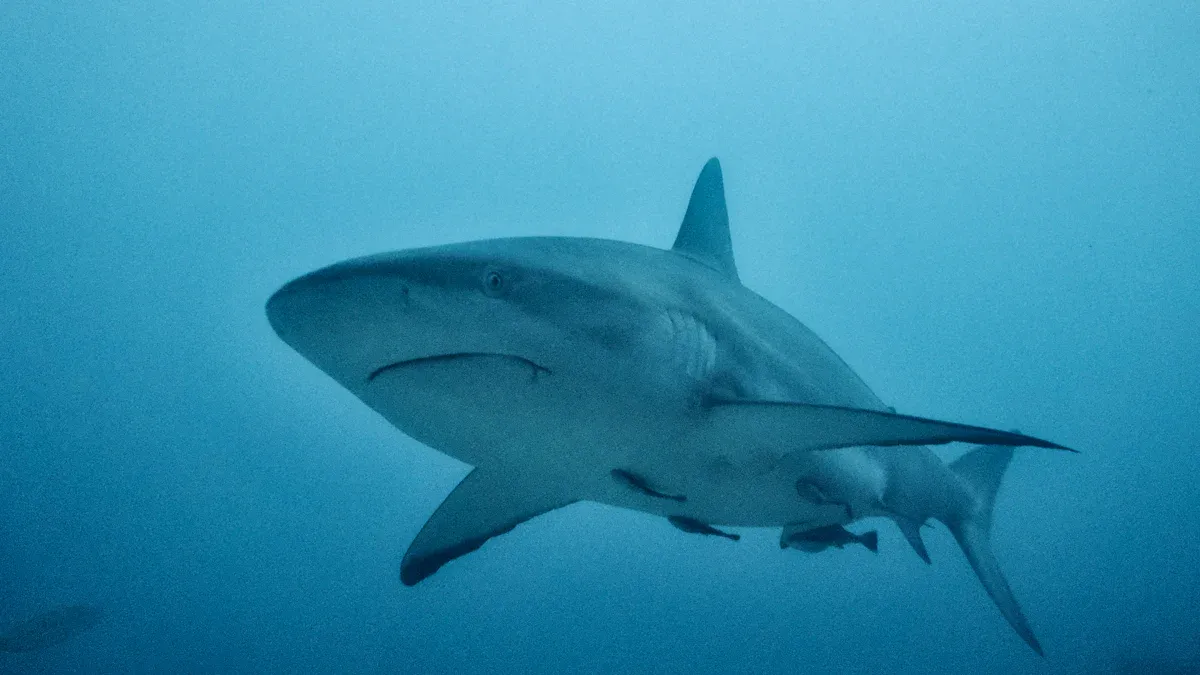
The Bronze Whaler Shark captivates many with its sleek body and unique coloration. This species thrives in coastal waters, showcasing remarkable adaptability. Understanding its characteristics and habitat helps you appreciate its role in marine ecosystems. Learn how this fascinating shark contributes to ocean health.
Key Takeaways
The Bronze Whaler Shark, also known as the copper shark, has a unique olive-grey coloration with a bronze sheen, making it easily identifiable.
This shark can grow up to 3.5 meters long and weighs around 305 kilograms, showcasing its impressive size and predatory capabilities.
Bronze Whaler Sharks thrive in warm temperate and subtropical waters, often found in shallow coastal areas, bays, and rocky environments.
Characteristics of the Bronze Whaler Shark
Coloration and Size
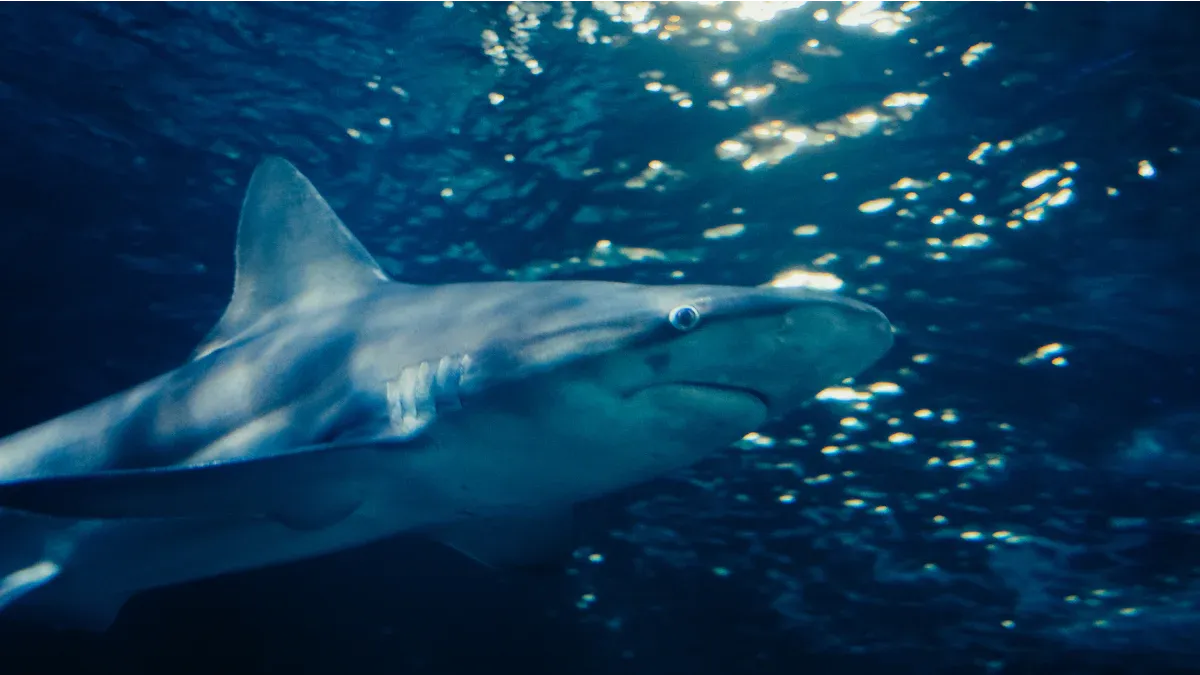
The Bronze Whaler Shark, also known as the copper shark, displays a striking appearance that sets it apart from other shark species. You will notice its olive-grey coloration, which transitions to a lighter shade on the underside. This unique color pattern includes a bronze sheen on its upper side, making it visually appealing. Here are some key points about its coloration:
Bronze Whaler Sharks exhibit an olive-grey coloration.
They have a bronze sheen on their upper side that fades to white on the underside.
In terms of size, the Bronze Whaler Shark can grow impressively large. Adult sharks typically reach lengths of up to 3.5 meters (approximately 11.5 feet) and can weigh around 305 kilograms (about 670 pounds). Here are some average and maximum size details:
Maximum size: approximately 295 cm, with rare cases reaching up to 350 cm.
Average size at maturity for males: 206-235 cm.
Average size at maturity for females: 227-244 cm.
The body shape of the Bronze Whaler Shark is torpedo-like, which aids in its swimming efficiency. It features a long, moderately rounded broad snout and large, pointed pectoral fins. The first dorsal fin is medium-sized, while the second dorsal fin is smaller. This streamlined shape allows the shark to navigate through both shallow coastal waters and deeper offshore environments with ease.
Teeth and Identification Features
When it comes to identifying the Bronze Whaler Shark, its teeth play a crucial role. This species has approximately 63-65 narrow, triangular teeth that are outwardly hook-shaped. Males possess longer, hooked upper teeth compared to females and juveniles. These teeth are essential for grasping slippery prey, which often includes fish and squid.
To help you distinguish the Bronze Whaler Shark from other requiem sharks, here’s a summary of its notable physical characteristics:
Characteristic | Description |
|---|---|
Size | Up to 3.5 meters in length and 305 kilograms in weight. |
Body Shape | Torpedo-shaped with a long, moderately rounded broad snout; large, pointed pectoral fins; medium-sized first dorsal fin; small second dorsal fin; heterocercal tail. |
Colouration | Bronze-grey to olive-green dorsal surface; white ventral surface; bronze to black edges on pelvic and pectoral fins. |
Eyes | Large, circular eyes with light golden green irises and dark slit pupils; features a nictitating membrane. |
Teeth | Approximately 63-65 narrow, triangular, outwardly hook-shaped teeth; males have longer, hooked upper teeth compared to females and juveniles. |
These features make the Bronze Whaler Shark easily identifiable in the water. Its unique coloration, size, and tooth structure contribute to its status as a powerful predator in marine ecosystems.
Habitat of the Bronze Whaler Shark
Preferred Environments
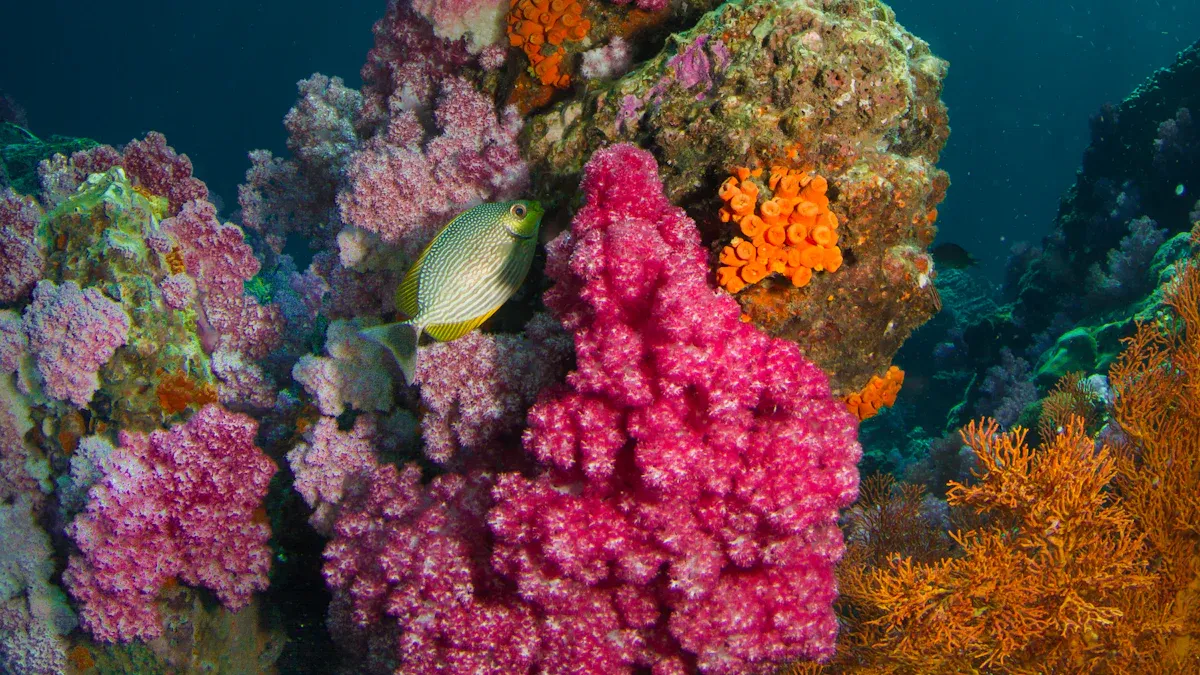
The Bronze Whaler Shark thrives in various marine environments. You can find this species in both shallow coastal waters and deeper offshore areas. Here are some of the preferred habitats:
Warm temperate to subtropical waters: These sharks inhabit regions in the Atlantic, Indo-Pacific, and Mediterranean seas.
Surf zone: They often swim in shallow areas near the shore, where they can hunt for prey.
Bays and harbors: Bronze Whaler Sharks frequently enter very shallow habitats, making them adaptable to different environments.
Rocky areas: They enjoy rocky environments, which provide shelter and hunting grounds.
Offshore islands: You can spot them around islands in the ocean, where they find abundant food sources.
Open ocean: They venture slightly beyond the continental shelf, exploring deeper waters.
Depths: These sharks can dive to depths of 100 meters or more, showcasing their versatility.
The table below summarizes the types of marine environments most frequently inhabited by Bronze Whaler Sharks:
Marine Environment Type | Description |
|---|---|
Warm temperate to subtropical | Found in these waters of the Atlantic, Indo-Pacific, and Mediterranean. |
Surf zone | Commonly inhabits shallow areas near the shore. |
Bays and harbours | Frequently enters very shallow habitats. |
Rocky areas | Inhabits rocky environments. |
Offshore islands | Found around islands in the ocean. |
Open ocean | Can be found slightly beyond the continental shelf. |
Depths | Dives to depths of 100m or more. |
Geographic Range
The geographic range of the Bronze Whaler Shark is quite extensive. You can find this species in various regions around the world. Here’s a breakdown of where they are commonly found:
Region | Description |
|---|---|
Southern Australia | Relatively common along the coast |
New Zealand | Relatively common along the coast |
South Africa | Seasonally abundant |
West Africa | Present |
Western Mediterranean | Present |
Northwest Atlantic | Absent |
South America (both sides) | Present |
Northeastern Pacific | Rarely found from southern Mexico to southern California |
Japan | Present |
Coast of China and Korea | Present |
Some Bronze Whaler Shark populations exhibit notable seasonal migrations. For example, in Argentina, they migrate from October to late March. In New South Wales, Australia, large populations appear from September to May, especially in February and April. The table below highlights these migration patterns:
Region | Migration Timing |
|---|---|
Argentina | October to late March |
Anegada Bay | January to April (females outnumber males) |
New South Wales, Australia | September to May (large populations in February and April) |
New Zealand | Summer (coastal temperate waters) |
Southwestern Atlantic Ocean | Colder months (warm, temperate waters) |
KwaZulu-Natal, South Africa | Winter (large numbers) |
Understanding the habitat and geographic range of the Bronze Whaler Shark helps you appreciate its adaptability and role in marine ecosystems.
Behavior and Biology
Feeding Habits
The Bronze Whaler Shark exhibits fascinating feeding habits that help it thrive in coastal environments. You will find that this shark primarily hunts in shallow waters, where it can access a variety of prey. Its diet mainly consists of:
Fish
Squid
Crustaceans
Occasionally, it scavenges on the carcasses of larger marine animals.
This opportunistic feeding behavior allows the copper shark to adapt to different food sources. The shark’s ability to tolerate varying temperatures also plays a role in its hunting success. It remains active in both warm and cool waters, which expands its range of available prey.
Reproduction and Lifespan
Reproduction in the Bronze Whaler Shark is quite interesting. The gestation period lasts about 12 months, during which the female carries her pups. The litter size ranges from 7 to 24 pups, with an average of 15 pups per litter. Here’s a summary of the reproductive cycle:
Gestation Period | Litter Size (Range) | Average Litter Size |
|---|---|---|
About 12 months | 7 – 24 pups | 15 pups |
Social behavior also plays a role in reproduction. These sharks occasionally form small groups, which may aid in mating. Their lifespan can reach up to 20 years, allowing them to contribute significantly to their populations over time.
The Bronze Whaler Shark’s adaptations for survival include its coastal predation strategies and social behaviors. These traits help it thrive in diverse marine environments.
The Bronze Whaler Shark plays a vital role in marine ecosystems. However, threats like overfishing pose significant risks to its populations, especially in areas like False Bay, which serves as a crucial nursery ground.
To protect these sharks, various conservation measures have been implemented:
Conservation Measure | Description |
|---|---|
Fishing Regulations | Many countries have implemented regulations to manage shark populations and reduce overfishing. |
Protected Areas | Establishing marine protected areas helps safeguard critical habitats for Bronze Whaler Sharks. |
International Agreements | Global agreements like CITES regulate the international trade of shark products. |
Public Awareness and Education | Raising awareness about the importance of sharks and promoting responsible ecotourism. |
Research and Monitoring | Scientific research and monitoring programs assess population trends and guide management. |
Education is crucial in the fight to save sharks and our oceans. By replacing fear with facts, you can become an advocate for sharks, leading to actions that promote their conservation.
FAQ
What do Bronze Whaler Sharks eat?
Bronze whaler sharks primarily consume fish, squid, and crustaceans. They also scavenge on larger marine animal carcasses.
Where can you find the habitat of the Copper Shark?
You can find the copper shark in warm temperate and subtropical waters, including coastal areas, bays, and rocky environments.
How big do Bronze Whaler Sharks get?
Bronze whaler sharks can grow up to 3.5 meters long and weigh around 305 kilograms, making them impressive predators in their habitat.
